Honda CRF-E2: The Quick Answer
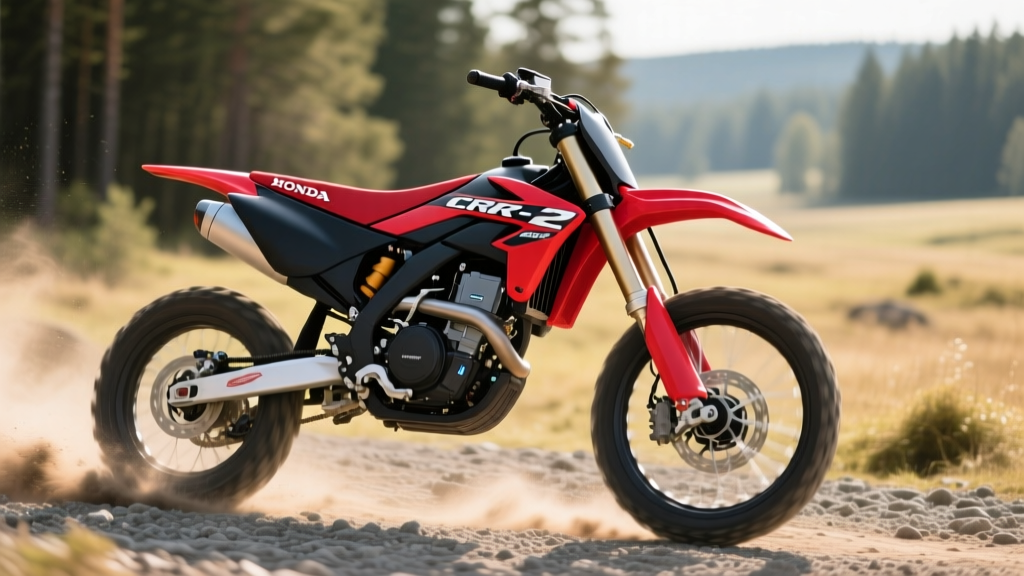
The Honda CRF-E2 is Honda's entry into the electric off-road segment, targeting trail riders and motocross enthusiasts who want instant torque and zero trailside noise complaints. As of early 2026, Honda has announced the CRF-E2 concept and limited production plans, but full consumer availability and final specifications remain preliminary. Based on Honda's disclosed targets and comparable electric dirt bikes (KTM Freeride E-XC, Stark Varg, Sur-Ron), buyers should expect a battery in the 4–7 kWh range, approximately 1.5–3 hours of trail riding per charge depending on intensity, Level 1 (120V) charging in 3–5 hours, and a starting MSRP likely between $8,000–$12,000. If you need a bike you can buy today, alternatives like the KTM Freeride E-XC or Stark Varg Alpha are already in showrooms. If you're a loyal Honda rider willing to wait, the CRF-E2 could reshape the 250cc-class trail experience — but go in with eyes open about battery limitations and the current lack of a federal EV tax credit for off-road motorcycles.
What Is the Honda CRF-E2 and Who Is It For?
Honda's CRF lineage — from the CRF250R to the CRF450X — defines the gas-powered dirt bike market. The CRF-E2 represents Honda's attempt to translate that legacy into a battery-electric platform. The target rider is someone who:
- Rides trail systems with noise restrictions (many public lands now limit dB output)
- Wants the simplicity of electric — no clutch, no jetting, no oil changes
- Practices motocross at home and needs a quiet option for backyard tracks
- Is a newer rider intimidated by the power delivery and maintenance of a 250cc four-stroke
Honda's electric off-road program draws from its broader electrification strategy, which includes the Motocompacto scooter and prototype electric MX racers. The CRF-E2, however, is aimed squarely at the consumer trail and amateur motocross market — not the professional racing circuit where gas still dominates.
Projected Specs: Battery, Motor, and Range
Because Honda has not yet published a final spec sheet for a retail CRF-E2, the figures below are announced targets and estimates based on Honda's concept disclosures, patent filings, and segment benchmarks. Treat these as preliminary until Honda confirms a production model.
| Spec | Projected Figure | Segment Context |
|---|---|---|
| Battery Capacity | ~5–7 kWh (estimated usable) | KTM Freeride E-XC: 3.9 kWh; Stark Varg Alpha: 6.5 kWh |
| Battery Chemistry | NMC (nickel manganese cobalt) likely | Standard for high-discharge off-road applications |
| Peak Motor Output | ~25–35 kW (~34–47 HP) | Comparable to a CRF250F four-stroke |
| Weight (est.) | ~230–260 lbs | Gas CRF250F: ~225 lbs; Stark Varg: ~210 lbs |
| Trail Ride Time (moderate) | 1.5–2.5 hours per charge | Varies heavily with rider aggression and terrain |
| Motocross Session Time | 25–45 minutes (hard riding) | Typical for all current electric dirt bikes |
| Top Speed (est.) | ~55–70 mph | Trail gearing dependent |
| Charging (120V Level 1) | 3–5 hours (0–100%) | Standard household outlet |
| Charging (240V Level 2, if supported) | ~1–1.5 hours (0–100%) | Not all electric dirt bikes support L2 |
| Estimated Base MSRP | $8,000–$12,000 | KTM Freeride E-XC: ~$8,499; Stark Varg Alpha: ~$13,190 |
kW vs. kWh reminder: kW (kilowatts) measures power — how fast the motor can deliver energy at any instant. kWh (kilowatt-hours) measures energy capacity — how much total energy the battery holds. A 6 kWh battery delivering 30 kW of peak power will drain in roughly 12 minutes at full sustained output, which is why ride time varies so dramatically with throttle discipline.
Electric vs. Gas Dirt Bike: The Real Comparison
The CRF-E2's most direct benchmark isn't another electric bike — it's the gas-powered CRF250F and CRF250RX that dominate Honda's off-road lineup. Here's how the ownership experience diverges:
| Factor | Honda CRF-E2 (Electric, Est.) | Honda CRF250F (Gas, 2025) |
|---|---|---|
| Base MSRP | $8,000–$12,000 | ~$8,399 |
| Fuel / Energy Cost Per Hour | ~$0.30–$0.60 (electricity) | ~$3.00–$5.00 (premium gas + oil) |
| Annual Maintenance | $50–$150 (chain, brake pads, coolant) | $400–$800 (oil, filter, valves, piston, air filter) |
| Noise Level | ~55–70 dB (whirring motor) | ~94–105 dB (exhaust) |
| Ride Time Per Tank/Charge | 1.5–2.5 hours (moderate trail) | 3–5 hours (2.1-gal tank, moderate trail) |
| Refuel / Recharge Time | 3–5 hours (Level 1, 120V) | 2 minutes (pour gas) |
| Power Delivery | Instant torque, linear, no clutch | RPM-dependent, clutch required, powerband |
| Cold Weather Impact | 10–20% range loss below 40°F | Jetting adjustment, choke, harder starts |
| Weight | ~230–260 lbs (est.) | ~225 lbs |
| Trail Access (noise-restricted) | ✅ Allowed on most restricted trails | ❌ Banned on many noise-limited public lands |
The numbers tell a clear story: electric wins on operating cost, maintenance, noise compliance, and simplicity. Gas wins on ride duration, refueling speed, and proven long-distance capability. For riders who do 2-hour loops and have a garage outlet, the CRF-E2 math works. For all-day adventure rides or remote backcountry, gas remains the pragmatic choice.
Real-World Ownership: Charging, Battery Life, and Costs
Home Charging Realities
Unlike electric cars, most electric dirt bikes charge exclusively on standard 120V household outlets — no special infrastructure needed. Plug the CRF-E2's included charger into a standard garage outlet and expect a full charge in 3–5 hours from empty. If Honda supports 240V Level 2 charging (unconfirmed), that could drop to roughly 1–1.5 hours, which would be a significant advantage for riders doing multiple moto sessions in a day.
Practical tip: If you ride at a track or trailhead without power access, you'll need to plan around the battery. Some riders invest in a portable power station (EcoFlow, Bluetti) with 1–2 kWh of capacity for trailside top-ups, but these add $800–$2,000 to the cost and only extend ride time by 20–40 minutes.
Battery Degradation and Longevity
NMC battery chemistry, common in high-performance off-road applications, typically retains 80% of original capacity after 500–800 full charge cycles. For a rider charging twice a week year-round, that's roughly 5–8 years before noticeable range reduction. Honda's battery warranty terms are not yet published, but the industry standard for electric powersport batteries is 1–2 years. Compare that to a gas engine top-end rebuild interval of 100–200 hours ($600–$1,200), and the long-term economics start to favor electric for moderate-use riders.
Five-Year Cost of Ownership
| Cost Category | CRF-E2 (Electric) | CRF250F (Gas) |
|---|---|---|
| Purchase Price | $10,000 (est. midpoint) | $8,399 |
| Fuel / Electricity (5 yrs, 100 hrs/yr) | $200–$300 | $2,000–$3,000 |
| Maintenance (5 yrs) | $500–$750 | $3,000–$5,000 |
| Insurance (off-road, 5 yrs) | $600–$1,000 | $600–$1,000 |
| Resale Value (est. after 5 yrs) | $3,500–$5,000 | $3,000–$4,500 |
| Net 5-Year Cost | $5,800–$7,850 | $9,999–$14,399 |
The CRF-E2's higher upfront price is offset within 2–3 years for riders logging 100+ hours annually. For casual riders (30–40 hours/year), the payback stretches to 4–5 years, and gas may remain cheaper overall.
Federal Tax Credits and Incentives: What Applies?
Here's where off-road electric vehicles hit a regulatory wall. The IRS §30D Clean Vehicle Credit applies to on-road vehicles meeting specific battery sourcing, MSRP, and buyer income requirements. Off-road motorcycles and dirt bikes do not qualify for the §30D federal tax credit, as they are not classified as highway-capable motor vehicles under IRS rules.
Some states and local utility districts offer rebates for electric off-road vehicles or electric powersports equipment — check your state energy office or utility provider. California's CARB programs occasionally include off-road electrification incentives, and Colorado has explored off-road EV rebates. Always verify current program availability before counting on a rebate.
Common Misconceptions About Electric Dirt Bikes
| Myth | Fact |
|---|---|
| "Electric dirt bikes have no power." | Electric motors deliver peak torque at 0 RPM — the CRF-E2's estimated 25–35 kW rivals a 250cc four-stroke off the line and exceeds it in low-speed technical terrain. |
| "The battery will die in 20 minutes." | At moderate trail pace, expect 1.5–2.5 hours. Only sustained motocross-intensity riding drops time to 25–45 minutes — same as all current electric off-road bikes. |
| "I need a special charger at home." | Standard 120V outlets work. No Level 2 installation required for basic charging, unlike electric cars. |
| "Electric bikes are heavier and handle worse." | Weight is comparable (~230–260 lbs vs. ~225 lbs gas). The lower center of gravity from battery placement can actually improve handling in corners. |
| "I'll save the environment." | Zero tailpipe emissions, yes — but electricity generation and battery mining carry upstream environmental costs. The net benefit is real but not zero-impact. |
| "The battery replacement will cost more than the bike." | Off-road EV battery replacements typically run $2,000–$4,000 — significant, but comparable to a full gas engine rebuild plus years of maintenance savings already recouped. |
Decision Framework: Should You Wait for the CRF-E2 or Buy Now?
Choose the Honda CRF-E2 (wait for it) if:
- You're a loyal Honda rider and want OEM dealer support, warranty service, and parts availability
- Your typical ride is under 2 hours and you have access to a standard outlet for recharging
- You ride noise-restricted trails where gas bikes are banned or frowned upon
- You value zero maintenance (no oil, valves, air filter, or jetting) and instant torque
- You're willing to accept first-generation limitations while Honda refines the platform
Choose an existing electric dirt bike (KTM Freeride E-XC, Stark Varg, Sur-Ron) if:
- You need a bike now and can't wait for Honda's production timeline
- You want proven real-world data on battery longevity and dealer support
- You're a competitive rider who needs a race-legal platform (check your sanctioning body rules)
Stick with a gas CRF250F / CRF250RX if:
- You ride all-day adventure loops (4+ hours) or remote backcountry with no power access
- You need quick refueling between motos at race events
- Your budget is under $8,000 and you want proven reliability with abundant aftermarket support
- You ride in extreme cold (below 20°F) where battery range loss compounds
What First-Time Electric Dirt Bike Buyers Should Know
If the CRF-E2 or any electric off-road bike is your first EV, recalibrate these expectations:
- Ride time is your new "fuel gauge." Unlike a gas bike where you glance at a tank, you'll learn to read battery percentage against terrain difficulty. Uphill, sand, and aggressive riding drain the battery 2–3x faster than flat, flowing singletrack.
- Preconditioning matters. Batteries perform best between 60–80°F. In cold weather, ride gently for the first 10 minutes to let the battery warm internally before hitting it hard.
- Regenerative braking changes your technique. Most electric dirt bikes offer adjustable regen. Set it low for motocross (you want coasting between corners) and high for tight technical trails (it acts like engine braking and extends range).
- Storage protocol is different. Never store a lithium battery at 100% or 0% for extended periods. Keep it at 50–70% state of charge if the bike will sit for more than two weeks — this significantly extends cycle life.
- No federal tax credit applies. Budget the full MSRP plus tax, title, and any dealer fees. Check state/local programs separately.
Frequently Asked Questions
Is the Honda CRF-E2 available to buy in 2026?
As of early 2026, Honda has announced the CRF-E2 concept and signaled production intent, but the bike is not yet available for retail purchase. Final specs, pricing, and availability dates remain unconfirmed. Check Honda Powersports for updates.
How long does an electric dirt bike battery last before needing replacement?
NMC batteries in off-road applications typically retain 80% capacity after 500–800 full charge cycles. For a rider charging 2x per week, that translates to roughly 5–8 years of usable life before noticeable range reduction. Full replacement costs are estimated at $2,000–$4,000 for a pack in the 5–7 kWh range.
Can I ride an electric dirt bike on public trails?
Yes — and in many cases, electric bikes have better trail access than gas bikes. Many public land agencies (USFS, BLM, state parks) enforce noise limits of 86–96 dB, which gas bikes often exceed. Electric dirt bikes at 55–70 dB typically pass without issue. Always check local trail regulations and OHV permits.
Does the Honda CRF-E2 qualify for any EV tax credit?
No. The IRS §30D federal Clean Vehicle Credit applies only to on-road, highway-capable vehicles meeting specific criteria. Off-road motorcycles and dirt bikes are excluded. Some state and utility programs may offer separate rebates — verify with your state energy office.
How does the CRF-E2 compare to the KTM Freeride E-XC?
The KTM Freeride E-XC uses a smaller 3.9 kWh battery and is lighter (~245 lbs), making it a proven, available option for moderate trail riding at ~$8,499. The CRF-E2 is expected to offer a larger battery (5–7 kWh est.), potentially longer ride times, and Honda's dealer network — but at a likely higher price and with an unconfirmed release date. If you need a bike today, the Freeride E-XC is the safer buy. If you want more range and Honda backing, waiting may pay off.
What happens if the battery dies mid-ride on the trail?
Unlike a gas bike that can be push-started or carry spare fuel, a dead electric dirt bike battery means the ride is over. You'll need to push or carry the bike back, or have a riding partner with a trailer. Always plan rides with a 15–20% battery buffer, especially on unfamiliar terrain with elevation gain.
Sources: Honda Powersports, IRS §30D Clean Vehicle Credit, California Air Resources Board (CARB). Specifications listed as estimated/preliminary where Honda has not published final production data.