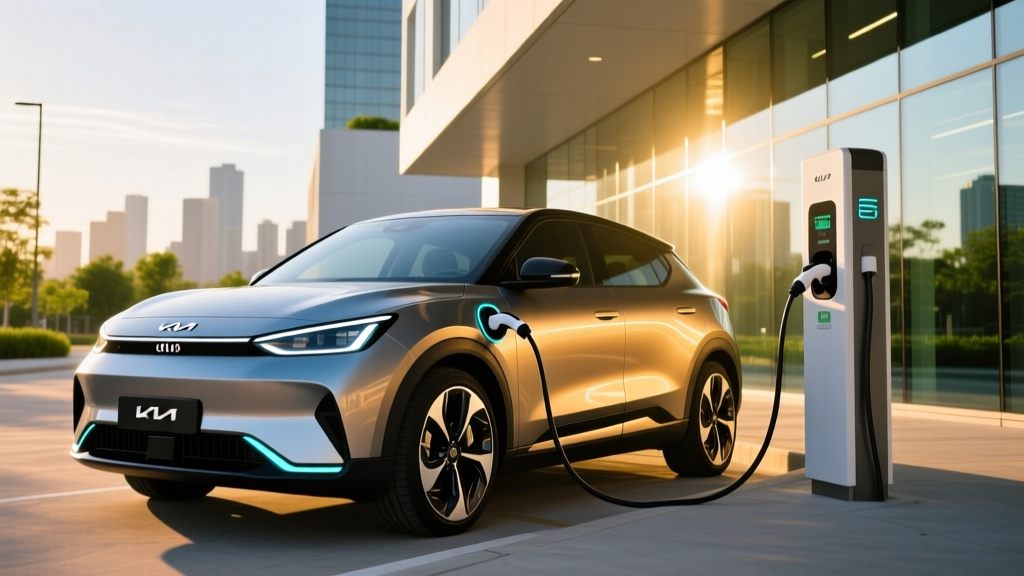
Kia EV3 at a Glance: What You'll Actually Pay
The 2026 Kia EV3 arrives in the U.S. as one of the most affordable dedicated battery-electric crossovers on the market. Built on Hyundai Motor Group's E-GMP platform and positioned below the EV6 and EV9, the EV3 targets buyers who want practical range and modern tech without crossing the $40,000 threshold. But the sticker price is only the opening chapter of the ownership story.
This guide breaks down every cost layer — from the federal §30D tax credit and state incentives to charging economics, insurance premiums, maintenance savings, and depreciation — so you can evaluate the true five-year cost of putting an EV3 in your driveway.
| Spec | EV3 Light (Std Range) | EV3 Wind (Long Range) |
|---|---|---|
| Base MSRP (est.) | $34,990 | $39,990 |
| Battery (usable) | 58.3 kWh (NMC) | 81.4 kWh (NMC) |
| EPA Range | ~235 mi | ~310 mi |
| Real-World Highway Range | ~195–210 mi | ~255–275 mi |
| Peak DC Fast Charge | ~150 kW | ~170 kW |
| 10–80% DCFC Time | ~30 min | ~28 min |
| Level 2 Charge Rate | 11 kW | 11 kW |
| Horsepower | 201 hp | 201 hp |
| 0–60 mph | ~7.5 sec | ~7.8 sec |
| Drivetrain | FWD | FWD |
| Battery/Powertrain Warranty | 10 yr / 100,000 mi | 10 yr / 100,000 mi |
Real-World Range Note: EPA estimates assume a mix of city and highway driving at moderate temperatures. Expect highway-only range to drop 12–18% below the EPA sticker, and cold-weather (below 32°F) range to drop 20–30%. The Long Range EV3's 310-mile EPA figure realistically translates to ~260 miles on a 70°F mixed-drive day, ~220 miles on a winter road trip.
Does the Kia EV3 Qualify for the Federal Tax Credit?
The IRS §30D Clean Vehicle Credit can knock up to $7,500 off the effective price of a qualifying new EV — or, since 2024, be transferred to the dealer as a point-of-sale discount. However, eligibility hinges on a matrix of requirements that change based on battery sourcing, MSRP caps, and buyer income. As of the 2026 tax year, here is what you need to know:
- MSRP Cap: SUVs and crossovers must have an MSRP at or below $80,000; sedans at or below $55,000. The EV3 clears this easily at every trim.
- Buyer Income Limits (Modified AGI): $150,000 single filer / $225,000 head of household / $300,000 married filing jointly. If your AGI exceeds these in either the purchase year or the prior year, you lose eligibility.
- Battery Component Manufacturing: A percentage of battery components must be manufactured or assembled in North America. This threshold increases annually. Kia's U.S.-built EVs (EV6, EV9) have historically met this — but the EV3 is built in South Korea (Gwangmyeong plant), which complicates the component-sourcing requirement.
- Critical Minerals Sourcing: A percentage of critical minerals must be sourced from the U.S. or a free-trade-agreement country. This threshold also tightens yearly.
- Foreign Entity of Concern (FEOC) Restriction: Vehicles with battery components from a FEOC (primarily Chinese entities) are disqualified entirely, regardless of other criteria.
- Point-of-Sale Transfer: If eligible, you can assign the credit to the dealer at purchase, receiving up to $7,500 as an immediate price reduction rather than waiting to claim it on your tax return.
Critical Caveat for the EV3: Because Kia manufactures the EV3 in South Korea, its §30D eligibility depends entirely on whether its battery supply chain meets the North American component and critical-minerals thresholds for the 2026 tax year. Confirm eligibility on fueleconomy.gov before signing a purchase agreement. Kia's U.S.-assembled EV6 and EV9 have a clearer path to the credit. If the EV3 does not qualify for §30D, the effective price gap versus those larger siblings narrows considerably.
State, Local, and Utility Incentives
Federal credit is only one piece of the puzzle. Many states, municipalities, and electric utilities offer their own rebates and incentives:
- California (CVRP): Up to $7,000 for income-eligible buyers via the Clean Cars 4 All / Clean Fuel Reward programs (funding varies by year).
- Colorado: State tax credit of up to $5,000 for new EVs under certain MSRP thresholds.
- New York: Drive Clean Rebate up to $2,000, subject to funding availability.
- Utility Rebates: Many utilities (PG&E, ConEdison, Xcel Energy, Dominion) offer $250–$1,500 rebates for EV purchase or home Level 2 charger installation. Check your local provider.
- HOV Lane Access: Several states grant single-occupant HOV lane access to EV owners — a significant non-monetary perk in congested metros.
These programs vary widely by jurisdiction, have their own income or MSRP caps, and can run out of funding. Always verify current availability through your state energy office or utility website.
Five-Year Total Cost of Ownership: EV3 vs. Gas Crossover
To understand what the EV3 actually costs over time, we model a five-year / 75,000-mile ownership scenario against a comparable gasoline compact SUV (27 MPG combined, $3.40/gallon regular, ~$30,000 MSRP). All figures are national averages — your actual costs depend on local electricity rates, driving patterns, and insurance market.
| Cost Category | 2026 Kia EV3 Wind (LR) | Gas Crossover Baseline |
|---|---|---|
| Purchase Price (MSRP) | $39,990 | $30,000 |
| Est. Federal Tax Credit | $0–$7,500 (see eligibility above) | $0 |
| Effective Purchase Price | $32,490–$39,990 | $30,000 |
| Fuel / Energy (75k mi) | $2,850 (home L2 avg) | $9,444 |
| Maintenance (5 yr) | $1,200 | $3,500 |
| Insurance (5 yr) | $9,500 | $7,200 |
| Depreciation (est. 5 yr) | $16,000–$18,000 | $12,000–$14,000 |
| 5-Year Total (w/ full credit) | ~$52,040–$54,040 | ~$62,144–$64,144 |
| 5-Year Total (no credit) | ~$59,540–$61,540 | ~$62,144–$64,144 |
With the full $7,500 federal credit applied, the EV3 saves roughly $8,000–$12,000 over five years versus a gas crossover. Without the credit, the EV3 breaks even or runs slightly cheaper — primarily thanks to fuel and maintenance savings offsetting higher insurance and depreciation.
Charging vs. Gasoline: The Per-Mile Math
The EV3 Wind (Long Range) achieves an estimated 120 MPGe combined, or roughly 28 kWh per 100 miles. Here's how that translates to real cost per mile under different charging scenarios:
| Scenario | Rate | Cost per 100 mi | Cost per Mile |
|---|---|---|---|
| Home Level 2 (national avg) | $0.14/kWh | $3.92 | $0.039 |
| Home Level 2 (CA / high-cost) | $0.28/kWh | $7.84 | $0.078 |
| Home with off-peak TOU rate | $0.08/kWh | $2.24 | $0.022 |
| Public DCFC (avg $0.40/kWh) | $0.40/kWh | $11.20 | $0.112 |
| Gas Crossover (27 MPG, $3.40/gal) | $3.40/gal | $12.59 | $0.126 |
At the national average residential rate of $0.14/kWh, the EV3 costs roughly $0.04 per mile to fuel at home — less than one-third the per-mile cost of a 27 MPG gas crossover. Even in high-cost electricity markets like California, home charging remains cheaper than gasoline. The economics flip only if you rely exclusively on public DC fast charging at $0.40+/kWh, which narrows the gap to near parity with gas.
Annual fuel savings estimate: At 15,000 miles/year and national-average home charging, the EV3 saves approximately $1,300–$1,400 per year versus the gas baseline. Over five years, that's roughly $6,500–$7,000 in fuel savings alone.
Maintenance Savings: Where EVs Quietly Win
Electric vehicles eliminate most routine powertrain maintenance. The EV3's single-speed reduction gear and electric motor have far fewer wear components than an internal combustion engine. Here's a five-year maintenance comparison at 75,000 miles:
| Maintenance Item | EV3 (5 yr / 75k mi) | Gas Crossover (5 yr / 75k mi) |
|---|---|---|
| Oil Changes | $0 (none required) | $600–$900 (6–10 changes) |
| Transmission Fluid | $0 (sealed unit) | $150–$300 |
| Engine Air Filter | $0 | $100–$200 |
| Spark Plugs | $0 | $200–$400 |
| Brake Pads/Rotors | $100–$300 (regen extends life 2–3×) | $600–$1,200 |
| Cabin Air Filter | $100–$150 | $100–$150 |
| Tire Rotation/Replacement | $800–$1,200 (EVs wear tires ~15% faster due to weight/torque) | $600–$1,000 |
| Coolant/Other Fluids | $50–$100 | $150–$300 |
| Total Estimated | $1,050–$1,750 | $2,400–$4,450 |
The biggest maintenance caveat: EVs tend to wear through tires faster than comparable gas vehicles due to higher curb weight and instant torque delivery. Budget for one additional tire replacement over five years compared to a gas crossover. Beyond that, the EV3's regenerative braking system significantly extends brake pad life — many EV owners report original brake pads lasting 80,000+ miles.
Kia's 10-year / 100,000-mile battery and powertrain warranty covers the EV3's traction battery against defects and excessive degradation (typically defined as falling below 70% state of health). This warranty is transferable to a second owner, which supports resale value.
Insurance Costs: The Uncomfortable Truth
EV insurance premiums run 15–30% higher than equivalent gas vehicles, and the EV3 is unlikely to be an exception. Several structural factors drive this:
- Higher repair costs: Battery pack damage, even minor, often triggers full-pack replacement protocols. High-voltage system repairs require specialized technician certification.
- Parts availability: EV-specific body panels, battery modules, and power electronics have longer lead times and fewer aftermarket alternatives.
- Total-loss thresholds: Insurers may declare an EV a total loss at lower damage thresholds due to battery safety protocols, increasing claim severity.
- Vehicle price: The EV3's MSRP sits above many gas compact SUVs, raising the insured value baseline.
Based on 2025–2026 industry data, expect annual EV3 insurance premiums of $1,700–$2,100 for a clean-record driver with good credit (national average), versus $1,300–$1,600 for a comparably priced gas crossover. Over five years, that's an additional $2,000–$2,500 in insurance costs.
Mitigation strategies: Shop quotes from EV-friendly insurers (Geico, Progressive, and State Farm have competitive EV programs). Bundling home and auto, maintaining a clean record, and opting for higher deductibles can narrow the premium gap. Some insurers offer specific EV discounts — always ask.
Depreciation and Resale Value: What to Expect
EV depreciation has been volatile. In 2023–2024, aggressive Tesla price cuts and rapid battery technology evolution caused used EV values to drop 30–40% in some segments — far steeper than the gas-vehicle average. By 2025–2026, the market has stabilized, but EVs still depreciate somewhat faster than their gas counterparts in the first three years.
For the EV3, expect five-year depreciation of approximately 40–48% of original MSRP, translating to a residual value of roughly $16,800–$20,800 for the Wind Long Range trim. This compares to 35–42% depreciation for a mainstream gas compact SUV.
Several factors support the EV3's long-term value:
- Kia's 10-year battery warranty provides second-owner confidence, a meaningful advantage over brands offering only 8 years.
- NMC chemistry in the Long Range pack offers strong energy density but may see slightly faster calendar degradation than LFP alternatives — though real-world data on E-GMP packs has been encouraging, with most retaining 90%+ SoH at 50,000 miles.
- Segment positioning: The sub-$40K electric crossover segment is growing rapidly, and strong used-market demand from budget-conscious EV adopters could buoy residuals.
- Charging standard: The EV3 ships with the NACS (Tesla) connector in North America, ensuring access to the Supercharger network — a resale-value positive as the CCS ecosystem transitions.
Decision Framework: Is the EV3 the Right Financial Move?
Choose the Kia EV3 if:
- You can charge at home (Level 2) and your local electricity rate is below $0.20/kWh.
- You qualify for the §30D federal tax credit (verify on fueleconomy.gov) — this dramatically improves the TCO equation.
- You drive 12,000+ miles per year, maximizing fuel savings.
- You value the 10-year battery warranty and NACS Supercharger access.
- You want a practical electric crossover without stepping up to the EV6 or EV9 price bracket.
Consider a gas or hybrid alternative if:
- You cannot install a home charger and would rely primarily on public DCFC (eroding fuel-cost savings).
- Your AGI exceeds §30D income limits and your state offers no supplementary incentives.
- You plan to own the vehicle for only 2–3 years (higher depreciation hits harder in short ownership windows).
- You regularly tow or take long highway road trips in extreme cold, where range loss and charging frequency become friction points.
Frequently Asked Questions
How much does it really cost to own a Kia EV3 over 5 years?
With the full $7,500 federal tax credit, five-year total cost of ownership (purchase + energy + maintenance + insurance + depreciation) lands around $52,000–$54,000 for the Long Range Wind trim at 75,000 miles. Without the credit, expect $59,500–$61,500. Both scenarios are competitive with or cheaper than a $30,000 gas crossover over the same period, primarily due to fuel and maintenance savings.
Do I qualify for the federal EV tax credit on the Kia EV3?
It depends. You must meet IRS §30D income caps ($150K single / $300K married filing jointly), and the vehicle must satisfy battery component and critical mineral sourcing requirements for the 2026 tax year. Because the EV3 is manufactured in South Korea, its battery supply chain compliance is less certain than U.S.-built Kia models. Always verify current eligibility on fueleconomy.gov before purchasing.
How much will I save on fuel and maintenance versus a gas car?
At 15,000 miles/year with home Level 2 charging at the national average electricity rate, expect to save approximately $1,300–$1,400 annually on fuel. Over five years, maintenance savings add another $1,500–$2,500 compared to a gas compact SUV. Combined, that's roughly $8,000–$9,500 in operational savings over the ownership period.
Are EVs more expensive to insure?
Yes, typically 15–30% more expensive than comparable gas vehicles. Higher repair costs for battery and high-voltage components, specialized technician requirements, and total-loss protocols all contribute. For the EV3, expect annual premiums of $1,700–$2,100 versus $1,300–$1,600 for a gas crossover. Shop multiple insurers and ask about EV-specific discounts.
How well does the Kia EV3 hold its value?
Expect 5-year depreciation of approximately 40–48%, which is slightly higher than mainstream gas compact SUVs (35–42%) but in line with the broader EV market. Kia's 10-year/100,000-mile battery warranty and NACS charging compatibility are residual-value positives. The sub-$40K EV crossover segment is growing, which may support used demand.
What about home charger installation costs?
A Level 2 home charger (240V, 32–48 amp) typically costs $500–$800 for the unit plus $800–$2,500 for professional installation by a licensed electrician, depending on panel capacity and wiring distance. If your home needs a 200-amp panel upgrade, add $1,500–$3,000. Many utilities offer rebates of $250–$750 for charger installation — check with your provider. Total all-in cost for most homeowners: $1,500–$3,000 before rebates.
Is the EV3 cheaper than a Kia EV6 or Hyundai Ioniq 5?
The EV3 undercuts both the EV6 and Ioniq 5 by $8,000–$15,000 at comparable trims, but it's a smaller vehicle with a single motor, less cargo space, and no AWD option. If you need the space and performance, the EV6 or Ioniq 5 justify the premium. If you're a solo commuter or small household prioritizing value, the EV3 is the more cost-effective entry point to the E-GMP platform.