The 2026 Tesla Model Y: Juniper Refresh Meets Real-World Ownership
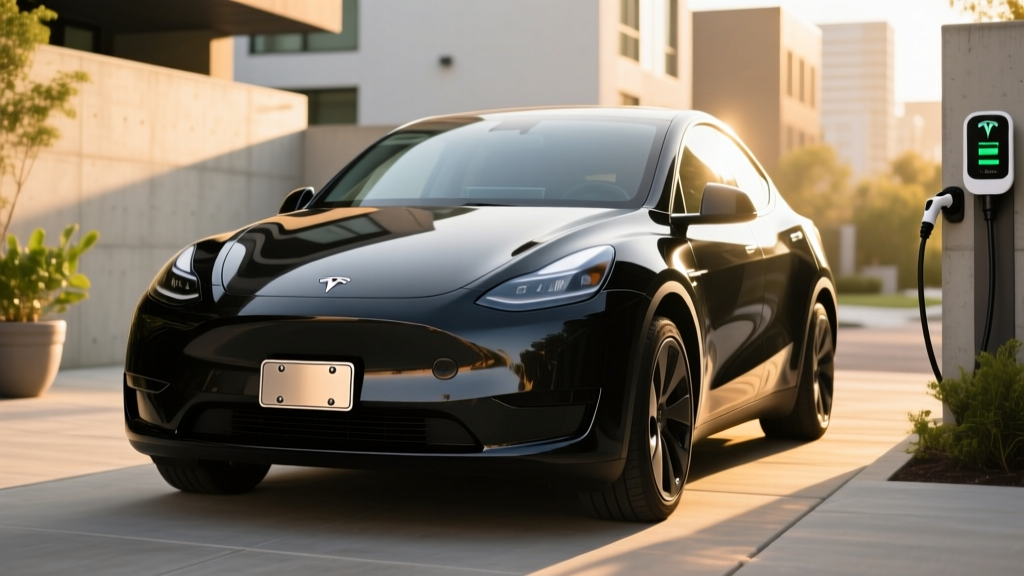
The Tesla Model Y remains the best-selling electric vehicle in the United States for good reason: it delivers competitive range, access to the most reliable DC fast-charging network, and over-the-air updates that keep the platform current. The 2026 Model Y — part of the "Juniper" refresh that debuted for the 2025 model year — brings updated styling, a revised interior with ambient lighting and ventilated front seats, and slightly improved efficiency. But beneath the polish, the fundamental ownership questions remain the same: what range will you actually see, how fast does it charge, does it still qualify for the federal tax credit, and how do you deal with front license plate mounting without drilling into the bumper?
This review covers the 2026 Model Y Long Range AWD and Performance trims with exact EPA figures, real-world range expectations, charging data, pricing after the §30D credit, and a practical look at the Tesla Model Y SnapPlate front license plate holder — an aftermarket accessory that solves one of the most common new-owner frustrations.
Range, Battery, and Efficiency: What the Numbers Actually Mean
The 2026 Model Y Long Range AWD carries an EPA-estimated range of 320 miles on a full charge, while the Performance trim is rated at 293 miles. These figures come from Tesla's 78.1 kWh usable battery pack (gross capacity approximately 82 kWh), which uses NMC (nickel manganese cobalt) cathode chemistry in the Long Range and Performance variants.
The base Rear-Wheel-Drive model, which uses LFP (lithium iron phosphate) chemistry in a smaller ~60 kWh pack, is rated at 259 miles EPA. LFP offers slower degradation and can be charged to 100% daily without concern, but sacrifices some energy density and cold-weather performance compared to NMC.
- EPA sticker: 320 miles
- Mixed driving (city/suburban): ~295–310 miles
- Sustained highway (70–75 mph): ~255–275 miles
- Cold weather (below 32°F): ~220–260 miles depending on preconditioning and cabin heat usage
- Efficiency: 122 MPGe combined / 28 kWh per 100 miles (Long Range AWD per fueleconomy.gov)
The gap between EPA and real-world highway range is typical for EVs. The Model Y's aerodynamic profile (0.23 Cd drag coefficient) helps at speed, but sustained 75+ mph driving, headwinds, and elevation changes will push consumption above the EPA test cycle. Cold weather compounds this: without consistent use of the heat pump and battery preconditioning, expect a 15–25% range reduction in freezing temperatures.
| Spec | Long Range AWD | Performance | Rear-Wheel Drive |
|---|---|---|---|
| EPA Range | 320 mi | 293 mi | 259 mi |
| Battery (usable) | 78.1 kWh (NMC) | 78.1 kWh (NMC) | ~60 kWh (LFP) |
| Drivetrain | Dual-Motor AWD | Dual-Motor AWD | Single-Motor RWD |
| Horsepower | 384 hp | 456 hp | 295 hp |
| 0–60 mph | 4.8 sec | 3.5 sec | 6.6 sec |
| MPGe (combined) | 122 MPGe | 111 MPGe | 128 MPGe |
| DC Fast Charge (peak) | 250 kW | 250 kW | 170 kW |
| 10–80% DCFC Time | ~25 min | ~25 min | ~30 min |
| Level 2 Charge Rate | 11.5 kW (~44 mi/hr) | 11.5 kW (~44 mi/hr) | 11.5 kW (~44 mi/hr) |
| Base MSRP | $48,990 | $53,990 | $44,990 |
Charging Speed: DC Fast, Level 2, and the Charge Curve Reality
The 2026 Model Y Long Range AWD and Performance trims accept up to 250 kW on a DC fast charger (V3/V4 Tesla Supercharger or any CCS/NACS station capable of that rate). The RWD model peaks at 170 kW. Tesla quotes a 10–80% charge time of approximately 25 minutes for the Long Range and Performance on a 250 kW stall.
However, peak charge rate is not sustained charge rate. The Model Y's charge curve is aggressive at low states of charge — you'll see 230–250 kW between 10–30% SoC — but it tapers significantly above 50% and drops sharply past 80%. Charging from 80–100% can add another 20+ minutes. On road trips, the practical strategy is to charge in the 10–70% window and move on, rather than waiting for a full battery.
| Charging Level | Power | Miles Added per Hour | Typical Use Case |
|---|---|---|---|
| Level 1 (120V outlet) | ~1.4 kW | ~3–4 mi/hr | Emergency/trickle only |
| Level 2 (240V, 48A) | 11.5 kW | ~44 mi/hr | Home overnight charging |
| DC Fast (250 kW peak) | Up to 250 kW | ~200+ mi in 15 min | Road trips, Superchargers |
At home on a Level 2 charger (Tesla Wall Connector or any J1772/NACS 240V unit on a 60-amp circuit), the Model Y adds roughly 44 miles of range per hour. A full overnight charge from 20% to 80% takes about 5–6 hours — more than sufficient for daily driving. Home charging installation typically costs $800–$2,000 depending on panel capacity and conduit run length; always get a quote from a licensed electrician.
All 2026 Model Y vehicles sold in North America come equipped with the NACS (North American Charging Standard) connector natively. This grants direct access to Tesla's Supercharger network (over 25,000 stalls in the US) without an adapter, and an increasing number of third-party networks are adding NACS cables.
Performance, Cargo, and Daily Practicality
The Model Y's dual-motor AWD powertrain delivers 384 horsepower in the Long Range trim and 456 hp in the Performance. The Long Range hits 0–60 mph in 4.8 seconds; the Performance does it in 3.5 seconds. Both feel immediate in real-world driving — the instant torque delivery makes merging and passing effortless, and the low center of gravity (battery pack under the floor) keeps body roll controlled through corners.
Practicality remains the Model Y's strongest suit among electric crossovers:
- Cargo volume: 30.2 cu ft behind the second row; 72.1 cu ft with rear seats folded (per Tesla specifications)
- Front trunk (frunk): 4.1 cu ft — useful for charging cables, groceries, or a small bag
- Rear legroom: 41.6 inches — generous for adults on longer trips
- Front headroom: 41.0 inches; rear headroom: 39.7 inches
- Towing capacity: 3,500 lbs (when equipped with the factory tow package)
The Juniper refresh brought incremental interior improvements: acoustic glass reduces cabin noise, ventilated front seats are now standard on Long Range and Performance, and ambient lighting replaces the stark minimalism of earlier years. The 15.4-inch center touchscreen remains the command hub for everything — climate, navigation, media, and vehicle settings — with a secondary 8-inch rear touchscreen for passengers.
Pricing, Tax Credit Eligibility, and Total Cost
The 2026 Model Y lineup starts at $44,990 for the RWD, $48,990 for the Long Range AWD, and $53,990 for the Performance. All three trims fall below the IRS §30D MSRP cap of $80,000 for SUVs, which is the first eligibility gate.
Whether you actually receive the $7,500 federal EV tax credit (now available as a point-of-sale transfer to the dealer, reducing your out-of-pocket cost at purchase) depends on several factors that change periodically:
- MSRP cap: Vehicle must be under $80,000 (all Model Y trims qualify)
- Buyer income cap: Modified AGI must not exceed $150,000 (single) / $300,000 (joint) / $225,000 (head of household)
- Battery sourcing: Critical minerals and battery components must meet phased-in domestic/free-trade-agreement sourcing thresholds — Tesla has shifted significant supply chain to comply, but verify current-year status at IRS.gov qualified vehicle list
- Point-of-sale transfer: You can elect to transfer the credit to the dealer at purchase, reducing your upfront cost by $7,500 — but you must still meet income requirements on your tax return or repay the credit
- Final assembly: Must be assembled in North America (Model Y is built in Austin, TX and Fremont, CA — qualifies)
| Trim | Base MSRP | After $7,500 Credit | Estimated Destination + Fees | Net Starting Price* |
|---|---|---|---|---|
| Rear-Wheel Drive | $44,990 | $37,490 | $1,390 | ~$38,880 |
| Long Range AWD | $48,990 | $41,490 | $1,390 | ~$42,880 |
| Performance | $53,990 | $46,490 | $1,390 | ~$47,880 |
*Net price assumes full §30D credit eligibility. State incentives (California, Colorado, New York, etc.) may reduce cost further — check your state's energy office. Always confirm with a tax professional before relying on credit eligibility.
On a total-cost-of-ownership basis, the Model Y Long Range AWD typically costs 3–5 cents per mile to "fuel" on home Level 2 charging (varies by local electricity rate), versus 12–18 cents per mile for a comparable gas-powered crossover at $3.50/gallon. Over five years and 75,000 miles, that's roughly $7,000–$9,000 in fuel savings, partially offset by higher insurance premiums (typically 15–25% above comparable ICE vehicles).
The SnapPlate Front License Plate Holder: Solving a Real Ownership Problem
Here's a scenario every new Model Y owner in a front-plate state encounters: Tesla ships the vehicle without a front license plate bracket, and the OEM bracket included in the glovebox (or available from Tesla) requires you to drill holes into the front bumper fascia. For many owners, this is unacceptable — it voids aspects of the bumper warranty, creates potential for water intrusion, and permanently alters a vehicle they may want to resell clean.
This is where the Tesla Model Y SnapPlate front license plate holder enters the picture. The SnapPlate is an aftermarket no-drill mounting solution designed specifically for the Model Y's front bumper contour. Instead of screws into the fascia, it uses a combination of heavy-duty 3M VHB adhesive and/or a snap-fit bracket that attaches to the existing lower grille opening or tow-hook receiver point, depending on the specific product version.
Key considerations for the SnapPlate and similar no-drill front plate holders:
- Fitment: Confirm the product is listed for your specific model year — the Juniper refresh (2025+) changed the front bumper profile, and pre-2025 brackets may not seat correctly
- Adhesive durability: VHB adhesive performs well in most climates, but extreme heat (sustained 100°F+ bumper surface temps) can weaken the bond over 12–18 months. Some owners report needing to re-adhere annually in desert climates
- Tow-hook mount variants: Some no-drill holders use the front tow-hook receiver as a mounting point. These are more secure but can partially block airflow to the radiator/heat exchanger — a minor concern for efficiency but worth noting
- Legal compliance: 31 US states require a front license plate. The SnapPlate positions the plate at the correct height and angle to meet most state mounting requirements, but verify your local statute for exact placement rules
- Autopilot sensor clearance: The Model Y's front camera and ultrasonic sensors (where equipped) sit above the plate zone. A properly installed SnapPlate does not obstruct these, but ensure the plate does not extend above the bumper's upper crease line
- Cost: SnapPlate-style holders typically range from $25–$55, versus the free OEM bracket (which requires drilling). The premium buys you a non-destructive install and easy removal
For owners in front-plate states (California, New York, Texas, Florida, and others), the SnapPlate or a comparable no-drill holder is one of the first accessories to install. It preserves bumper integrity, maintains resale value, and takes under 10 minutes to mount.
Warranty, Safety, and Driver-Assistance Technology
Tesla covers the 2026 Model Y with the following warranty structure:
- Basic vehicle: 4 years / 50,000 miles
- Battery and drive unit: 8 years / 120,000 miles (Long Range/Performance AWD); 8 years / 100,000 miles (RWD)
- Battery capacity retention: Tesla warrants a minimum of 70% capacity retention during the warranty period
The 8-year battery warranty is competitive with the industry standard (Hyundai offers 10yr/100k; most others match at 8yr). Real-world degradation data from fleet monitoring suggests NMC Model Y packs lose approximately 8–12% capacity over the first 100,000 miles, with the curve flattening significantly afterward. LFP packs in the RWD model tend to degrade more slowly but start with less total capacity.
Safety ratings remain strong: the Model Y earned a 5-star overall rating from NHTSA and a Top Safety Pick+ designation from IIHS (carryover expected for 2026).
On the driver-assistance front, Tesla Autopilot (standard) includes adaptive cruise control, lane-keeping, and automatic emergency braking. Full Self-Driving (Supervised), a $8,000 option or $99/month subscription, adds automated lane changes, traffic-light recognition, and city-street navigation assistance. It is critical to understand that FSD is a SAE Level 2 system — you must keep your hands on the wheel and eyes on the road at all times. It is not autonomous driving, and you are legally responsible for the vehicle's operation.
Pros, Cons, and Who Should Buy the 2026 Model Y
- 320-mile EPA range (Long Range) is among the best in the segment
- Direct access to Tesla Supercharger network — the most reliable DCFC infrastructure in the US
- Class-leading cargo space (30.2 cu ft / 72.1 cu ft folded) and practical frunk
- Strong performance: 4.8s 0–60 in Long Range, 3.5s in Performance
- OTA updates continuously add features and refinements
- Qualifies for $7,500 §30D credit (verify sourcing status at purchase)
- Excellent safety ratings (NHTSA 5-star, IIHS TSP+)
- Minimalist interior still polarizes — no physical buttons for climate or mirrors
- FSD ($8,000) remains Level 2 despite the name; not a hands-off system
- Ride quality is firm, especially on 20-inch wheels
- No Apple CarPlay or Android Auto — Tesla's native UI only
- Front plate mounting requires aftermarket solution (SnapPlate) or drilling
- Insurance costs 15–25% above comparable ICE crossovers
- Service center availability varies by region; mobile service can have long wait times
Who the 2026 Model Y suits best: The Model Y is ideal for suburban commuters and small families who need practical cargo space, want access to reliable fast charging for road trips, and can charge at home overnight. The Long Range AWD at ~$42,880 after the federal credit (if eligible) offers the strongest value proposition. If your commute is under 40 miles and you rarely road-trip, the RWD model at ~$38,880 after credit is a compelling budget option — just accept the LFP trade-offs in cold weather.
Who should look elsewhere: If you need a third row (consider the Kia EV9), want physical buttons and a more traditional cockpit (BMW iX, Hyundai Ioniq 5), or live in an area with sparse Supercharger coverage and no home charging access, the Model Y's ecosystem advantages diminish.
Frequently Asked Questions
What is the real-world range of the 2026 Tesla Model Y?
The EPA rates the Long Range AWD at 320 miles, but expect 255–275 miles on sustained highway drives at 70–75 mph, and 220–260 miles in freezing weather without consistent preconditioning. Mixed city driving typically yields 295–310 miles.
How fast does the 2026 Model Y charge at home and on the road?
On DC fast charging, the Long Range and Performance peak at 250 kW and charge from 10–80% in approximately 25 minutes. At home on a Level 2 (240V, 48A) charger, the Model Y adds about 44 miles of range per hour, fully replenishing overnight.
Does the 2026 Tesla Model Y qualify for the $7,500 federal EV tax credit?
All Model Y trims are under the $80,000 MSRP cap and assembled in North America, meeting two key §30D requirements. However, eligibility also depends on your income (under $150K single / $300K joint) and Tesla's current battery-sourcing compliance. Check the IRS qualified vehicles list before purchasing and consult a tax professional.
Is the SnapPlate front license plate holder better than Tesla's OEM bracket?
The SnapPlate and similar no-drill holders are preferable if you want to avoid drilling holes in the bumper fascia. The OEM bracket is free but requires permanent drilling. SnapPlate-style holders cost $25–$55, install in minutes, and preserve resale value. Ensure you buy a version compatible with the Juniper bumper redesign (2025+).
Is the Tesla Model Y worth buying over the Hyundai Ioniq 5 or Ford Mustang Mach-E?
The Model Y wins on charging network access (Superchargers), cargo volume, and efficiency. The Ioniq 5 offers faster 800V charging (10–80% in ~18 min on a 350 kW charger) and a more conventional interior. The Mach-E is competitive on price and driving dynamics but trails on range and charging infrastructure. If reliable fast charging on road trips is your top priority, the Model Y's Supercharger advantage is significant.
How long will the Model Y battery last?
Tesla warrants the battery for 8 years / 120,000 miles (Long Range/Performance) with a minimum 70% capacity retention. Real-world fleet data suggests NMC packs lose 8–12% over the first 100,000 miles, then degrade slowly. Many Model Y batteries are projected to retain 80%+ capacity at 150,000 miles with normal charging habits (avoiding frequent 100% charges and deep discharges on NMC).