Quick Answer: What Is Kawasaki's EV Lineup?
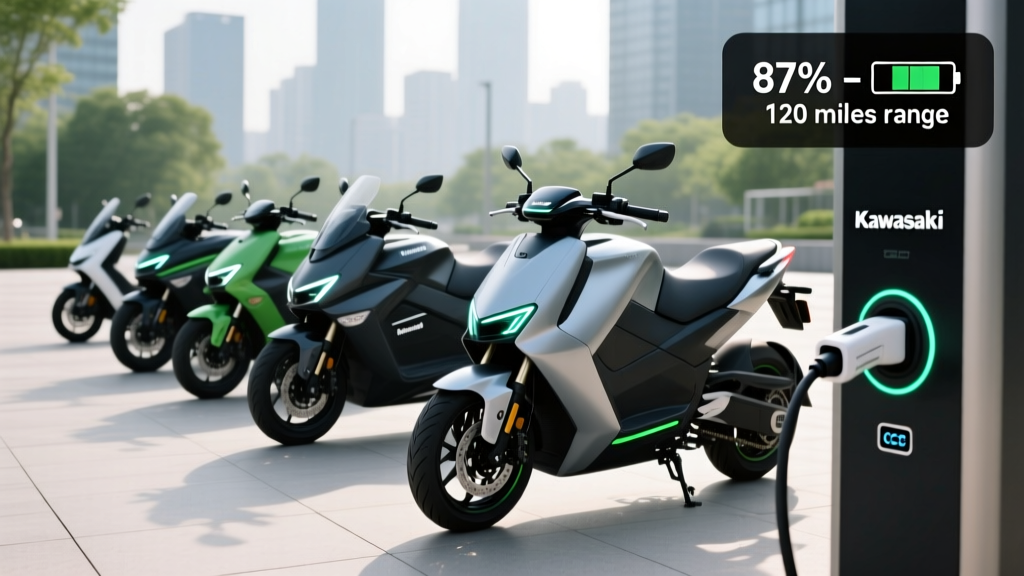
Kawasaki currently offers two street-legal electric vehicles in the U.S. market: the Ninja e-1 (a sport motorcycle starting around $6,500) and the Z e-1 (a naked streetfighter variant at roughly $6,300). Both share a 3.0 kWh swappable battery pack (two 1.5 kWh units), deliver approximately 42 miles of combined range, and produce 9 kW (12 hp) of peak power. A larger-displacement Kawasaki EV — rumored as a 125cc-class equivalent — remains in development as of early 2026 and has not been formally announced for the U.S. market. If you need highway-capable commuting, Kawasaki's current EVs won't suffice; if you want a zero-emissions urban runabout, they're a compelling niche pick.
Kawasaki EV Models Available Now
Kawasaki entered the electric two-wheeler space with a clear strategy: start small, target urban riders, and use swappable battery architecture to sidestep charging-infrastructure limitations. Here's what's actually available to buy in 2026:
| Spec | Ninja e-1 | Z e-1 |
|---|---|---|
| Motor Type | Interior permanent magnet | Interior permanent magnet |
| Peak Power | 9 kW (12 hp) | 9 kW (12 hp) |
| Rated (Continuous) Power | 5.0 kW (6.7 hp) | 5.0 kW (6.7 hp) |
| Battery (Total Usable) | 3.0 kWh (2 × 1.5 kWh swappable) | 3.0 kWh (2 × 1.5 kWh swappable) |
| Battery Chemistry | NMC lithium-ion | NMC lithium-ion |
| Claimed Range (WMTC) | ~42 mi (combined) | ~42 mi (combined) |
| Top Speed | ~55 mph (62 mph w/ e-Boost, 15 sec) | ~55 mph (62 mph w/ e-Boost, 15 sec) |
| Charge Time (0–100%, onboard) | ~3.7 hours per pack (7.4 hr total) | ~3.7 hours per pack (7.4 hr total) |
| Off-Board Charger (optional) | ~1.6 hours per pack | ~1.6 hours per pack |
| Curb Weight | ~309 lbs | ~298 lbs |
| MSRP (approx.) | $6,500 | $6,300 |
Real-world range caveat: The 42-mile WMTC figure is a standardized test cycle. In real-world urban riding with frequent stops and moderate acceleration, expect 30–38 miles. At sustained 50+ mph speeds, range drops to roughly 22–28 miles. Cold weather (below 40°F) can reduce range by an additional 15–25%, a limitation common to all NMC lithium-ion packs.
How Kawasaki EVs Compare to Gas Equivalents
The natural cross-shopping question: how does a Ninja e-1 stack up against a gas-powered Kawasaki Ninja 400 or Z400? The answer depends entirely on your use case.
| Metric | Kawasaki Ninja e-1 (EV) | Kawasaki Ninja 400 (Gas) |
|---|---|---|
| Peak Power | 12 hp | ~44 hp |
| Top Speed | ~55 mph | ~115 mph |
| Range | ~30–42 mi | ~180–220 mi (3.7 gal tank) |
| "Refuel" Time | 3.7–7.4 hr (onboard) | ~2 minutes at a gas station |
| Energy Cost per Mile | ~$0.01–$0.02 (home charging) | ~$0.08–$0.12 (gasoline) |
| Annual Maintenance | ~$50–$100 (tires, brakes, fluid) | ~$250–$500 (oil, chain, filters) |
| Purchase Price | ~$6,500 | ~$5,300–$5,700 |
| Emissions | Zero tailpipe | CO₂ + NOx |
| Highway Capable? | Limited (55 mph top speed) | Yes, fully |
The gas Ninja 400 dominates in power, range, and versatility. The e-1 wins on per-mile operating cost (roughly 5–10× cheaper to "fuel"), near-silent operation, zero tailpipe emissions, and drastically reduced maintenance — no oil changes, no air filters, no valve adjustments, and regenerative braking extends pad life significantly.
Real Costs of Owning a Kawasaki EV
| Cost Category | Ninja e-1 (EV) | Ninja 400 (Gas) |
|---|---|---|
| Purchase Price | $6,500 | $5,500 |
| Federal Tax Credit (§30D) | $0 (motorcycles excluded from §30D as of 2026; check IRS guidelines for updates) | $0 |
| Annual Energy/Fuel (5,000 mi) | ~$50–$100 | ~$400–$600 |
| Annual Maintenance | ~$50–$100 | ~$300–$500 |
| Insurance (avg annual) | ~$400–$700 | ~$500–$900 |
| 5-Year Total Operating Cost | ~$2,500–$4,500 | ~$5,500–$9,500 |
Key takeaway: The Ninja e-1 carries a ~$1,000 higher purchase price but recoups that within 2–3 years through fuel and maintenance savings if you ride 5,000+ miles annually. Below that threshold, the payback period extends to 4–5 years. Note that as of 2026, the federal §30D clean vehicle credit does not apply to motorcycles — it covers four-wheeled vehicles only. Some states and local utilities offer separate e-motorcycle rebates; check your state energy office and local power provider for specifics.
Charging at Home: What You Need to Know
Kawasaki's swappable battery design fundamentally changes the charging equation compared to four-wheeled EVs. You have three options:
- Onboard charging (Level 1 equivalent): Plug the bike directly into a standard 120V household outlet using the included charger. Each 1.5 kWh pack charges in approximately 3.7 hours; both packs simultaneously take about 7.4 hours. No electrician or special equipment needed.
- Off-board charger (optional accessory): Remove both battery packs and charge them on Kawasaki's dedicated off-board unit. This cuts charge time to roughly 1.6 hours per pack. Cost: approximately $500–$700 for the charger unit.
- Battery swapping: In markets where Kawasaki participates in swappable battery consortiums (primarily Japan and parts of Europe), you can exchange depleted packs for charged ones at swap stations. As of 2026, no public battery-swap network exists for Kawasaki in the U.S. This is a critical limitation if you were counting on swap infrastructure.
For most U.S. owners, overnight onboard charging at home is the default workflow. A dedicated 120V outlet in your garage or parking area is sufficient. Unlike four-wheeled EVs, there's no need for a 240V Level 2 home charger installation — the bike's small battery capacity simply doesn't justify the $500–$2,000 electrical upgrade cost.
Common Misconceptions About Kawasaki EVs
| Myth | Fact |
|---|---|
| "It's basically a Ninja 400 but electric." | The e-1 produces 12 hp vs. the Ninja 400's 44 hp. It's a 125cc-class equivalent, not a 400cc replacement. Think urban commuter, not canyon carver. |
| "I can take it on the highway." | Top speed is ~55 mph (briefly 62 mph with e-Boost for 15 seconds). It's legal on roads posted 55 mph or below, but sustained highway riding at 70 mph is not possible and would drain the battery in under 15 miles. |
| "The battery will need expensive replacement in a few years." | Kawasaki warranties the battery for 2 years/unlimited miles. NMC chemistry typically retains 80%+ capacity after 500–800 full charge cycles. At 42 miles per cycle, that's 21,000–33,000 miles before significant degradation. Replacement pack pricing has not been publicly listed; contact a dealer for current estimates. |
| "I'll qualify for the $7,500 EV tax credit." | Federal §30D credits apply to four-wheeled clean vehicles only. Electric motorcycles are excluded under current IRS rules. Some state/local incentives may apply. |
| "Swappable batteries mean I can swap anywhere." | No U.S. public swap network exists for Kawasaki as of 2026. Swapping is only practical if you buy a spare set of packs (~$1,500–$2,500 estimated per pair) and charge them independently. |
Who Should Buy a Kawasaki EV — and Who Shouldn't
Buy a Kawasaki e-1 or Z e-1 If:
- Your daily round-trip commute is under 30 miles on surface streets (speed limits ≤ 55 mph)
- You have access to a standard 120V outlet where you park overnight
- You want near-zero maintenance and ~$0.01–$0.02/mile energy cost
- You value silent operation (apartment-friendly, neighborhood-friendly)
- You want a lightweight, beginner-friendly motorcycle for urban riding
- You already own a highway-capable vehicle for longer trips
Look Elsewhere If:
- Your commute involves highways or roads posted above 55 mph
- Your one-way trip exceeds 20 miles regularly
- You live in a cold climate (below 30°F) and need reliable winter range
- You need a single vehicle that does everything — commuting, weekend rides, highway travel
- You don't have reliable overnight parking with electrical access
- You want the performance equivalent of a 300–400cc gas motorcycle
If the Kawasaki EVs don't fit your needs but you want an electric two-wheeler, consider competitors like the Zero SR/S (15.6 kWh battery, ~150-mile range, ~$20,000) for highway capability, or the LiveWire ONE (15.5 kWh, ~146-mile city range, ~$22,000) for premium performance. Both are significantly more expensive but solve the range and speed limitations of the e-1.
First-Time EV Buyer Essentials
If the Ninja e-1 or Z e-1 is your first electric vehicle of any kind, here's what to internalize before signing paperwork:
- kWh is your fuel tank, kW is your fuel pump. The 3.0 kWh battery is how much energy you carry (like a 1-gallon gas tank). The kW charge rate is how quickly you can refill it. Small battery + slow charge rate = long wait times.
- Range shrinks in real conditions. The 42-mile WMTC rating is a best-case laboratory number. Budget for 25–35 miles in real urban riding, and even less in cold weather or at sustained higher speeds.
- Plan your charging routine. Unlike a gas bike where you fill up in 2 minutes, this bike needs 3.7–7.4 hours plugged in. Make overnight charging a habit, just like plugging in your phone.
- Insurance may differ. Electric motorcycles are still uncommon enough that insurance premiums vary wildly by carrier. Get quotes from at least three insurers before purchasing.
- Battery degradation is real but slow. Expect 80–90% capacity retention after 3–5 years of regular use. Avoid storing the bike at 0% or 100% charge for extended periods — keeping it between 20–80% extends pack life.
Does the Kawasaki Ninja e-1 qualify for any tax credits or rebates?
The federal §30D clean vehicle tax credit does not cover motorcycles as of 2026. However, some states (notably California, Oregon, and New York) and local utility companies offer separate rebates for electric motorcycles, typically ranging from $200 to $1,500. Check your state energy office and utility provider's EV incentive page for current programs. Always verify eligibility details with a tax professional before relying on incentive amounts.
How long will the battery last before needing replacement?
Kawasaki warranties the traction battery for 2 years with no mileage limit. NMC lithium-ion chemistry in this application should retain roughly 80% of original capacity after 500–800 full charge cycles. If you charge daily from 20–100%, that translates to approximately 2–4 years of daily riding before noticeable range loss. Partial charges (20–80%) significantly extend this timeline. Replacement battery pricing has not been publicly disclosed; expect $1,000–$2,500 per pair based on current lithium-ion pack pricing trends for this capacity class.
Can I ride the Ninja e-1 on the highway?
Technically yes, but practically no. The top speed is approximately 55 mph (62 mph with e-Boost engaged for a maximum of 15 seconds). On a highway flowing at 65–75 mph, you'd be dangerously underpowered and would deplete the battery in under 15 miles. This motorcycle is designed for surface streets and urban environments, not freeway commuting.
Is a swappable battery the same as battery swapping stations?
No. "Swappable" means you can physically remove the battery packs from the motorcycle and charge them separately — useful if you park in an apartment without an outlet but can carry packs inside to charge. It does not mean there's a public network of swap stations where you trade empty packs for full ones. No such network exists for Kawasaki in the U.S. as of 2026.
How does the Kawasaki e-1 compare to an electric scooter?
Compared to electric scooters like the Vespa Elettrica (~$7,500, ~46-mile range, 4 kW motor), the Ninja e-1 offers more power (9 kW peak), sportier ergonomics, and a more motorcycle-like riding experience. Scooters offer step-through convenience, under-seat storage, and often slightly better range due to lower weight. Choose the e-1 if you want a motorcycle experience; choose a scooter if utility and storage matter more.