Quick Verdict: A Performance SUV With Real Trade-Offs
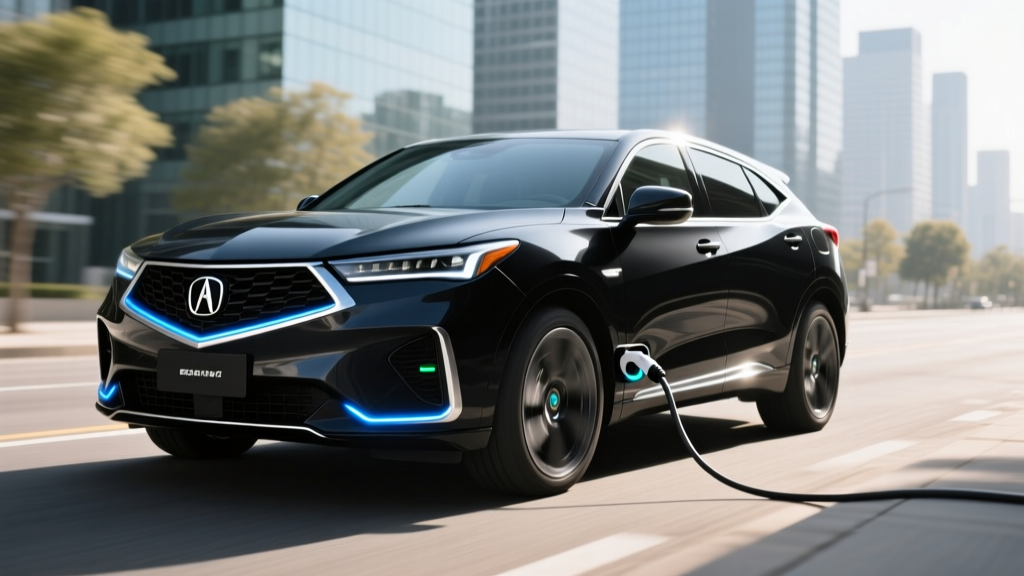
The 2026 Acura ZDX Type S is Acura's flagship electric performance SUV — a 500-horsepower, dual-motor machine that targets Tesla Model X and BMW iX buyers who want a luxury badge with genuine straight-line speed. Built on GM's Ultium platform, the ZDX Type S pairs a 102 kWh battery with a sport-tuned air suspension and Brembo brakes, delivering a 0-60 mph time in the low 4-second range.
But the performance comes with compromises. At a base MSRP of $69,450 (before destination), the ZDX Type S sits above the $55,000 MSRP cap for SUVs under the federal §30D tax credit — meaning most buyers will not qualify for the $7,500 credit. Real-world range also falls short of the EPA sticker during highway driving, and the infotainment system, while improved, still lags behind competitors in responsiveness.
This review covers everything you need to decide whether the ZDX Type S earns a spot in your garage — with exact numbers, real-world testing context, and ownership economics laid bare.
Range, Battery, and Real-World Efficiency
| Specification | Value |
|---|---|
| EPA Estimated Range | 278 miles |
| Battery Capacity (Usable) | 102 kWh (NMC chemistry) |
| EPA Efficiency | 82 MPGe combined (41 kWh/100 mi) |
| Drivetrain | Dual-motor AWD |
| Heat Pump | Standard |
The EPA rates the ZDX Type S at 278 miles, but real-world results vary significantly by driving scenario:
- City/suburban mixed driving: 260–280 miles (regen braking recovers energy effectively)
- Sustained highway (70–75 mph): 225–245 miles — the Type S's wider 265/45R22 tires and performance tuning increase rolling resistance
- Cold weather (below 32°F): Expect 195–220 miles. The standard heat pump mitigates cabin heating losses, but battery chemistry still loses ~15–20% capacity at freezing temperatures
- Worst case (highway + cold + elevation): ~185–200 miles before needing a charge stop
The NMC (nickel manganese cobalt) chemistry in the Ultium pack prioritizes energy density over cycle longevity compared to LFP. For most owners charging to 80% daily and using the full 100% only on road trips, degradation should remain under 10% over the 8-year warranty period.
Compared to the lighter, single-motor ZDX A-Spec (EPA 313 miles), the Type S sacrifices roughly 35 miles of range for its dual-motor performance hardware. That's a meaningful gap on road trips, where you'll plan one additional charge stop per 600-mile journey versus the A-Spec trim.
Charging Speed: DC Fast and Level 2
| Charging Level | Power | Time / Rate |
|---|---|---|
| DC Fast Charge (Peak) | 190 kW | 10–80% in ~30 minutes |
| DC Fast Charge (Sustained Avg) | ~135 kW (10–80%) | Charge curve tapers above 60% SoC |
| Level 2 (240V, 48A) | 11.5 kW | ~25 miles of range per hour |
| Level 2 (0–100% Full Charge) | 11.5 kW | ~9.5 hours |
| Level 1 (120V, 12A) | 1.4 kW | ~3 miles of range per hour |
The ZDX Type S uses the CCS1 connector for DC fast charging. Acura has not announced a NACS adapter timeline, so Tesla Supercharger access requires a third-party CCS-to-NACS adapter (such as the Lectron or A2Z adapter), which adds cost and a potential point of failure.
At 190 kW peak, the ZDX Type S charges competently but not class-leading. The Hyundai Ioniq 5 peaks at 240 kW and the Porsche Macan EV at 270 kW. On a 350 kW Electrify America or EVgo station, the ZDX will pull its max rate only between roughly 10–55% state of charge, then taper progressively. The 10–80% time of approximately 30 minutes is acceptable for road-trip rest stops but noticeably slower than the sub-20-minute leaders.
For home charging, a Level 2 wall connector on a 60-amp circuit (48A continuous) delivers 11.5 kW — enough to fully replenish the 102 kWh pack overnight. Budget $500–$1,500 for a professional Level 2 installation depending on your panel capacity and run distance from the breaker box. If your home has a 100-amp electrical panel, a panel upgrade to 200 amps may be required, adding $1,500–$3,000.
Performance, Handling, and Drivetrain
| Specification | Value |
|---|---|
| Horsepower | 500 HP |
| Torque | 545 lb-ft |
| 0–60 mph | 4.5 seconds |
| Top Speed | 130 mph (electronically limited) |
| Drivetrain | Dual-motor AWD (front + rear permanent magnet) |
| Suspension | Adaptive air suspension (Type S tuned) |
| Brakes | Brembo 6-piston front, 15.5" rotors |
| Wheels/Tires | 22" alloy, 265/45R22 all-season |
The 500 HP dual-motor setup delivers genuinely quick acceleration. The 4.5-second 0–60 mph time puts the ZDX Type S in the company of the BMW iX M60 (4.6s) and ahead of the Audi Q8 e-tron S (4.4s). Launch control is engaged by holding the brake and accelerator simultaneously, then releasing the brake — the torque fill from the electric motors is immediate, with no turbo lag or transmission shift interrupt.
The adaptive air suspension lowers the ride height by 0.6 inches in Sport+ mode and stiffens the damping noticeably. Body control is excellent for a 5,900-lb SUV, though the steering remains numb at the limit — a common EV complaint. The Brembo brakes provide confident stopping power and integrate smoothly with the regenerative braking system. Paddle shifters behind the wheel allow four levels of regen adjustment, from coasting to near one-pedal driving (though full stop-hold requires the brake pedal).
Towing capacity is rated at 1,500 lbs — adequate for a small utility trailer or bike rack, but far below the Rivian R1S (7,700 lbs) or even the Tesla Model X (3,500 lbs). If towing is a priority, the ZDX Type S is not the right choice.
Interior, Cargo, and Technology
The ZDX Type S cabin is a significant step up from previous Acura interiors, with standard Milano leather, microsuede headliner, and 16-way power-adjustable front seats with heating, ventilation, and massage. The flat floor (thanks to the Ultium skateboard platform) provides generous rear legroom.
| Dimension | Measurement |
|---|---|
| Front Legroom | 42.1 inches |
| Rear Legroom | 37.2 inches |
| Cargo (Behind 2nd Row) | 28.0 cu ft |
| Cargo (2nd Row Folded) | 62.0 cu ft |
| Front Trunk (Frunk) | Not available |
| Seating Capacity | 5 passengers |
The 11.3-inch touchscreen runs Acura's latest infotainment software with native Google Built-in (Google Maps, Google Assistant, Play Store). Wireless Apple CarPlay and Android Auto are standard. The 11-inch digital gauge cluster is configurable but lacks the 3D effects of Audi's Virtual Cockpit. An 18-speaker Bang & Olufsen audio system is standard on the Type S.
The biggest tech drawback: Acura's touch-capacitive volume slider and haptic climate controls. These look modern but lack the tactile certainty of physical knobs, and multiple owners report frustration with accidental inputs. The center console storage is also modest — there's no large under-console pass-through like the Hyundai Ioniq 5 or Ford Mustang Mach-E.
The absence of a frunk (front trunk) is a missed opportunity. Competitors like the Rivian R1S and Tesla Model X offer 5–12 cu ft of front storage for charging cables or groceries.
Driver Assistance: AcuraWatch (SAE Level 2)
AcuraWatch is a Level 2 driver-assistance system. The driver must keep hands on the wheel and eyes on the road at all times. It does not permit texting, sleeping, or disengagement. Only Level 4 services (Waymo, Zoox) operate without a human driver.
AcuraWatch includes adaptive cruise control with stop-and-go, lane-centering assist, blind-spot monitoring, rear cross-traffic alert, and automatic emergency braking with pedestrian detection. The system is competent for highway cruising but requires frequent steering-wheel torque inputs to confirm driver attention — more frequent than GM's Super Cruise or Ford's BlueCruise.
Notably, the ZDX does not offer hands-free driving on mapped highways the way Super Cruise does on the Cadillac Lyriq or GMC Hummer EV (which share the Ultium platform). Acura has not announced a hands-free feature roadmap. If hands-free Level 2 highway driving is a priority, the Lyriq or BMW iX with Driving Assistant Professional are stronger choices.
Pricing, Trims, and Federal Tax Credit Eligibility
| Trim | Base MSRP | Destination | Total Before Credit | §30D Credit Eligible? |
|---|---|---|---|---|
| ZDX A-Spec (Single Motor RWD) | $58,950 | $1,995 | $60,945 | No (MSRP above $55K cap for non-SUV classification)* |
| ZDX A-Spec (Dual Motor AWD) | $62,950 | $1,995 | $64,945 | No (MSRP above $55K SUV cap)* |
| ZDX Type S (Dual Motor AWD) | $69,450 | $1,995 | $71,445 | No — exceeds $80,000 SUV cap with destination |
*Note: The IRS classifies vehicles for the §30D credit based on the manufacturer's designation. Acura lists the ZDX as a "sport utility vehicle," which carries an $80,000 MSRP cap under current IRS rules. However, the ZDX Type S with destination charges at $71,445 — under the $80,000 cap. Eligibility then depends on battery-sourcing and critical-mineral requirements, which have tightened significantly for 2026. Consult the IRS qualified vehicles list to confirm current eligibility before purchase.
- MSRP Cap: $80,000 for SUVs, vans, and trucks; $55,000 for sedans
- Buyer Income Cap: $150,000 single / $225,000 head of household / $300,000 joint (modified AGI)
- Battery Component Sourcing: Increasing percentage of battery components must be manufactured or assembled in North America (phased thresholds per IRS guidance)
- Critical Minerals: Increasing percentage of critical minerals must be sourced from the US or FTA partners
- Point-of-Sale Transfer: Eligible buyers can transfer the credit to the dealer for an upfront price reduction — but only if the vehicle qualifies
- Foreign Entity of Concern (FEOC): Vehicles with battery components or critical minerals from a FEOC (including certain Chinese suppliers) are disqualified
Source: IRS Clean Vehicle Credit. Rules change frequently — verify eligibility at purchase time. Consult a tax professional for your specific situation.
The as-tested price for a fully optioned ZDX Type S (with the $1,200 Performance Wheel Package and $600 Crystal Black Pearl paint) reaches approximately $73,245. At this price, the ZDX competes directly with the BMW iX xDrive50 ($73,900 base) and the Tesla Model X Long Range ($79,990 base).
Ownership Costs: Warranty, Insurance, and 5-Year TCO
| Coverage | Term |
|---|---|
| Limited Vehicle Warranty | 4 years / 50,000 miles |
| Powertrain Warranty | 6 years / 70,000 miles |
| Battery Warranty | 8 years / 100,000 miles (retains ≥70% capacity) |
| Corrosion Perforation | 5 years / unlimited miles |
| Roadside Assistance | 4 years / 50,000 miles |
The 8-year/100,000-mile battery warranty with a 70% capacity retention threshold is industry-standard and matches the federal minimum requirement. Competitors like Hyundai offer a more generous 10-year/100,000-mile battery warranty on the Ioniq 5, while Tesla's Model X warranty is 8 years/150,000 miles at 70% retention.
Insurance premiums for the ZDX Type S run higher than average for luxury EVs. Expect $2,800–$3,600 annually depending on your state, driving record, and coverage level — roughly 15–25% above a BMW iX due to the Type S's higher repair cost profile and limited collision-repair network for Acura EVs.
5-Year Estimated Cost of Ownership: Assuming 12,000 miles/year, $0.14/kWh home charging, and $3.50/gallon gasoline for a comparable BMW X5 M50i comparison — the ZDX Type S saves approximately $6,500 in fuel costs over five years versus the gas equivalent. However, higher insurance and faster depreciation (luxury EVs currently depreciate 50–60% over 5 years vs. 35–45% for gas luxury SUVs) partially offset those savings.
Pros and Cons
✓ Pros
- 500 HP and 4.5-second 0–60 — genuinely quick for a 3-row SUV
- Adaptive air suspension provides excellent ride quality and handling balance
- Premium interior with standard massage seats and B&O audio
- Google Built-in infotainment with native Google Maps navigation
- CCS1 charging widely compatible with Electrify America, EVgo, and ChargePoint networks
- Quiet cabin at highway speeds — among the best in the luxury EV SUV class
✗ Cons
- Real-world highway range drops to ~225 miles — plan road-trip stops carefully
- 190 kW peak DC charging is slower than the 240–350 kW competition
- No NACS connector — requires adapter for Tesla Supercharger access
- No frunk (front trunk) — a missed utility opportunity
- Haptic climate/volume controls are frustrating in daily use
- 1,500-lb towing capacity is the lowest in the luxury EV SUV segment
- No hands-free highway driving feature (unlike GM Super Cruise competitors)
- Tax credit eligibility uncertain due to battery sourcing rules
Who Should Buy the Acura ZDX Type S?
- You want a luxury performance EV SUV with genuine sub-5-second acceleration and premium ride quality
- You primarily commute and take day trips under 200 miles, where the 278-mile EPA range is sufficient
- You prefer Acura's dealer network and service experience over Tesla, BMW, or Rivian
- You value a quiet, well-insulated cabin with top-tier audio and seat comfort
- You frequently road-trip 300+ miles — the real-world range and 30-minute charge stops will frustrate. Consider the Tesla Model X or Hyundai Ioniq 5.
- You need hands-free highway driving — the Cadillac Lyriq with Super Cruise or BMW iX with Highway Assistant are superior.
- You tow more than 1,500 lbs — the Rivian R1S or Tesla Model X are far more capable.
- The federal tax credit is essential to your budget — explore the Hyundai Ioniq 5, Ford Mustang Mach-E, or Tesla Model Y, which have more predictable credit eligibility.
How the ZDX Type S Stacks Up Against Competitors
| Spec | Acura ZDX Type S | BMW iX xDrive50 | Tesla Model X LR |
|---|---|---|---|
| Base MSRP | $69,450 | $73,900 | $79,990 |
| EPA Range | 278 mi | 324 mi | 335 mi |
| Battery (kWh) | 102 (NMC) | 111.5 (NMC) | 100 (NMC) |
| 0–60 mph | 4.5 sec | 4.6 sec | 3.8 sec |
| Horsepower | 500 HP | 516 HP | 670 HP |
| Peak DC Charge | 190 kW | 195 kW | 250 kW |
| 10–80% Time | ~30 min | ~31 min | ~25 min |
| Cargo (cu ft) | 28.0 / 62.0 | 35.5 / 77.9 | 37.1 / 75.4 |
| Towing (lbs) | 1,500 | 3,500 | 3,500 |
| Connector | CCS1 | CCS1 | NACS |
The ZDX Type S undercuts the BMW iX and Tesla Model X on price but also trails both in range, cargo space, and towing. The BMW iX offers a more refined interior and slightly better efficiency. The Tesla Model X dominates on performance, Supercharger network access, and cargo utility — but costs $10,000 more and has a more polarizing design. The ZDX's advantage is its combination of acceleration, air-suspension ride quality, and Acura's reputation for long-term reliability (though EV-specific reliability data is limited for this new platform).
Frequently Asked Questions
What is the real-world range of the Acura ZDX Type S?
The EPA rates the ZDX Type S at 278 miles. In real-world highway driving at 70–75 mph, expect 225–245 miles. In cold weather (below freezing), range drops to 195–220 miles. City driving with regenerative braking can approach or slightly exceed the EPA number.
How fast does the ZDX Type S charge at home and on the road?
On a Level 2 home charger (11.5 kW / 48A), the ZDX Type S gains about 25 miles of range per hour, fully charging in roughly 9.5 hours. On a DC fast charger, it peaks at 190 kW and charges from 10–80% in approximately 30 minutes. The charge curve tapers significantly above 60% SoC, so plan to unplug around 80% on road trips for efficiency.
Does the Acura ZDX Type S qualify for the $7,500 federal tax credit?
Possibly, but it's not guaranteed. The ZDX Type S MSRP of $71,445 (with destination) falls under the $80,000 SUV cap. However, the §30D credit also requires meeting battery-sourcing and critical-minerals thresholds that have tightened in 2026. Buyer income must also fall below $150,000 (single) or $300,000 (joint). Check the IRS qualified vehicle list before purchasing and consult a tax professional.
Is the ZDX Type S worth buying over the Tesla Model X or BMW iX?
If you prioritize a quiet, comfortable ride with strong acceleration and prefer Acura's dealer experience, the ZDX Type S offers good value at $69,450. However, the Tesla Model X provides more range (335 mi), faster charging (250 kW), full Supercharger access, and more cargo space. The BMW iX offers a more refined cabin and better efficiency (324 mi EPA). The ZDX's main drawback is its 190 kW charging and limited real-world highway range.
Does the ZDX Type S have a front trunk (frunk)?
No. The ZDX Type S does not include a front trunk. The hood area houses ancillary electronics and the HVAC system. This is a notable omission compared to the Tesla Model X (5.3 cu ft frunk) and Rivian R1S (11 cu ft frunk).
What is the battery warranty on the ZDX Type S?
Acura covers the ZDX Type S battery for 8 years or 100,000 miles, whichever comes first, with a minimum 70% capacity retention threshold. If the battery degrades below 70% of its original 102 kWh capacity within that period, Acura will repair or replace it. The powertrain warranty is 6 years / 70,000 miles.
Can I use Tesla Superchargers with the ZDX Type S?
Not natively. The ZDX Type S uses a CCS1 connector, while Tesla Superchargers use the NACS (North American Charging Standard) connector. You can purchase a CCS-to-NACS adapter (approximately $150–$250) from third-party manufacturers, but Acura does not currently offer an official adapter. Tesla's "Open Supercharger" program allows some non-Tesla vehicles to charge at select stations via the Tesla app, but availability is limited.
Sources: EPA Fuel Economy, IRS Clean Vehicle Credits, Acura Newsroom specifications.