If you've typed "is Tesla done making cars" into a search bar recently, you're not alone. Between Elon Musk's pivot toward robotaxis, AI, and Optimus robots, plus the Cybertruck's polarizing reception and slowing global EV market share, plenty of shoppers are wondering whether Tesla is still serious about selling passenger vehicles — or whether the company is quietly sunsetting its car business in favor of autonomy and energy.
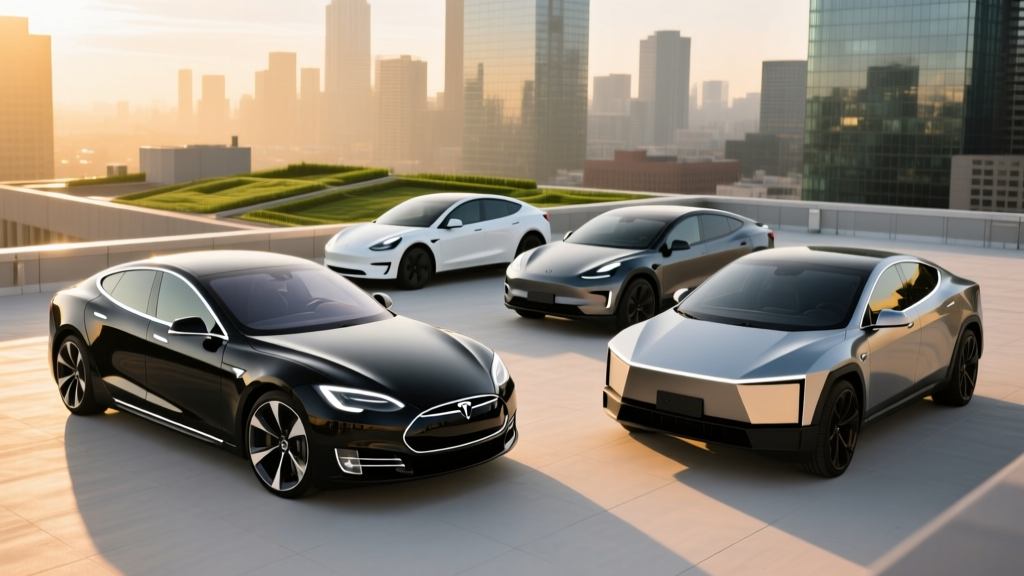
The short answer: No, Tesla is not done making cars. As of 2026, Tesla continues to manufacture, sell, and update five core vehicle lines: the refreshed Model 3 ("Highland"), the Model Y (including the long-awaited "Juniper" refresh), the flagship Model S and Model X, and the Cybertruck. The company delivered over 1.7 million vehicles globally in 2025 and has expanded production capacity in Austin, Berlin, and Shanghai.
But the longer answer is more nuanced. Tesla's focus has clearly shifted. The affordable next-generation platform (sometimes called the "Model 2" or "Redwood") that was expected around 2025 has been repeatedly delayed or reprioritized toward robotaxi development. Meanwhile, competitors from Hyundai, BMW, Ford, and Chinese automakers have closed the gap — or surpassed Tesla — in build quality, charging speed, and interior refinement.
Below, we review every vehicle Tesla currently sells in the U.S. market for 2026, with the exact specs, real-world range data, charging curves, pricing, and tax-credit eligibility that matter to actual buyers.
2026 Tesla Model Lineup at a Glance
| Model | EPA Range | Battery (kWh / Chemistry) | Peak DC Charge | 10–80% Time | 0–60 mph | Base MSRP |
|---|---|---|---|---|---|---|
| Model 3 RWD | 272 mi | ~60 kWh / LFP | 170 kW | ~25 min | 5.8 s | $38,990 |
| Model 3 Long Range AWD | 341 mi | ~79 kWh / NMC | 250 kW | ~18 min | 4.2 s | $42,490 |
| Model 3 Performance | 315 mi | ~79 kWh / NMC | 250 kW | ~18 min | 2.9 s | $52,990 |
| Model Y Long Range AWD | 320 mi | ~79 kWh / NMC | 250 kW | ~20 min | 4.8 s | $44,990 |
| Model Y Performance | 285 mi | ~79 kWh / NMC | 250 kW | ~20 min | 3.5 s | $50,990 |
| Model S Long Range | 402 mi | ~100 kWh / NMC | 250 kW | ~27 min | 3.1 s | $74,990 |
| Model S Plaid | 359 mi | ~100 kWh / NMC | 250 kW | ~27 min | 1.99 s | $89,990 |
| Model X Long Range | 335 mi | ~100 kWh / NMC | 250 kW | ~28 min | 3.8 s | $79,990 |
| Cybertruck AWD | 340 mi | ~123 kWh / NMC | 250 kW | ~30 min | 4.1 s | $79,990 |
| Cybertruck Cyberbeast | 320 mi | ~123 kWh / NMC | 250 kW | ~30 min | 2.6 s | $99,990 |
Model 3 (2026): Still the Entry Point, but Competition Is Fierce
The Model 3 received its first major refresh (codename "Highland") for the 2024 model year, and the 2026 version carries over with incremental software and suspension tuning improvements. It remains Tesla's most affordable vehicle and the one most likely to cross-shop with the Hyundai Ioniq 6, BMW i4, and Polestar 2.
EPA estimate: 341 miles. In mixed highway driving at 70 mph, expect roughly 290–310 miles. In freezing temperatures (below 30°F), range can drop to 240–270 miles due to battery resistance and cabin heating demands, even with the heat pump. City driving with regenerative braking can exceed the EPA number, reaching 350+ miles in mild weather.
The base RWD model uses a lithium iron phosphate (LFP) battery. LFP chemistry trades energy density for longevity — Tesla recommends charging LFP packs to 100% regularly, which is a significant daily-use advantage. The Long Range and Performance trims use NMC (nickel manganese cobalt) chemistry, which offers more range per kilogram but prefers daily charging limits around 80% for long-term health.
Charging Speed
| Level | Power / Rate | What You Get |
|---|---|---|
| Level 1 (120V household) | ~1.4 kW | ~3–4 miles per hour |
| Level 2 (240V home / Wall Connector) | 11.5 kW (48A) | ~44 miles per hour |
| DC Fast Charge (Supercharger V3) | Up to 250 kW (LR/Perf) | 10–80% in ~18 min; tapers sharply above 80% |
One important charging-curve note: the 250 kW peak on Long Range and Performance models is sustained only between roughly 10% and 35% state of charge. By 60% SoC, you're typically seeing 100–120 kW, and above 80% it drops below 50 kW. This is normal lithium-ion behavior, but it means that last 20% can take as long as the first 70%.
Efficiency & Performance
The Model 3 Long Range achieves 132 MPGe combined (per fueleconomy.gov), translating to roughly 25 kWh per 100 miles. That's among the most efficient vehicles in its class — a testament to Tesla's motor and thermal management engineering. The Performance trim drops to about 119 MPGe due to stickier tires and more aggressive calibration.
Performance specs: the Long Range AWD produces approximately 346 horsepower and hits 0–60 in 4.2 seconds. The Performance model bumps output to roughly 510 hp and drops the 0–60 to 2.9 seconds, with adaptive dampers and track-oriented braking.
Interior, Cargo & Tech
The Highland refresh addressed many of the old Model 3's complaints: the cabin is noticeably quieter (acoustic glass all around), the suspension is more compliant, ventilated front seats are now standard, and ambient lighting adds warmth. The 15.4-inch touchscreen remains the control hub — there are still no physical buttons for climate or mirrors, which frustrates some buyers.
- Cargo: 23 cu ft (trunk + frunk combined)
- Rear legroom: 35.2 inches — adequate for adults, tight for tall passengers on long trips
- Driver assist: Basic Autopilot (lane centering + adaptive cruise) is standard. Full Self-Driving (Supervised) is a $8,000 add-on — and remains an SAE Level 2 system requiring constant driver attention
Model Y (2026): The Best-Seller Gets the Juniper Refresh
The Model Y is Tesla's volume king — the best-selling vehicle globally in 2023 and 2024. For 2026, the "Juniper" refresh brings a redesigned front fascia, updated interior materials, a rear passenger touchscreen, and improved ride quality. It competes directly with the Hyundai Ioniq 5, Ford Mustang Mach-E, and Kia EV6.
EPA estimate: 320 miles. Highway cruising at 75 mph yields approximately 275–295 miles. Cold-weather highway range drops to 230–260 miles. The taller, heavier crossover body means more aerodynamic drag than the Model 3, which shows up most at sustained highway speeds.
The Model Y Long Range uses a ~79 kWh NMC pack. Efficiency lands around 28 kWh/100 mi or 120 MPGe combined. DC fast charging peaks at 250 kW with a 10–80% time of roughly 20 minutes on a V3 Supercharger.
Space & Practicality
This is where the Model Y earns its family-hauler reputation:
- Cargo (behind 2nd row): 30.2 cu ft
- Cargo (2nd row folded): 72.1 cu ft
- Optional 3rd row: Available but best for children; eats into cargo space
- Rear legroom: 37.0 inches — genuinely comfortable for adults
The optional tow package adds a 3,500-lb towing capacity, adequate for a small trailer or pair of jet skis but not for a large boat or camper.
Model S & Model X (2026): Flagships in a Crowded Luxury Field
The Model S and Model X haven't received a full exterior redesign since 2021's "Palladium" refresh. They still offer class-leading range (the Model S Long Range hits an EPA-estimated 402 miles) and absurd performance (the Plaid's 1.99-second 0–60 remains the quickest production sedan ever). But the luxury EV landscape has transformed around them.
The BMW i7, Lucid Air, Mercedes EQS, and Porsche Taycan all offer competitive or superior interior quality, ride refinement, and in some cases faster charging architectures (the Lucid Air peaks at over 300 kW, and Hyundai's E-GMP models charge at 350 kW on capable stations).
| Spec | Model S Long Range | Model S Plaid | Model X Long Range |
|---|---|---|---|
| EPA Range | 402 mi | 359 mi | 335 mi |
| Battery | ~100 kWh NMC | ~100 kWh NMC | ~100 kWh NMC |
| Horsepower | 670 hp | 1,020 hp | 670 hp |
| 0–60 mph | 3.1 s | 1.99 s | 3.8 s |
| MPGe (combined) | 120 MPGe | 111 MPGe | 104 MPGe |
| Cargo (total) | 28 cu ft | 28 cu ft | 88 cu ft (2nd/3rd folded) |
| Base MSRP | $74,990 | $89,990 | $79,990 |
At these price points, neither the Model S nor Model X qualifies for the §30D federal tax credit — the IRS caps SUVs at $80,000 MSRP and sedans at $55,000. The Model X Long Range at $79,990 squeaks under the SUV cap, but adding any options pushes it over. The Model S sedan exceeds the $55,000 sedan cap regardless of trim. Always verify current rules at irs.gov.
Cybertruck (2026): Polarizing, Capable, Still Ramp-Up Phase
The Cybertruck continues to divide opinion. Its stainless-steel exoskeleton, 48-volt architecture, and steer-by-wire system make it genuinely innovative from an engineering standpoint. Production has ramped through 2024–2025, and by 2026 Tesla is building at a meaningful volume — though still well below F-150 Lightning or Rivian R1T output.
The AWD dual-motor version delivers 340 miles EPA (with the range extender battery pack option). The tri-motor Cyberbeast drops to 320 miles. Real-world highway range at 70 mph: expect 280–310 miles for the AWD, with cold weather bringing that to 240–270 miles. The angular shape creates significant aerodynamic drag.
- Towing: 11,000 lbs (class-leading for an electric pickup)
- Payload: 2,500 lbs
- Bed length: 6 feet (with the tonneau-style vault cover)
- 0–60 (Cyberbeast): 2.6 seconds — supercar acceleration in a 6,800-lb truck
The 123 kWh NMC battery is massive, and charging at 250 kW peak means a 10–80% session takes roughly 30 minutes. The large battery also means Level 2 home charging at 11.5 kW takes over 10 hours for a full charge — plan your overnight charging accordingly.
Federal Tax Credit Eligibility Across the 2026 Lineup
IRS §30D Clean Vehicle Credit — Key Requirements (2026):
- MSRP caps: Vans/SUVs/pickups ≤ $80,000; sedans ≤ $55,000
- Buyer income caps: $150,000 single / $225,000 head of household / $300,000 joint (modified AGI)
- Battery sourcing: Critical minerals and battery components must meet escalating domestic/free-trade-partner thresholds (increasing yearly through 2029)
- Point-of-sale transfer: Eligible buyers can transfer the credit to the dealer for an upfront price reduction
- Assembly: Vehicle must undergo final assembly in North America
| Model | Base MSRP | MSRP Cap Met? | Est. After $7,500 Credit* | Notes |
|---|---|---|---|---|
| Model 3 RWD | $38,990 | ✅ Yes (sedan ≤$55K) | ~$31,490 | LFP battery — sourcing rules may limit credit to $3,750 in some cases |
| Model 3 Long Range | $42,490 | ✅ Yes | ~$34,990 | NMC pack with improving domestic sourcing |
| Model 3 Performance | $52,990 | ✅ Yes (just under $55K) | ~$45,490 | Verify current sourcing compliance |
| Model Y LR AWD | $44,990 | ✅ Yes (SUV ≤$80K) | ~$37,490 | Strong credit eligibility — US-assembled |
| Model Y Performance | $50,990 | ✅ Yes | ~$43,490 | Eligible if income/sourcing rules met |
| Model S LR | $74,990 | ❌ No (sedan >$55K) | $74,990 | No federal credit available |
| Model X LR | $79,990 | ⚠️ Borderline (SUV ≤$80K) | ~$72,490 if eligible | Options push over cap — verify build config |
| Cybertruck AWD | $79,990 | ⚠️ Borderline (pickup ≤$80K) | ~$72,490 if eligible | Base only; any add-ons exceed cap |
*Credit eligibility depends on buyer income, battery critical-mineral and component sourcing compliance, and final MSRP as configured. Rules change frequently — consult IRS §30D guidance and a tax professional before purchasing.
Warranty Coverage
Tesla's warranty structure is straightforward and competitive:
- Basic vehicle: 4 years / 50,000 miles
- Battery & drive unit (Model 3 RWD): 8 years / 100,000 miles
- Battery & drive unit (Model 3 LR, Model Y, Model S, Model X): 8 years / 120,000 miles (Long Range/Performance) or 8 years / 150,000 miles (Model S/X)
- Battery degradation threshold: Tesla warrants that the battery will retain at least 70% of original capacity during the warranty period
- Cybertruck: 8 years / 120,000 miles (battery & drive unit)
The 70% retention threshold is standard across the industry (Hyundai offers 10yr/100,000mi at the same threshold). Real-world Tesla battery degradation data from fleet studies suggests most packs lose 5–10% in the first 50,000 miles, then plateau — most owners will never hit the warranty claim threshold under normal use.
Biggest Pros and Cons Across the 2026 Tesla Lineup
Pros
- Supercharger network — still the most reliable, widespread DC fast-charging ecosystem in North America (now open to other brands via NACS adoption)
- Class-leading efficiency — Tesla's motor/inverter engineering delivers more miles per kWh than most competitors
- Over-the-air updates — genuine feature additions and improvements years after purchase
- Performance per dollar — few vehicles at any price match a Model 3 Performance's 2.9s 0–60 for $53K
- Resale value — Teslas historically retain value better than most EVs (though this has softened in 2024–2025)
- Minimalist interior appeals to tech-forward buyers who want a screen-first experience
Cons
- Build quality inconsistency — panel gaps, paint defects, and interior rattles still reported more often than at BMW, Hyundai, or Porsche
- No Apple CarPlay or Android Auto — a dealbreaker for many buyers accustomed to phone projection
- FSD (Supervised) remains Level 2 — despite the name and $8,000 price tag, it requires full driver attention and does not make the car self-driving
- Service center wait times — in many metro areas, body repair and warranty service can take weeks
- Touchscreen-only controls — adjusting mirrors, climate, and glovebox via screen frustrates some drivers
- Model S/X aging platform — the 2021 refresh is showing its age against newer luxury EVs
- Brand perception — Tesla's association with Musk's political activities has alienated a segment of its traditional buyer base
So, Is Tesla Done Making Cars — Or Just Changing Direction?
Tesla is absolutely still making cars. Five vehicle lines are in active production and sale, with the Model Y continuing to dominate global EV sales charts. The company's Fremont, Austin, Berlin, and Shanghai factories are running at high capacity.
What is changing is Tesla's strategic emphasis. The company has publicly deprioritized a sub-$30,000 compact EV in favor of developing a dedicated robotaxi platform. R&D spending has shifted heavily toward AI, FSD training compute, and the Optimus humanoid robot. This means the "next big Tesla vehicle launch" may not be a consumer car at all — it may be an autonomous fleet vehicle.
For buyers shopping today, that strategic shift matters less than the product in front of you. The 2026 Model 3 and Model Y remain excellent, efficient, well-supported EVs. The Model S and X are performance benchmarks losing ground on luxury. And the Cybertruck is a capable, conversation-starting truck with real-world compromises.
Who Should Buy a Tesla in 2026?
- Choose Model 3 if: You want the most efficient, affordable entry into the Supercharger ecosystem with strong range and daily-driver practicality. The Long Range AWD at ~$35K after credit is a compelling value.
- Choose Model Y if: You need family SUV space, optional third row, and cargo versatility. The Juniper refresh makes it more refined than ever, and it remains eligible for the full $7,500 credit.
- Choose Model S if: You prioritize range (402 miles is still best-in-class for sedans) and acceleration, and you don't need the interior luxury of a Lucid Air or BMW i7.
- Choose Cybertruck if: You need genuine truck capability (11,000-lb towing) and want something unmistakably different — and you accept that build quality and service infrastructure are still maturing.
- Look elsewhere if: Build quality, Apple CarPlay, physical buttons, or luxury interior refinement are top priorities. The Hyundai Ioniq 5/6, BMW i4/iX, and Rivian R1S/R1T all compete strongly in these areas.
Frequently Asked Questions
Is Tesla discontinuing the Model S or Model X?
As of 2026, Tesla has not announced any discontinuation of the Model S or Model X. Both remain available for order on Tesla's website. However, production volumes are low compared to Model 3/Y, and industry analysts have speculated about an eventual phase-out or replacement. No official timeline has been communicated.
Will Tesla release a cheaper "Model 2" or sub-$30K car?
Tesla has discussed a next-generation, lower-cost platform for years, originally expected around 2025. As of 2026, the company appears to have redirected that platform's initial production toward a robotaxi variant rather than a consumer compact car. A consumer version may eventually follow, but no firm date has been announced. Consider any "Model 2" timeline speculative.
What is the real-world range of the best-selling Tesla?
The Model Y Long Range AWD carries an EPA estimate of 320 miles. In real-world highway driving at 70–75 mph, expect 275–295 miles in mild weather and 230–260 miles in freezing conditions. City driving with regenerative braking can push past 330 miles.
How fast does a Tesla charge at home?
Using a Tesla Wall Connector on a 240V/60A circuit, most Tesla models charge at up to 11.5 kW, adding roughly 44 miles of range per hour. A full charge from 10% to 100% takes 7–10 hours depending on battery size. The Cybertruck's 123 kWh pack takes the longest — over 10 hours for a full charge.
Does the Tesla Model Y qualify for the $7,500 federal tax credit?
The Model Y Long Range AWD at $44,990 MSRP falls well under the $80,000 SUV cap and is assembled in the US. Buyers meeting income requirements ($150K single / $300K joint) can likely qualify for the full $7,500 credit, provided the battery meets current-year critical mineral and component sourcing thresholds. The credit can be transferred at point of sale for an upfront price reduction. Always verify current rules at irs.gov.
Is Tesla's FSD actually self-driving?
No. Full Self-Driving (Supervised) is an SAE Level 2 driver-assistance system. It can handle highway lane changes, navigate on-ramps, and manage some city intersections — but the driver must remain fully attentive, keep hands on the wheel (or demonstrate engagement), and be prepared to take over instantly. It is not autonomous driving. Only Level 4 services like Waymo operate without a human driver.
How does Tesla's Supercharger network compare to competitors?
The Tesla Supercharger network remains the gold standard for reliability and coverage in North America, with over 25,000 stalls in the US alone. With the adoption of the NACS connector as the industry standard, Ford, GM, Rivian, Hyundai, and other brands now access Superchargers via adapter or native NACS port. However, this increased access has led to longer wait times at popular stations in some corridors.