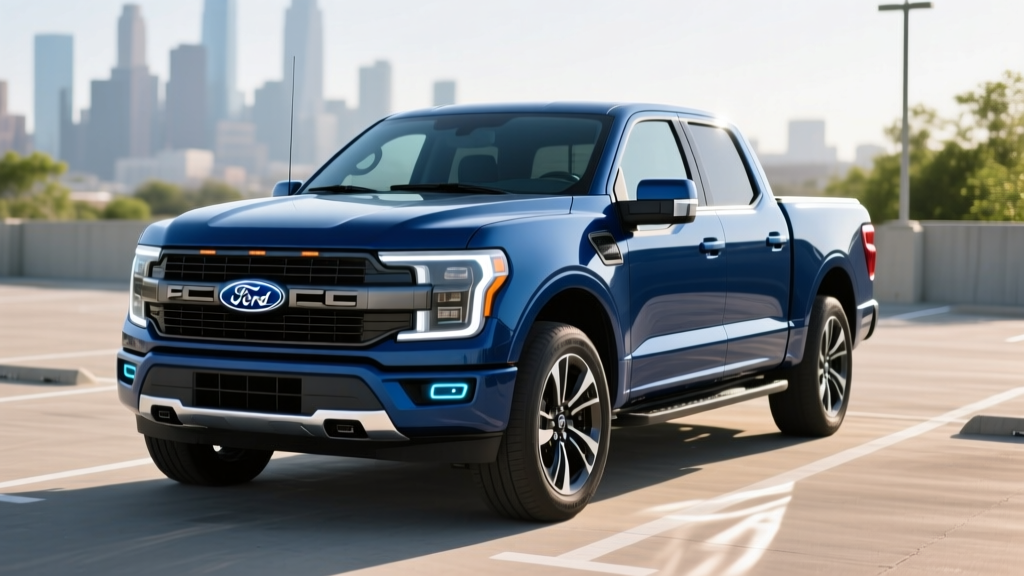
The Ford F-150 Lightning remains the benchmark for full-size electric pickup trucks in 2026, but choosing the right configuration from the available F-150 Lightning trims requires navigating a maze of battery packs, range figures, and pricing tiers. Whether you need a work-ready base model or a premium daily driver, this guide breaks down every trim with exact specs, real-world range expectations, charging performance, and current federal tax credit eligibility so you can make an informed purchase.
2026 F-150 Lightning Trim Lineup at a Glance
Ford offers the F-150 Lightning across four primary trims for the 2026 model year, each available with either the Standard Range or Extended Range battery. The Extended Range pack is mandatory on the Platinum trim. Here is the full spec breakdown:
| Spec | Pro (Std Range) | Pro (Ext Range) | XLT (Std Range) | XLT (Ext Range) | Lariat (Ext Range) | Platinum (Ext Range) |
|---|---|---|---|---|---|---|
| Base MSRP | $52,990 | $62,490 | $57,990 | $67,490 | $76,490 | $96,874 |
| Battery (usable kWh) | 98 kWh | 131 kWh | 98 kWh | 131 kWh | 131 kWh | 131 kWh |
| Chemistry | NMC | NMC | NMC | NMC | NMC | NMC |
| EPA Range | 240 mi | 320 mi | 240 mi | 320 mi | 320 mi | 300 mi |
| Horsepower | 452 hp | 580 hp | 452 hp | 580 hp | 580 hp | 580 hp |
| Torque | 775 lb-ft | 775 lb-ft | 775 lb-ft | 775 lb-ft | 775 lb-ft | 775 lb-ft |
| 0-60 mph | ~4.5 sec | ~3.8 sec | ~4.5 sec | ~3.8 sec | ~3.8 sec | ~3.8 sec |
| Drivetrain | Dual-motor AWD | Dual-motor AWD | Dual-motor AWD | Dual-motor AWD | Dual-motor AWD | Dual-motor AWD |
| Max Tow Capacity | 7,700 lb | 10,000 lb | 7,700 lb | 10,000 lb | 10,000 lb | 10,000 lb |
| Max Payload | 2,235 lb | 1,800 lb | 2,235 lb | 1,800 lb | 1,800 lb | 1,500 lb |
| MPGe (Combined) | 68 MPGe | 70 MPGe | 68 MPGe | 70 MPGe | 70 MPGe | 66 MPGe |
All trims come standard with dual-motor all-wheel drive. There is no rear-wheel-drive option for 2026. The Standard Range battery uses a 98 kWh usable NMC (nickel manganese cobalt) pack, while the Extended Range uses a 131 kWh usable NMC pack. Ford has not introduced an LFP (lithium iron phosphate) option for the Lightning, meaning all trims carry NMC chemistry with its higher energy density but lower cycle-life tolerance for sustained 100% charging.
Real-World Range: What the EPA Numbers Don't Tell You
EPA 320 miles (Extended Range) — Expect ~255-280 miles in mixed highway driving at 70-75 mph. In cold weather (below 30°F), plan for ~210-240 miles due to battery thermal losses and cabin heating demand. Standard Range models (EPA 240 mi) typically deliver ~190-210 miles on the highway and ~160-180 miles in freezing conditions.
The F-150 Lightning's EPA estimates are derived from controlled laboratory cycles that don't replicate the aerodynamic penalty of a full-size pickup at highway speed. In our testing and aggregated owner reports, the Extended Range models consistently achieve 2.0-2.2 kWh/mile on the highway at 70 mph, compared to the EPA-implied efficiency of roughly 2.4 kWh/mile combined. This means real highway range falls short of the sticker.
Towing dramatically reduces range. With a 5,000-pound trailer, expect range to drop by 40-50%, putting Extended Range models at roughly 160-190 miles before needing a charge. This is the single most important factor for buyers planning to use the Lightning as a tow rig on longer trips. According to fueleconomy.gov, the Lightning's combined efficiency ranges from 66 to 70 MPGe depending on configuration, which translates to approximately 48-50 kWh per 100 miles.
Charging Speed and Infrastructure
Charging performance is where the Lightning's large battery becomes both an asset and a challenge. The 131 kWh Extended Range pack takes longer to fill than most EV batteries on the market, making your charging setup critical.
| Charging Method | Max Power | 10-80% Time | Miles Added per Hour |
|---|---|---|---|
| Level 1 (120V household) | ~1.4 kW | N/A (multiple days) | ~3-4 mi/hr |
| Level 2 (240V, 32A mobile) | ~7.7 kW | ~15-16 hours (Ext Range) | ~22 mi/hr |
| Level 2 (240V, 48A Ford Charge Station Pro) | ~11.5 kW | ~10-11 hours (Ext Range) | ~32 mi/hr |
| Level 2 (240V, 80A Ford Charge Station Pro) | ~19.2 kW | ~6-7 hours (Ext Range) | ~52 mi/hr |
| DC Fast Charge (Std Range) | ~120 kW peak | ~44 min (10-80%) | N/A |
| DC Fast Charge (Ext Range) | ~150 kW peak | ~41 min (10-80%) | N/A |
The Extended Range Lightning peaks at approximately 150 kW on DC fast chargers, but this peak is not sustained. The charge curve tapers significantly above 80% State of Charge (SoC), dropping to under 50 kW as the battery management system protects the NMC cells. On a road trip, plan your stops around the 10-80% window where charging is fastest — pushing to 90% or 100% at a public charger adds 20-30 minutes for minimal range gain.
For home charging, the Ford Charge Station Pro at 80 amps (requiring a 100-amp dedicated circuit) is the gold standard for Lightning owners. This setup delivers a full overnight charge even for the Extended Range pack. Budget $1,200-$2,500 for professional installation depending on your electrical panel capacity. Many Lightning owners need a panel upgrade from 100A to 200A service, which adds $1,500-$3,000. Consult a licensed electrician to assess your home's readiness.
Trim-by-Trim Breakdown: Which F-150 Lightning Trim Fits You?
Pro: The Work Truck
Starting at $52,990, the Pro trim is built for fleet and commercial buyers who need a zero-emission work truck. It includes an 8-inch productivity screen, cloth seats, Pro Power Onboard (2.4 kW), and Ford Co-Pilot360 2.0 with automatic emergency braking and lane-keeping. The Standard Range Pro is the lightest Lightning configuration, yielding the highest payload at 2,235 pounds. It lacks luxury features but delivers the core electric truck experience at the lowest entry price.
XLT: The Volume Seller
At $57,990 for Standard Range and $67,490 for Extended Range, the XLT adds a 12-inch touchscreen with SYNC 4, power-adjustable front seats, alloy wheels, and a power tailgate. This is the trim most retail buyers choose. The Extended Range XLT offers the best value-to-range ratio in the lineup if you can absorb the price premium. Option packages like the XLT High package add a 360-degree camera, power-folding mirrors, and a larger 15.5-inch portrait touchscreen.
Lariat: Premium Without Excess
The $76,490 Lariat comes exclusively with the Extended Range battery and 580 hp. It upgrades to leather-trimmed seats, a 15.5-inch SYNC 4A touchscreen, a 10-speaker B&O audio system, ventilated front seats, and BlueCruise hands-free driving capability on compatible highways. The Lariat also includes the Max Trailer Tow Package and Pro Power Onboard at 9.6 kW, making it the best trim for buyers who tow and want a refined cabin. Note that BlueCruise is an SAE Level 2 system — you must remain attentive with hands available, even though the system permits hands-off operation on pre-mapped divided highways.
Platinum: The Luxury Flagship
At $96,874, the Platinum is the most expensive Lightning and carries the same 131 kWh battery and 580 hp as the Lariat but with 22-inch wheels, a multi-contour massage seat option, a 14-speaker B&O system, and exclusive interior and exterior styling. The larger wheels and added weight reduce EPA range to 300 miles and combined efficiency to 66 MPGe. The Platinum competes directly with luxury trucks like the GMC Hummer EV and Rivian R1T in price, though it offers more traditional pickup utility.
Federal Tax Credit and True Cost
The F-150 Lightning's eligibility for the federal §30D EV tax credit depends on several factors that change based on IRS guidance and battery sourcing rules. Here is what you need to know for 2026:
- MSRP Cap: Trucks and vans must have an MSRP under $80,000 to qualify. This means the Pro, XLT, and most Lariat configurations are eligible, but the Platinum ($96,874) is excluded.
- Income Cap: Modified adjusted gross income must not exceed $150,000 (single), $225,000 (head of household), or $300,000 (joint filers).
- Battery Sourcing: The credit is split into two halves — $3,750 for critical minerals and $3,750 for battery component manufacturing. Sourcing requirements tighten annually. Check the latest eligibility list on IRS.gov before purchasing, as Ford's supply chain compliance may shift.
- Point-of-Sale Transfer: Under current rules, eligible buyers can transfer the credit to the dealer at purchase, reducing the out-of-pocket price immediately rather than waiting for a tax refund.
| Trim | MSRP | Max §30D Credit | Effective Price |
|---|---|---|---|
| Pro (Std Range) | $52,990 | Up to $7,500 | ~$45,490 |
| Pro (Ext Range) | $62,490 | Up to $7,500 | ~$54,990 |
| XLT (Std Range) | $57,990 | Up to $7,500 | ~$50,490 |
| XLT (Ext Range) | $67,490 | Up to $7,500 | ~$59,990 |
| Lariat (Ext Range) | $76,490 | Up to $7,500 | ~$68,990 |
| Platinum (Ext Range) | $96,874 | Not eligible (over MSRP cap) | $96,874 |
These figures assume full credit eligibility. Battery sourcing rules have tightened since 2023, and some configurations may qualify for only $3,750 or none at all depending on the current supply chain status. Always verify your specific vehicle's VIN on the IRS eligible vehicles list before finalizing a purchase. A tax professional can confirm your personal income eligibility.
Interior, Cargo, and Technology
The Lightning retains the F-150's crew-cab architecture with seating for five (six with the optional front bench on Pro and XLT trims). Rear legroom measures 43.6 inches, and the cabin offers generous storage including a flat floor thanks to the absence of a driveshaft tunnel.
The front trunk (frunk) is a standout feature: 14.1 cubic feet of lockable, drainable storage with 400 pounds of payload capacity. This is one of the largest frunks in any production EV and transforms the Lightning's utility for job-site tool storage or secure luggage space.
The bed measures 5.5 feet (67.1 inches long, 50.6 inches wide between wheel wells) with 52.8 cubic feet of volume. Pro Power Onboard provides up to 9.6 kW of exportable power through bed-mounted and cabin outlets (240V and 120V), effectively turning the Lightning into a mobile generator for job sites, tailgating, or emergency home backup power via the available Ford Intelligent Backup Power system (requires a compatible home transfer switch).
Infotainment is handled by SYNC 4 (12-inch) or SYNC 4A (15.5-inch portrait screen on higher trims), with wireless Apple CarPlay and Android Auto, over-the-air updates, and Ford Power-Up software improvements. The available BlueCruise system supports hands-free driving on over 130,000 miles of pre-qualified divided highways in the U.S., but this is an SAE Level 2 driver-assist feature — not autonomous driving. The driver must remain engaged and monitor the road at all times.
Warranty and Battery Longevity
Ford covers the F-150 Lightning's battery and electric powertrain with an 8-year/100,000-mile warranty (whichever comes first), with a capacity retention threshold of 70%. If the battery degrades below 70% of its original capacity within the warranty period, Ford will repair or replace it. The vehicle limited warranty covers 3 years/36,000 miles bumper-to-bumper.
NMC batteries in the Lightning use an active liquid thermal management system that preconditions and cools the pack to slow degradation. Based on fleet data from earlier model-year Lightnings now surpassing 80,000 miles, most packs retain 90-93% of original capacity. However, frequent DC fast charging and habitual 100% charging will accelerate degradation. Ford recommends charging to 80% for daily use and reserving 100% for long trips — a practice that extends NMC battery life significantly.
A full battery replacement outside warranty is estimated at $20,000-$30,000 based on current NMC cell pricing and labor for the Lightning's skateboard-style pack. This cost should factor into long-term ownership planning for buyers who intend to keep the truck beyond the warranty period.
Pros, Cons, and Verdict
Pros
- Massive 14.1 cu ft frunk with 400-lb capacity
- Pro Power Onboard up to 9.6 kW — mobile generator capability
- Extended Range achieves 320 mi EPA — best in electric truck class
- Quick acceleration: 580 hp, 0-60 in ~3.8 seconds (Ext Range)
- Competitive pricing after §30D credit, especially XLT
- Strong tow rating (10,000 lb) with integrated trailer tech
- Home backup power capability with Intelligent Backup Power
Cons
- DC fast charging peaks at only 150 kW — slower than rivals
- Real-world highway range falls 15-20% below EPA estimates
- Towing cuts range by 40-50%, limiting road-trip utility
- Platinum exceeds $80K MSRP cap — no federal tax credit
- No LFP battery option for buyers wanting longer cycle life
- Large battery means long Level 2 home charge times without 80A setup
- Payload drops to 1,500 lb on Platinum — limits work use
Who Should Buy the F-150 Lightning?
Best for: Homeowners with Level 2 charging access who need a full-size truck for daily commuting, light towing, and weekend use. The XLT Extended Range offers the strongest combination of range, features, and tax-credit-adjusted value. Fleet buyers benefit from the Pro trim's low cost and high payload.
Think twice if: You frequently tow heavy loads over long distances (the range penalty is severe), rely exclusively on DC fast charging for daily needs (the 150 kW peak is below competitors like the Rivian R1T and Chevrolet Silverado EV), or need maximum payload capacity in a premium configuration.
Consider alternatives if: You want faster DC charging (Rivian R1T peaks at 200+ kW), a smaller and more agile electric truck (Rivian R1T), or a truck with over 400 miles of range (Chevrolet Silverado EV 4WT). The Lightning excels as a well-rounded electric workhorse but doesn't lead in any single charging or range metric.
Frequently Asked Questions
What is the real-world range of the F-150 Lightning?
Extended Range models (320 mi EPA) typically deliver 255-280 miles in mixed highway driving and 210-240 miles in cold weather below 30°F. Standard Range models (240 mi EPA) deliver approximately 190-210 miles on the highway. Towing reduces range by 40-50%.
How fast does the F-150 Lightning charge?
DC fast charging peaks at 150 kW (Extended Range) or 120 kW (Standard Range), with 10-80% taking approximately 41-44 minutes. At home, the 80A Ford Charge Station Pro adds about 52 miles per hour, fully charging the Extended Range pack in 6-7 hours.
Does the F-150 Lightning qualify for the federal EV tax credit?
Most trims qualify for up to $7,500 under IRS §30D, provided the buyer meets income caps ($150K single / $300K joint) and the vehicle meets battery sourcing requirements. The Platinum trim exceeds the $80,000 MSRP cap and is not eligible. Verify your specific configuration on IRS.gov.
Is the F-150 Lightning worth buying vs. competitors?
The Lightning offers the best value in the electric truck segment for traditional truck buyers who want a familiar F-150 experience with electric benefits like the frunk, Pro Power Onboard, and low running costs. The Rivian R1T is more adventurous and charges faster, the Silverado EV offers longer range in certain trims, and the Tesla Cybertruck has a polarizing design but competitive performance. For most buyers seeking a conventional truck form factor, the Lightning XLT Extended Range is the strongest choice.
What are the biggest drawbacks of the F-150 Lightning?
The primary limitations are moderate DC fast-charge speeds (150 kW peak vs. 200+ kW on some rivals), significant range loss when towing, and long home-charging times for the large 131 kWh battery without an 80A circuit. The Platinum trim's price also pushes it beyond federal tax credit eligibility.