Quick Answer: Is a Commercial Electric Vehicle Worth It in 2026?
For last-mile delivery, service routes, and urban fleets with predictable daily mileage under 150 miles and depot charging access, a commercial electric vehicle delivers a lower total cost of ownership than a comparable diesel or gasoline van — typically saving $0.12–$0.18 per mile in fuel and maintenance. Upfront purchase cost remains 30–60% higher, but the federal §45W Commercial Clean Vehicle Credit (up to $7,500 for vehicles under 14,000 lbs GVWR, up to $40,000 for heavier classes) significantly narrows the gap. For long-haul, rural, or cold-climate routes exceeding 200 miles daily without mid-shift charging, diesel remains the practical choice for now.
The Commercial EV Landscape: What's Available Now
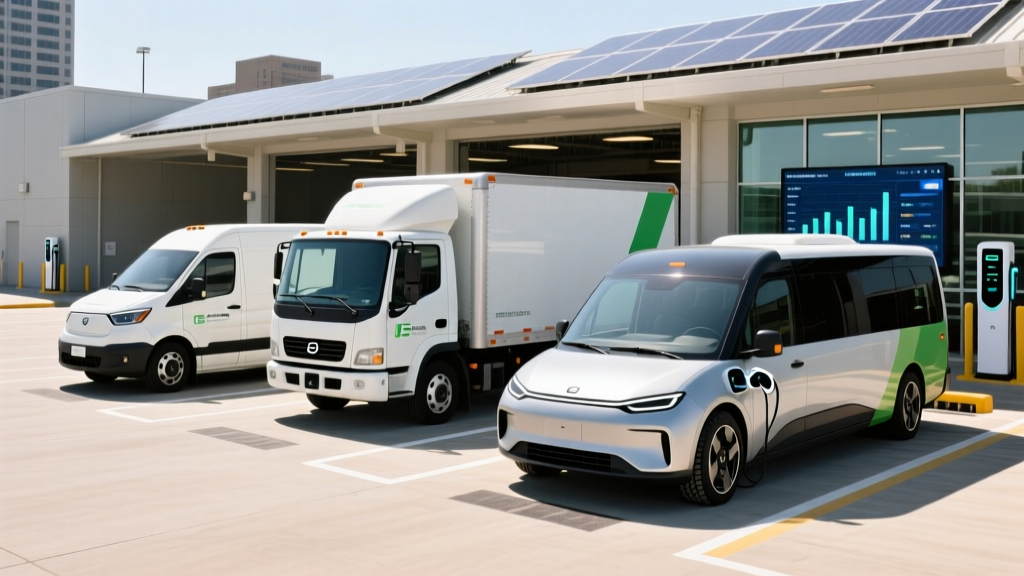
The light-duty commercial EV van segment has matured considerably. Fleet managers now choose from several production models with proven powertrains, established dealer service networks, and real-world mileage data spanning multiple model years. Here's how the major contenders stack up:
| Specification | Ford E-Transit | BrightDrop Zevo 600 | Mercedes-Benz eSprinter | Rivian EDV 700 |
|---|---|---|---|---|
| Usable Battery (kWh) | 68 kWh (NMC) | 165 kWh (NMC) | 113 kWh (NMC) | 149 kWh (NMC) |
| EPA Range (miles) | 126 | 272 | 205 | 161 |
| Real-World Range* | 95–110 mi | 210–240 mi | 160–185 mi | 130–145 mi |
| Max DC Fast Charge (kW) | 115 kW | 150 kW | 115 kW | 150 kW |
| 10–80% DC Charge Time | ~45 min | ~60 min | ~55 min | ~50 min |
| Level 2 AC Charge Rate | 10.5 kW | 11.5 kW | 11 kW | 11.5 kW |
| Max Cargo Volume (cu ft) | 487.3 | 615 | 533 | 700 |
| Max Payload (lbs) | 3,880 | 2,800 | 2,624 | 2,735 |
| Horsepower | 266 hp | 320 hp | 201 hp | 335 hp |
| Starting MSRP | ~$48,000 | ~$78,000 | ~$72,000 | Fleet/lease only |
| Battery Warranty | 8 yr / 100k mi | 8 yr / 100k mi | 8 yr / 100k mi | 8 yr / 175k mi |
*Real-world range reflects mixed urban/highway driving with cargo load, HVAC use, and moderate climate. Cold-weather (below 32°F) operation reduces range an additional 20–35% due to battery chemistry limitations and cabin/cargo heating demands.
Total Cost of Ownership: Commercial EV vs. Gasoline Van
The purchase price alone tells an incomplete story. Fleet economics depend on per-mile operating cost, and that's where electrification reshapes the equation. Below is a 5-year / 75,000-mile TCO comparison between the Ford E-Transit and the gasoline Ford Transit 250 cargo van, assuming a depot-based delivery route averaging 70 miles/day, 5 days/week.
| Cost Category | Ford E-Transit (EV) | Ford Transit 250 (Gas) |
|---|---|---|
| Vehicle MSRP (base cargo) | $48,000 | $43,500 |
| Federal Tax Credit (§45W) | –$7,500 | $0 |
| Net Acquisition Cost | $40,500 | $43,500 |
| Fuel / Electricity (75k mi) | $5,625 (avg $0.10/kWh depot) | $16,875 (avg $3.75/gal, 15 MPG) |
| Maintenance (5 years) | $2,800 | $8,500 |
| Insurance (5 years) | $14,000 | $11,500 |
| Depreciation (est. resale) | –$14,000 | –$16,000 |
| Total 5-Year TCO | $48,925 | $64,375 |
| Cost Per Mile | $0.65/mi | $0.86/mi |
The E-Transit saves approximately $15,450 over five years, or $0.21 per mile. The primary savings drivers are energy ($11,250 less) and maintenance ($5,700 less — no oil changes, no transmission fluid, significantly reduced brake wear from regenerative braking). Insurance runs roughly 15–22% higher for the EV due to repair-cost data on battery enclosures and high-voltage components, but this gap has narrowed as claims data matures.
Charging Infrastructure: The Depot Advantage and the Public-Charging Problem
Commercial EVs live and die by depot charging. A van parked at a fleet yard overnight with Level 2 access is operationally superior to a gasoline van — no fuel-card logistics, no driver detours to gas stations, predictable "refueling" during off-peak electricity hours.
Level 2 Depot Charging: What It Takes
For a fleet of 10 E-Transits, you need roughly 105 kW of continuous Level 2 supply (10 vehicles × 10.5 kW each). Most commercial properties require a panel upgrade or a dedicated 480V/3-phase service drop. Expect these installation costs:
| Component | Cost Range |
|---|---|
| Level 2 chargers (10 × dual-port, 19.2 kW capable) | $12,000–$22,000 |
| Electrical panel upgrade / transformer | $8,000–$35,000 |
| Trenching, conduit, wiring (per stall) | $3,000–$8,000 |
| Permits and utility interconnection fees | $2,000–$7,000 |
| Networked fleet-management software (annual) | $1,500–$4,000/yr |
| Total Estimated Install | $35,000–$90,000 |
The wide range reflects site-specific variables: existing electrical capacity, distance from utility transformer, local permitting timelines, and whether you choose networked chargers (ChargePoint, EV Connect, Blink Fleet) with load-management software or simpler non-networked units. The §30C Alternative Fuel Vehicle Refueling Property Credit covers up to 30% of charging equipment and installation costs (capped at $100,000 per item of property), subject to prevailing-wage and census-tract requirements. Consult a tax professional for eligibility specifics.
DC Fast Charging for Mid-Shift Top-Ups
If your routes exceed the vehicle's real-world range, mid-shift DC fast charging becomes necessary. A 115–150 kW DC charger can add 60–100 miles of range in 20–30 minutes. However, commercial DC installations cost $80,000–$200,000+ per charger, including utility demand-charge negotiations. Most fleets find it more economical to right-size the vehicle battery to the route rather than install private DC infrastructure.
Real-World Range Reality Check
EPA range figures assume moderate temperatures, light cargo, and mixed driving. In practice:
- Full cargo load + summer A/C: subtract 10–15% from EPA range
- Winter operation (below 32°F): subtract 20–35% (battery chemistry + cabin heating)
- Highway-dominant routes (65+ mph): subtract 15–20% vs. urban stop-and-go
- Charge-curve taper: the 10–80% DC time is accurate, but 80–100% can take as long as 10–80%. Never plan operations around a full charge from DC fast charging.
Rule of thumb: spec your vehicle's EPA range at 1.5× to 2× your daily route mileage to account for weather, cargo, detours, and battery degradation over the vehicle's life.
Tax Credits and Incentives for Commercial Fleets
The federal incentive landscape for commercial EVs differs from the consumer §30D credit. Fleet buyers should understand the §45W Commercial Clean Vehicle Credit:
- Credit amount: Up to $7,500 for vehicles under 14,000 lbs GVWR; up to $40,000 for vehicles 14,000 lbs and above
- Calculation: Lesser of 15% of vehicle cost basis (30% for vehicles not powered by gas/diesel) or the incremental cost over a comparable ICE vehicle
- No MSRP cap: Unlike the consumer credit, §45W has no manufacturer's suggested retail price ceiling
- No buyer income cap: Available to businesses and tax-exempt organizations regardless of revenue
- Battery sourcing: Currently does not carry the same critical-mineral and battery-component sourcing restrictions as §30D, though this is subject to legislative change
- Transferability: Businesses may elect to transfer the credit to the seller for a point-of-sale price reduction (effective for vehicles placed in service after 2023)
- Per-VIN limitation: Each vehicle can only claim the credit once — buying a used commercial EV does not re-qualify it
State and local incentives vary significantly and change frequently. California's HVIP, New York's Truck Voucher Incentive Program, and various utility make-ready programs can stack with federal credits. Always verify current incentive availability with official state and utility sources before budgeting.
Common Misconceptions About Commercial EVs
| Myth | Fact |
|---|---|
| "EVs can't handle a full day's work." | Most urban delivery and service routes average 60–120 miles/day. The BrightDrop Zevo 600's real-world 210+ mi range covers this with margin. Route analysis, not range anxiety, should drive the decision. |
| "Battery replacement will bankrupt the fleet." | Modern NMC commercial batteries are warrantied for 8 years / 100,000+ miles at 70%+ capacity retention. Fleet data from early E-Transit and eSprinter deployments shows degradation of 5–8% over the first 3 years under normal use. Full replacement costs $15,000–$30,000 depending on pack size, but is rarely needed within the vehicle's service life. |
| "Charging takes too long for commercial use." | Overnight Level 2 depot charging (8–10 hours) fully replenishes any light-duty commercial EV. This is faster operationally than gas, because the vehicle refuels while parked — zero driver time spent at a fuel station. |
| "EVs don't work in cold climates." | Range drops 20–35% in sub-freezing temps — a real limitation. Fleets in Minnesota or Maine must spec larger batteries or accept reduced winter range. Preconditioning (warming the battery while plugged in) recovers 5–10% of that loss. |
| "The grid can't handle fleet charging." | A 10-van Level 2 depot draws ~100 kW — roughly equivalent to a small commercial building. Utility coordination and load-management software (which staggers charging across off-peak hours) solve this for most sites. DC fast charging is a different, larger challenge. |
Decision Framework: Is a Commercial EV Right for Your Fleet?
Choose a Commercial Electric Vehicle If:
- Your daily route is under 150 miles (or under 100 miles in cold-climate regions)
- Vehicles return to a central depot nightly with charging access
- Your routes are urban or suburban stop-and-go (maximizing regenerative braking and minimizing highway energy loss)
- You can install or already have Level 2 charging at your depot
- Your fleet qualifies for §45W and/or state incentive stacking, bringing net acquisition cost within 10–15% of an ICE equivalent
- ESG reporting, municipal clean-fleet mandates, or customer sustainability requirements factor into your procurement
Stick With Gasoline or Diesel (For Now) If:
- Daily routes regularly exceed 200 miles with no mid-shift charging option
- Vehicles operate primarily in extreme cold (below 0°F) with high daily mileage demands
- Your fleet is rural with no depot and limited public DC charging infrastructure along routes
- Vehicle payload requirements push you to the GVWR limit — EV battery weight reduces legal payload capacity
- Your capital budget cannot absorb higher upfront costs even with tax credits, and leasing options aren't available in your market
First-Time Commercial EV Buyer: What to Know Before You Order
If you're transitioning a fleet from ICE to electric for the first time, these practical considerations separate smooth deployments from expensive missteps:
1. Conduct a route-by-route energy analysis. Don't rely on average daily mileage alone. Track the highest-mileage day of each route, plus seasonal variation. Your vehicle's battery must handle your worst day, not your average day. Telematics data from your current vehicles (GPS tracking, OBD-II loggers) provides this in 30–60 days of collection.
2. Engage your utility early. Commercial charging installations can require 6–18 months of utility planning, especially if a new transformer or service upgrade is needed. Contact your utility's EV or commercial-accounts team before you place vehicle orders.
3. Pilot before scaling. Order 1–2 vehicles first. Run them on your most demanding routes through a full winter and summer cycle. Measure actual kWh/mile consumption, real charging times, driver feedback, and maintenance events. Use pilot data to validate your TCO model before committing to a full fleet transition.
4. Budget for driver training. Regenerative braking behavior, one-pedal driving modes, range-aware climate control, and preconditioning routines all require driver buy-in. Fleets that skip training see 10–20% higher energy consumption than those that invest in a 2-hour onboarding session per driver.
5. Plan for battery end-of-life at acquisition. While most commercial EV batteries will outlast the vehicle's primary service life, second-life applications (stationary storage) and recycling pathways (Redwood Materials, Li-Cycle) affect residual value. Ask your OEM or lessor about battery take-back or trade-in programs.
Frequently Asked Questions
What is the per-mile electricity cost for a commercial electric van?
At the national commercial electricity average of $0.12/kWh and a consumption rate of 2.0–2.5 kWh/mile (typical for loaded cargo vans), expect $0.06–$0.075 per mile on depot charging. Fleets with negotiated off-peak utility rates or on-site solar can push this to $0.04–$0.05 per mile. Compare this to a gasoline Transit at 15 MPG and $3.75/gal: $0.25 per mile. The per-mile energy savings is typically 70–75%.
How long do commercial EV batteries last before replacement?
Current NMC battery packs in commercial vans are warrantied for 8 years or 100,000–175,000 miles (depending on OEM) at 70% capacity retention. Fleet data suggests these packs deliver 150,000–250,000 miles before degradation to 80% state of health under normal cycling. LFP (lithium iron phosphate) packs, which some OEMs are introducing for commercial duty, offer longer cycle life (3,000+ cycles vs. 1,500–2,000 for NMC) but lower energy density, meaning heavier packs for the same range.
Can I use public charging networks for commercial fleet operations?
You can, but it's rarely optimal. Public DC fast charging costs $0.35–$0.55/kWh at networks like Electrify America or EVgo — 3–5× depot rates. For occasional top-ups or emergency range extension, it works. For daily operations, the cost erases most of the EV fuel savings advantage. Fleet-specific charging networks (e.g., EVgo Fleet, ChargePoint Fleet) offer negotiated commercial rates and reserved access, which is a better middle ground for fleets without full depot charging.
Does the §45W commercial credit stack with state incentives?
Generally, yes. Federal §45W is independent of most state incentive programs, and many states design their vouchers to stack. For example, California's HVIP can provide $20,000–$120,000+ for medium- and heavy-duty vehicles on top of federal credits. However, some state programs have their own sourcing or domestic-content requirements, and incentive budgets deplete. Always confirm current availability and stacking rules with your state energy office or a qualified tax advisor before finalizing procurement budgets.
What happens if a commercial EV battery fails out of warranty?
Out-of-warranty battery replacement for a commercial van currently costs $15,000–$35,000 depending on pack size and OEM parts pricing. However, module-level repair (replacing individual degraded modules rather than the full pack) is increasingly available through OEM-authorized service centers for $3,000–$8,000. Third-party EV battery repair shops are also emerging. Fleets should factor a $0.02–$0.03/mile battery reserve into their long-term TCO models for vehicles kept beyond the warranty period.