Rivian's Bottom Line: Why Profitability Matters to EV Buyers
If you're considering spending $70,000+ on a Rivian R1S SUV or R1T pickup, one question likely sits in the back of your mind: is Rivian profitable? It's a fair concern. Buying from a startup automaker means evaluating not just the vehicle, but the company's ability to honor warranties, maintain software, and keep service centers running for the next decade or more.
As of early 2026, the short answer is no — Rivian is not yet consistently profitable on a net-income basis. The company has been narrowing its losses quarter over quarter, driven by cost reductions in manufacturing at its Normal, Illinois facility, the launch of its more affordable R2 platform (announced for production in 2026), and improving gross margins. Rivian's cash reserves and its joint venture with Volkswagen (a multi-billion-dollar technology partnership announced in 2024) provide a substantial financial runway. But buyers should weigh the company's trajectory against established competitors.
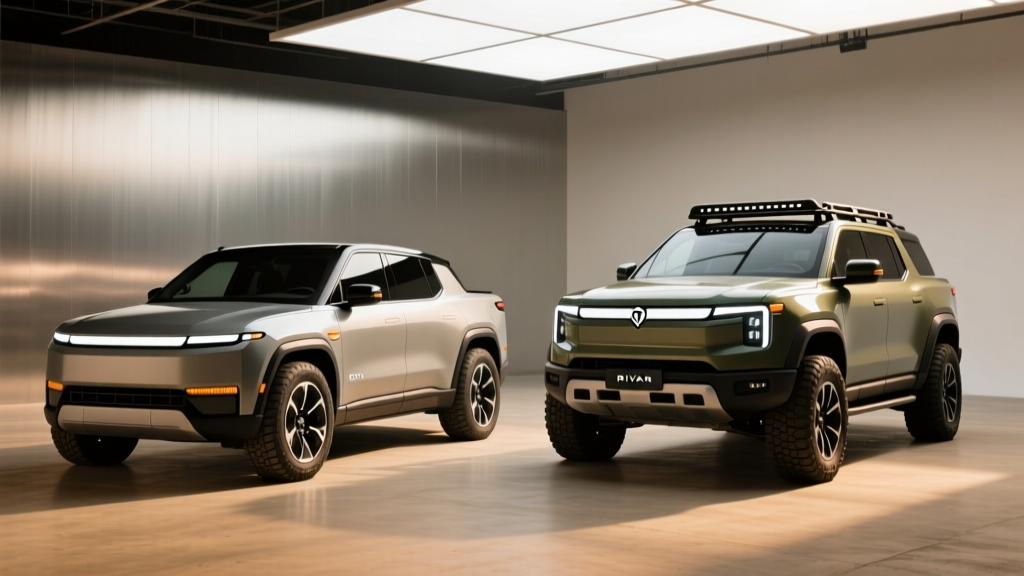
This review pairs Rivian's financial standing with a deep-dive evaluation of its current flagship vehicles — the 2025/2026 R1S (three-row SUV) and R1T (crew-cab pickup) — so you can make an informed decision on both the machine and the maker.
2026 Rivian R1S and R1T: Spec-by-Spec Breakdown
The R1S and R1T share Rivian's skateboard platform, powertrain options, and battery packs. Below are the core specifications for the current-generation models on sale as of the 2026 model year. Rivian refreshed both vehicles significantly for the 2025 model year (dubed "Gen 2"), adding new dual-motor and tri-motor configurations, a standard-range LFP battery option, and updated software architecture.
| Spec | R1S (Dual-Motor, Standard Battery) | R1S (Tri-Motor, Max Battery) | R1T (Dual-Motor, Standard Battery) |
|---|---|---|---|
| EPA Range | 270 miles | 410 miles (est.) | 270 miles |
| Battery Capacity (usable) | ~95 kWh (LFP) | ~141 kWh (NMC) | ~95 kWh (LFP) |
| Battery Chemistry | LFP (Lithium Iron Phosphate) | NMC (Nickel Manganese Cobalt) | LFP |
| Drivetrain | Dual-Motor AWD | Tri-Motor AWD | Dual-Motor AWD |
| Horsepower | 533 hp | 850+ hp | 533 hp |
| 0-60 mph | ~4.5 sec | ~3.0 sec | ~4.5 sec |
| Max DC Fast Charge | ~200 kW | ~220 kW | ~200 kW |
| 10-80% DCFC Time | ~28 min | ~38 min | ~28 min |
| Level 2 Home Charging | 11.5 kW (~25 mi/hr) | 11.5 kW (~25 mi/hr) | 11.5 kW (~25 mi/hr) |
| MPGe (combined) | ~73 MPGe | ~70 MPGe | ~73 MPGe |
| Efficiency | ~46 kWh/100mi | ~48 kWh/100mi | ~46 kWh/100mi |
| Towing Capacity | 7,700 lbs | 7,700 lbs | 11,000 lbs |
| Cargo (R1S behind 3rd row) | 10.4 cu ft | 10.4 cu ft | N/A (bed: 4.5 ft) |
| Cargo (R1S all rows folded) | 104.7 cu ft | 104.7 cu ft | N/A |
| Base MSRP | $71,700 | $99,000+ | $69,900 |
| Battery/Powertrain Warranty | 8 yr / 175,000 mi | 8 yr / 175,000 mi | 8 yr / 175,000 mi |
The EPA sticker says 270 miles for the Standard Battery pack, but real-world results depend heavily on conditions. In highway driving at 75 mph in moderate temperatures (65-75°F), expect 230-250 miles before needing a charge. In cold weather (below 30°F), range can drop to 180-210 miles due to battery resistance and cabin heating demands. The Max Battery (410 mi EPA) performs better on long road trips but is still subject to ~15-20% highway reduction and ~25-35% cold-weather loss. Plan charging stops accordingly.
Charging: How Fast Does a Rivian Actually Charge?
Charging speed is where Rivian's Gen 2 platform shows meaningful improvement over the original launch vehicles. The company transitioned from CCS to the NACS (Tesla-style) connector for new vehicles starting in 2025, giving Rivian owners native access to the Tesla Supercharger network — a significant real-world advantage for road trips.
| Charging Level | Power / Voltage | Miles Added per Hour | Notes |
|---|---|---|---|
| Level 1 (120V household) | ~1.4 kW | ~3-4 mi/hr | Emergency/trickle only |
| Level 2 (240V home) | 11.5 kW (48A) | ~25 mi/hr | Full charge overnight (~10 hrs for Standard pack) |
| DC Fast Charge (Standard pack) | Peak ~200 kW | N/A — 10-80% in ~28 min | Charge curve tapers sharply above 80% |
| DC Fast Charge (Max pack) | Peak ~220 kW | N/A — 10-80% in ~38 min | Larger battery = longer session despite higher peak kW |
A critical nuance for Rivian owners: peak kW is not sustained kW. The Standard Battery pack may hit 200 kW briefly between 10-30% State of Charge (SoC), but the charge curve tapers progressively. Your average charging rate over a 10-80% session will be closer to 130-150 kW. The Max Battery pack has a longer taper due to its larger capacity, meaning 10-80% takes roughly 38 minutes despite a higher peak rate.
For home charging, Rivian recommends a 60-amp circuit with a 48-amp continuous charger (like the Rivian Wall Connector or a ChargePoint Home Flex). A typical home Level 2 installation costs $800-$2,000 depending on your electrical panel's proximity to the garage and whether a panel upgrade (to 200A service) is needed.
Performance and Driving Dynamics
Rivian's quad-motor and tri-motor configurations deliver supercar-rivaling acceleration in a vehicle that can also ford rivers. The tri-motor R1S/T produces over 850 hp and hits 60 mph in approximately 3.0 seconds — making it one of the quickest SUVs and trucks ever sold. The dual-motor setup, at 533 hp and ~4.5 seconds to 60, is more than adequate for daily driving and merging.
What sets Rivian apart dynamically is the air suspension with adjustable ride height. The system offers up to 14.4 inches of ground clearance for off-road use and drops for highway efficiency and easier loading. The hydraulic roll control system (which replaces traditional anti-roll bars) keeps body lean minimal in corners despite the vehicle's substantial weight (over 6,800 lbs for the R1S Max Battery).
The R1T pickup offers an 11,000-lb towing capacity (when properly equipped), though real-world range while towing drops dramatically — expect a 40-50% range reduction when pulling a heavy trailer. The R1T's signature Gear Tunnel — a full-width pass-through storage compartment behind the cab — remains one of the most innovative features in the truck segment, offering 11.7 cu ft of lockable, weatherproof storage.
Pricing, Trim Levels, and Federal Tax Credit Eligibility
Rivian's pricing has evolved significantly. As of 2026, the R1S starts at $71,700 for the Dual-Motor Standard Battery, while the R1T starts at $69,900. Fully loaded tri-motor Max Battery configurations can exceed $105,000.
| Configuration | MSRP | Est. Federal Credit | Effective Price |
|---|---|---|---|
| Dual-Motor, Standard Battery (LFP) | $71,700 | $0-$7,500* | $64,200-$71,700 |
| Dual-Motor, Large Battery (NMC) | $79,900 | $0-$7,500* | $72,400-$79,900 |
| Tri-Motor, Max Battery (NMC) | $99,000+ | $0-$7,500* | $91,500-$99,000+ |
*Federal tax credit eligibility under IRS §30D is subject to multiple requirements. See checklist below.
- MSRP Cap: SUVs/pickups must be priced at or below $80,000. R1S Dual-Motor Standard and Large Battery qualify; Tri-Motor Max exceeds the cap.
- Buyer Income Cap: Modified AGI must not exceed $150,000 (single), $225,000 (head of household), or $300,000 (joint).
- Battery Sourcing: Critical minerals and battery components must meet phased-in domestic/free-trade-partner sourcing thresholds. Rivian's LFP pack (sourced from CATL in China) has faced eligibility challenges — check the IRS eligible vehicle list for current status.
- Point-of-Sale Transfer: Eligible buyers can transfer the credit to the dealer at purchase, reducing the purchase price directly rather than waiting for a tax refund.
- Assembly: Must be assembled in North America. Rivian's Normal, IL factory qualifies.
Rules change frequently. Consult a tax professional and verify on irs.gov before purchasing.
Tech, Interior, and Driver Assistance
Rivian's interior is minimalist but well-executed, anchored by a 15.6-inch central touchscreen running Rivian's proprietary software. The interface is responsive and receives regular over-the-air (OTA) updates. Notable tech features include:
- Rivian Driver+ (Level 2 ADAS): Combines adaptive cruise control, lane-centering, and automated lane changes on divided highways. This is a SAE Level 2 system — the driver must remain attentive and keep hands on or near the wheel at all times. It is not self-driving.
- Camera-based side mirrors: Available on Gen 2 models, replacing traditional mirrors with cameras to reduce drag and improve visibility (where legally permitted).
- Electric camp kitchen: An available slide-out kitchen for the R1T Gear Tunnel with an induction cooktop and sink — a standout overlanding feature.
- Vehicle-to-Load (V2L): Powers external devices and appliances from the vehicle's battery, useful for camping or job-site power.
Rivian Driver+ is an SAE Level 2 driver-assistance system. It requires active driver supervision. It does not make the vehicle autonomous. You are responsible for all driving decisions at all times.
Notable drawbacks: The R1S third row is tight for adults (best suited for children on longer trips). Infotainment lacks native Apple CarPlay/Android Auto — Rivian uses its own ecosystem. Service center availability, while expanding, still lags legacy automakers in rural areas. Panel fit and paint quality have improved post-Gen 2 refresh but remain a step below luxury benchmarks like BMW or Mercedes-Benz.
Is Rivian Worth Buying vs. the Competition?
Rivian competes in a crowded space. Here's how it stacks up against key rivals:
| Attribute | Rivian R1S (Dual-Motor) | Tesla Model X (Long Range) | Kia EV9 (GT-Line AWD) | BMW iX xDrive50 |
|---|---|---|---|---|
| EPA Range | 270 mi (Std) / 410 mi (Max) | ~335 mi | ~270 mi | ~324 mi |
| Starting MSRP | $71,700 | ~$81,630 | ~$59,900 | ~$87,250 |
| Third Row | Yes (tight) | Yes (cramped) | Yes (usable) | No |
| Off-Road Capability | Excellent | Limited | Moderate | Limited |
| DCFC 10-80% | ~28 min | ~25 min | ~24 min | ~31 min |
| Towing | 7,700 lbs | 5,000 lbs | 5,000 lbs | 3,500 lbs |
- Choose Rivian R1S if: You need genuine off-road capability, three rows (for kids), high towing capacity, and a distinctive vehicle that isn't on every corner. Ideal for active families who camp, ski, or tow.
- Choose Rivian R1T if: You want an electric pickup that's more refined and car-like than a Ford F-150 Lightning, and you value the Gear Tunnel for secure storage. Best for lifestyle/overland use rather than fleet work.
- Choose the Kia EV9 instead if: Budget is the priority, you want a more spacious third row, and you don't need off-road capability. At ~$60K, it's the value leader in three-row EVs.
- Choose the Tesla Model X instead if: You prioritize maximum Supercharger network access (though Rivian now has this too), falcon-wing doors, and slightly better range in a more established service network.
So, Is Rivian Profitable — And Does It Matter?
Rivian's financial trajectory matters, but it shouldn't be the sole factor in your purchase decision. Here's the practical framework:
Reasons for confidence: The Volkswagen partnership (a $5B+ investment and joint technology development deal) provides a massive cash infusion and validates Rivian's electrical architecture. The R2 platform launch in 2026 targets a $45,000 price point, which could dramatically increase volume and move the company toward profitability. Manufacturing costs per vehicle have dropped significantly since 2022. The company has a growing service network and OTA update cadence that keeps vehicles improving post-purchase.
Reasons for caution: Rivian has burned billions in cumulative losses. The EV market is intensely competitive, with price wars compressing margins across the industry. If the R2 launch is delayed or underperforms, financial pressure could mount. Service infrastructure, while growing, is still thin compared to Ford, Toyota, or BMW.
Bottom line: Rivian is on a credible path toward profitability, but hasn't arrived yet. The VW partnership and R2 launch are the key catalysts to watch. For current R1S/R1T buyers, the 8-year/175,000-mile battery warranty and active OTA support provide reasonable protection. The vehicles themselves are among the most capable and well-engineered EVs on the market — particularly for buyers who need off-road chops, towing, or adventure-oriented features that no competitor matches.
Frequently Asked Questions
What is the real-world range of the Rivian R1S and R1T?
The EPA rates the Standard Battery at 270 miles, but real-world highway driving in moderate weather yields roughly 230-250 miles. Cold weather (below 30°F) can reduce that to 180-210 miles. The Max Battery configuration (410 mi EPA) delivers roughly 340-360 miles on the highway in good conditions.
How fast does a Rivian charge at home and on the road?
At home on a Level 2 (240V, 48A) charger, a Rivian adds approximately 25 miles of range per hour, fully charging the Standard pack overnight in about 10 hours. On a DC fast charger, the Standard Battery charges from 10-80% in approximately 28 minutes (peak ~200 kW), while the Max Battery takes about 38 minutes (peak ~220 kW).
How much does a Rivian cost after federal tax credits?
If you qualify for the full $7,500 §30D credit (meeting income, MSRP, and battery-sourcing requirements), the R1S Dual-Motor Standard Battery effectively starts around $64,200 and the R1T around $62,400. However, the LFP battery's Chinese-sourced minerals may affect eligibility — verify on the IRS eligible vehicles page before purchasing.
Does the Rivian R1S or R1T qualify for the federal EV tax credit?
Eligibility depends on the specific configuration and your personal tax situation. The R1S Dual-Motor Standard and Large Battery fall under the $80,000 SUV MSRP cap. The Tri-Motor Max exceeds it. You must also meet income limits ($300K joint / $150K single) and the vehicle's battery must satisfy critical-mineral and component sourcing thresholds. Rules change — always check the current IRS list and consult a tax professional.
Is Rivian a safe buy compared to legacy automakers?
Rivian's vehicles have earned strong safety ratings, and the VW partnership provides financial stability. However, the company is not yet profitable, and its service network is smaller than legacy brands. If you have a Rivian service center nearby and value the R1's unique capabilities (off-road, towing, Gear Tunnel), it's a compelling choice. If service proximity or long-term corporate stability is your top priority, a Kia EV9 or Ford F-150 Lightning may offer more peace of mind.
What are the biggest pros and cons of owning a Rivian?
- Class-leading off-road capability with air suspension
- Tri-motor option delivers supercar acceleration
- NACS connector = native Tesla Supercharger access
- Unique Gear Tunnel (R1T) and camp kitchen options
- Regular OTA updates improve the vehicle over time
- 8-year/175,000-mile battery warranty
- Company not yet profitable — long-term risk
- No Apple CarPlay or Android Auto
- Third row is tight for adults (R1S)
- Service centers still limited in many regions
- LFP battery may limit federal tax credit eligibility
- High starting price vs. Kia EV9 or Hyundai Ioniq 5