Tesla Model Y Dimensions: Exactly How Wide Is It?
If you're measuring your garage, planning a tight parking routine, or comparing the Model Y against rivals like the Hyundai IONIQ 5 or Ford Mustang Mach-E, exterior dimensions matter more than most reviews let on. The 2026 Tesla Model Y (including the refreshed "Juniper" update) measures 75.6 inches wide with the side mirrors folded, and 83.8 inches wide with mirrors extended. That width puts it squarely in the midsize crossover class — wider than a Toyota RAV4 (73.0 in) but narrower than a BMW X5 (78.9 in).
But width is just one number. Buyers researching the Model Y also need to know whether it fits their lifestyle from bumper to bumper, battery to back seat. Below is the full dimensional breakdown, followed by the range, charging, performance, and pricing data you need to make an informed purchase.
| Measurement | Inches | Millimeters |
|---|---|---|
| Width (mirrors folded) | 75.6 in | 1,920 mm |
| Width (mirrors extended) | 83.8 in | 2,129 mm |
| Length (bumper to bumper) | 188.0 in | 4,775 mm |
| Height | 63.9 in | 1,623 mm |
| Wheelbase | 113.8 in | 2,890 mm |
| Ground clearance | 6.6 in | 168 mm |
| Curb weight (Long Range AWD) | 4,363 lbs | 1,979 kg |
Full 2026 Tesla Model Y Spec Sheet
Dimensions only tell part of the story. Here's the complete spec table covering the Long Range AWD and Performance trims — the two configurations Tesla currently sells in the US market for 2026.
| Spec | Long Range AWD | Performance |
|---|---|---|
| EPA Range | 320 miles | 293 miles |
| Battery (usable) | ~75 kWh (NMC) | ~75 kWh (NMC) |
| Drivetrain | Dual-Motor AWD | Dual-Motor AWD |
| Horsepower | 384 hp | 456 hp |
| 0–60 mph | 4.8 sec | 3.5 sec |
| Top Speed | 125 mph | 155 mph |
| MPGe (combined) | 111 MPGe | 103 MPGe |
| Efficiency | 30 kWh/100 mi | 33 kWh/100 mi |
| Max DC Fast Charge | 250 kW | 250 kW |
| 10–80% DC Time | ~25 min | ~25 min |
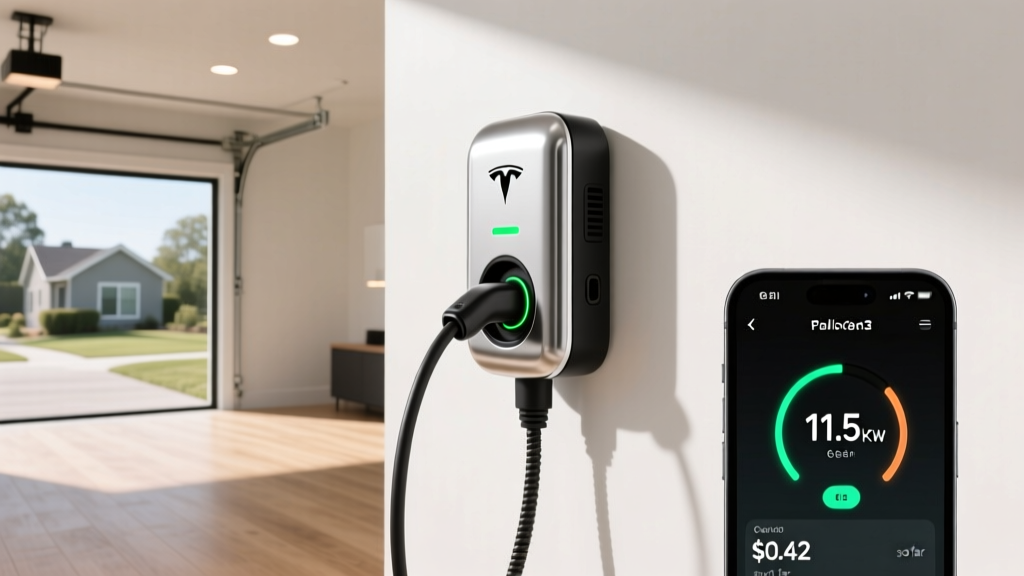
| Level 2 Home Charge | 11.5 kW (~44 mi/hr) | 11.5 kW (~44 mi/hr) |
| Base MSRP | $44,990 | $51,490 |
| Warranty (battery) | 8 yr / 120,000 mi | 8 yr / 120,000 mi |
Real-World Range vs. EPA Estimates
The Model Y's 75 kWh (usable) NMC lithium-ion battery pack delivers strong efficiency for its class — 30 kWh per 100 miles on the Long Range trim, which translates to 111 MPGe combined. That efficiency edge comes from Tesla's heat pump (standard on all trims since 2021), which recovers waste heat from the drivetrain to warm the cabin rather than relying solely on resistive heating.
For city-heavy commuters using regenerative braking in "Hold" mode, the Model Y can actually exceed its EPA city estimate, sometimes returning 330+ miles on low-speed stop-and-go routes in mild weather. Highway driving at 80 mph, however, will push consumption closer to 34–36 kWh/100 mi, cutting effective range to around 240–260 miles before you'll want to find a Supercharger.
Charging Speed: DC Fast, Level 2, and Level 1
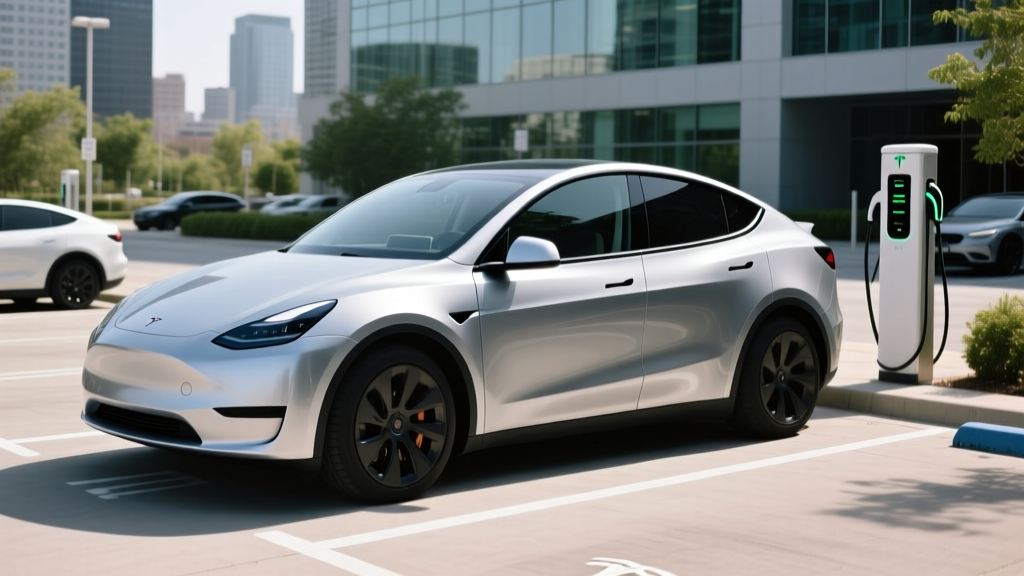
The Model Y charges via Tesla's North American Charging Standard (NACS) connector — the same plug now adopted by Ford, GM, Rivian, and most major automakers transitioning through 2025–2026. This gives the Model Y native access to the Tesla Supercharger network, which remains the most reliable DC fast-charging infrastructure in the US.
| Charging Level | Power | Charge Rate | Miles Added |
|---|---|---|---|
| Level 1 (120V household) | ~1.4 kW | Trickle | ~4–5 mi/hr |
| Level 2 (240V, 48A Wall Connector) | 11.5 kW | Full onboard rate | ~44 mi/hr |
| DC Fast (Supercharger V3/V4) | 250 kW peak | 10–80% in ~25 min | ~200 mi in 15 min |
Charging curve reality: The Model Y peaks at 250 kW only between roughly 10–30% state of charge. From 30–60%, expect sustained rates around 150–180 kW. Above 80%, the rate tapers sharply to protect battery longevity — charging from 80–100% on DC can add another 20+ minutes. For road trips, the practical strategy is to charge from 10–80% and move on, which the Tesla navigation system's trip planner already optimizes automatically.
At home, a Tesla Wall Connector on a 60-amp circuit delivers the full 11.5 kW (48 amps), replenishing a depleted battery in roughly 6.5 hours. Most owners who plug in nightly never visit a public charger for daily driving. Installation for a 240V/60A circuit typically runs $800–$2,000 depending on panel proximity and local permitting, according to Tesla's installation guidance.
Interior Space, Cargo, and Practicality
The Model Y's 75.6-inch width translates to a cabin that seats five adults, though the middle rear position is best reserved for children or short trips due to the transmission tunnel hump (yes, even in an EV — the structural floor ridge affects foot placement).
| Measurement | Dimension |
|---|---|
| Front headroom | 41.0 in |
| Rear headroom | 38.2 in |
| Front legroom | 41.8 in |
| Rear legroom | 37.5 in |
| Front shoulder room | 56.4 in |
| Rear shoulder room | 54.0 in |
| Cargo (rear seats up) | 30.2 cu ft |
| Cargo (rear seats folded) | 72.1 cu ft |
| Front trunk (frunk) | 4.1 cu ft |
The Juniper refresh brought incremental improvements to cabin materials — soft-touch surfaces replacing the hard plastics that drew criticism on pre-2025 models — and ambient lighting that makes the interior feel more premium at its price point. The 15.4-inch center touchscreen remains the command center for climate, navigation, media, and vehicle settings, with no physical instrument cluster behind the steering wheel.
Pricing, Trims, and Federal Tax Credit Eligibility
| Trim | Base MSRP | Destination | Est. Total | §30D Credit Eligible? |
|---|---|---|---|---|
| Long Range AWD | $44,990 | $1,390 | $46,380 | Up to $7,500* |
| Performance | $51,490 | $1,390 | $52,880 | Up to $7,500* |
*Federal tax credit caveats (IRS §30D): The Model Y qualifies for the federal EV tax credit — currently up to $7,500 — but eligibility depends on several factors that change annually. For 2026, key requirements include:
- MSRP cap: SUVs/crossovers must be priced at or below $80,000 (both trims clear this).
- Buyer income limits: Modified AGI must not exceed $150,000 (single), $225,000 (head of household), or $300,000 (joint filers).
- Battery sourcing: A percentage of critical minerals and battery components must be sourced from the US or free-trade-agreement partners. Tesla's evolving supply chain means eligibility can shift — always verify current status at IRS.gov before purchasing.
- Point-of-sale transfer: As of 2024, eligible buyers can transfer the credit to the dealer at purchase, reducing the upfront price rather than waiting for a tax refund.
Performance, Tech, and Driver Assistance
The dual-motor AWD powertrain provides confident all-weather traction and brisk acceleration. The Long Range's 4.8-second 0–60 time is quicker than nearly every gas-powered crossover in its price range, while the Performance trim's 3.5 seconds enters sports-sedan territory.
On the technology front, the Model Y runs Tesla's latest infotainment software with native streaming (Netflix, YouTube, Spotify), a full web browser, and over-the-air updates that regularly add features. The 15.4-inch touchscreen is responsive, though the lack of physical climate controls remains a polarizing choice — adjusting fan speed or temperature requires tapping the screen or using voice commands.
FSD (Supervised) is available as a $8,000 one-time purchase or $99/month subscription. It adds automatic lane changes, traffic-light and stop-sign recognition, and city-street navigation assist. Real-world performance varies significantly by geography and road complexity — it excels on well-marked highways but can struggle with construction zones, faded lane markings, and unprotected left turns. For most buyers, the standard Autopilot (included with the car) provides adequate adaptive cruise and lane-centering for highway commuting.
Pros, Cons, and Who Should Buy
- Class-leading efficiency (111 MPGe combined)
- Access to Tesla Supercharger network (17,000+ stalls in North America)
- 320-mile EPA range on Long Range trim
- Strong cargo versatility (72.1 cu ft max)
- OTA updates continuously add features
- Qualifies for up to $7,500 federal credit
- No physical buttons — all controls via touchscreen
- Rear middle seat comfort is limited
- FSD (Supervised) is expensive and inconsistent
- Insurance premiums run 15–25% higher than gas rivals
- Minimal dealer network for body repair
- 250 kW peak charge rate trails 800V rivals (Hyundai IONIQ 5 at 350 kW)
Best for: The Model Y is ideal for suburban families and commuters who need a practical, efficient daily driver with the flexibility for road trips. The Supercharger network advantage makes it the most stress-free EV for cross-country travel. If you have home Level 2 charging and your daily commute is under 100 miles, the Model Y will rarely require a public charging stop.
Consider alternatives if: You need maximum rear-seat comfort for three adults across (look at the Kia EV9), you want the fastest possible DC charging (Hyundai IONIQ 5 or Porsche Macan EV with 800V architecture), or you prefer physical buttons and a traditional instrument cluster.
Frequently Asked Questions
How wide is a Tesla Model Y with mirrors folded?
The 2026 Tesla Model Y measures 75.6 inches wide with the side mirrors folded in. With mirrors extended, the total width is 83.8 inches. For garage clearance, always measure with mirrors folded and add a few inches of margin on each side.
What is the real-world range of the Tesla Model Y?
The Long Range AWD is EPA-rated at 320 miles. Real-world highway driving at 70 mph typically yields 260–285 miles. In cold weather (below freezing), expect 220–250 miles. City driving with regenerative braking can sometimes exceed the EPA estimate in mild conditions.
How fast does the Model Y charge at home and on the road?
At home on a 240V Level 2 charger (48A), the Model Y charges at 11.5 kW, adding roughly 44 miles of range per hour — a full charge in about 6.5 hours. On a Tesla Supercharger (V3 or V4), it peaks at 250 kW and charges from 10–80% in approximately 25 minutes.
Does the 2026 Tesla Model Y qualify for the $7,500 federal tax credit?
Yes, the Model Y is eligible for up to $7,500 under IRS §30D, provided the buyer meets income limits ($150K single / $300K joint), the vehicle MSRP is under $80,000 (both trims qualify), and battery-sourcing requirements are met at the time of purchase. Always verify current eligibility at IRS.gov and consult a tax professional.
Is the Tesla Model Y worth buying over competitors?
The Model Y remains the benchmark for efficiency, Supercharger access, and software integration. If charging-network reliability and real-world range are your top priorities, it's hard to beat. However, rivals like the Hyundai IONIQ 5 offer faster 800V charging (~18 min 10–80%), more physical controls, and competitive pricing. Test-drive both before deciding.
What is the Model Y's towing capacity?
The 2026 Model Y is rated to tow up to 3,500 pounds when equipped with the optional tow hitch. That covers a small utility trailer, a pair of dirt bikes, or a lightweight camper — but not a large boat or full-size travel trailer.