Quick Verdict: The Ioniq 5 N Is a Track Toy First, Daily Driver Second
If you're researching an Ioniq 5 N lease, you already know this isn't a conventional efficiency-focused EV. The 2026 Hyundai Ioniq 5 N is a 641-horsepower performance SUV that sacrifices range and comfort for track capability and driving thrills. With a starting MSRP of $67,500, a monthly lease typically lands between $650 and $850 depending on terms, down payment, and regional incentives. But before you sign, you need to understand what living with this EV actually looks like — from its real-world range limitations to its impressive charging speed and the federal tax credit implications of leasing versus buying.
This guide breaks down every spec that matters to an Ioniq 5 N lessee: EPA range versus what you'll actually see, charging speeds at home and on the road, what the lease math looks like after incentives, and how it stacks up against performance EV rivals like the Tesla Model Y Performance and Porsche Macan 4 Electric.
Range and Efficiency: The Ioniq 5 N's Biggest Trade-Off
EPA Estimated Range: 221 miles
Real-World Expectation: 180–200 miles highway; 160–180 miles in cold weather (below 32°F)
Why the gap? The Ioniq 5 N's 21-inch forged wheels, sticky Pirelli P Zero tires, aggressive aero profile, and dual-motor AWD all create more rolling resistance and drag than the standard Ioniq 5. Drive it the way it was engineered to be driven — hard — and expect even less.
The 2026 Ioniq 5 N carries an 84 kWh usable battery pack (from a gross capacity of approximately 88 kWh) using NMC (nickel-manganese-cobalt) chemistry. NMC offers higher energy density than LFP, which matters here because Hyundai needed every kilowatt-hour to push a 4,800-pound performance SUV past 200 miles of range.
On the EPA's official fuel economy page, the Ioniq 5 N is rated at 84 MPGe combined, which translates to roughly 40 kWh per 100 miles. For context, the standard Ioniq 5 Limited AWD achieves 110 MPGe combined — the N variant consumes about 30% more energy per mile due to its performance tuning, wider tires, and heavier curb weight.
What this means for daily life: If your commute is under 40 miles round-trip and you charge at home every night, the 221-mile range is perfectly adequate. But on a road trip at sustained 75 mph highway speeds in 40°F weather, plan for charging stops every 150–160 miles. The Ioniq 5 N is not a cross-country cruiser in the same way a Rivian R1S or even the standard Ioniq 5 is.
Charging Speed: Where the Ioniq 5 N Shines
| Charging Level | Power / Rate | Speed / Time | Connector |
|---|---|---|---|
| Level 1 (120V) | ~1.4 kW | ~3–4 miles per hour | NACS (native) |
| Level 2 (240V, 48A) | 10.9 kW | ~27 miles per hour; 0–100% in ~8.5 hours | NACS (native) |
| DC Fast Charge (peak) | 232 kW peak | 10–80% in ~18 minutes (with preconditioning) | NACS (Tesla Supercharger compatible) |
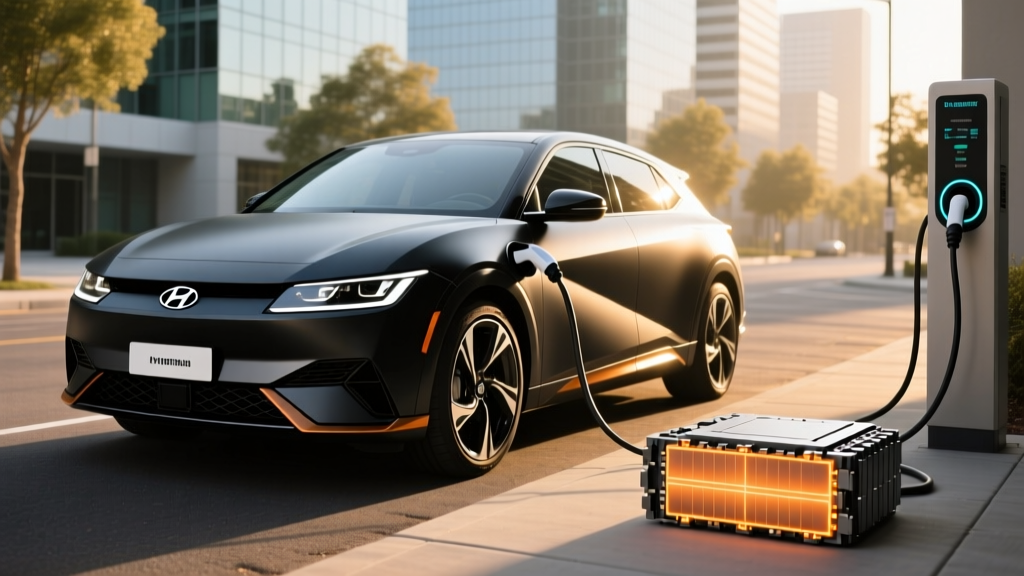
Hyundai's E-GMP platform remains one of the best-charging architectures on the market, and the Ioniq 5 N benefits fully. The 800-volt battery system enables a peak DC fast-charge rate of 232 kW, which translates to a 10–80% charge in approximately 18 minutes when the battery is properly preconditioned.
Charging curve reality: Peak 232 kW is sustained from roughly 10% to 45% state of charge. From 45–65%, expect rates around 160–180 kW. Above 80%, charging tapers sharply to protect battery health — a typical 80–100% top-off adds another 25+ minutes. For road trips, plan your stops around 10–80% charges for maximum efficiency.
Starting with the 2025 model year, the Ioniq 5 N ships with a native NACS (North American Charging Standard) port. This means direct access to Tesla's Supercharger network — over 20,000 stalls nationwide — without an adapter. This is a significant practical advantage for Ioniq 5 N lessees who plan road trips, as Supercharger reliability consistently outperforms CCS-based networks in independent surveys.
Home charging tip for lessees: If you're installing a Level 2 home charger, the Ioniq 5 N's onboard charger accepts up to 10.9 kW. A 48-amp hardwired Level 2 station (like a ChargePoint Home Flex or Tesla Wall Connector) on a 60-amp circuit will fully replenish the battery overnight. Budget $500–$1,500 for the equipment and electrician, depending on your panel capacity and run distance.
Performance Specs: Why the "N" Badge Matters
| Spec | Value |
|---|---|
| Drivetrain | Dual-motor AWD |
| Horsepower (N Grin Boost) | 641 hp |
| Torque | 568 lb-ft |
| 0–60 mph | 3.4 seconds |
| Top Speed | 161 mph |
| Battery (usable) | 84 kWh, NMC |
| EPA Range | 221 miles |
| MPGe (combined) | 84 MPGe |
| Curb Weight | ~4,861 lbs |
| Towing Capacity | Not rated (not recommended) |
The Ioniq 5 N is Hyundai's first N-brand electric vehicle, and the engineering effort is evident. The dual-motor setup produces 601 horsepower in standard mode, rising to 641 hp with N Grin Boost engaged (a 10-second burst). The 3.4-second 0–60 time puts it in the same territory as a Porsche 911 Carrera S, though the Ioniq 5 N weighs nearly 1,400 pounds more.
Hyundai's N division added substantial hardware beyond the powertrain: electronically controlled suspension with N-specific tuning, a reinforced body structure, an N-specific thermal management system for sustained track use, N e-Shift (which simulates an 8-speed dual-clutch transmission with synthetic shift shock), and N Sound EQ+ (which generates synthetic engine and exhaust notes through interior and exterior speakers).
Whether these features are gimmicks or genuinely engaging depends on your perspective. On a track, the thermal management system is legitimately impressive — the Ioniq 5 N can sustain multiple hot laps without significant power derating, a common EV limitation. On the street, the synthetic sounds and simulated shifts are polarizing.
Interior, Cargo, and Tech: Practical Enough for Daily Use?
The Ioniq 5 N shares its cabin architecture with the standard Ioniq 5, which means a spacious, flat-floor interior thanks to the E-GMP platform's long 118.1-inch wheelbase.
Passenger space:
- Front headroom: 39.6 inches
- Front legroom: 41.7 inches
- Rear headroom: 38.0 inches
- Rear legroom: 39.4 inches
Cargo volume:
- Behind rear seats: 27.2 cubic feet
- Rear seats folded: 59.3 cubic feet
- Front trunk (frunk): 0.85 cubic feet (minimal — houses electrical components)
The N variant adds heavily bolstered N-specific sport seats with integrated headrests, an N-branded steering wheel with dedicated drive-mode buttons, and a unique digital cluster layout with track-focused telemetry (lap timer, G-meter, battery temperature).
Infotainment: Dual 12.3-inch displays running Hyundai's latest infotainment software with wireless Apple CarPlay and Android Auto, over-the-air updates, and Hyundai's Bluelink connected services. The center stack includes physical climate controls — a welcome practical choice.
Driver assistance (ADAS): The Ioniq 5 N includes Hyundai SmartSense, a SAE Level 2 driver-assistance suite featuring:
- Adaptive cruise control with stop-and-go
- Lane-keeping assist and lane-centering
- Blind-spot monitoring with rear cross-traffic alert
- Forward collision-avoidance assist with pedestrian detection
- Highway Driving Assist (HDA) with lane-change assist
Notable drawbacks: The sport seats, while excellent on a track, are firm for long highway drives. The frunk is essentially useless for storage. Road noise from the 21-inch summer tires is pronounced above 65 mph. And the synthetic powertrain sounds, while toggleable, feel out of place in a $67,000+ vehicle during a quiet commute.
Lease Pricing, Tax Credits, and Total Cost
| Item | Amount |
|---|---|
| Base MSRP (Ioniq 5 N, single trim) | $67,500 |
| Destination charge | $1,495 |
| Typical as-tested (with packages) | $68,995–$71,500 |
| Federal §30D Tax Credit (purchase) | Up to $7,500 (see eligibility below) |
| Estimated monthly lease (36 mo, $4,500 down) | $650–$850/mo (varies by region/dealer) |
Does the Ioniq 5 N Qualify for the Federal EV Tax Credit?
Under current IRS §30D rules, the Ioniq 5 N faces several eligibility hurdles for the full $7,500 federal tax credit if purchased:
- MSRP Cap: The Ioniq 5 N's $67,500 base price falls under the $80,000 SUV/truck cap. ✅ Eligible.
- Buyer Income Cap: AGI must not exceed $300,000 (joint), $225,000 (head of household), or $150,000 (single). Check your tax situation. ⚠️ Varies by buyer.
- Battery Sourcing Requirements: For 2026, both critical minerals and battery component sourcing thresholds apply. Hyundai has been working to localize supply chains, but the Ioniq 5 N's NMC cells may only qualify for the $3,750 partial credit depending on current-year sourcing compliance. ⚠️ Check the DOE/FuelEconomy credit lookup tool at time of purchase.
- Final Assembly: The Ioniq 5 N is assembled in Ulsan, South Korea — which does NOT meet the North American final assembly requirement for a purchase credit. ❌ This likely disqualifies it from the purchase credit.
Is an Ioniq 5 N Lease Smarter Than Buying?
For the Ioniq 5 N specifically, leasing often makes financial sense for three reasons:
- Tax credit access via §45W: The lease loophole can unlock $7,500 in savings that a purchase cannot (due to the South Korea assembly issue).
- Depreciation protection: Performance EVs have historically depreciated faster than mainstream models. A lease transfers residual-value risk to the lessor.
- Warranty coverage: A 36-month lease keeps you fully under Hyundai's bumper-to-bumper warranty (5 years/60,000 miles) and well within the powertrain/battery warranty.
Warranty Coverage
| Coverage | Term |
|---|---|
| New Vehicle (bumper-to-bumper) | 5 years / 60,000 miles |
| Powertrain | 10 years / 100,000 miles |
| EV Battery Capacity | 10 years / 100,000 miles (≥70% retention) |
| Corrosion Perforation | 7 years / unlimited miles |
| Roadside Assistance | 5 years / unlimited miles |
Hyundai's 10-year/100,000-mile battery warranty guarantees the pack will retain at least 70% of its original capacity. Given that NMC chemistry in the E-GMP platform has shown strong degradation data in standard Ioniq 5 models (typically losing 5–8% over the first 100,000 miles), the N variant's battery should hold up well under normal use. However, frequent track use and repeated DC fast-charging at maximum rates could accelerate degradation — something to consider if you plan to use the car as Hyundai's marketing intends.
Ioniq 5 N vs. Competitors: Is It Worth the Lease?
| Spec | Hyundai Ioniq 5 N | Tesla Model Y Performance | Porsche Macan 4 Electric |
|---|---|---|---|
| Base MSRP | $67,500 | $53,490 | $84,800 |
| 0–60 mph | 3.4 sec | 3.5 sec | 4.9 sec |
| EPA Range | 221 mi | 277 mi | 307 mi |
| HP | 641 | 456 | 402 |
| Peak DC Charge | 232 kW | 250 kW | 270 kW |
| Battery (usable) | 84 kWh NMC | 75 kWh NMC | 94 kWh NMC |
| Track Focus | Very High | Moderate | Moderate |
Choose the Ioniq 5 N If:
- You want a genuine track-capable EV with sustained performance
- You value analog-feeling driving engagement over range efficiency
- Your daily commute is short and you charge at home nightly
- You can access the §45W lease credit to offset the MSRP
Choose a Competitor If:
- Range is a priority (Model Y Performance: 277 mi; Macan 4: 307 mi)
- You need a more comfortable daily driver (Macan 4 rides better)
- Budget is a concern (Model Y Performance starts $14K lower)
- You want the broadest Supercharger access without question (Tesla)
Pros and Cons
✅ Pros
- 641 hp and 3.4s 0–60 — supercar acceleration in a practical hatchback
- Best-in-class track thermal management among performance EVs
- 232 kW DC fast-charging with native NACS (Supercharger access)
- 10-year/100,000-mile battery and powertrain warranty
- Spacious interior with generous rear legroom (39.4 inches)
- Lease loophole (§45W) can unlock $7,500 credit for non-US-built EV
- Unique character — no other EV offers this blend of track focus and practicality
❌ Cons
- 221-mile EPA range is the lowest in its class; ~160 mi in cold weather
- 40 kWh/100mi efficiency means expensive charging vs. standard Ioniq 5
- $67,500 MSRP is steep for a Hyundai badge
- Firm sport seats and high road noise reduce daily comfort
- Frunk is virtually non-existent (0.85 cu ft)
- Not rated for towing
- Simulated shifts and synthetic sounds feel gimmicky to some drivers
- South Korea assembly likely disqualifies purchase from §30D credit
Who the Ioniq 5 N Lease Suits Best
The ideal Ioniq 5 N lessee is an enthusiast driver with a short commute and home charging access who wants a single vehicle that can serve as a daily driver on weekdays and a track car on weekends. It's for the person who previously owned a BMW M3 or Mercedes-AMG C63 and wants to go electric without giving up driving engagement.
It is not the right choice for:
- Long-distance commuters (100+ miles daily) who would charge too frequently
- Families who road-trip often — the 221-mile range and 180-mile cold-weather reality make interstate travel tedious
- Budget-conscious buyers — the Model Y Performance delivers 90% of the thrills for $14,000 less with 56 more miles of range
- Apartment dwellers without home charging — relying on public DC fast-charging with a 40 kWh/100mi consumption rate gets expensive fast
Frequently Asked Questions
What is the real-world range of the Ioniq 5 N?
The EPA rates the Ioniq 5 N at 221 miles. In real-world highway driving at 70–75 mph, expect 180–200 miles. In cold weather (below 32°F), range drops to approximately 160–180 miles. Aggressive driving will reduce range further — on a track, expect to consume the entire battery in under 50 miles.
How fast does the Ioniq 5 N charge?
On a DC fast charger, the Ioniq 5 N peaks at 232 kW and charges from 10–80% in approximately 18 minutes with battery preconditioning. On a Level 2 home charger (10.9 kW), a full charge takes about 8.5 hours. The native NACS port provides direct Tesla Supercharger access.
How much does an Ioniq 5 N lease cost per month?
Based on current market data, expect $650–$850 per month on a 36-month lease with approximately $4,500 due at signing. If the lessor passes through the §45W commercial credit ($7,500), monthly payments can drop significantly. Exact pricing varies by dealer, region, credit tier, and current Hyundai incentives.
Does the Ioniq 5 N qualify for the $7,500 federal tax credit?
For a purchase, the Ioniq 5 N likely does NOT qualify for the §30D credit because it is assembled in South Korea, failing the North American final assembly requirement. However, for a lease, the leasing company may claim the §45W Commercial Clean Vehicle Credit (up to $7,500) and pass the savings to you as a cap-cost reduction. Confirm with your dealer.
Is the Ioniq 5 N worth it over the Tesla Model Y Performance?
It depends on your priorities. The Model Y Performance is $14,000 cheaper, has 56 more miles of EPA range (277 vs. 221), and offers the most reliable charging network. The Ioniq 5 N has significantly more power (641 vs. 456 hp), superior track thermal management, and a more engaging driver experience. If track days matter, the Ioniq 5 N is worth the premium. If daily practicality and value matter more, the Model Y Performance wins.
Can I tow with the Ioniq 5 N?
No. The Ioniq 5 N is not rated for towing. If you need towing capability, look at the standard Ioniq 5 (rated up to 2,300 lbs with the towing package) or a Rivian R1S/R1T.
What is the battery warranty on the Ioniq 5 N?
Hyundai covers the Ioniq 5 N's battery for 10 years or 100,000 miles, guaranteeing at least 70% capacity retention. The powertrain is also covered for 10 years/100,000 miles, and bumper-to-bumper coverage runs 5 years/60,000 miles.