If you have been following the electric-vehicle startup space, you have likely heard of Canoo Inc. — the company that promised a radically reimagined, skateboard-platform EV with a lounge-like cabin and a subscription-first ownership model. The Canoo Lifestyle Vehicle (LV) has generated years of headlines, concept renders, and pre-order campaigns. But as of early 2026, the critical question for prospective buyers remains: can you actually buy one, and do the specs hold up against established competitors?
This profile breaks down everything we know about the Canoo Lifestyle Vehicle — from its announced battery and range figures to its charging architecture, projected pricing, and federal tax credit outlook. Where data is preliminary or company-stated (rather than EPA-verified), we flag it clearly so you can make an informed decision.
Canoo Inc. at a Glance: What Is the Lifestyle Vehicle?
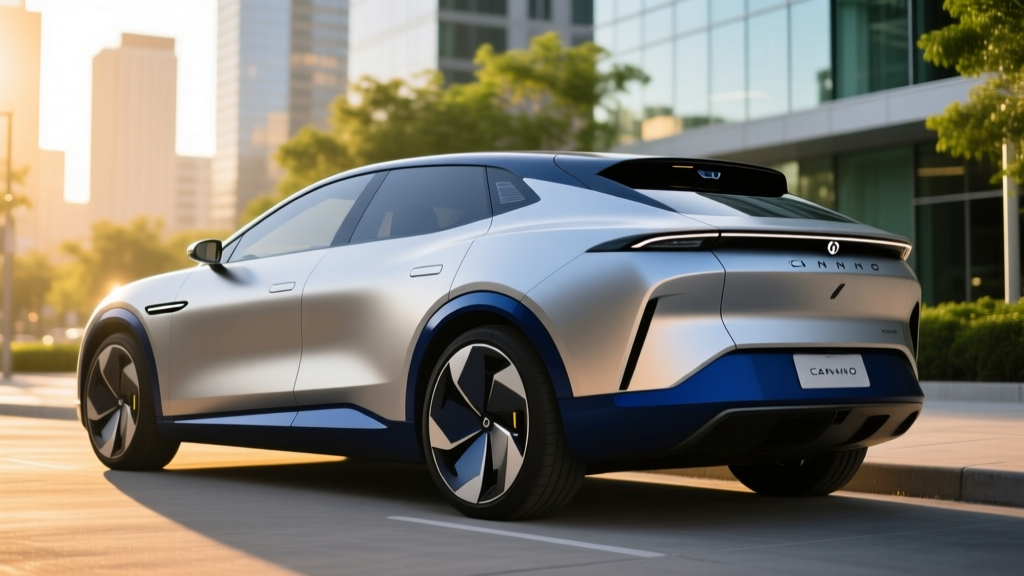
The Canoo Lifestyle Vehicle is a multi-purpose electric vehicle built on the company's proprietary skateboard platform — a flat chassis housing the battery pack, motors, and suspension, with a cab-forward "pod" body sitting on top. Canoo has pitched the LV in several configurations: a base passenger model, a premium "Lifestyle Delivery Vehicle" variant, and a planned pickup truck derivative. The passenger LV seats up to seven in a lounge-style layout with no traditional hood or engine bay, maximizing interior volume relative to its compact exterior footprint.
Canoo originally targeted a 2021-2022 production timeline. That slipped repeatedly due to funding challenges, manufacturing delays, and leadership changes. As of early 2026, Canoo Inc. has begun limited production at its facility in Oklahoma City, with initial vehicles earmarked for fleet and commercial customers. Consumer retail sales remain restricted and are not yet broadly available nationwide.
Battery, Range, and Efficiency
Canoo has stated the Lifestyle Vehicle uses an 80 kWh battery pack (usable capacity). The company initially referenced NMC (nickel-manganese-cobalt) chemistry for its skateboard platform, which offers higher energy density than LFP (lithium iron phosphate) but typically carries a higher cost and slightly faster degradation over time. Canoo has not publicly confirmed a switch to LFP for the production LV as of this writing.
| Spec | Value |
|---|---|
| Battery Capacity (Usable) | 80 kWh |
| Chemistry | NMC (announced) |
| EPA Estimated Range | ~230 miles (company target; pending full EPA cert.) |
| Efficiency (Projected) | ~2.9 kWh/mile (~34 kWh/100 mi) |
| Drivetrain | RWD (single motor); AWD (dual motor) planned |
Canoo has targeted approximately 230 miles EPA for the base RWD configuration. However, the LV's boxy, upright shape creates significant aerodynamic drag. In real-world highway driving at 70+ mph, expect range to drop to roughly 170–195 miles. In cold weather (below 32°F / 0°C), NMC packs typically lose 20–30% of range without preconditioning — putting winter highway range potentially as low as 140–160 miles. Canoo has referenced a heat pump for cabin climate control, which helps, but the vehicle's large glass surface area and upright profile work against efficiency. For context, the similarly boxy but larger Rivian R1S achieves around 316 miles EPA with a 149 kWh pack — illustrating how much energy the LV's shape demands per mile.
Charging Speed: DC Fast Charge and Home Level 2
Charging speed is where early-stage EV companies often stumble, and Canoo is no exception. The company has referenced DC fast-charging capability but has been less specific about sustained charge rates and the full charge curve than established OEMs like Hyundai or Tesla.
| Level | Power (kW) | Speed / Time | Connector |
|---|---|---|---|
| Level 1 (120V) | ~1.4 kW | ~3–4 mi/hr | NACS / J1772 adapter |
| Level 2 (240V) | ~11.5 kW (est.) | ~28–33 mi/hr; full charge ~8 hrs | NACS (native, 2025+ production) |
| DC Fast Charge | ~150 kW peak (announced) | 10–80% in ~30 min (est.) | NACS |
A few critical notes on these numbers:
- Peak kW is not sustained kW. A 150 kW peak means the vehicle may hit that rate briefly at a low state of charge (around 10–20% SoC) but will taper significantly as the battery fills. Expect average charging rates closer to 90–110 kW across a 10–80% session, which is typical for vehicles in this class without advanced 800V architectures.
- The ~30-minute 10–80% estimate assumes ideal conditions — a charger capable of delivering 150+ kW, a preconditioned battery, and ambient temperatures around 65–75°F. In cold weather without preconditioning, that time could stretch to 45+ minutes.
- Canoo has adopted the NACS (Tesla) connector for newer production vehicles, aligning with the broader industry shift. This grants access to Tesla Supercharger networks via adapter or native port, which is a significant practical advantage for road-trip charging.
For home charging, an 11.5 kW Level 2 setup on a 48-amp circuit would replenish the 80 kWh pack in roughly 7–8 hours — standard overnight charging territory. Installation costs for a Level 2 home charger typically run $800–$2,500 depending on whether your electrical panel needs an upgrade (a 200-amp panel is recommended). Always consult a licensed electrician for a site-specific quote.
Performance and Driving Dynamics
The Canoo Lifestyle Vehicle was never pitched as a performance EV, and its specs reflect that. The base single-motor RWD configuration is estimated to produce around 200 horsepower and 250 lb-ft of torque, with a 0–60 mph time in the 7.5–8.5 second range. A dual-motor AWD variant has been referenced with approximately 300+ hp, which would drop 0–60 to roughly 6 seconds, but this variant is not yet in confirmed production for retail buyers.
Driving dynamics are shaped by the skateboard platform's low center of gravity, which helps mitigate body roll despite the vehicle's tall profile. However, the LV's upright windshield and large glass area create noticeable wind noise at highway speeds — a trade-off for the panoramic visibility that defines the cabin experience. Ride quality on the base 18-inch wheels is reportedly compliant, prioritizing comfort over sportiness.
| Metric | RWD Base | AWD (Planned) |
|---|---|---|
| Horsepower | ~200 hp | ~300+ hp |
| Torque | ~250 lb-ft | ~350 lb-ft (est.) |
| 0–60 mph | ~7.5–8.5 sec | ~6.0 sec (est.) |
| Top Speed | ~110 mph (gov.) | TBD |
Interior Space, Tech, and Standout Features
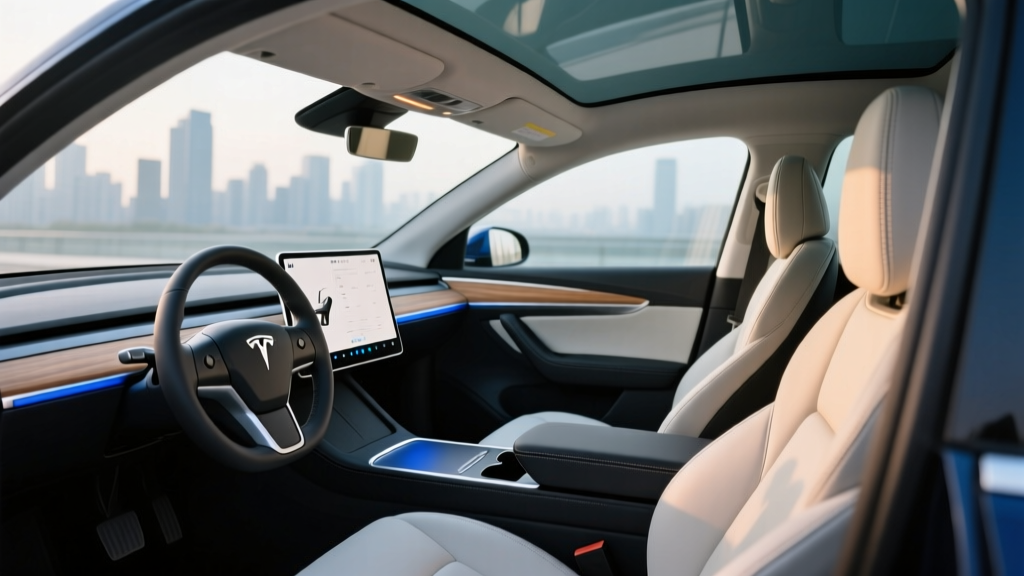
The Canoo LV's interior is its defining feature — and the primary reason buyers have been willing to wait through years of delays. The cab-forward design eliminates the traditional hood, pushing the windshield far forward and creating an airy, van-like cabin.
Passenger and cargo dimensions (company-stated):
- Seating: Up to 7 passengers in a three-row lounge configuration
- Front legroom: ~43 inches (estimated, bench-style seating)
- Rear legroom (third row): ~32 inches
- Cargo volume behind third row: ~15 cu ft
- Cargo volume with third row folded: ~55 cu ft
- Cargo volume with all rear rows folded: ~120+ cu ft
- Side cargo doors: Dual sliding doors with wide openings for easy loading
Notable tech features include:
- A large central touchscreen (15.6-inch estimated) running a proprietary infotainment OS with wireless Apple CarPlay and Android Auto
- A steer-by-wire system (no mechanical connection between steering wheel and wheels) — a bold engineering choice that eliminates the steering column and enables the flat-floor cabin layout
- Level 2 driver-assistance suite (ADAS) including adaptive cruise control, lane-centering, automatic emergency braking, and blind-spot monitoring. Note: This is SAE Level 2 — the driver must remain fully engaged. It is not autonomous or "self-driving."
- Over-the-air (OTA) software updates for powertrain calibration, infotainment, and ADAS improvements
- V2L (vehicle-to-load) capability, allowing the battery to power external devices — useful for camping or job-site use
Notable drawbacks:
- Steer-by-wire is unproven at scale in consumer vehicles; early adopters may face calibration or reliability issues
- Large glass area creates a greenhouse effect in hot climates — robust cabin cooling is essential
- No frunk (front trunk) — the skateboard platform's front section houses electronics, not storage
- Limited service network compared to Tesla, Ford, or Hyundai — repairs may require shipping to Oklahoma or waiting for mobile service
Pricing, Trims, and Federal Tax Credit Eligibility
Canoo originally targeted a starting price around $34,750 for the base LV, but inflation, supply-chain pressures, and production realities have pushed estimates higher. As of early 2026, the anticipated pricing structure is:
| Trim / Config | Est. MSRP | §30D Credit Eligible? | Est. After Credit |
|---|---|---|---|
| Base RWD (5-seat) | ~$42,000 | Possible (see rules below) | ~$34,500 (if $7,500) |
| Premium RWD (7-seat) | ~$49,500 | Possible | ~$42,000 (if $7,500) |
| AWD (when available) | ~$55,000+ | Subject to MSRP cap | TBD |
Does the Canoo LV Qualify for the Federal EV Tax Credit?
Under IRS §30D rules for 2026, eligibility for up to $7,500 in federal tax credits depends on several factors:
- MSRP Cap: The vehicle must have an MSRP at or below $55,000 for sedans/wagons or $80,000 for SUVs/vans/pickups. The Canoo LV, classified as a multi-purpose vehicle, likely falls under the $80,000 cap — making all announced trims eligible on price.
- Buyer Income Cap: Modified adjusted gross income (MAGI) must not exceed $150,000 (single), $225,000 (head of household), or $300,000 (joint filers).
- Battery Sourcing Requirements: At least a specified percentage of critical minerals must be sourced from the U.S. or free-trade-agreement partners, and battery components must be manufactured or assembled in North America. This is where Canoo's eligibility is uncertain. Canoo has stated its skateboard platform is assembled in the U.S., but detailed battery-cell sourcing (likely from Asian suppliers) has not been publicly confirmed as meeting 2026 critical-mineral thresholds.
- Point-of-Sale Transfer: If eligible, the credit can be transferred to the dealer at purchase, reducing the upfront cost rather than requiring a year-end tax filing.
- Final Assembly: Must occur in North America. Canoo's Oklahoma City plant satisfies this requirement.
Bottom line: Do not assume the full $7,500 credit until Canoo publishes official battery-sourcing documentation and the IRS confirms the LV on its qualified vehicles list. Consult a tax professional before factoring the credit into your purchase decision.
Warranty, Ownership Costs, and Service Network
Canoo has referenced a standard warranty package, but final terms for retail vehicles have not been fully published. Based on company statements and industry-standard EV warranties, expect:
- Battery/Powertrain Warranty: 8 years / 100,000 miles (minimum required by the EPA for EV certification; most OEMs match or exceed this)
- Battery Capacity Retention Threshold: Typically 70% of original capacity during the warranty period — but Canoo has not confirmed its specific threshold
- Bumper-to-Bumper: 3 years / 36,000 miles (estimated)
- Roadside Assistance: Likely included for the basic warranty period
The bigger ownership concern is service accessibility. Unlike Tesla (with 1,200+ service centers and mobile technicians nationwide) or Hyundai/Kia (with thousands of dealers), Canoo's service infrastructure is minimal. Early owners may need to rely on mobile service technicians, ship components back to Oklahoma, or wait for Canoo to expand its service footprint. This is a real risk for buyers outside Oklahoma, Texas, and the company's initial launch markets.
Insurance costs for startup EVs tend to run 15–25% higher than equivalent models from established brands, due to limited crash-test data, higher repair costs, and insurer uncertainty. Expect annual premiums in the $1,800–$2,400 range depending on your state and driving record.
How the Canoo LV Compares to Key Competitors
The Canoo Lifestyle Vehicle doesn't have a direct rival — its pod-like form factor is unique. But buyers cross-shopping it will likely consider these alternatives:
| Spec | Canoo LV (Base) | VW ID. Buzz | Tesla Model Y (LR) | Kia EV9 (LR RWD) |
|---|---|---|---|---|
| EPA Range | ~230 mi (est.) | 234 mi | 320 mi | 304 mi |
| Battery | 80 kWh NMC | 91 kWh NMC | 75 kWh (usable) | 100 kWh NMC |
| DC Fast Charge | ~150 kW | 175 kW | 250 kW | 210 kW |
| 10–80% Time | ~30 min | ~26 min | ~20 min | ~24 min |
| Seating | 5–7 | 7 | 5–7 | 6–7 |
| Base MSRP (2026) | ~$42,000 | ~$59,995 | ~$44,990 | ~$54,900 |
| Availability | Limited / Fleet | On Sale | On Sale | On Sale |
Choose the Canoo LV if:
- You want a uniquely styled, cab-forward EV with maximum interior volume in a compact footprint
- You are a fleet or commercial buyer who can absorb early-adopter risk and limited service infrastructure
- You value V2L capability and a flat-floor lounge layout for urban delivery, mobile workspace, or family hauling
- You are willing to wait for broader retail availability and confirmed tax-credit eligibility
- You need proven long-range highway capability (the Tesla Model Y LR or Kia EV9 significantly outperform the LV here)
- You want immediate retail availability and a nationwide service network
- You require confirmed EPA range data and verified §30D tax-credit eligibility before purchasing
- Highway road trips are a regular part of your driving — the LV's ~170–195 mi real-world highway range and 150 kW charge rate will mean frequent, longer stops
Pros and Cons at a Glance
✅ Pros
- Unique cab-forward design with class-leading interior volume for its footprint
- Flat-floor skateboard platform enables flexible seating and cargo configurations
- V2L capability for off-grid power
- Steer-by-wire eliminates steering column for more cabin space
- NACS connector for Tesla Supercharger access
- U.S. final assembly (Oklahoma City)
❌ Cons
- Not yet broadly available to retail consumers
- Range (est. 230 mi EPA) lags competitors significantly
- DC fast charging at ~150 kW peak is below the class standard (200–350 kW)
- Steer-by-wire reliability is unproven at consumer scale
- Minimal service network outside initial launch markets
- Tax credit eligibility unconfirmed pending battery-sourcing disclosure
- No frunk; limited exterior storage
- Large glass area creates thermal management challenges
Frequently Asked Questions
What is the real-world range of the Canoo Lifestyle Vehicle?
Canoo targets approximately 230 miles EPA for the base RWD model. In real-world highway driving, expect roughly 170–195 miles. In cold weather, that could drop to 140–160 miles without effective battery preconditioning. The LV's boxy aerodynamics are the primary range limiter.
How fast does the Canoo LV charge?
On DC fast chargers, Canoo has announced a peak rate of approximately 150 kW, yielding an estimated 10–80% charge time of about 30 minutes under ideal conditions. At home on Level 2 (240V, ~11.5 kW), a full charge takes roughly 7–8 hours. These figures are preliminary and may change with production vehicles.
How much does the Canoo LV cost after tax credits?
The base RWD model is estimated at approximately $42,000 MSRP. If the vehicle qualifies for the full $7,500 federal §30D credit — which depends on battery-sourcing compliance, buyer income, and MSRP caps — the effective price could drop to around $34,500. However, credit eligibility is not yet confirmed for the Canoo LV. Always verify on the IRS qualified vehicles list before purchasing.
Is the Canoo LV worth buying vs. the VW ID. Buzz or Tesla Model Y?
If you prioritize uniqueness, interior flexibility, and V2L capability, the LV is compelling — but it carries significant early-adopter risk. The VW ID. Buzz offers similar van-like space with proven EPA certification (234 mi range, 175 kW charging) and nationwide dealer support. The Tesla Model Y Long Range offers 320 mi of range, 250 kW Supercharging, and a mature service network for a similar starting price. For most retail buyers in 2026, the Model Y or ID. Buzz are safer bets unless you specifically need the LV's unique form factor.
Does the Canoo LV qualify for the $7,500 federal EV tax credit?
Possibly, but it is not yet confirmed. The LV's MSRP falls under the $80,000 SUV/van cap, and final assembly occurs in Oklahoma (North America). However, the battery cell and critical-mineral sourcing requirements under §30D have not been publicly verified for Canoo's supply chain. Check the EPA/DOE qualified vehicle list and consult a tax professional before relying on the credit.
When can I actually buy a Canoo Lifestyle Vehicle?
As of early 2026, Canoo has begun limited production primarily for fleet and commercial customers. Retail consumer sales are expected to expand gradually, but there is no confirmed nationwide availability date. If you have a pre-order, contact Canoo directly for your queue status. For most individual buyers, availability remains restricted.
What is the battery warranty on the Canoo LV?
Canoo has referenced an 8-year / 100,000-mile battery and powertrain warranty, which aligns with the federal minimum for EV certification. The specific capacity-retention threshold (e.g., 70% of original capacity) has not been officially confirmed. Always request written warranty terms before purchase.
Sources: Canoo Inc. official specifications and press releases; IRS §30D Clean Vehicle Credit guidelines; U.S. EPA Fuel Economy; NHTSA. All specs are subject to change. Verify final figures with the manufacturer and official government sources before purchasing.