2026 Hyundai Ioniq 5: Pricing, Range, and Real-World Ownership Data
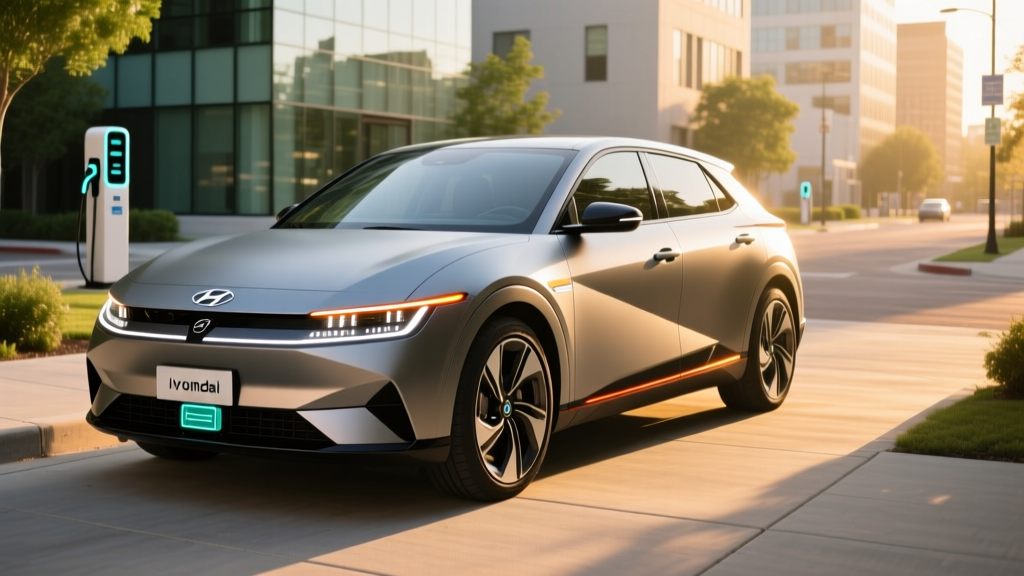
The Hyundai Ioniq 5 remains one of the most compelling electric crossovers on the market, blending retro-futuristic styling with genuine 800-volt fast-charging capability and practical daily range. For 2026, Hyundai has refined the lineup with updated battery options, expanded NACS native charging compatibility, and competitive pricing that undercuts many rivals. If you're researching the Ioniq 5 MSRP and trying to determine which trim delivers the best value after federal tax credits, this guide breaks down every number you need — from base pricing to real-world highway range and charging-curve behavior.
The 2026 Ioniq 5 SE/SEL/Limited with the 84.0 kWh battery and RWD achieves an EPA-estimated 318 miles of range. In real-world highway driving at 70 mph, expect approximately 265–285 miles. In cold weather (below 32°F), range can drop 20–30%, yielding roughly 220–255 miles depending on cabin heat usage and terrain. The AWD variant with the same battery drops to an EPA 290 miles, with real-world highway figures around 240–260 miles.
2026 Ioniq 5 MSRP by Trim Level
Hyundai offers the Ioniq 5 across several trims for 2026, with pricing that positions it competitively against the Tesla Model Y, Ford Mustang Mach-E, and Kia EV6. Below is the current MSRP breakdown before any incentives or destination charges.
| Trim | Drivetrain | Battery | EPA Range | MSRP |
|---|---|---|---|---|
| SE Standard Range | RWD | 63.0 kWh (LFP) | 245 mi | $42,600 |
| SE | RWD | 84.0 kWh (NMC) | 318 mi | $47,150 |
| SE | AWD | 84.0 kWh (NMC) | 290 mi | $51,150 |
| SEL | RWD | 84.0 kWh (NMC) | 318 mi | $49,600 |
| SEL | AWD | 84.0 kWh (NMC) | 290 mi | $53,600 |
| Limited | AWD | 84.0 kWh (NMC) | 290 mi | $58,200 |
| N (Performance) | AWD | 84.0 kWh (NMC) | 265 mi | $66,500 |
All prices exclude destination charges (~$1,395). MSRP figures reflect 2026 model-year pricing as published by Hyundai. Prices subject to change; verify with dealer.
Federal Tax Credit Eligibility (IRS §30D)
The Ioniq 5 is assembled at Hyundai's Metaplant in Ellabell, Georgia, which qualifies it for federal tax credit consideration under current IRS §30D rules. However, eligibility is not automatic — it depends on multiple factors:
- Vehicle MSRP cap: SUVs must be under $80,000 MSRP — all Ioniq 5 trims qualify.
- Buyer income cap: Modified AGI must not exceed $300,000 (joint filers), $225,000 (head of household), or $150,000 (single filers).
- Battery sourcing requirements: The vehicle must meet critical mineral and battery component sourcing thresholds set by the IRS for the applicable tax year. These thresholds increase annually and can affect eligibility mid-year.
- Point-of-sale transfer: Eligible buyers can transfer the credit to the dealer at purchase, reducing the purchase price directly rather than waiting for tax filing.
| Trim | MSRP | Est. Price After $7,500 Credit* |
|---|---|---|
| SE Standard Range RWD | $42,600 | ~$35,100 |
| SE RWD | $47,150 | ~$39,650 |
| SEL RWD | $49,600 | ~$42,100 |
| Limited AWD | $58,200 | ~$50,700 |
*Assumes full $7,500 §30D credit eligibility. Actual credit amount ($0, $3,750, or $7,500) depends on battery-sourcing compliance at time of purchase. Verify current eligibility at IRS.gov clean vehicle credit page before purchasing. Consult a tax professional for personal eligibility.
Charging Speed: DC Fast Charge and Home Level 2
The Ioniq 5's 800-volt E-GMP platform remains one of its strongest technical advantages, enabling DC fast-charge speeds that outperform most competitors in this price bracket. Here's what the numbers look like across charging levels:
| Charging Level | Power | Rate / Time |
|---|---|---|
| Level 1 (120V household) | ~1.4 kW | ~3–4 mi/hr added |
| Level 2 (240V home, 48A) | 10.9 kW | ~32–35 mi/hr added; full charge ~8.5 hrs |
| DC Fast Charge (350 kW station) | Peak ~240 kW | 10–80% in ~18 minutes |
| DC Fast Charge (150 kW station) | Peak ~150 kW | 10–80% in ~25 minutes |
Charging-curve reality check: The Ioniq 5's peak 240 kW rate is achievable only when the battery is preconditioned (navigating to a compatible charger triggers automatic preconditioning) and ambient temperatures are moderate. Above 80% state of charge, the rate tapers significantly — expect 80–100% to take an additional 15–20 minutes. For road trips, plan stops around the 10–80% window to minimize total charging time.
For 2026, the Ioniq 5 comes equipped with the native NACS (Tesla-style) charge port on North American models, eliminating the need for a CCS-to-NACS adapter at Tesla Superchargers. This dramatically expands the available fast-charging network.
Performance, Efficiency, and Powertrain Specs
| Spec | SE Std Range RWD | SE/SEL RWD (84 kWh) | SE/SEL/Limited AWD | Ioniq 5 N |
|---|---|---|---|---|
| Horsepower | 168 hp | 225 hp | 320 hp | 641 hp (w/ N Grin Boost) |
| 0–60 mph | ~7.4 sec | ~6.5 sec | ~4.5 sec | ~3.2 sec |
| Drivetrain | RWD single motor | RWD single motor | Dual-motor AWD | Dual-motor AWD |
| MPGe (combined) | 110 MPGe | 117 MPGe | 103 MPGe | 85 MPGe |
| kWh/100 mi | ~30 | ~29 | ~33 | ~40 |
Efficiency figures sourced from fueleconomy.gov. The RWD long-range variant delivers the best efficiency, making it ideal for commuters prioritizing range over acceleration. The AWD models trade roughly 10–15% efficiency for all-weather traction and significantly quicker acceleration.
Interior Space, Cargo, and Technology
The Ioniq 5's flat floor and long wheelbase (118.1 inches) create cabin space that punches above its compact-crossover class:
- Front legroom: 41.7 inches
- Rear legroom: 39.4 inches
- Cargo volume (rear seats up): 27.2 cu ft
- Cargo volume (rear seats folded): 59.3 cu ft
- Frunk (front trunk): 0.85 cu ft (RWD) / 0.42 cu ft (AWD) — useful for charging cables, not much else
Tech highlights: Dual 12.3-inch displays (cluster + infotainment), wireless Apple CarPlay and Android Auto, Hyundai Digital Key 2 (phone-as-key via NFC/UWB), vehicle-to-load (V2L) capability providing up to 3.6 kW of AC power output, and Highway Driving Assist 2 (SAE Level 2 driver assistance with lane-centering and adaptive cruise).
Notable drawbacks: The rear wiper is absent on earlier builds (some 2026 models may address this). The frunk is impractically small compared to rivals like the Ford Mach-E. Rear visibility is compromised by thick C-pillars. The infotainment system uses a mix of touch-capacitive buttons that can be finicky while driving.
Battery, Warranty, and Long-Term Ownership
The 84.0 kWh battery pack uses NMC (nickel-manganese-cobalt) chemistry in long-range trims, offering high energy density. The Standard Range model uses LFP (lithium iron phosphate) chemistry, which trades some energy density for longer cycle life and the ability to charge routinely to 100% without degradation concerns.
| Attribute | NMC (Long Range) | LFP (Standard Range) |
|---|---|---|
| Energy density | Higher (more range per kg) | Lower |
| Cycle life | ~1,000–1,500 full cycles | ~2,000–3,000+ full cycles |
| Routine 100% charging | Not recommended daily | Recommended periodically |
| Cold-weather performance | Better low-temp output | More range loss in cold |
| Cost | Higher | Lower |
Warranty coverage:
- New vehicle limited warranty: 5 years / 60,000 miles
- Powertrain warranty: 10 years / 100,000 miles
- EV battery warranty: 10 years / 100,000 miles (capacity retention above 70% threshold)
- Complimentary maintenance: 3 years / 36,000 miles
Hyundai's battery warranty is among the industry's best, though the 70% capacity retention threshold is standard rather than generous. Real-world degradation data from early Ioniq 5 owners suggests approximately 5–8% capacity loss over the first 60,000 miles under normal use — well within warranty margins.
Pros, Cons, and Who Should Buy
- Class-leading 800V DC fast charging (10–80% in ~18 min)
- Native NACS port (2026) — full Supercharger access
- Spacious cabin with flat floor and generous rear legroom
- V2L capability for camping, tailgating, or backup power
- Competitive MSRP with federal tax credit eligibility
- 10-year/100,000-mile battery warranty
- Tiny frunk — barely fits charging cables
- No rear wiper on many builds
- Real-world highway range ~15% below EPA sticker
- AWD efficiency penalty noticeable on long trips
- Touch-capacitive controls can distract while driving
- Insurance premiums run 10–20% above ICE equivalents
- You prioritize fast DC charging for frequent road trips
- You want Tesla Supercharger access without adapter hassle
- Flat-floor cabin space and V2L matter for your lifestyle
- You qualify for the full $7,500 federal tax credit
- Maximum cargo volume is critical (Ford Mach-E offers more)
- You need a larger frunk for front storage
- You prefer a more traditional crossover design (Kia EV6 is mechanically similar but styled differently)
Frequently Asked Questions
What is the real-world range of the 2026 Hyundai Ioniq 5?
The EPA estimates 318 miles for the RWD long-range model. In real-world highway driving at sustained speeds, expect 265–285 miles. Cold weather (below freezing) can reduce range by 20–30%, bringing it to approximately 220–255 miles depending on conditions and cabin heating usage.
How fast does the Ioniq 5 charge at home and on the road?
At home on a 240V Level 2 charger (48A), the Ioniq 5 adds approximately 32–35 miles of range per hour, fully charging the 84 kWh battery in about 8.5 hours. On a 350 kW DC fast charger with battery preconditioning, it peaks at ~240 kW and charges from 10–80% in approximately 18 minutes.
How much does the Ioniq 5 cost after federal tax credits?
With full $7,500 §30D credit eligibility, the SE RWD starts around $39,650 (MSRP $47,150 minus credit). The SEL RWD drops to approximately $42,100. Eligibility depends on buyer income caps, battery-sourcing compliance, and the $80,000 MSRP cap for SUVs. Always verify current eligibility on IRS.gov before purchasing.
Does the 2026 Ioniq 5 qualify for the federal EV tax credit?
Yes, the Ioniq 5 is assembled in Georgia and appears on the IRS qualified vehicles list. However, the actual credit amount ($0, $3,750, or $7,500) depends on battery-sourcing requirements that change annually. Buyer income must also fall below IRS thresholds ($150K single / $300K joint). Consult a tax professional and check the IRS clean vehicle credit page for current status.
Is the Ioniq 5 worth buying over the Tesla Model Y or Ford Mach-E?
The Ioniq 5 wins on DC fast-charge speed and V2L capability. The Model Y offers more cargo space, a larger Supercharger network advantage (though this gap is closing with NACS adoption), and over-the-air updates. The Mach-E provides a larger frunk and sportier driving dynamics. If fast charging and unique tech matter most, the Ioniq 5 is a top-tier choice. If cargo volume or software ecosystem is paramount, cross-shop carefully.
What battery chemistry does the Ioniq 5 use?
Long-range trims (SE, SEL, Limited with 84.0 kWh) use NMC (nickel-manganese-cobalt) chemistry for higher energy density. The Standard Range trim (63.0 kWh) uses LFP (lithium iron phosphate), which offers longer cycle life and tolerance for routine 100% charging but less range and weaker cold-weather performance.
Sources: fueleconomy.gov, IRS.gov clean vehicle credits, Hyundai USA official specifications.