Quick Verdict: Who Should Buy a Used 2014 B-Class Electric Drive?
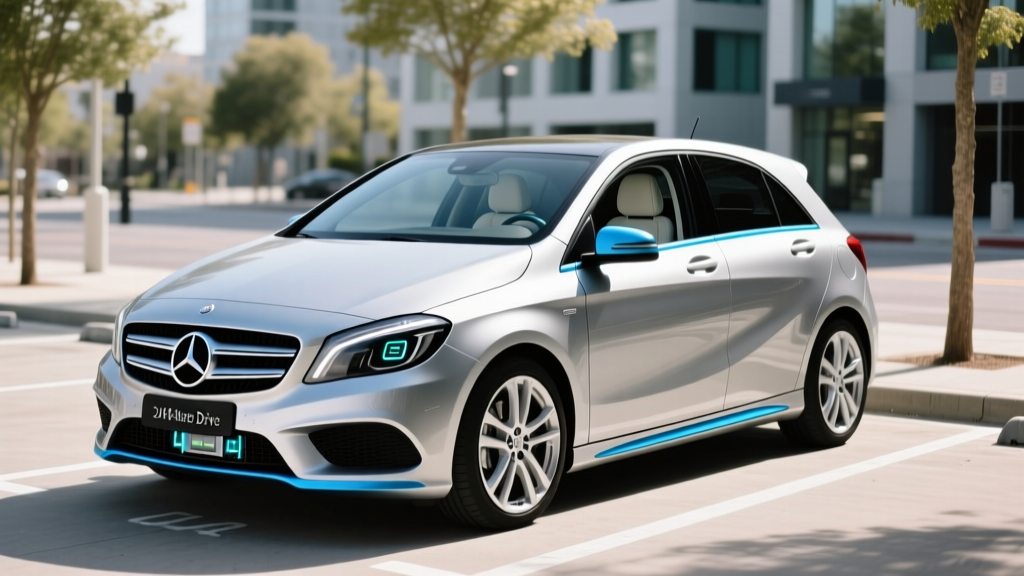
The 2014 Mercedes-Benz B-Class Electric Drive is a discontinued, compliance-era EV with an 87-mile EPA range, a 28 kWh usable battery (36 kWh gross, Tesla-supplied), and no DC fast charging. In 2026, expect to pay $7,000–$12,000 on the used market. It works as a city commuter if you have reliable Level 2 home charging and a short daily drive. It does not work as a primary vehicle for highway trips, cold climates, or anyone without home charging access. Parts availability and high-voltage service are growing concerns as the model ages past the decade mark.
What the 2014 B-Class Electric Drive Actually Is
Mercedes-Benz built the B-Class Electric Drive (later renamed the B250e for 2016–2017) primarily to satisfy California's ZEV mandate. Under the skin, it used a Tesla-supplied powertrain: a 132 kW (177 hp) AC induction motor and a 36 kWh lithium-ion battery pack (approximately 28 kWh usable) sourced from Tesla's energy division. This was one of several automaker partnerships in the early 2010s—Toyota's RAV4 EV used a similar Tesla drivetrain.
The B-Class Electric Drive was rated by the EPA at 87 miles of combined range and 84 MPGe combined. It was sold only in select ZEV states (primarily California and a handful of others) and only through lease programs initially, though many have since entered the used market. Mercedes discontinued the model after the 2017 model year, replacing it eventually with the EQA/EQB line on a dedicated EV platform.
| Spec | Value |
|---|---|
| EPA Range | 87 miles (combined) |
| Battery (Gross / Usable) | 36 kWh / ~28 kWh |
| Battery Chemistry | NMC (nickel-manganese-cobalt) |
| Motor Output | 132 kW / 177 hp, 228 lb-ft torque |
| 0–60 mph | ~7.9 seconds |
| MPGe (City / Hwy / Combined) | 85 / 82 / 84 MPGe |
| Onboard Charger | 10 kW (Level 2 AC only) |
| DC Fast Charging | Not available |
| Level 2 Charge Time (0–100%) | ~3.5 hours at 10 kW |
| Level 1 Charge Time (120V, 1.4 kW) | ~24+ hours |
| Connector | J1772 (AC only) |
| Original MSRP (before incentives) | $41,450 |
| 2026 Used Price Range (est.) | $7,000–$12,000 |
| Original Battery Warranty | 8 years / 100,000 miles (expired) |
Real-World Range: What 87 EPA Miles Means in 2026
The EPA's 87-mile estimate was measured on a new vehicle under controlled conditions. In real-world ownership a decade later, several factors compress that number significantly:
- Battery degradation: A 2014 NMC pack that's been cycled regularly for 10+ years will likely have lost 15–25% of its original capacity. That puts usable capacity closer to 21–24 kWh, reducing real range to roughly 65–75 miles in moderate weather.
- Cold weather: NMC chemistry in freezing temperatures loses an additional 20–30% of range. Expect 45–60 miles on a full charge in winter conditions, particularly with cabin heating running (the B-Class uses a resistive PTC heater, not a heat pump).
- Highway driving: The B-Class's boxy hatchback shape generates substantial drag above 65 mph. Sustained highway speeds of 70–75 mph will reduce range by roughly 15–20% compared to the EPA combined figure.
Range reality check: EPA sticker says 87 miles. Plan for 65–75 miles in fair weather with a degraded battery, and 45–60 miles in cold or highway-heavy driving. If your round-trip commute exceeds 50 miles, this vehicle will cause daily stress.
Charging: The No-DC-Fast-Charge Limitation
This is the single biggest ownership constraint. The 2014 B-Class Electric Drive has no DC fast charging capability whatsoever. It accepts AC power only, through a J1772 connector, with a 10 kW onboard charger.
| Level | Power | Approx. Miles Added per Hour | Full Charge Time (degraded ~24 kWh usable) |
|---|---|---|---|
| Level 1 (120V standard outlet) | ~1.4 kW | ~5 miles/hr | ~17 hours |
| Level 2 (240V, 40A circuit) | Up to 10 kW | ~35 miles/hr | ~2.5 hours |
| DC Fast Charge | Not supported | N/A | N/A |
For daily use, a home Level 2 charger is essentially mandatory. A Level 1 (120V) outlet will add only about 5 miles of range per hour of charging—meaning an overnight 10-hour plug-in yields roughly 50 miles. That may work for very short commutes but leaves no margin for detours, climate use, or battery degradation.
Without DC fast charging, road trips are impractical. Even if you find a public Level 2 station, a 30-minute stop adds only about 17 miles of range. This vehicle is fundamentally a local commuter, and treating it otherwise will result in frustration.
Cost Breakdown: Purchase, Charging, and Ownership
At $7,000–$12,000 on the used market, the B-Class Electric Drive is one of the cheapest ways into a Mercedes-branded EV. But the low purchase price comes with ownership caveats that differ sharply from a modern EV.
| Cost Category | 2014 B-Class Electric (est.) | Gas Hatchback Baseline (e.g., 2014 Honda Fit) |
|---|---|---|
| Purchase Price | $9,500 (mid-range used) | $10,000 (similar age/mileage) |
| Annual Fuel / Energy (10,000 mi/yr) | $300–$450 (home Level 2 at $0.13/kWh) | $1,200–$1,500 (gas at $3.40/gal, 33 MPG) |
| Annual Maintenance | $400–$700 (tires, cabin filter, brake fluid, 12V battery) | $600–$1,000 (oil, filters, brakes, belts) |
| Insurance (annual) | $1,100–$1,600 | $900–$1,300 |
| Major Risk: Battery Replacement | $8,000–$15,000 (if needed; limited availability) | $2,500–$4,000 (engine/transmission repair) |
| Federal Tax Credit (§30D) | Not eligible (used EV credit up to $4,000 may apply) | None |
Energy savings are real: At a national average electricity rate of ~$0.13/kWh, charging the B-Class's ~24 kWh usable battery from empty to full costs about $3.12. That's roughly $0.04–$0.05 per mile. A comparable gas car at 33 MPG and $3.40/gallon costs about $0.10 per mile. Over 10,000 miles annually, that's a $600–$900/year fuel savings.
Used EV tax credit: Under current IRS §25E rules, you may qualify for up to $4,000 (30% of sale price, capped) if the vehicle sells for $25,000 or less, you buy from a licensed dealer, and your income falls below the threshold ($75,000 single / $150,000 joint). The vehicle must be at least two model years old, which a 2014 easily satisfies. Verify eligibility with a tax professional—rules are subject to change.
Battery Health: The Critical Pre-Purchase Check
The original 8-year/100,000-mile battery warranty has expired on all 2014 models. You are buying this car entirely on battery condition, and replacement options are extremely limited.
The Tesla-supplied NMC pack was well-engineered for its era, but NMC chemistry degrades measurably over time and charge cycles. Key considerations:
- Expected degradation at 10+ years: Industry data suggests 15–25% capacity loss is typical for NMC packs of this vintage, depending on charging habits, climate exposure, and mileage.
- No official replacement program: Mercedes-Benz does not currently offer a new replacement battery for this model. Third-party rebuilds or refurbished packs from salvage vehicles are the only realistic options, at costs of $8,000–$15,000.
- Pre-purchase inspection: Before buying, request a State of Health (SoH) reading from a Mercedes dealer or an EV-specialist shop. An SoH below 75% means your real-world range may drop below 60 miles—and the battery is a ticking time bomb for replacement cost.
- 12V battery: Like all EVs, the B-Class has a standard 12V auxiliary battery that powers electronics. These typically need replacement every 3–5 years (~$200–$350). A dead 12V battery will prevent the car from starting, even if the high-voltage pack is fully charged.
How It Compares: B-Class Electric vs. Gas and Modern EVs
| Metric | 2014 B-Class Electric | 2014 Honda Fit (Gas) | 2017 Nissan Leaf (30 kWh) | 2018 Chevrolet Bolt EV |
|---|---|---|---|---|
| Used Price (est.) | $7K–$12K | $8K–$12K | $8K–$13K | $12K–$17K |
| EPA Range | 87 mi | ~330 mi (tank) | 107 mi | 238 mi |
| DC Fast Charging | No | N/A (gas) | Yes (CHAdeMO, 50 kW) | Yes (CCS, 55 kW) |
| Annual Fuel Cost (10K mi) | $300–$450 | $1,200–$1,500 | $350–$500 | $400–$550 |
| Practicality as Only Car | Low | High | Low–Moderate | High |
| Parts/Service Availability | Declining | Excellent | Moderate | Good |
The B-Class Electric's Mercedes interior quality, quiet ride, and peppy 177 hp motor are genuine advantages over a Nissan Leaf or Honda Fit. But 87 miles of new range (likely 65–75 degraded) with no fast charging makes it a difficult recommendation as a primary vehicle. The EPA's official fuel economy data confirms the 84 MPGe combined rating—respectable for its era, but the small battery is the limiting factor.
If you're spending in the $10,000–$15,000 range, the 2017–2019 Chevrolet Bolt EV offers 238 miles of EPA range, DC fast charging, and far better long-term usability for only slightly more money.
Common Misconceptions About the B-Class Electric
| Myth | Fact |
|---|---|
| "It has a Tesla battery, so it's basically a Tesla." | The drivetrain was Tesla-supplied, but the pack is a bespoke NMC configuration, not interchangeable with any Tesla model. Service and parts are Mercedes-specific, and Tesla's Supercharger network cannot charge this vehicle. |
| "I can fast-charge it at any station." | There is no DC fast-charge port. The car accepts only AC charging (J1772 connector). CCS, CHAdeMO, and NACS DC chargers are all unusable. |
| "87 miles is enough for my commute." | 87 miles is the EPA new-car rating. With 10+ years of battery degradation, cold weather, or highway driving, real range drops to 45–75 miles. Map your actual commute round-trip plus errands before deciding. |
| "Mercedes will replace the battery if it fails." | The 8-year/100,000-mile warranty has expired on all 2014 models. Mercedes does not offer a new replacement pack. Third-party options are expensive and scarce. |
| "It qualifies for the $7,500 federal tax credit." | The §30D new-vehicle credit does not apply to used purchases. The §25E used-EV credit may provide up to $4,000 if all dealer, price, and income requirements are met. Verify with the IRS. |
Decision Framework: Should You Buy One?
Buy the 2014 B-Class Electric Drive if:
- Your daily round-trip driving is under 40 miles, with predictable routes
- You have a garage or dedicated parking spot where you can install a Level 2 (240V) charger
- You live in a mild climate (rarely below freezing)
- This is a second vehicle in a two-car household
- You can get a pre-purchase battery SoH reading above 80%
- You value Mercedes build quality and want a cheap entry into EV commuting
Do NOT buy the 2014 B-Class Electric Drive if:
- Your daily round-trip exceeds 50 miles
- You rely on street parking or apartment living without charging access
- You live in a cold-winter climate (regular sub-35°F temperatures)
- This would be your only vehicle
- You need to take highway trips longer than 60 miles one-way
- The battery SoH is below 75% or the seller cannot provide one
- You cannot absorb a potential $8,000–$15,000 battery replacement cost
First-Time EV Buyer Essentials (If This Is Your First Electric Car)
If the B-Class Electric is your introduction to EV ownership, understand these fundamentals before signing:
- Home charging is non-negotiable for this car. Budget $500–$2,000 for a Level 2 (240V, 40-amp) home charger installation by a licensed electrician, plus the cost of a J1772-compatible charging unit ($300–$600 for a quality unit like a ChargePoint Home Flex or Emporia Vue). A panel upgrade to 200A may add $1,500–$3,000 if your home has older 100A service.
- kW vs. kWh: The battery stores 28 kWh of energy (usable). The onboard charger accepts up to 10 kW of power. Think of kWh as the "gallon" equivalent and kW as the "flow rate" of the pump. This car has a small tank and a moderate-speed pump.
- Maintenance is lower but not zero: You'll still need tire rotations (EVs wear tires faster due to instant torque), cabin air filter replacement, brake fluid checks (regen braking means the friction brakes are used less but can corroize from disuse), wiper fluid, and 12V battery replacement.
- Insurance may cost more: Even as a used EV, some insurers charge higher premiums due to repair complexity and high-voltage system training requirements. Get quotes before purchasing.
- Regenerative braking: The B-Class offers adjustable regen via paddle shifters. In its strongest setting, it enables near one-pedal driving in city traffic, which reduces brake wear and recovers energy.
Is the 2014 Mercedes B-Class Electric a good used EV buy in 2026?
It can be a solid budget commuter EV if your daily driving is under 40 miles round-trip, you have home Level 2 charging, and the battery health checks out above 80% SoH. For anything beyond a predictable city commute, its 87-mile EPA range (likely 65–75 miles degraded) and lack of DC fast charging make it impractical as a primary vehicle.
How much does it cost to charge the B-Class Electric at home?
At the national average electricity rate of ~$0.13/kWh, a full charge of the ~24 kWh usable battery costs approximately $3.12. Over 10,000 miles per year, expect to spend $300–$450 on electricity—compared to $1,200–$1,500 for gasoline in a comparable hatchback.
Can I use a Tesla Supercharger with the B-Class Electric?
No. The B-Class Electric has no DC fast charging capability at all. It charges only via AC using a J1772 connector. Tesla Superchargers, Electrify America CCS stations, and all other DC networks are unusable. You are limited to Level 1 (120V) and Level 2 (240V) AC charging.
What happens if the high-voltage battery fails?
The original 8-year/100,000-mile warranty has expired on all 2014 models. Mercedes-Benz does not currently manufacture a replacement pack. Your options are limited to third-party rebuild services or salvaged packs from wrecked vehicles, at an estimated cost of $8,000–$15,000. This is a significant financial risk that should factor into your purchase decision.
Does the 2014 B-Class Electric qualify for any tax credits?
It does not qualify for the §30D new-vehicle credit (that applies only to new purchases). Under the §25E used clean vehicle credit, you may receive up to $4,000 (30% of the sale price, capped at $4,000) if you purchase from a licensed dealer for $25,000 or less and meet income thresholds ($75,000 single / $150,000 joint). Always verify current rules with the IRS and a tax professional.
How does the B-Class Electric compare to a 2014 gas car in daily costs?
The B-Class Electric saves approximately $600–$900 per year in fuel costs versus a similar-age gas hatchback, plus modest maintenance savings (no oil changes, less brake wear). However, insurance may run $100–$300 more annually, and the risk of an out-of-warranty battery replacement ($8,000–$15,000) is a financial exposure that gas cars don't carry at this price point.