If you're researching the 2006 Honda Civic bolt pattern, you're likely planning a wheel upgrade, an EV conversion, or fitting aftermarket rims on one of Honda's most popular compact sedans. The eighth-generation Civic (2006–2011) remains a favorite platform for DIY electric-vehicle swaps thanks to its light curb weight (~2,600 lbs), robust aftermarket support, and spacious engine bay. Getting the wheel fitment right is critical — an incorrect bolt pattern or offset can cause vibration, bearing wear, or dangerous clearance issues.
Below, we break down the exact bolt pattern, center bore, thread size, and offset specs for every 2006 Civic trim, explain what they mean in practical terms, and cover how these numbers matter if you're converting your Civic to electric power.
2006 Honda Civic Bolt Pattern: The Exact Specs
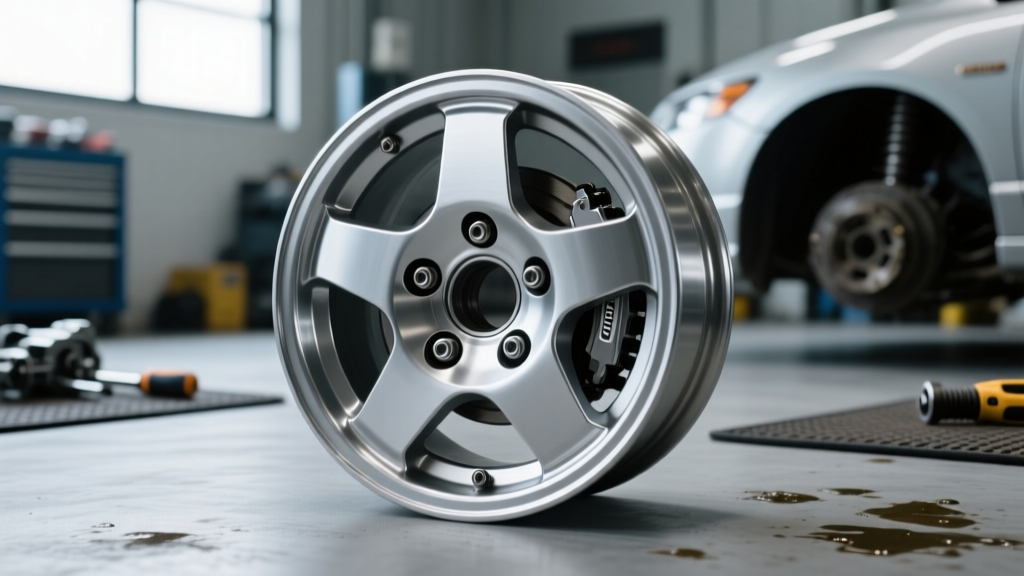
The 2006 Honda Civic uses a 5-lug, 114.3 mm bolt pattern (also written as 5×4.5 inches). This applies to all trims — DX, LX, EX, EX-L, Si, and Hybrid. Honda standardized the 5×114.3 circle across most of its compact and midsize lineup from the mid-2000s onward, which gives you a wide selection of compatible wheels from Honda, Acura, and aftermarket manufacturers.
| Specification | Value |
|---|---|
| Bolt Pattern (PCD) | 5 × 114.3 mm (5 × 4.5 in) |
| Center Bore | 64.1 mm |
| Thread Size (Lug Nuts) | M12 × 1.5 |
| Stock Wheel Size | 15×6.0 (DX/LX) / 16×6.5 (EX) / 17×7.0 (Si) |
| Stock Offset (ET) | +45 mm (typical range +42 to +50 mm) |
| OEM Tire Size | 195/65R15 (DX/LX) / 205/55R16 (EX) / 215/45R17 (Si) |
| Lug Nut Torque Spec | 80 lb-ft (108 Nm) |
Source: Honda Owner's Manual and aftermarket fitment databases.
What Bolt Pattern 5×114.3 Actually Means
The "5" refers to the number of lug studs on the hub. The "114.3 mm" is the diameter of the imaginary circle that passes through the center of all five studs. This is sometimes called the Pitch Circle Diameter (PCD). Because 114.3 mm equals exactly 4.5 inches, you'll see this pattern listed both ways depending on the wheel manufacturer.
The 5×114.3 pattern is one of the most common in the automotive world. It's shared by:
- Honda Accord, CR-V, Pilot, Odyssey (most model years)
- Acura TL, TSX, RDX, MDX
- Toyota Camry (2007+), RAV4, Highlander
- Nissan Altima, Maxima, 350Z/370Z
- Ford Mustang (1994–2025), Explorer
- Hyundai Sonata, Tucson, Santa Fe
This interchangeability is a major advantage if you're sourcing wheels for an EV conversion — you can pull from a massive used-wheel market without resorting to adapters.
Center Bore and Offset: Why They Matter as Much as Bolt Pattern
Matching the bolt pattern alone isn't enough. Two additional measurements determine whether a wheel will actually fit your 2006 Civic safely:
Center Bore: 64.1 mm
The center bore is the hole in the middle of the wheel that slides over the hub. The 2006 Civic's hub diameter is 64.1 mm. If you buy a wheel with a larger center bore (say, 73.1 mm, common on many aftermarket wheels), you must use hub-centric rings to fill the gap. Without them, the wheel is centered only by the lug nuts (lug-centric mounting), which can cause vibration at highway speeds and uneven stud loading.
If you buy a wheel with a center bore smaller than 64.1 mm, it simply will not fit over the hub — no workaround exists short of machining the wheel, which is not recommended.
Offset (ET): +42 to +50 mm
Offset is the distance in millimeters from the wheel's mounting surface to its centerline. The 2006 Civic's stock offset is approximately +45 mm. Staying within the +42 to +50 mm range ensures:
- No rubbing against the fender liner or suspension components
- Proper wheel bearing loading (too low an offset pushes the wheel outward, increasing bearing stress)
- Correct scrub radius for stable steering geometry
For EV conversions, where added battery weight increases bearing load, staying close to the factory offset is especially important to avoid premature bearing failure.
Why the 2006 Civic Is a Popular EV Conversion Platform
The eighth-generation Civic (2006–2011) has become one of the most popular donor vehicles for DIY electric conversions. Here's why wheel fitment knowledge matters specifically in this context:
Weight Distribution Changes
A typical Civic EV conversion adds 300–600 lbs of battery mass, often mounted low in the chassis or in the trunk area. This shifts weight distribution and increases the load on rear wheel bearings. Running the correct offset and using hub-centric wheels minimizes uneven bearing wear under the higher axle loads.
Regenerative Braking and Wheel Stress
Regen braking applies torque through the wheel studs in the reverse direction compared to friction braking. While the 5×114.3 pattern with M12×1.5 studs is more than strong enough for this, ensuring proper lug nut torque (80 lb-ft) and re-torquing after the first 50 miles of driving is essential practice.
Tire Selection for EV Efficiency
Once your Civic is electric, rolling resistance becomes your primary efficiency variable. Many converters opt for low-rolling-resistance (LRR) tires in the stock 195/65R15 or 205/55R16 size. Sticking with the factory tire diameter preserves speedometer accuracy and keeps the motor operating in its intended RPM range.
Compatible Wheel Options for Your 2006 Civic
With a 5×114.3 bolt pattern, 64.1 mm center bore, and ~+45 mm offset, you have an enormous selection. Here are common paths:
| Source | Example Wheels | Fitment Notes |
|---|---|---|
| OEM Honda/Acura | Accord Sport 17", TL 17", TSX 18" | Direct bolt-on, same bore, similar offset |
| OEM Toyota/Lexus | Camry SE 17", RAV4 18" | 60.1 mm bore — requires 60.1→64.1 mm rings (note: Toyota bore is smaller, will NOT fit) |
| Aftermarket (Enkei, Konig, XXR) | Enkei RPF1 17×7.5, Konig Hypergram 17×8 | Available in 5×114.3 with 64.1+ bore or use rings |
| Used OEM (Junkyard/eBay) | Mustang GT 17", Altima 16" | Verify bore and offset; many are 66.1 mm+ bore — rings required |
Critical note on Toyota/Lexus wheels: Toyota uses a 60.1 mm center bore, which is smaller than the Civic's 64.1 mm hub. These wheels will not physically slide onto the Civic hub. This is a common mistake in cross-brand wheel swaps.
Torque Specs and Installation Best Practices
Whether you're mounting stock wheels or fitting new rims for an EV conversion, follow these installation rules:
- Torque sequence: Tighten lug nuts in a star (crisscross) pattern to ensure even clamping force.
- Torque spec: 80 lb-ft (108 Nm) for M12×1.5 studs. Do not exceed this — over-torquing stretches studs and can cause failure.
- Re-torque after 50 miles: New wheels or freshly removed wheels should be re-checked after the first 50 miles of driving.
- Hub-centric rings: If using wheels with a bore larger than 64.1 mm, install plastic or aluminum hub-centric rings before mounting. These cost $10–$25 per set and eliminate vibration.
- Never use impact wrenches for final tightening: Use a calibrated torque wrench for the final pass.
Frequently Asked Questions
What is the bolt pattern on a 2006 Honda Civic?
The 2006 Honda Civic uses a 5×114.3 mm bolt pattern (also expressed as 5×4.5 inches). This is consistent across all trims: DX, LX, EX, EX-L, Si, and Hybrid.
Will 5×114.3 wheels from a Mustang fit a 2006 Civic?
The bolt pattern matches, but Mustang wheels typically have a 70.5 mm center bore (vs. the Civic's 64.1 mm). You'll need hub-centric rings (70.5→64.1 mm) and should verify the offset — many Mustang wheels run +30 to +35 mm offset, which will push the wheel outward and may cause fender rubbing on the Civic.
Can I use wheel adapters to change the bolt pattern?
Adapters exist to fit non-5×114.3 wheels onto a Civic hub, but they add thickness (typically 20–25 mm), effectively reducing offset and pushing the wheel outward. This increases bearing load and can cause rubbing. For EV conversions with added weight, adapters are generally not recommended.
What is the center bore of the 2006 Civic?
64.1 mm. Any wheel with a center bore of 64.1 mm or larger can fit (larger bores require hub-centric rings). Wheels with a bore smaller than 64.1 mm will not fit.
What size are the lug nuts on a 2006 Honda Civic?
M12 × 1.5 thread pitch. Use a 19 mm socket for OEM lug nuts. Torque to 80 lb-ft (108 Nm) in a star pattern.
Does the 2006 Civic Hybrid have a different bolt pattern?
No. The 2006 Civic Hybrid shares the same 5×114.3 mm bolt pattern, 64.1 mm center bore, and M12×1.5 lug nuts as all other trims. The Hybrid came with 15×6.0 wheels and 195/65R15 low-rolling-resistance tires from the factory.
How does wheel weight affect an EV-converted Civic?
Unsprung weight (wheels, tires, brakes) has an outsized effect on EV efficiency and ride quality. Each pound of unsprung weight is generally considered equivalent to 2–4 lbs of sprung mass in terms of energy consumption. Lightweight aftermarket wheels (e.g., Enkei RPF1 at ~15 lbs for a 17×7.5) can recover 3–5% of range compared to heavier stock or steel wheels — a meaningful gain in a conversion with a limited battery pack.
For more details on the 2006 Civic's factory specifications, consult the official Honda owner's manual archive or the EPA Fuel Economy database for original efficiency ratings.