If you have been browsing EV forums or scanning dealer ads, you have likely seen the phrase Hyundai Ioniq 5 lease deal popping up with eye-catching monthly payments. Hyundai has aggressively subsidized Ioniq 5 leases in recent years, often stacking factory cash against the federal tax credit to produce monthly payments that undercut far less capable crossovers. But a lease is only as good as the car underneath it. This profile examines the 2026 Hyundai Ioniq 5 in depth — range, charging speed, real-world efficiency, pricing after incentives, and whether signing a lease is genuinely the smartest path to ownership compared to buying or choosing a rival like the Tesla Model Y or Ford Mustang Mach-E.
Quick Verdict: Who the Ioniq 5 Lease Actually Serves
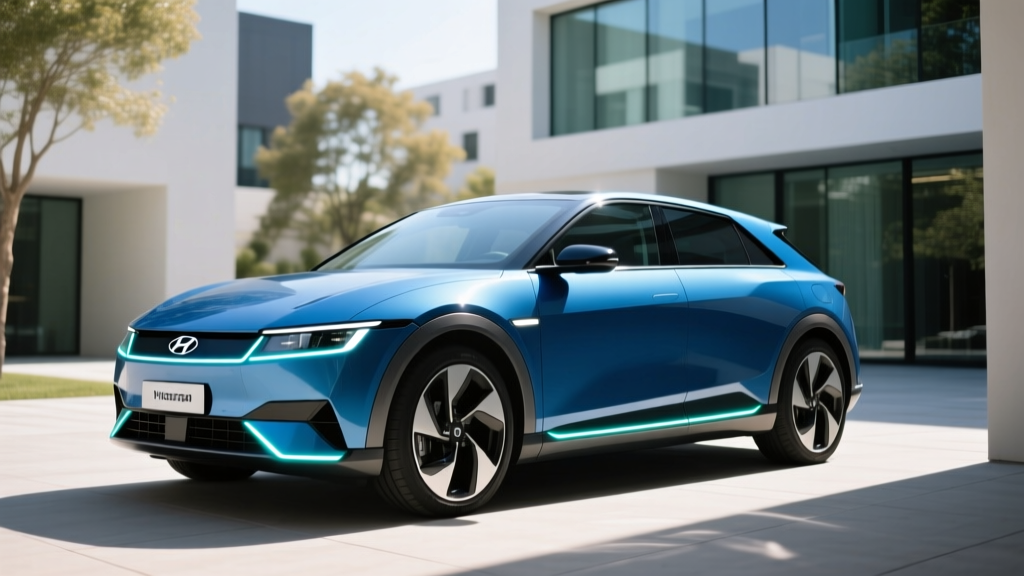
The Ioniq 5 is a midsize electric crossover built on Hyundai Motor Group's E-GMP platform with an 800-volt electrical architecture — a feature that still sets it apart from nearly every non-Porsche/Audi rival. It excels as a daily commuter and family hauler with excellent DC fast-charging speeds, a spacious flat-floor cabin, and strong safety scores. It is less ideal for buyers who need over 320 miles of EPA range, frequent cold-climate road-trippers without access to Tesla Superchargers (though NACS adoption is changing this), or anyone wanting a third row.
Leasing the Ioniq 5 makes particular sense for drivers who want to capture the full $7,500 federal credit regardless of personal tax liability, avoid battery-degradation risk, and upgrade in 36 months when solid-state or next-gen models arrive.
Range, Battery, and Real-World Efficiency
The 2026 Ioniq 5 lineup offers two battery configurations across its SE, SEL, and Limited trims. The Standard Range RWD pairs a 63.0 kWh usable lithium-ion NMC (nickel-manganese-cobalt) pack with a single rear motor. The Long Range variants — available in both RWD and AWD — use a 84.0 kWh usable NMC battery. Hyundai has not switched the Ioniq 5 to LFP chemistry, which means you get higher energy density and stronger cold-weather performance than LFP competitors, though you should still observe best practices like keeping daily charge to 80% for longevity.
| Spec | Standard Range RWD | Long Range RWD | Long Range AWD |
|---|---|---|---|
| Battery (usable kWh) | 63.0 | 84.0 | 84.0 |
| Chemistry | NMC | NMC | NMC |
| EPA Range (miles) | 245 | 318 | 290 |
| MPGe (combined) | 114 | 117 | 101 |
| kWh / 100 mi | 29 | 28 | 33 |
| Drivetrain | RWD | RWD | Dual-motor AWD |
| Horsepower | 168 hp | 225 hp | 320 hp |
| 0–60 mph | ~7.5 s | ~6.5 s | ~4.5 s |
For context, fueleconomy.gov lists the Long Range RWD at 117 MPGe combined, which translates to roughly 28 kWh per 100 miles — competitive with the Tesla Model Y Long Range and noticeably better than the Ford Mustang Mach-E Extended Range AWD.
Charging Speed: 800V Architecture Pays Off
This is where the Ioniq 5 still flexes on most of the segment. Its 800-volt electrical architecture enables DC fast-charging speeds that only Porsche's Taycan and the Kia EV6 (its platform sibling) can match at similar price points.
| Charging Level | Rate | Speed / Notes |
|---|---|---|
| Level 1 (120V household) | ~1.4 kW | ~3–4 miles per hour |
| Level 2 (240V home, 48A) | 10.9 kW | ~36 miles per hour; full charge in ~9 hours (84 kWh) |
| DC Fast Charge (peak) | ~240 kW | 10–80% in approximately 18 minutes (Long Range) |
| DC Fast Charge (sustained avg) | ~165 kW | Real-world average across the 10–80% curve |
A critical detail many spec sheets gloss over: the charge curve. The Ioniq 5 peaks near 240 kW at a low state of charge (around 10–30%) but tapers progressively as the battery fills. Expect roughly 180–200 kW through 50%, dropping to 120–140 kW by 70%, and slowing sharply above 85%. That 18-minute 10–80% claim assumes a 350 kW-capable charger and a preconditioned battery. On a 150 kW Electrify America or EVgo station, plan for 25–30 minutes instead.
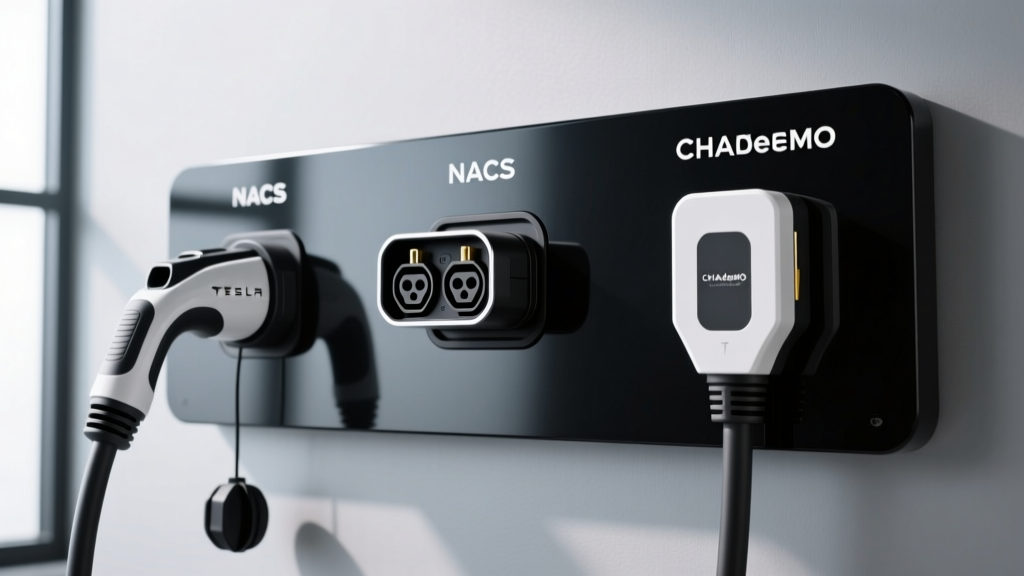
Starting with the 2025 refresh, Hyundai transitioned the Ioniq 5 to the NACS (Tesla) charge port in North America, granting native access to Tesla Superchargers without an adapter. This is a significant practical advantage over CCS-port rivals still relying on adapter dongles for Supercharger access. For home Level 2 charging, a 48-amp hardwired wallbox on a 60-amp circuit delivers the full 10.9 kW rate; budget roughly $600–$1,200 for a quality unit (ChargePoint Home Flex, Emporia Level 2, or Hyundai's branded wallbox) plus $500–$2,000 for electrician installation depending on panel proximity and local permit costs.
Pricing, Lease Deals, and Tax Credit Math
Hyundai has been one of the most aggressive automakers in structuring lease deals that effectively pass the full federal §30D clean vehicle credit through to the lessee. Here is how the pricing landscape looks for the 2026 model year:
| Trim | Base MSRP | Typical Lease (36 mo) | Est. Payment w/ Credit |
|---|---|---|---|
| SE Standard Range RWD | ~$42,600 | $299–$349/mo | ~$249–$299/mo |
| SE Long Range RWD | ~$46,500 | $349–$399/mo | ~$289–$349/mo |
| SEL Long Range AWD | ~$51,200 | $429–$479/mo | ~$369–$419/mo |
| Limited Long Range AWD | ~$56,800 | $499–$559/mo | ~$439–$499/mo |
How the tax credit flows through a lease: Under IRS rules, the $7,500 §30D credit technically belongs to the lessor (the finance company), not you. However, Hyundai Capital America and most captive lenders routinely apply this credit as a capitalized-cost reduction, effectively lowering your monthly payment by roughly $180–$210 per month on a 36-month term. This sidesteps the personal income caps and tax-liability requirements that block many buyers from claiming the credit on a purchase.
- MSRP cap: Vans/SUVs/pickups must be under $80,000 — all Ioniq 5 trims qualify.
- Buyer income cap (purchase only): $150K single / $225K head of household / $300K joint — does NOT apply to leases.
- Battery sourcing: Critical minerals and battery components must meet phased-in domestic/free-trade-partner thresholds — Hyundai has restructured supply chains to maintain eligibility, but always confirm with the dealer at signing.
- Point-of-sale transfer: Available for purchases; for leases, the lessor captures the credit and passes savings via cap-cost reduction.
- Lease "loophole": Foreign-built EVs (like the Ioniq 5, assembled in South Korea for some trims, though U.S. production in Georgia has ramped) that fail purchase-credit sourcing rules can still qualify under commercial-vehicle lease provisions.
Always confirm current incentive details with your dealer and consult IRS.gov or a tax professional before signing. Hyundai's own Ioniq 5 page lists current offers that vary by region and month.
Interior Space, Tech, and Driver Assistance
The Ioniq 5's flat floor and long 118.1-inch wheelbase create cabin volume that punches above its class. Front legroom measures 41.7 inches; rear legroom is a generous 39.4 inches — more than the Model Y and comparable to the three-row Kia EV6's second row. Cargo space behind the rear seats is approximately 27.2 cubic feet, expanding to 59.3 cubic feet with the rear seats folded. The front trunk (frunk) adds another 0.85 to 2.1 cubic feet depending on drivetrain — useful for charging cables but not a major storage area.
Standout tech features:
- Dual 12.3-inch panoramic displays with wireless Apple CarPlay and Android Auto
- Hyundai's Highway Driving Assist 2 (HDA2) — a competent Level 2 SAE system with lane-centering, adaptive cruise, and lane-change assist. Note: this is a driver-assist system, not self-driving; hands must stay on the wheel.
- Vehicle-to-Load (V2L): An integrated 120V outlet (up to 3.6 kW) lets you power laptops, tools, or camping gear from the traction battery.
- Augmented-reality head-up display (Limited trim)
- Digital side mirrors (market-dependent, available on Limited)
- 800V battery conditioning for optimized DC charging in cold weather
Notable drawbacks: The Ioniq 5 still lacks a rear wiper (a common complaint in rain/snow), the single-motor RWD models feel modestly powered for highway merging compared to dual-motor rivals, and the infotainment system — while improved — is not as responsive as Tesla's interface. Some owners report wind noise above 70 mph, and the ride on 20-inch wheels (Limited) is firmer than expected for a comfort-oriented crossover.
Pros and Cons at a Glance
- 800V architecture: 10–80% in ~18 min on 350 kW chargers
- NACS port: native Tesla Supercharger access
- Spacious flat-floor cabin with V2L capability
- Strong lease incentives effectively pass through $7,500 credit
- IIHS Top Safety Pick+ rated
- Heat pump standard (better cold-weather range retention)
- Competitive efficiency at 28 kWh/100 mi (LR RWD)
- No rear wiper (visibility issue in wet weather)
- RWD single-motor lacks punch for some drivers
- Real-world highway range ~240–260 mi (below EPA 318)
- 20-inch wheels on Limited reduce ride comfort
- No third-row option
- Some wind noise at highway speeds
- Infotainment lag vs. Tesla benchmark
How the Ioniq 5 Stacks Up Against Key Rivals
| Attribute | Hyundai Ioniq 5 LR AWD | Tesla Model Y LR AWD | Ford Mach-E ER AWD |
|---|---|---|---|
| EPA Range | 290 mi | 311 mi | 290 mi |
| Battery (usable kWh) | 84.0 | ~78.1 | ~88.0 |
| Peak DC Charge kW | ~240 kW | ~250 kW | ~150 kW |
| 10–80% Time | ~18 min | ~22 min | ~38 min |
| 0–60 mph | ~4.5 s | ~4.8 s | ~5.1 s |
| Base MSRP (AWD) | ~$51,200 | ~$48,990 | ~$49,995 |
| NACS Port (native) | Yes | Yes | No (adapter) |
| V2L Capability | Yes | No | No |
Choose the Model Y if: You want the longest Supercharger network access, slightly more range, and the most mature OTA software ecosystem — and don't mind a stiffer ride and sparser interior.
Choose the Mach-E if: You prefer a more traditional crossover driving feel, want Ford dealer proximity, and don't fast-charge often enough for the slower 150 kW peak to matter.
Warranty and Long-Term Ownership
Hyundai backs the Ioniq 5 with one of the strongest warranty packages in the EV segment:
- New vehicle: 5 years / 60,000 miles
- Powertrain: 10 years / 100,000 miles
- Battery: 8 years / 100,000 miles (retains ≥70% capacity under the warranty threshold)
- Roadside assistance: 5 years / unlimited miles
The 8-year battery warranty with a 70% capacity-retention floor is standard for the industry. Real-world degradation data from early Ioniq 5 owners suggests roughly 5–8% capacity loss over the first 60,000 miles with normal charging habits — well within the warranty buffer. If you lease for 36 months and 36,000–45,000 miles, battery degradation is essentially a non-issue during your term.
Frequently Asked Questions
What is the real-world range of the 2026 Hyundai Ioniq 5?
The Long Range RWD carries an EPA estimate of 318 miles. In real-world mixed driving, expect 270–290 miles. Highway-only travel at 75+ mph yields roughly 240–260 miles, and freezing temperatures can drop usable range to 200–230 miles. The Standard Range RWD (EPA 245 miles) realistically delivers 190–220 miles in mixed use.
How fast does the Ioniq 5 charge at home and on the road?
At home on a 240V Level 2 charger (48 amps), the Ioniq 5 adds about 36 miles of range per hour and fully charges the 84 kWh battery in roughly 9 hours. On a 350 kW DC fast charger, it peaks at ~240 kW and charges from 10–80% in approximately 18 minutes. On a 150 kW station, expect 25–30 minutes for the same 10–80% session.
How much does the Ioniq 5 cost after tax credits on a lease?
With Hyundai's typical lease structure and the $7,500 federal credit applied as a cap-cost reduction, monthly payments range from roughly $249/month (SE Standard Range) to $499/month (Limited AWD) on 36-month terms with $2,500–$3,500 due at signing. Exact figures vary by region, dealer, and credit tier.
Does the Hyundai Ioniq 5 qualify for the federal EV tax credit?
Yes — for 2026, the Ioniq 5 qualifies for the full $7,500 §30D credit when leased, as the lessor claims the commercial clean vehicle credit and passes savings to you via a lower capitalized cost. For purchases, eligibility depends on your income, the vehicle's MSRP (under $80,000 — all trims qualify), and battery-sourcing requirements. Confirm current eligibility with your dealer and consult IRS guidance.
Is leasing the Ioniq 5 better than buying?
Leasing is advantageous if you want to capture the $7,500 credit regardless of your tax liability, avoid long-term battery-degradation risk, and upgrade in three years. Buying makes more sense if you plan to keep the vehicle 7+ years, drive fewer than 12,000 miles annually, and meet the income/sourcing requirements for the purchase credit or can take the point-of-sale transfer. Run both scenarios with your dealer before deciding.
Is the Ioniq 5 worth it over the Tesla Model Y?
It depends on your priorities. The Ioniq 5 offers faster DC charging (18 vs. 22 minutes, 10–80%), a more comfortable ride, V2L capability, and stronger lease incentives. The Model Y counters with slightly more range, a larger Supercharger footprint (though the gap is closing with NACS adoption), and more mature software. For lease shoppers, the Ioniq 5 often delivers a lower monthly payment with comparable capability.
Who Should Lease the 2026 Ioniq 5?
The Ioniq 5 lease deal is strongest for suburban commuters and small families who charge primarily at home, take occasional road trips of 200–300 miles, and want a well-rounded electric crossover without paying a luxury badge premium. If your daily drive is under 60 miles round-trip with access to Level 2 home charging, even the Standard Range trim covers your needs comfortably with room to spare. The AWD Long Range variant suits drivers in snow-belt states who need all-weather traction and the longest possible range envelope.
It is less suited for high-mileage drivers (over 20,000 miles/year may incur lease overage penalties), those who regularly tow (the Ioniq 5's 2,300-pound towing capacity is modest), or large families needing three rows. If those describe you, consider the Kia EV9, Rivian R1S, or a plug-in hybrid as alternatives.
Bottom line: the current Hyundai Ioniq 5 lease deal represents one of the most accessible entry points into a fast-charging, well-built electric crossover on the market — provided you verify credit eligibility at signing and understand the real-world range you will actually experience.