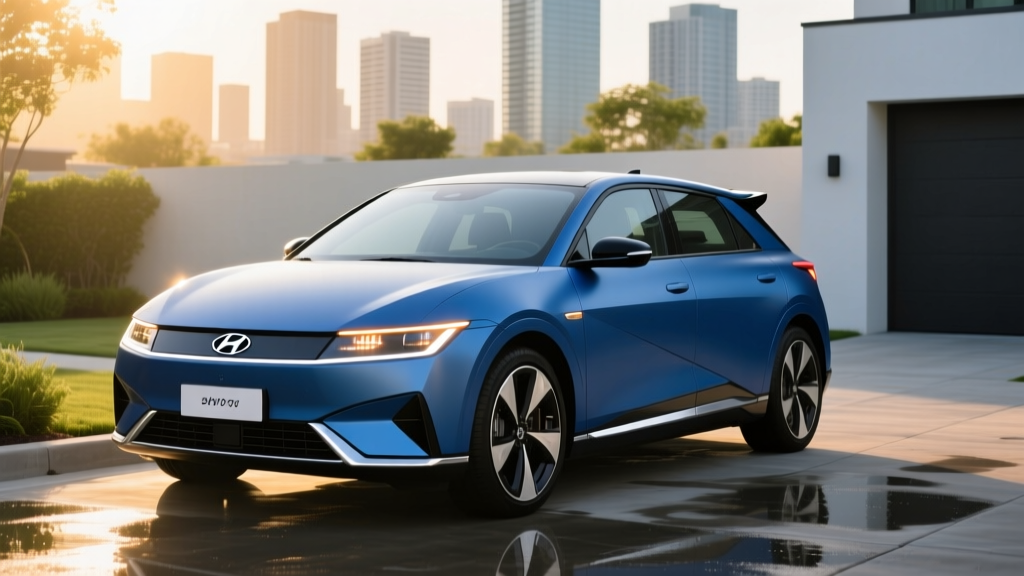
The Hyundai Ioniq 5 hatchback has been a cornerstone of the mainstream EV market since its launch, and the 2026 model year brings a critical hardware upgrade that addresses one of the most persistent complaints from early adopters: the charge port. For 2026, the Ioniq 5 ditches the CCS1 connector in favor of the Tesla-designed NACS (North American Charging Standard) port, granting native access to the Supercharger network without an adapter. But beyond the plug swap, does this electric crossover still hold up against a rapidly evolving field of competitors?
We spent time with the 2026 Hyundai Ioniq 5 across multiple trims to evaluate its real-world range, charging behavior, daily usability, and ownership economics. Here's what buyers need to know before signing the paperwork.
2026 Hyundai Ioniq 5: Core Specifications at a Glance
| Specification | SE / SEL Standard Range | SEL / Limited Long Range RWD | Limited Long Range AWD |
|---|---|---|---|
| EPA Range | 245 miles | 318 miles | 290 miles |
| Battery (usable) | 63.0 kWh | 84.0 kWh | 84.0 kWh |
| Chemistry | NMC | NMC (4th-gen) | NMC (4th-gen) |
| Horsepower | 168 hp | 225 hp | 320 hp |
| 0–60 mph | ~7.4 sec | ~6.5 sec | ~4.5 sec |
| Drivetrain | RWD | RWD | Dual-motor AWD |
| Max DC Fast Charge | ~175 kW | ~240 kW | ~240 kW |
| 10–80% DCFC Time | ~22 min | ~18 min | ~18 min |
| Level 2 Rate | 10.9 kW | 10.9 kW | 10.9 kW |
| Charge Port | NACS | NACS | NACS |
| Combined MPGe | 110 MPGe | 114 MPGe | 101 MPGe |
| Base MSRP | $42,600 | $47,450 | $51,950 |
Source: Hyundai Motor America and fueleconomy.gov. Prices exclude destination charges (~$1,495). Specifications reflect 2026 model year as published.
Real-World Range vs. the EPA Sticker
EPA estimate: 318 miles
Real-world highway (70–75 mph, moderate temps): ~265–280 miles
Real-world highway in cold weather (below 32°F): ~220–245 miles
City / mixed suburban driving: ~295–310 miles
The 318-mile EPA figure on the Long Range RWD is competitive for the segment, but as with every EV, that number assumes a blend of city and highway driving at moderate speeds and temperatures. On sustained highway runs at 70–75 mph, expect to use roughly 28–31 kWh per 100 miles, which pulls range down to the 265–280 mile corridor. That's still enough for most daily needs and manageable road trips, but it's a meaningful gap from the sticker.
Cold weather compounds the loss. The Ioniq 5 uses a heat pump (standard on all trims for 2026), which helps preserve range compared to resistive heating. Even so, lithium-ion chemistry inherently loses efficiency in freezing temperatures. Plan for 20–30% range reduction in sub-freezing conditions, especially on highway drives where cabin heating and battery thermal management both draw energy.
The Standard Range model's 245-mile EPA rating translates to roughly 200–215 miles in mixed real-world driving. For a commuter with home charging, that's perfectly adequate. For road-trip-heavy buyers, the Long Range battery is the pragmatic choice.
Charging Performance: NACS Access Changes the Equation
The headline charging upgrade for 2026 is the native NACS port. This means 2026 Ioniq 5 owners can plug directly into Tesla Supercharger V3 and V4 stalls (up to 250 kW) without carrying a CCS-to-NACS adapter. That alone significantly expands reliable DC fast-charging options, particularly in rural corridors where Superchargers often outnumber Electrify America or EVgo stations.
| Charging Level | Power / Rate | Miles Added per Hour | Notes |
|---|---|---|---|
| Level 1 (120V) | ~1.4 kW | ~4–5 mi/hr | Emergency / trickle only |
| Level 2 (240V, 48A) | 10.9 kW | ~36–40 mi/hr | Full charge overnight (~8–9 hrs for 84 kWh pack) |
| DC Fast (NACS Supercharger V3) | Up to ~240 kW peak | ~180+ mi in 15 min (peak) | 10–80% in ~18 min; tapers sharply above 80% |
| DC Fast (350 kW CCS station w/ adapter) | ~240 kW peak | Similar to NACS | Legacy Ioniq 5 (pre-2026) requires adapter for NACS stations |
The Ioniq 5's 800-volt E-GMP architecture remains a genuine advantage. While many competitors peak at 150–175 kW on DC fast chargers, the Long Range Ioniq 5 can sustain roughly 200+ kW through the 20–60% state-of-charge window before tapering. The 10–80% time of approximately 18 minutes is among the fastest in the mainstream EV segment, rivaling the Porsche Taycan and exceeding the Tesla Model Y's typical 25–27 minute 10–80% session on V3 Superchargers.
One important caveat about the charging curve: peak kW is not sustained kW. The Ioniq 5's 240 kW peak holds only in a narrow SoC band (roughly 15–45%). Above 60%, the rate drops to around 120–140 kW, and above 80% it falls below 60 kW. This is normal lithium-ion behavior driven by cell-protection protocols, but it means charging from 80–100% on a road trip is painfully slow. Plan your stops around 10–80% sessions for maximum efficiency.
At home on a Level 2 wall connector (240V, 48-amp circuit), the 10.9 kW onboard charger replenishes the 84 kWh battery from empty in roughly 8.5 hours. Most owners will arrive home with 30–50% remaining and wake up to a full battery every morning. A dedicated 60-amp circuit with a hardwired Level 2 charger (such as a ChargePoint Home Flex or Tesla Wall Connector with NACS) is the recommended home setup — budget $800–$2,000 for equipment and electrician labor depending on your panel capacity and run distance.
Performance and Driving Dynamics
The Ioniq 5's driving character varies dramatically by trim. The Standard Range RWD with 168 hp is adequate for city and suburban driving but feels leisurely on highway merges. The Long Range RWD's 225 hp provides confident passing power and a 0–60 mph time around 6.5 seconds — quick enough for most buyers.
The dual-motor AWD Limited is the performance pick, delivering 320 hp and a 4.5-second 0–60 sprint. It's genuinely rapid off the line, and the instant torque delivery makes it feel quicker than the numbers suggest. All-wheel traction gives it an edge in rain and light snow, though ground clearance (6.1 inches) limits any off-road ambitions.
Ride quality is a standout. The Ioniq 5 uses a multi-link rear suspension that absorbs bumps with composure uncommon in this price range. Steering is light and precise, if not particularly communicative. The regenerative braking system offers four levels of regen (adjustable via steering wheel paddles), with Level 3 enabling near-one-pedal driving in city traffic. Unlike some competitors, the Ioniq 5 doesn't quite come to a complete stop in max regen — you'll still need the brake pedal for the final few mph.
Interior, Cargo, and Technology
The Ioniq 5's interior design remains one of the most distinctive in the EV segment. The flat floor (enabled by the dedicated E-GMP platform) and sliding center console create an airy, lounge-like cabin. Hyundai calls this the "Universal Island" concept, and it genuinely improves front-seat versatility — you can slide the console back to create a pass-through or forward for more armrest space.
Cargo and passenger dimensions:
- Rear cargo volume: 27.2 cu ft (behind second row) / 59.3 cu ft (seats folded)
- Front trunk (frunk): 0.85 cu ft (AWD) / 2.0 cu ft (RWD) — enough for charging cables, not much more
- Rear legroom: 39.4 inches — generous, among the best in class
- Front headroom: 39.6 inches
The frunk is notably small compared to the Ford Mustang Mach-E (4.7 cu ft) or the Tesla Model Y (4.1 cu ft). Hyundai sacrificed frunk volume for packaging the power electronics under the hood — a tradeoff that matters if you rely on front cargo space.
Tech highlights include dual 12.3-inch displays (instrument cluster and infotainment), wireless Apple CarPlay and Android Auto, a head-up display with augmented-reality navigation (Limited trim), and Hyundai's Highway Driving Assist 2 (HDA2) — a Level 2 driver-assistance system that handles adaptive cruise, lane centering, and lane-change assist on divided highways. HDA2 works well in practice, though it requires hands-on-wheel contact and is not a substitute for driver attention. It is not self-driving.
For 2026, Hyundai has added an enhanced battery preconditioning feature that automatically warms the pack when a DC fast-charger is set as your navigation destination. This is critical for achieving advertised charge speeds in cold weather and was a notable omission on early Ioniq 5 model years.
Pricing, Trims, and Federal Tax Credit Eligibility
The 2026 Ioniq 5 lineup spans four main trims, with the Standard Range and Long Range battery options distributed across them:
| Trim | Battery | Drivetrain | MSRP (excl. destination) |
|---|---|---|---|
| SE Standard Range | 63 kWh | RWD | $42,600 |
| SEL | 84 kWh | RWD | $47,450 |
| Limited | 84 kWh | RWD | $51,950 |
| Limited AWD | 84 kWh | Dual-motor AWD | $55,450 |
Does the 2026 Ioniq 5 Qualify for the Federal EV Tax Credit?
Under the IRS §30D Clean Vehicle Credit, the 2026 Ioniq 5's eligibility depends on several factors that shift frequently based on battery-sourcing compliance:
- MSRP cap: The Ioniq 5 is classified as an SUV/crossover by the IRS, so the cap is $80,000. All trims clear this threshold easily.
- Buyer income cap: Modified adjusted gross income must not exceed $150,000 (single), $225,000 (head of household), or $300,000 (joint filing).
- Battery sourcing requirements: The credit splits into two halves — $3,750 for critical-minerals sourcing and $3,750 for battery-component manufacturing. Hyundai has been working to shift supply chains to compliant sources as battery production ramps at the Georgia Metaplant. As of early 2026, most Ioniq 5 trims qualify for the full $7,500, but confirm with your dealer and a tax professional at the time of purchase.
- Point-of-sale transfer: For 2026, eligible buyers can transfer the credit to the dealer at purchase, reducing the out-of-pocket price immediately rather than waiting for a tax refund.
Effective pricing after the $7,500 credit (if eligible): The SEL Long Range RWD drops from ~$48,945 (with destination) to approximately $41,445 — competitive with a well-equipped Toyota RAV4 Hybrid when you factor in fuel savings over time.
Warranty and Ownership Costs
Hyundai backs the Ioniq 5 with one of the strongest warranty packages in the EV market:
- Battery & drive unit: 10 years / 100,000 miles (whichever comes first)
- New vehicle limited: 5 years / 60,000 miles
- Roadside assistance: 5 years / unlimited miles
- Complimentary maintenance: 3 years / 36,000 miles (oil changes aren't relevant, but this covers cabin air filter, tire rotation, multi-point inspections)
The 10-year battery warranty guarantees that the high-voltage pack will retain at least 70% of its original capacity during the coverage period. In practice, Hyundai-Kia's NMC packs have shown degradation rates of approximately 1–2% per year in moderate climates based on fleet data, meaning most owners will see 90%+ state of health at the 5-year mark. The 70% threshold is a conservative floor, not an expected outcome.
Insurance costs for the Ioniq 5 tend to run 10–20% higher than equivalent gas-powered crossovers, reflecting higher repair costs for EV-specific components. Expect annual premiums of $1,600–$2,400 depending on your profile, location, and coverage level.
Pros and Cons: The Honest Scorecard
✓ Pros
- Class-leading DC fast-charge speed (18 min 10–80%)
- Native NACS port — direct Supercharger access
- Spacious rear seat (39.4" legroom) and flat floor
- Standard heat pump across all trims
- 10-year / 100,000-mile battery warranty
- Battery preconditioning for cold-weather fast charging
- Vehicle-to-load (V2L) capability — power devices from the car
- Competitive pricing after federal tax credit
✗ Cons
- Small frunk (0.85–2.0 cu ft) — barely fits cables
- No rear wiper (visibility issue in rain/snow)
- Single-pedal driving doesn't hold to a full stop
- Standard Range model's 245-mile EPA range is limiting for road trips
- Infotainment can be laggy compared to Tesla or Rivian
- AWD availability limited to top trim (Limited)
- Real-world highway range ~15% below EPA sticker
Who Should Buy the Hyundai Ioniq 5 Hatchback?
Choose the Ioniq 5 if:
- You want the fastest mainstream DC fast-charging speeds available
- Native Tesla Supercharger access matters to you for road trips
- You prioritize rear-seat space and ride comfort over sporty handling
- You can charge at home and want a reliable daily commuter with 280+ real-world miles
- You value a long battery warranty and Hyundai's dealer network
Look elsewhere if:
- You need maximum cargo volume — the Model Y offers significantly more (76 cu ft seats-down)
- You want a large frunk for gear storage
- You need a third row — consider the Kia EV9 or Hyundai Ioniq 9
- You're a driving enthusiast — the BMW i4 or Ford Mustang Mach-E GT are more engaging
- Budget is tight and you can't access the federal credit — the base price is steep without it
Frequently Asked Questions
What is the real-world range of the 2026 Hyundai Ioniq 5?
The Long Range RWD is EPA-rated at 318 miles, but expect approximately 265–280 miles on sustained highway drives and 220–245 miles in freezing temperatures. City and suburban driving with regenerative braking gets you closest to the EPA figure, around 295–310 miles.
How fast does the Ioniq 5 charge at home and on the road?
On a Level 2 home charger (240V, 48A), it charges at 10.9 kW — adding about 36–40 miles of range per hour, or a full charge in roughly 8.5 hours. On a DC fast charger, the Long Range models peak at approximately 240 kW and charge from 10–80% in about 18 minutes under ideal conditions.
Does the 2026 Ioniq 5 qualify for the $7,500 federal tax credit?
Most trims are expected to qualify for the full $7,500 under IRS §30D rules, provided the buyer meets income caps ($150K single / $300K joint) and the battery meets critical-minerals and component-sourcing requirements. The credit can be transferred at the point of sale to reduce your purchase price immediately. Always verify current eligibility with your dealer and consult IRS guidance before purchasing.
Is the Ioniq 5 worth buying over the Tesla Model Y or Ford Mach-E?
The Ioniq 5 wins on DC fast-charge speed, ride comfort, and warranty coverage. The Model Y wins on cargo space, software ecosystem, and Supercharger network maturity (though the Ioniq 5 now accesses it natively). The Mustang Mach-E offers sportier handling and a larger frunk. Your best choice depends on whether you prioritize charging speed (Ioniq 5), cargo versatility (Model Y), or driving engagement (Mach-E).
What's the biggest drawback of the Hyundai Ioniq 5?
The small frunk and lack of a rear windshield wiper are the most common owner complaints. The frunk holds barely more than the included charging cable, and the missing wiper reduces rear visibility in wet conditions. Neither is a dealbreaker, but both are notable omissions at this price point.
Is the Ioniq 5 self-driving?
No. The Ioniq 5's Highway Driving Assist 2 (HDA2) is an SAE Level 2 driver-assistance system. It can manage speed, following distance, and lane centering on compatible highways, but the driver must remain fully attentive with hands on the wheel at all times. It does not drive autonomously.