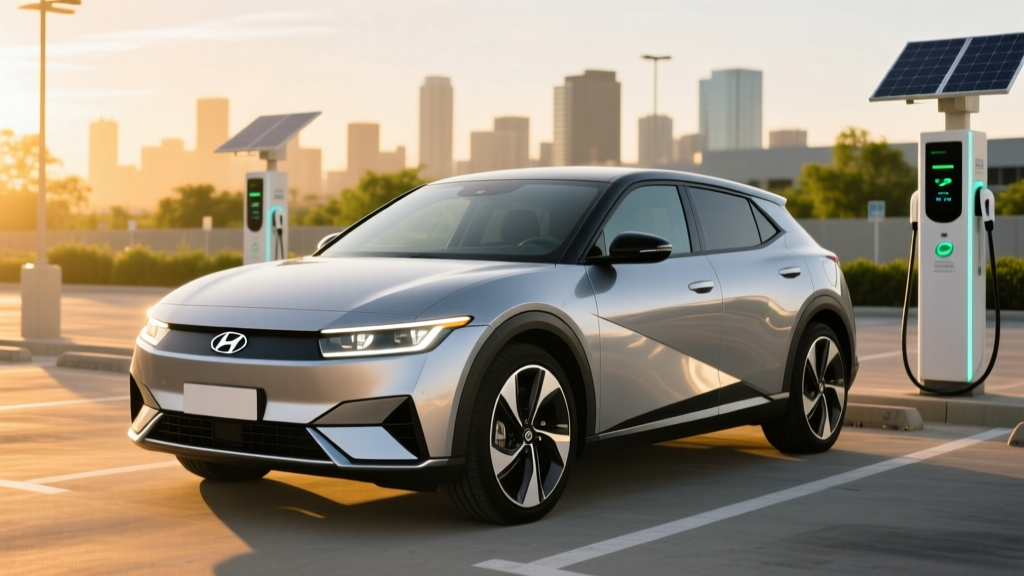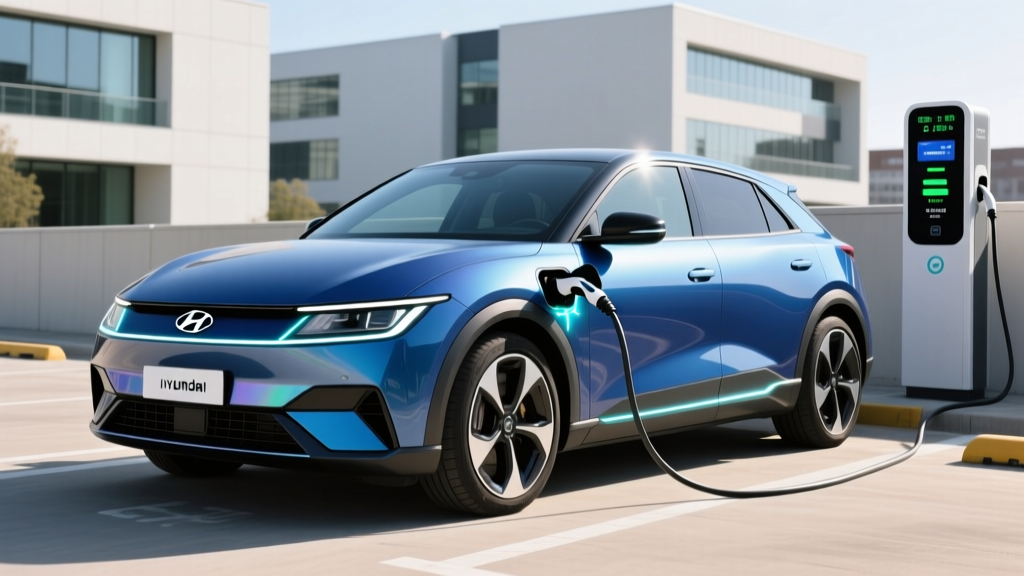
The Hyundai Ioniq 5 arrived in the U.S. for the 2022 model year and quickly became one of the most talked-about electric crossovers on the market, thanks to its retro-futuristic styling and 800-volt architecture borrowed from the E-GMP platform it shares with the Kia EV6 and Genesis GV60. This review focuses specifically on the Standard Range RWD configuration — the base model that Hyundai designated with internal parts reference 87628-GI020 — covering model years 2022 through 2024. If you are shopping the used EV market or comparing trims, understanding exactly what this entry-level Ioniq 5 delivers (and where it falls short) is critical before writing a check.
For 2024, Hyundai restructured the Ioniq 5 lineup, dropping the Standard Range RWD from the new-vehicle lineup in the U.S. and making the Long Range RWD the new entry point. That means the 2022-2023 Standard Range models are now primarily available on the used and certified pre-owned market, where they represent a compelling value — especially when paired with the federal used-EV tax credit (IRC §25E). We will cover both the original MSRP context and what these vehicles cost today.
Quick Verdict: Who Should Buy the Standard Range Ioniq 5?
The Standard Range Ioniq 5 is best suited for urban and suburban drivers who charge at home, commute under 50 miles round-trip, and want a stylish, tech-forward EV without paying for range they will rarely use. Its 220-mile EPA rating is adequate for daily life but demands planning on road trips longer than 200 miles. The 800V fast-charging architecture is the standout feature — it charges faster than many EVs costing $20,000 more.
- You charge at home nightly and rarely drive more than 180 miles in a single day
- You want 800V-class DC fast charging without the Long Range price premium
- You value distinctive design and a spacious cabin over maximum range
- You regularly take road trips exceeding 250 miles between charging stops
- You live in a cold climate where winter range loss could push real-world range below 160 miles
- You need AWD for snow or performance driving
Range, Battery, and Efficiency: The Real Numbers
The 2022-2023 Hyundai Ioniq 5 Standard Range RWD carries a 58.0 kWh usable battery pack (72.6 kWh gross) using NMC (nickel-manganese-cobalt) lithium-ion cells supplied by SK Innovation. This is not an LFP pack — Hyundai reserved LFP chemistry for certain international markets and later model-year variants.
EPA Estimated Range: 220 miles
Real-World Highway (70 mph, moderate temps): ~185-200 miles
Real-World City/Mixed Driving: ~200-215 miles
Cold Weather (below 30°F, highway): ~150-170 miles
The Ioniq 5 Standard Range achieves an EPA-rated 110 MPGe combined (114 city / 106 highway), translating to roughly 30 kWh per 100 miles. Efficiency drops noticeably at sustained highway speeds above 75 mph due to the vehicle's boxy aerodynamic profile. In cold weather, expect a 20-30% range reduction — the Standard Range model lacks a standard heat pump in the U.S. for 2022-2023, which means cabin heating draws directly from the traction battery via resistive elements, consuming significant energy.
| Specification | Value |
|---|---|
| EPA Range | 220 miles |
| Battery (Usable / Gross) | 58.0 kWh / 72.6 kWh |
| Battery Chemistry | NMC (Nickel-Manganese-Cobalt) |
| EPA Efficiency | 110 MPGe (30 kWh/100 mi) |
| Drivetrain | Rear-Wheel Drive (single motor) |
| Horsepower | 168 hp |
| Torque | 258 lb-ft |
| 0-60 mph | 7.0 seconds (est.) |
| Max DC Fast Charge Rate | ~175 kW (peak) |
| 10-80% DC Fast Charge | ~18 minutes (optimal conditions) |
| Level 2 Charge Rate | 10.9 kW (onboard charger) |
| Charge Port | CCS1 (2022-2024); NACS adapter available 2025+ |
| Cargo Volume (rear seats up / folded) | 27.2 / 59.3 cu ft |
| Rear Legroom | 39.4 inches |
| Curb Weight | ~4,255 lbs |
Charging Speed: 800V Architecture Is the Headline
The Ioniq 5's 800-volt electrical architecture is its most significant technical advantage over competitors like the Volkswagen ID.4 and Ford Mustang Mach-E (both built on 400V systems). Higher voltage allows the Ioniq 5 to accept higher power at the charger without requiring excessive current, which means faster charging and less heat generation in the battery pack.
| Charging Level | Power (kW) | Miles of Range Added Per Hour | Full Charge Time (0-100%) |
|---|---|---|---|
| Level 1 (120V household) | ~1.4 kW | ~4-5 miles/hr | ~42+ hours |
| Level 2 (240V home, 48A) | 10.9 kW | ~36 miles/hr | ~5.5 hours |
| DC Fast Charge (350 kW station) | ~175 kW peak | N/A (minutes-based) | 10-80% in ~18 min |
| DC Fast Charge (150 kW station) | ~120-150 kW | N/A | 10-80% in ~25 min |
Charging curve reality check: The Ioniq 5 Standard Range peaks near 175 kW only between roughly 10% and 40% state of charge. Above 55%, the rate tapers to approximately 100-120 kW, and above 80% it drops further to protect the battery. On a 350 kW Electrify America or Ionity station with a preconditioned battery, the 10-80% sprint takes approximately 18 minutes. On a more common 150 kW station, expect 22-28 minutes depending on battery temperature and starting SoC.
Preconditioning matters: The Ioniq 5 will automatically precondition its battery when a DC fast-charging station is set as your navigation destination. If you arrive at a charger without preconditioning (for example, by driving directly there without using navigation), peak charge rates can be 30-40% lower, especially in cold weather. Always navigate to your charger.
For home Level 2 charging, the 10.9 kW onboard charger is competitive. On a 48-amp Level 2 circuit (the most common home installation), you will add roughly 36 miles of range per hour — meaning an overnight session from 20% to 100% takes about 5.5 hours. A standard 120V Level 1 outlet is viable only for emergency top-ups or very low-mileage drivers, adding just 4-5 miles per hour.
Performance and Driving Dynamics
The Standard Range RWD Ioniq 5 produces 168 horsepower and 258 lb-ft of torque from a single rear-mounted permanent-magnet synchronous motor. The 0-60 mph time lands around 7.0 seconds — brisk enough for confident highway merging but noticeably a step behind the Long Range RWD (225 hp, ~5.5 seconds) and far from the dual-motor AWD variants (320 hp, ~4.5 seconds).
Where the Standard Range shines is in city and suburban driving. The instant torque delivery makes it feel quicker than the horsepower number suggests, and the rear-wheel-drive layout gives it a more natural steering feel than many front-drive EV crossovers. The 3,990-mm (157.4-inch) wheelbase — one of the longest in its class — contributes to stable highway behavior and an exceptionally roomy rear seat.
Regenerative braking is adjustable via steering-wheel paddles, with four levels ranging from coasting to full one-pedal driving (i-Pedal mode). The i-Pedal mode is well-calibrated and can handle most daily driving without touching the friction brake pedal, which helps reduce brake wear and recapture energy efficiently.
Pricing, Trims, and Federal Tax Credit Eligibility
Understanding the pricing landscape for the 2022-2024 Ioniq 5 Standard Range requires distinguishing between original MSRP (when sold new) and current used-market pricing, as well as the different tax credits available for new versus used purchases.
| Model Year / Trim | Original MSRP | Est. Used Price (2026) | Applicable Tax Credit |
|---|---|---|---|
| 2022 Ioniq 5 SE Standard Range | $43,650 | $26,000-$30,000 | Up to $4,000 (IRC §25E used-EV credit) |
| 2022 Ioniq 5 SEL Standard Range | $46,200 | $28,000-$32,000 | Up to $4,000 (IRC §25E used-EV credit) |
| 2023 Ioniq 5 SE Standard Range | $41,450 | $27,000-$31,000 | Up to $4,000 (IRC §25E used-EV credit) |
| 2024 Ioniq 5 (Standard Range discontinued) | N/A | N/A | N/A |
Federal tax credit details: Because the Ioniq 5 Standard Range was manufactured in South Korea (at Hyundai's Ulsan plant) during the 2022-2023 model years — before Hyundai's Metaplant America in Georgia began production in late 2024 — these vehicles did not qualify for the full $7,500 new-vehicle credit under IRC §30D when purchased new. The §30D credit requires final assembly in North America, per IRS guidelines.
However, on the used market, these vehicles can qualify for the IRC §25E previously-owned clean vehicle credit — up to $4,000 (30% of the sale price, capped at $4,000). Eligibility requirements for §25E include:
- Sale price must be $25,000 or less
- Buyer income caps: $75,000 single / $112,500 head of household / $150,000 joint
- Vehicle must be at least two model years old
- Must be purchased from a licensed dealer (private-party sales do not qualify)
- The credit can be transferred to the dealer at point of sale as an immediate discount
This means a 2022 Ioniq 5 SE Standard Range priced at $24,500 from a qualifying dealer could effectively cost $20,500 after the credit — making it one of the best-value 800V EVs on the used market. Always verify eligibility with your tax professional and confirm the specific VIN qualifies before purchase.
Interior, Tech, and Daily Livability
The Ioniq 5's interior is one of its strongest selling points. The flat floor (enabled by the dedicated E-GMP platform) and extended wheelbase create rear-seat legroom of 39.4 inches — more than many midsize SUVs. Cargo volume is 27.2 cubic feet behind the rear seats and 59.3 cubic feet with them folded. The front trunk (frunk) on the Standard Range RWD adds a modest 0.85 cubic feet — enough for charging cables but not much else.
The dual-screen setup uses a 12.3-inch digital instrument cluster and a 12.3-inch infotainment touchscreen running Hyundai's Bluelink-connected system. Wireless Apple CarPlay and Android Auto are standard on SE trims. The center console features a sliding "Universal Island" armrest that can move forward and back by 5.5 inches — a clever touch that makes it easier to exit the vehicle through the passenger side in tight parking spots.
Driver assistance (SAE Level 2): The Ioniq 5 comes equipped with Hyundai SmartSense, which includes Highway Driving Assist II (HDA II), adaptive cruise control with stop-and-go, lane-keeping assist, blind-spot monitoring, and rear cross-traffic collision avoidance. HDA II is a competent Level 2 driver-assist system — it handles lane centering and speed management on highways well, but the driver must keep hands on the wheel and remain fully engaged. This is not a hands-off or self-driving system.
Vehicle-to-load (V2L): One of the Ioniq 5's party tricks is its V2L capability, which allows the vehicle's battery to power external devices through a standard 120V outlet (up to 1.9 kW / 16 amps). You can run a laptop, small refrigerator, power tools, or even charge another EV in an emergency. An interior V2L outlet is available on SEL and above trims; the external V2L adapter is sold separately for some model years.
Warranty Coverage and Battery Longevity
Hyundai backs the Ioniq 5 with one of the strongest warranty packages in the EV segment:
- Battery: 10 years / 100,000 miles (whichever comes first) — covers defects and capacity loss below 70% of original capacity
- Electric powertrain (motor, inverter, reduction gear): 10 years / 100,000 miles
- New-vehicle limited warranty: 5 years / 60,000 miles
- Roadside assistance: 5 years / unlimited miles
The 70% capacity retention threshold is standard for the industry but worth noting — if your 58 kWh usable pack degrades to 40.6 kWh usable within the warranty period, Hyundai will repair or replace it. In practice, NMC packs in Hyundai-Kia E-GMP vehicles have shown moderate degradation of approximately 5-8% over the first 60,000 miles based on owner-reported data, which is within normal expectations.
For used buyers, the critical question is warranty transferability. Hyundai's 10-year/100,000-mile battery and powertrain warranty transfers to the second owner but is reduced to 5 years / 60,000 miles from the original in-service date for subsequent owners. Verify the remaining coverage with a Hyundai dealer using the VIN before purchasing.
How It Compares: Ioniq 5 Standard Range vs. Key Competitors
On the used market in 2026, the Ioniq 5 Standard Range competes against several well-known EVs in the $22,000-$32,000 range. Here is how the key metrics stack up:
| Vehicle | EPA Range | Max DC Charge | 10-80% Time | Est. Used Price |
|---|---|---|---|---|
| 2022-23 Ioniq 5 Std Range RWD | 220 mi | ~175 kW | ~18 min | $26K-$32K |
| 2022-23 VW ID.4 Pro (RWD) | 275 mi | ~135 kW | ~29 min | $24K-$29K |
| 2022-23 Ford Mach-E Select (RWD) | 247 mi | ~115 kW | ~35 min | $25K-$30K |
| 2022-23 Tesla Model Y LR (AWD) | 330 mi | ~250 kW | ~20 min | $32K-$38K |
The Ioniq 5's trade-off is clear: less range than the ID.4, Mach-E, and especially the Model Y, but faster DC charging than the ID.4 and Mach-E thanks to its 800V system. The Tesla Model Y outperforms on range and charging speed but commands a higher used price. For a commuter who charges at home and values rapid road-trip charging over raw range, the Ioniq 5 Standard Range is a strong pick.
Pros, Cons, and Final Assessment
- 800V architecture enables class-leading DC fast charging (~18 min 10-80%)
- Spacious cabin with 39.4" rear legroom on a flat floor
- Distinctive, award-winning design that stands out in a growing EV crowd
- V2L capability for camping, tailgating, and emergency power
- Strong 10-year/100,000-mile battery warranty (first owner)
- Qualifies for up to $4,000 used-EV tax credit at qualifying prices
- Comfortable ride quality with composed highway manners
- 220-mile EPA range is limiting for road trips and cold climates
- No heat pump standard in U.S. market (2022-2023) — cold-weather efficiency suffers
- Only 168 hp feels underpowered at highway speeds with a full load
- Tiny frunk (0.85 cu ft) on RWD models
- Infotainment can be slow to respond; no physical volume knob on base trims
- Warranty reduces to 5yr/60,000-mi for second owners
- Rear wiper not standard on early model years (a common owner complaint)
The 2022-2023 Hyundai Ioniq 5 Standard Range RWD (87628-GI020) is not the EV for everyone — its range is its Achilles' heel for road-trippers and cold-climate drivers. But as a daily commuter and suburban family vehicle, it delivers a combination of fast charging, spacious comfort, and distinctive design that remains hard to match at its now-depreciated price point. If your driving pattern fits within its range envelope, and you can access home Level 2 charging, this is one of the smartest used EV buys in 2026.
Frequently Asked Questions
What is the real-world range of the Hyundai Ioniq 5 Standard Range?
The EPA rates the 2022-2023 Ioniq 5 Standard Range RWD at 220 miles. In real-world mixed driving at moderate temperatures, expect approximately 200-215 miles. Sustained highway driving at 70+ mph reduces that to roughly 185-200 miles. In freezing temperatures, range can drop to 150-170 miles due to the lack of a standard heat pump in U.S.-spec models.
How fast does the Ioniq 5 Standard Range charge?
On a 350 kW DC fast charger with a preconditioned battery, the Ioniq 5 Standard Range can charge from 10% to 80% in approximately 18 minutes, peaking near 175 kW. On a 150 kW charger, expect 22-28 minutes. At home on a 240V Level 2 charger (48 amps), it charges at up to 10.9 kW, adding roughly 36 miles of range per hour and fully charging in about 5.5 hours.
How much does a used 2022-2023 Ioniq 5 Standard Range cost in 2026?
Used pricing for the 2022-2023 Ioniq 5 Standard Range typically falls between $26,000 and $32,000 depending on mileage, condition, and trim. If you find one priced at or below $25,000 from a licensed dealer, it may qualify for the federal used-EV credit (IRC §25E) worth up to $4,000, potentially bringing the effective cost below $21,000 for income-eligible buyers.
Does the 2022-2023 Ioniq 5 qualify for the federal EV tax credit?
When new, the 2022-2023 Ioniq 5 Standard Range did not qualify for the $7,500 new-vehicle credit (IRC §30D) because it was assembled in South Korea, not North America. On the used market, it can qualify for the IRC §25E previously-owned clean vehicle credit — up to $4,000 — provided the sale price is $25,000 or less, the buyer meets income caps ($75K single / $150K joint), and the vehicle is purchased from a licensed dealer. Consult a tax professional and verify eligibility via the IRS previously-owned vehicle credit page.
Is the Ioniq 5 Standard Range worth buying over the Long Range?
If your daily driving is under 50 miles round-trip and you charge at home, the Standard Range saves several thousand dollars and still delivers the 800V fast-charging advantage. The Long Range (303 miles EPA, RWD) is the better choice if you take regular road trips, live in a cold climate, or want the security of a larger range buffer. On the used market, the price gap between Standard and Long Range has narrowed, so compare specific listings before deciding.
What connector does the 2022-2024 Ioniq 5 use for charging?
The 2022-2024 Ioniq 5 uses a CCS1 (Combined Charging System) connector for DC fast charging and a J1772 connector for Level 1/Level 2 AC charging. Hyundai has announced NACS (Tesla-style) adapters for CCS-equipped vehicles, allowing access to Tesla Supercharger stations. Availability of these adapters expanded through 2025; check with your Hyundai dealer for compatibility with your specific model year.
How does the Ioniq 5 compare to the Kia EV6?
The Ioniq 5 and Kia EV6 share the E-GMP platform, 800V architecture, and similar battery options. The EV6 has a slightly lower roofline and sportier driving dynamics; the Ioniq 5 offers more headroom and a more upright, spacious cabin. Range and charging specs are nearly identical for equivalent battery sizes. Choose based on design preference and interior packaging priorities.