Quick Verdict: The Ioniq 5's Performance Story Goes Beyond the Stopwatch
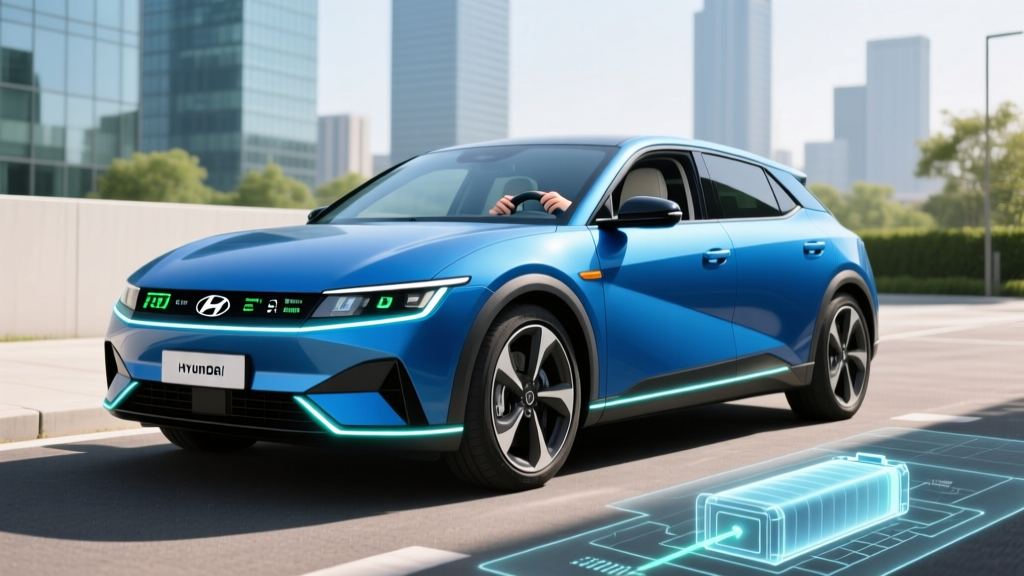
The Hyundai Ioniq 5 has anchored the mainstream EV market since its launch, and the 2026 model year keeps its core formula intact: an 800-volt architecture that enables class-leading DC fast charging, a spacious cabin built on the E-GMP platform, and a design that still turns heads in crowded parking lots. But for shoppers searching specifically for Hyundai Ioniq 5 0-60 times, the answer depends entirely on which powertrain you choose — and the gap between trims is substantial.
The single-motor Standard Range model isn't trying to win drag races. The dual-motor AWD variants, however, deliver sports-sedan acceleration that punches well above their price class. This review breaks down every performance metric, real-world range figure, charging speed, and ownership cost you need to make an informed decision.
| Spec | SE/SEL Std Range (RWD) | SE/SEL (RWD) | SE/SEL/Limited (AWD) | N (Performance) |
|---|---|---|---|---|
| 0-60 mph | ~7.4 sec | ~6.8 sec | ~4.5 sec | ~3.25 sec |
| Horsepower | 168 hp | 225 hp | 320 hp | 641 hp |
| Torque | 258 lb-ft | 258 lb-ft | 446 lb-ft | 568 lb-ft |
| Drivetrain | RWD | RWD | Dual-Motor AWD | Dual-Motor AWD |
| Battery (usable) | ~58 kWh (LFP) | ~84 kWh (NMC) | ~84 kWh (NMC) | ~84 kWh (NMC) |
| EPA Range | 240 mi | 303 mi | 260–290 mi | 221 mi |
| MPGe (combined) | 117 MPGe | 114 MPGe | 101–110 MPGe | 84 MPGe |
| Peak DC Charge | ~175 kW | ~238 kW | ~238 kW | ~238 kW |
| 10–80% DC Time | ~20 min | ~18 min | ~18 min | ~18 min |
| Base MSRP | ~$42,600 | ~$47,100 | ~$50,600 | ~$67,500 |
0-60 mph and Performance: What Each Trim Actually Delivers
The Ioniq 5 lineup spans a remarkable performance range. The Standard Range RWD with its 168-hp motor is perfectly adequate for highway merging and daily commuting, but its 7.4-second 0-60 time won't excite anyone coming from a turbocharged gas sedan. Step up to the Long Range RWD and the 225-hp motor shaves the sprint to roughly 6.8 seconds — noticeably more confident when you need acceleration on short freeway on-ramps.
The real performance leap comes with the dual-motor AWD configuration. With 320 hp and 446 lb-ft of torque available instantly, the AWD Ioniq 5 SE, SEL, or Limited hits 60 mph in approximately 4.5 seconds. That places it in the territory of a BMW 340i or Audi S4, but with a lower center of gravity and no turbo lag. The instant torque delivery in an EV makes these times feel even quicker in real-world driving than the numbers suggest.
At the top of the range, the Ioniq 5 N is Hyundai's dedicated performance variant. With N Grin Boost engaged, it produces 641 hp and rockets to 60 mph in roughly 3.25 seconds. It also adds track-oriented features like N Pedal (aggressive regen for trail-braking), N Torque Distribution, and simulated gear shifts. But the N is a specialized, $67,500 proposition — not the Ioniq 5 most buyers should be considering.
EPA Range vs. Real-World Range: What to Actually Expect
The EPA numbers tell one story, but real-world conditions tell another. Here's how the range picture actually looks once you leave the laboratory:
- Long Range RWD (EPA 303 mi): Expect ~260–280 mi on mixed driving, ~240–255 mi on sustained 75-mph highway runs. In freezing temperatures (below 30°F), plan for 190–220 mi without preconditioning.
- AWD Long Range (EPA 260–290 mi): Real-world highway drops to ~220–250 mi. Cold weather can reduce this to ~175–210 mi.
- Standard Range RWD (EPA 240 mi): Realistic mixed driving yields ~200–220 mi; highway at 75 mph yields ~180–195 mi.
- Ioniq 5 N (EPA 221 mi): Aggressive driving can drain this to under 150 mi. Conservative driving might yield ~190 mi.
The Ioniq 5's heat pump (standard on most trims) helps mitigate cold-weather losses compared to EVs without active thermal management, but no EV is immune to the physics of battery chemistry in freezing temperatures.
According to fueleconomy.gov, the Long Range RWD Ioniq 5 achieves 114 MPGe combined with an energy consumption of roughly 30 kWh per 100 miles. The AWD variant trades some efficiency for traction, consuming approximately 33–34 kWh/100 mi. These are competitive figures for the crossover segment, though the Tesla Model Y and Kia EV6 edge slightly ahead on efficiency.
800-Volt Charging: The Ioniq 5's Biggest Technical Advantage
This is where the Ioniq 5 separates itself from most competitors. Its 800-volt electrical architecture (shared with the Kia EV6 and Genesis GV60) allows it to accept significantly higher DC fast-charge power than 400-volt rivals. On a 350-kW charger, the Long Range and AWD models can peak at roughly 238 kW, pulling the battery from 10% to 80% in approximately 18 minutes under ideal conditions.
| Charge Level | Power / Rate | Approx. Miles Added per Hour | Notes |
|---|---|---|---|
| Level 1 (120V household) | ~1.4 kW | ~4–5 mi/hr | Emergency / overnight trickle only |
| Level 2 (240V home, 48A) | ~10.9 kW | ~32–36 mi/hr | Full charge in ~8–9 hours (84 kWh battery) |
| DC Fast (150 kW station) | ~150 kW (capped) | N/A — session-based | 10–80% in ~25 min |
| DC Fast (350 kW station) | ~238 kW peak | N/A — session-based | 10–80% in ~18 min; tapers sharply above 80% |
A critical detail that spec sheets often bury: charge-curve taper. The 238-kW peak is only sustained in a narrow State of Charge window (roughly 10–40%). Above 60%, the rate drops substantially, and above 80% it slows to a trickle. This is normal for lithium-ion batteries — the battery management system protects cell longevity by reducing current as cells approach full charge. For road trips, the practical strategy is to charge from 10–80% and drive on, rather than waiting for a full charge.
One practical note: the Ioniq 5 uses the NACS (Tesla-style) charge port starting with the 2025 model year refresh, giving it native access to Tesla's Supercharger network without an adapter. This dramatically expands its usable public charging infrastructure compared to earlier CCS-equipped model years.
For home charging, a Level 2 wall connector on a 60-amp circuit (48A continuous) will fully replenish the 84-kWh battery overnight. Expect to budget $800–$1,500 for a quality Level 2 unit plus professional installation by a licensed electrician, with potential additional costs if your electrical panel needs an upgrade to 200A service.
Battery Chemistry, Degradation, and Warranty Coverage
Hyundai uses two distinct battery chemistries across the Ioniq 5 lineup, and the choice matters for long-term ownership:
| Attribute | LFP (Standard Range) | NMC (Long Range / AWD / N) |
|---|---|---|
| Usable Capacity | ~58 kWh | ~84 kWh |
| Energy Density | Lower (heavier per kWh) | Higher (lighter per kWh) |
| Cycle Life | ~3,000+ cycles | ~1,500–2,000 cycles |
| Cold-Weather Performance | More range loss in cold | Better cold-weather retention |
| Recommended Charge Habit | Can charge to 100% daily | 80% daily; 100% for trips only |
| Cost to Replace (est.) | $8,000–$12,000 | $12,000–$18,000 |
The LFP (lithium iron phosphate) pack in the Standard Range model sacrifices energy density for exceptional cycle life and the ability to charge to 100% regularly without accelerating degradation. This makes it ideal for daily commuters who can charge at home every night. The NMC (nickel manganese cobalt) pack in Long Range and AWD models offers more range per charge but benefits from being kept between 20–80% for daily use.
Hyundai backs the Ioniq 5 battery with a 10-year/100,000-mile warranty that covers capacity loss below 70% of original capacity. The powertrain (motors, reduction gear, inverter) is also covered for 10 years/100,000 miles. The basic vehicle warranty is 5 years/60,000 miles. This is among the strongest coverage in the EV segment, matching Kia and exceeding most competitors.
Pricing, Trims, and Federal Tax Credit Eligibility
The 2026 Ioniq 5 lineup spans roughly $42,600 to $67,500 in MSRP before incentives. Here's how the pricing breaks down and how the federal tax credit applies:
| Trim | Base MSRP | Federal Credit (§30D) | Est. Net Price | Credit Eligibility Notes |
|---|---|---|---|---|
| SE Standard Range (RWD) | ~$42,600 | Up to $7,500 | ~$35,100 | MSRP under $55K cap; subject to income + sourcing rules |
| SE Long Range (RWD) | ~$47,100 | Up to $7,500 | ~$39,600 | MSRP under $55K cap; subject to income + sourcing rules |
| SEL AWD | ~$51,100 | Up to $7,500 | ~$43,600 | MSRP under $55K cap; subject to income + sourcing rules |
| Limited AWD | ~$57,100 | $0 (exceeds cap) | ~$57,100 | MSRP exceeds $55,000 SUV/van cap — NOT eligible |
| Ioniq 5 N | ~$67,500 | $0 (exceeds cap) | ~$67,500 | MSRP exceeds cap — NOT eligible |
Under current IRS §30D Clean Vehicle Credit rules, the Ioniq 5 qualifies as an SUV for the $55,000 MSRP cap (not the $25,000 sedan cap). However, several conditions must be met simultaneously:
- Buyer income limits: Modified AGI must not exceed $300,000 (joint), $225,000 (head of household), or $150,000 (single) for the tax year of delivery or the prior year.
- MSRP cap: Vehicle base MSRP plus dealer-installed options must not exceed $55,000. The Limited trim and N model exceed this.
- Battery sourcing requirements: A percentage of critical minerals and battery components must be sourced from the US or free-trade-agreement countries. These thresholds tighten annually. Check the DOE/Fuel Economy credit-qualifying list for the specific model year.
- Point-of-sale transfer: As of 2024, buyers can transfer the credit to the dealer for an immediate price reduction at purchase, rather than waiting to claim it on their tax return. This requires the dealer to be registered with the IRS.
- Final assembly: Vehicle must undergo final assembly in North America. The Ioniq 5 for the US market is assembled at Hyundai's Metaplant in Ellabell, Georgia, satisfying this requirement.
Critical caveat: Tax credit eligibility rules, battery-sourcing thresholds, and qualifying vehicle lists change frequently. Always verify current eligibility on fueleconomy.gov and consult a tax professional before relying on the credit in your purchase decision.
Interior Space, Technology, and Daily Livability
The Ioniq 5's E-GMP platform delivers a flat floor and a long 118.1-inch wheelbase, translating into genuinely spacious accommodations. Rear-seat legroom measures 39.4 inches — enough for adults on long trips without complaint. Cargo volume behind the rear seats is 27.2 cubic feet, expanding to 59.3 cubic feet with the rear seats folded. The front trunk (frunk) adds between 0.85 and 2.1 cubic feet depending on drivetrain — small but useful for charging cables or a laptop bag.
The infotainment system uses dual 12.3-inch displays (instrument cluster and center touchscreen) with wireless Apple CarPlay and Android Auto. Physical climate controls are a welcome inclusion that Hyundai has preserved. The center console slides fore and aft ("Universal Island"), providing flexible storage. On the Limited trim, you get a panoramic fixed glass roof, ventilated front seats, a head-up display with augmented-reality navigation overlays, and a premium Bose audio system.
On the safety front, the Ioniq 5 has earned IIHS Top Safety Pick+ status and top five-star ratings from NHTSA. Standard Hyundai SmartSense features include forward collision-avoidance assist with pedestrian and cyclist detection, blind-spot collision-avoidance assist, rear cross-traffic collision-avoidance assist, and Safe Exit Assist (which prevents doors from opening into approaching traffic).
Pros
- Best-in-class 800V DC fast charging (~18 min, 10–80%)
- NACS port provides native Supercharger access
- Spacious flat-floor cabin with excellent rear legroom
- AWD 0-60 in ~4.5 sec rivals sport sedans
- 10-year/100,000-mile battery and powertrain warranty
- Strong safety ratings (IIHS TSP+, NHTSA 5-star)
- Vehicle-to-load (V2L) capability powers devices/appliances
Cons
- Limited trim exceeds $55K tax-credit MSRP cap
- Standard Range LFP battery loses more range in cold weather
- No rear wiper (a common complaint in rain/snow)
- Frunk is small compared to some competitors
- Infotainment can lag slightly under heavy load
- AWD efficiency drops noticeably vs. RWD (~30 fewer EPA miles)
Who Should Buy the Ioniq 5 — And Who Should Look Elsewhere?
- You take regular road trips and value the fastest DC charging in the segment (18 min, 10–80% on a 350-kW charger).
- You want a daily driver with a spacious cabin, strong safety credentials, and a 10-year warranty.
- You commute 30–60 miles daily and can charge at home on Level 2 overnight.
- You want AWD acceleration (4.5 sec 0-60) without paying luxury-brand prices.
- NACS Supercharger access is a priority for your charging network.
- You need 3-row seating (consider the Kia EV9 or Hyundai Ioniq 9).
- You want maximum range above all else — the Tesla Model Y Long Range offers ~330+ EPA miles.
- You want the most affordable entry point — the Chevy Equinox EV starts lower.
- You want a performance EV with track capability — the Tesla Model 3 Performance or Porsche Macan EV may suit better.
Frequently Asked Questions
What is the real-world range of the Hyundai Ioniq 5?
The Long Range RWD model carries a 303-mile EPA estimate, but expect roughly 260–280 miles in real mixed driving and 240–255 miles on sustained highway trips at 70–75 mph. In freezing weather, plan for 190–220 miles unless you precondition the battery while still plugged in. The AWD variants see real-world highway range of approximately 220–250 miles.
How fast does the Ioniq 5 charge at home and on the road?
On a Level 2 home charger (240V, 48A), the Ioniq 5 adds roughly 32–36 miles of range per hour and can fully charge the 84-kWh battery in about 8–9 hours. On a 350-kW DC fast charger, the Long Range and AWD models peak at approximately 238 kW and charge from 10% to 80% in about 18 minutes. The Standard Range model peaks lower (~175 kW) and takes roughly 20 minutes for the same session.
How much does the Ioniq 5 cost after the federal tax credit?
If you qualify for the full $7,500 §30D credit, a Standard Range SE drops from ~$42,600 to ~$35,100, and a Long Range SE from ~$47,100 to ~$39,600. However, the Limited AWD (~$57,100 MSRP) and Ioniq 5 N (~$67,500) exceed the $55,000 MSRP cap and are not eligible. You must also meet income caps and battery-sourcing requirements. Always verify current eligibility on fueleconomy.gov before purchasing.
Is the Ioniq 5 worth buying over the Tesla Model Y or Kia EV6?
The Ioniq 5 trades the Model Y's range and Supercharger ecosystem maturity for faster charging on non-Tesla networks, a more distinctive design, and a longer warranty. Versus the mechanically similar Kia EV6, the Ioniq 5 offers a more upright, crossover-like seating position and slightly more rear headroom, while the EV6 leans sportier. All three are strong choices — the decision often comes down to design preference, specific trim pricing, and which dealer network you prefer.
Does the Ioniq 5 qualify for the federal EV tax credit in 2026?
The SE and SEL trims (MSRP under $55,000) are potentially eligible for up to $7,500 under §30D, provided the buyer meets income limits, the vehicle meets battery critical-mineral and component sourcing thresholds, and final assembly is in North America (the Georgia-built Ioniq 5 satisfies this). The Limited and N trims are ineligible due to MSRP caps. Credit rules change — confirm on the IRS website and fueleconomy.gov before committing to a purchase.
What's the difference between the Standard Range LFP and Long Range NMC batteries?
The Standard Range uses an LFP (lithium iron phosphate) battery (~58 kWh) that offers longer cycle life and can be charged to 100% daily without harm, but provides less range and performs worse in cold weather. The Long Range uses an NMC (nickel manganese cobalt) battery (~84 kWh) with higher energy density and better cold-weather performance, but it's best kept between 20–80% for daily charging to maximize lifespan. For most buyers with home charging, the Long Range NMC provides the better overall experience.