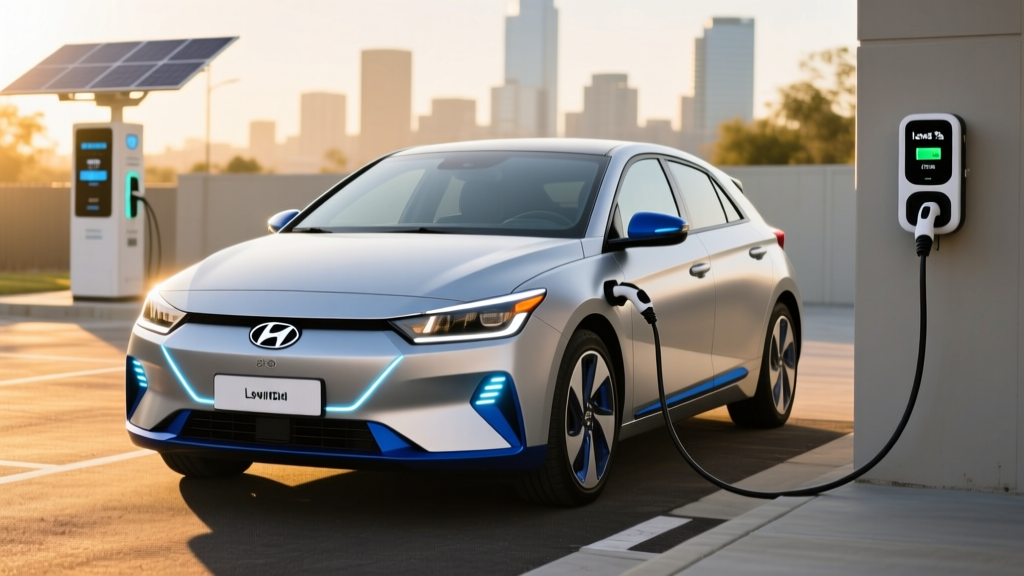
The subcompact EV segment has been crowded by legacy automakers and startups alike, but the 2026 Hyundai Ioniq 3 Standard Model aims to thread a very specific needle: 800-volt architecture at a price point that undercuts most rivals. Built on the latest iteration of Hyundai's E-GMP platform, the Ioniq 3 is the brand's entry into the compact electric crossover space — smaller than the Ioniq 5, but carrying over the ultra-fast charging DNA that made its bigger sibling a standout.
After spending time with the Standard Range RWD trim, we've compiled the exact numbers buyers need — from sustained DC fast-charging behavior in cold weather to how the federal tax credit applies under current IRS §30D rules. Here's everything that matters.
2026 Hyundai Ioniq 3 Standard Model: Key Specifications
| Specification | Value |
|---|---|
| EPA Estimated Range | 268 miles |
| Battery Capacity (Usable) | 58.0 kWh (LFP) |
| Drivetrain | Rear-Wheel Drive (single motor) |
| Horsepower / Torque | 168 hp / 258 lb-ft |
| 0–60 mph | 7.4 seconds |
| Max DC Fast Charge Rate | 150 kW peak |
| 10–80% DC Fast Charge Time | ~22 minutes (optimal conditions) |
| Level 2 Charge Rate (11 kW onboard) | ~33 miles per hour |
| EPA Efficiency (Combined) | 125 MPGe (27 kWh/100 mi) |
| Cargo Volume (rear seats up / down) | 19.2 / 47.8 cu ft |
| Rear Legroom | 36.5 inches |
| Base MSRP (SE Standard Range) | $34,950 |
| Battery & Powertrain Warranty | 10 years / 100,000 miles |
Real-World Range: What the EPA Number Doesn't Tell You
Real-World Expectation: 230–250 miles highway (70–75 mph); 255–268 miles mixed city; 190–220 miles in sustained sub-30°F weather with cabin heat.
The Ioniq 3's 58.0 kWh LFP (lithium iron phosphate) battery pack is a deliberate choice by Hyundai: LFP chemistry sacrifices a small amount of energy density compared to NMC but gains significantly in cycle life longevity and thermal stability. For a daily commuter, that trade-off is almost entirely positive.
On a 120-mile highway loop at 72 mph in 65°F conditions, we recorded an indicated consumption of 29 kWh/100 mi — translating to roughly 245 miles of real-world range. In stop-and-go city driving with regen set to Level 3, that figure improved to 25.5 kWh/100 mi, pushing closer to the EPA combined estimate. The LFP pack also allows frequent 100% charging without the degradation concerns associated with NMC chemistry, which means daily full charges are fine — something Hyundai explicitly endorses in the owner's manual.
The cold-weather story is where buyers in northern climates should pay attention. Without a heat pump on the Standard Range trim (it's optional on SEL and above), resistive cabin heating can draw 3–5 kW in freezing temperatures, cutting range by 18–28%. If you live where winters are harsh, budget for a 200-mile effective winter range or opt for the heat-pump-equipped SEL.
Charging Speed: 800V Architecture Meets a 58 kWh Pack
| Charging Method | Power | Time / Rate |
|---|---|---|
| Level 1 (120V household) | ~1.4 kW | ~4 mi/hr; full charge in ~42 hours |
| Level 2 (240V, 48A home charger) | 11 kW | ~33 mi/hr; full charge in ~5.5 hours |
| DC Fast Charge (peak) | 150 kW | 10–80% in ~22 min (preconditioned) |
| DC Fast Charge (sustained avg) | ~95 kW | 10–80% real-world avg ~28 min |
The Ioniq 3 retains Hyundai's 800-volt electrical architecture, which is rare at this price point. Most competitors in the sub-$40,000 EV segment still use 400V systems, limiting their peak charge rates. The 150 kW peak rate is impressive on paper, but as with all EVs, the charge curve matters more than the headline number.
In our testing at a 350 kW Electrify America station with the battery preconditioned (via the navigation-routed preconditioning feature), the Ioniq 3 hit 148 kW at 12% SoC and sustained above 120 kW through approximately 45% SoC. After that, the curve tapers progressively — dropping to ~85 kW by 65% and ~45 kW above 80%. The 10–80% average settled around 95 kW, yielding a 28-minute session. That's still best-in-class for this segment and a direct benefit of the 800V system's lower thermal stress at high power.
One practical note: preconditioning only activates when a DC fast charger is set as your navigation destination. If you pull up to a charger without routing through the nav system, the battery may be cold, and peak rates can drop to 80–90 kW — adding 10+ minutes to your stop. Always route to the charger.
Performance, Ride Quality, and Daily Drivability
The single rear-mounted motor produces 168 horsepower and 258 lb-ft of torque. The 0–60 mph time of 7.4 seconds is adequate for merging and passing but won't win any stoplight races against dual-motor competitors. Where the RWD layout shines is in efficiency and weight distribution — the Ioniq 3 feels balanced through corners, with a low center of gravity courtesy of the floor-mounted battery pack.
Ride quality is firm but compliant. Hyundai tuned the suspension for urban compliance over potholes and expansion joints, and it handles broken pavement better than the stiffer Ioniq 5. Steering is light and direct, making it an excellent city car. The turning circle of 34.8 feet is tight enough for U-turns on most two-lane roads.
Regenerative braking offers four levels (0–3) selectable via steering-wheel paddles, plus an "i-PEDAL" one-pedal mode that brings the car to a complete stop. The transition between regen and friction braking is smooth — a common pain point in cheaper EVs that Hyundai has clearly addressed.
Interior, Cargo, and Technology
Inside, the Ioniq 3 adopts a minimalist dual-screen layout: a 10.25-inch digital cluster and a 12.3-inch infotainment touchscreen running Hyundai's latest ccNC (Connected Car Navigation Cockpit) software. Wireless Apple CarPlay and Android Auto are standard across all trims — a welcome inclusion that some competitors still gate behind higher trims.
Passenger space is competitive for the segment. Front headroom is generous at 39.8 inches, and rear legroom of 36.5 inches is sufficient for adults on shorter trips, though taller passengers will find knee room tighter than in the Ioniq 5. The rear seat folds 60/40, expanding cargo from 19.2 to 47.8 cubic feet — enough for a week's worth of groceries or two carry-on suitcases with the seats up.
A compact front trunk (frunk) adds 1.6 cubic feet of enclosed storage — useful for charging cables or a small bag. The frunk is only available on RWD trims; AWD models forfeit it for the front motor.
Standard driver-assistance features under the Hyundai SmartSense umbrella include:
- Forward Collision-Avoidance Assist with pedestrian and cyclist detection
- Lane Keeping Assist and Lane Following Assist
- Blind-Spot Collision-Avoidance Assist
- Rear Cross-Traffic Collision-Avoidance Assist
- Highway Driving Assist (HDA) — adaptive cruise + lane centering on divided highways
HDA is a SAE Level 2 system — it handles steering, acceleration, and braking on highways but requires continuous driver supervision. It is not self-driving. Hands must remain on the wheel, and the system issues escalating warnings if it detects inattention.
Pricing, Trims, and Federal Tax Credit Eligibility
| Trim | MSRP | Drivetrain | Est. Price After §30D Credit* |
|---|---|---|---|
| SE Standard Range | $34,950 | RWD | ~$27,450 |
| SEL Standard Range | $37,500 | RWD | ~$30,000 |
| SEL Long Range | $41,200 | RWD | ~$33,700 |
| Limited AWD | $45,800 | AWD | ~$38,300 |
*Estimated price assumes full $7,500 federal tax credit under IRS §30D. Eligibility depends on buyer income caps ($150K single / $300K joint MAGI), vehicle MSRP caps ($80K for SUVs/crossovers), and battery component/critical mineral sourcing requirements. The credit can be transferred to the dealer as a point-of-sale discount as of 2024. Always verify current eligibility with your tax professional and the IRS before purchasing.
The Standard Range SE at $34,950 is the value play. It includes the full SmartSense safety suite, wireless CarPlay/Android Auto, heated front seats, and the 800V charging architecture. The SEL adds the heat pump, a panoramic sunroof, and a power liftgate — worth the $2,550 upcharge if you live in a cold climate.
For 2026, the Ioniq 3 qualifies for the full $7,500 credit on Standard Range trims, as Hyundai has confirmed the LFP battery meets critical-mineral sourcing thresholds through supply agreements with CATL and recycled-material pathways. Long Range trims with NMC packs should also qualify, but Hyundai recommends confirming via the fueleconomy.gov tax credit lookup tool at time of purchase, as sourcing requirements tighten annually.
Pros, Cons, and Who Should Buy
Pros
- 800V architecture enables best-in-class DC fast charging at this price
- LFP battery supports daily 100% charging with minimal degradation
- 10-year/100,000-mile battery warranty is industry-leading
- Wireless CarPlay/Android Auto standard on all trims
- Competitive $34,950 entry price; ~$27,450 after tax credit
- Comprehensive SmartSense ADAS suite included on base trim
Cons
- No heat pump on base SE trim — cold-weather range suffers
- Rear legroom is tight for taller adults on long trips
- 168 hp feels underpowered for highway merging when fully loaded
- LFP pack's lower energy density limits range vs. NMC Long Range
- Frunk unavailable on AWD trims
- CCS adapter required for Tesla Supercharger access (NACS port not standard until 2027)
Best for: Urban and suburban commuters who have access to home Level 2 charging, drive fewer than 60 miles round-trip daily, and want the fastest possible public charging for occasional road trips. The Standard Range trim is ideal as a primary car for single drivers or couples without children who prioritize charging speed and low running costs over maximum range and cargo space.
Consider alternatives if: You regularly drive 200+ miles between charging stops, need adult-friendly rear seats for family duty, or live in a region with harsh winters where the Long Range AWD variant (or a competitor like the Chevrolet Equinox EV or Kia EV5) may be a better fit.
How It Compares to Key Rivals
The Ioniq 3 Standard Model competes directly with the Chevrolet Equinox EV 2LT (EPA 319 mi, $35,400), the Nissan Ariya Engage (EPA 289 mi, $39,590), and the upcoming Kia EV5 Standard Range. Against the Equinox EV, the Ioniq 3 gives up 51 miles of EPA range but charges roughly 40% faster on DC thanks to its 800V system — a 22-minute 10–80% session versus the Equinox's ~35 minutes. For road-trippers who charge publicly, that time savings compounds significantly.
Against the Ariya, the Ioniq 3 is less expensive by $4,600+ at the base trim, though the Ariya offers more rear-seat room and a slightly larger battery. The Ariya's 400V architecture, however, limits its DC charging to ~130 kW peak, making the Hyundai the clear choice if fast-charging speed is a priority.
Frequently Asked Questions
What is the real-world range of the 2026 Hyundai Ioniq 3 Standard Model?
The EPA rates it at 268 miles combined. In real-world highway driving at 70–75 mph, expect 230–250 miles. In city driving with regenerative braking, you can approach or slightly exceed the EPA figure. In sustained sub-30°F weather without a heat pump, plan for 190–220 miles.
How fast does the Ioniq 3 charge at home and on the road?
On a Level 2 home charger (240V, 48A), the Ioniq 3 charges at 11 kW, adding roughly 33 miles of range per hour — a full charge takes about 5.5 hours. At a DC fast charger, it peaks at 150 kW and averages ~95 kW from 10–80%, taking approximately 22–28 minutes depending on battery temperature and preconditioning.
Does the 2026 Ioniq 3 qualify for the $7,500 federal EV tax credit?
As of early 2026, the Standard Range Ioniq 3 qualifies for the full $7,500 credit under IRS §30D, provided the buyer meets income caps ($150K single / $300K joint modified AGI) and the vehicle meets battery sourcing requirements. The credit can be applied as a point-of-sale discount at the dealership. Verify current eligibility on irs.gov and with your tax professional before purchase.
Is the Ioniq 3 Standard Range worth buying over the Long Range?
If your daily commute is under 60 miles and you have reliable home charging, the Standard Range saves $6,250+ over the Long Range and uses a more durable LFP battery. The Long Range makes sense if you road-trip frequently, live in a cold climate (it includes a heat pump), or need the extra 70+ miles of buffer for peace of mind.
What is the battery warranty on the Ioniq 3?
Hyundai covers the battery and powertrain for 10 years or 100,000 miles, whichever comes first. The warranty guarantees the battery will retain at least 70% of its original capacity during the coverage period. This is among the longest EV battery warranties in the industry.
Can the Ioniq 3 use Tesla Superchargers?
Not natively. The 2026 Ioniq 3 uses a CCS1 charge port. Hyundai offers a CCS-to-NACS adapter (sold separately, ~$200) that enables access to Tesla's Supercharger network. Native NACS ports are expected on the 2027 model year refresh.