Quick Answer: Which Hyundai Electric Car Should You Buy?
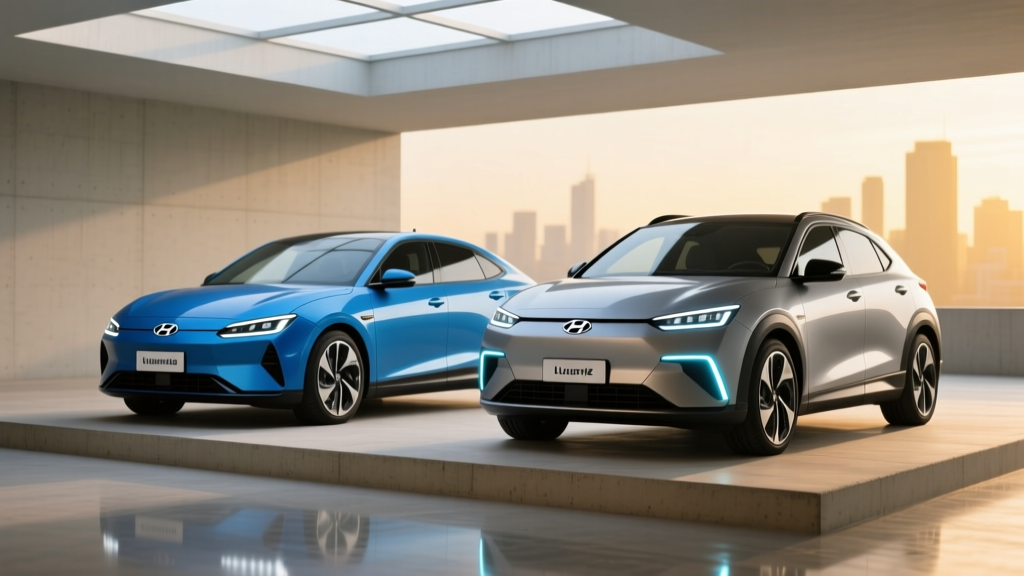
Hyundai currently sells four battery-electric vehicles in the US for 2026: the Kona Electric (subcompact SUV, 261 mi EPA, from ~$32,975), the Ioniq 5 (midsize crossover, up to 318 mi EPA, from ~$42,600), the Ioniq 6 (sedan, up to 361 mi EPA, from ~$38,650), and the new three-row Ioniq 9 (up to 335 mi EPA, from ~$56,000). All use Hyundai's E-GMP platform with 800V architecture (except the Kona), enabling 10–80% DC fast charging in roughly 18 minutes on the Ioniq 5/6/9. For most buyers, the Ioniq 5 is the best all-rounder; choose the Ioniq 6 if maximum range and efficiency matter most, or the Kona Electric if budget is the priority.
Hyundai's 2026 EV Lineup: Specs at a Glance
Before diving into costs and ownership realities, here's how Hyundai's four BEVs stack up on the numbers that matter most. All ranges below are EPA estimates; real-world results vary based on temperature, speed, and terrain.
| Spec | Kona Electric | Ioniq 5 | Ioniq 6 | Ioniq 9 |
|---|---|---|---|---|
| Body Style | Subcompact SUV | Midsize Crossover | Sedan | 3-Row SUV |
| EPA Range (max) | 261 mi | 318 mi | 361 mi | 335 mi |
| Battery (usable, kWh) | 64.8 kWh (NMC) | 84.0 kWh (NMC) | 77.4 kWh (NMC) | 110.3 kWh (NMC) |
| Drivetrain | FWD | RWD / AWD | RWD / AWD | RWD / AWD |
| Horsepower | 201 hp | 168–320 hp | 149–320 hp | 215–375 hp |
| 0–60 mph | ~7.6 sec | ~7.2–5.1 sec | ~8.4–5.1 sec | ~7.5–4.9 sec |
| Peak DC Charge Rate | ~100 kW | ~240 kW | ~240 kW | ~240 kW |
| 10–80% DC Time | ~43 min | ~18 min | ~18 min | ~24 min |
| Level 2 (240V) Rate | ~10.9 kW | ~10.9 kW | ~10.9 kW | ~10.9 kW |
| Connector | CCS1 / NACS (2025+) | NACS (2025+) | NACS (2025+) | NACS (2025+) |
| MPGe (combined) | 129 MPGe | 110–134 MPGe | 117–140 MPGe | ~100–115 MPGe |
| Base MSRP | ~$32,975 | ~$42,600 | ~$38,650 | ~$56,000 |
| Battery Warranty | 10 yr / 100,000 mi | 10 yr / 100,000 mi | 10 yr / 100,000 mi | 10 yr / 100,000 mi |
Sources: fueleconomy.gov, Hyundai USA. Specs reflect 2026 model year where published; Ioniq 9 specs are preliminary estimates pending final EPA certification.
Real-World Range vs. EPA Sticker: What to Actually Expect
EPA range estimates are a useful baseline, but they don't tell the full story. Based on consistent real-world testing patterns and owner reports, here's what Hyundai EV buyers should plan for:
Ioniq 5 (318 mi EPA, RWD Long Range)
Highway (70–75 mph): Expect ~250–270 miles. Higher speeds increase aerodynamic drag significantly on crossovers.
Cold weather (below 32°F): Expect ~210–240 miles. The Ioniq 5's heat pump (standard on most trims) helps, but cabin heating and battery conditioning still consume 15–25% of energy.
Mixed driving (city/suburban): Close to EPA, often 290–310 miles thanks to regenerative braking.
Ioniq 6 (361 mi EPA, SE Long Range RWD)
Highway: ~290–310 miles. The Ioniq 6's 0.21 Cd drag coefficient is among the lowest of any production car, so highway losses are smaller than the Ioniq 5.
Cold weather: ~240–280 miles. The sleek sedan shape and standard heat pump mitigate losses better than most SUVs.
Mixed driving: 330–355 miles is achievable with moderate speeds.
The Kona Electric, with its smaller 64.8 kWh battery and 400V architecture, will see real-world highway range closer to 200–220 miles and cold-weather range around 170–195 miles. It's best suited for commuters with predictable daily routes under 150 miles round-trip.
Charging Speeds and the 800V Advantage
Hyundai's E-GMP platform (used in the Ioniq 5, 6, and 9) operates at 800 volts, roughly double the 400V architecture used by most competitors and the Kona Electric. This matters because higher voltage allows more power (kW) to flow into the battery at lower current, reducing heat and enabling faster sustained charging.
| Charging Level | Power | Miles Added per Hour | Best For |
|---|---|---|---|
| Level 1 (120V household) | ~1.4 kW | ~3–5 mi/hr | Emergency/top-up overnight |
| Level 2 (240V, home/workplace) | ~10.9 kW | ~30–40 mi/hr | Daily home charging (full charge in 7–9 hrs) |
| DC Fast (350 kW station, Ioniq 5/6) | Peak ~240 kW | ~15–20 mi/min (peak) | Road trips: 10–80% in ~18 min |
| DC Fast (Kona Electric) | Peak ~100 kW | ~8–12 mi/min (peak) | Road trips: 10–80% in ~43 min |
Charge curve reality check: The "18-minute" 10–80% claim for the Ioniq 5/6 assumes a 350 kW-capable charger and battery preconditioning (the car warms the battery when you navigate to a charger). Above 80% state of charge (SoC), the rate tapers sharply — from ~240 kW down to under 50 kW. Charging from 80–100% can add another 20–25 minutes. On road trips, plan stops around the 10–80% window for maximum efficiency.
Starting with the 2025 model year, Hyundai transitioned its EV lineup to the NACS (Tesla-style) connector. For 2026, all new Ioniq and Kona Electric models ship with a native NACS port, granting access to Tesla Supercharger stations (now open to non-Tesla vehicles) alongside Electrify America, EVgo, and other networks. If you own an older CCS-equipped Hyundai, a Hyundai-provided NACS adapter is available.
Total Cost of Ownership: Hyundai EV vs. Gas Equivalent
The purchase price of an EV is higher than a comparable gas car, but operating costs are significantly lower. Here's a five-year comparison between the Ioniq 5 SEL AWD (~$47,000 MSRP) and a similarly equipped gas compact SUV like the Hyundai Tucson AWD (~$35,000 MSRP).
| Cost Factor (5 Years / 75,000 mi) | Ioniq 5 SEL AWD | Tucson AWD (Gas) |
|---|---|---|
| Purchase Price (MSRP) | $47,000 | $35,000 |
| Est. Federal Tax Credit (§30D) | –$3,750 to $7,500* | $0 |
| Fuel / Electricity | ~$3,200 (home charging at $0.14/kWh) | ~$8,400 (28 MPG avg at $3.50/gal) |
| Maintenance | ~$1,200 (tire rotations, cabin filter, fluid top-ups) | ~$3,800 (oil changes, filters, brakes, spark plugs) |
| Insurance (avg) | ~$9,500 ($1,900/yr) | ~$7,500 ($1,500/yr) |
| Est. Depreciation | ~$18,000 | ~$14,000 |
| 5-Year Total (approx.) | ~$55,150 – $61,650 | ~$68,700 |
* Federal §30D credit eligibility depends on MSRP caps, buyer income limits, and battery-component/critical-mineral sourcing requirements. For 2026, the Ioniq 5 (assembled in Georgia) may qualify for up to $7,500, but amounts vary. Verify current eligibility at irs.gov and confirm with a tax professional. The credit can now be transferred to the dealer at point of sale, reducing your out-of-pocket cost at purchase.
The key takeaway: even with higher insurance and depreciation, the Ioniq 5 breaks even or comes out ahead over five years when the federal credit applies — and the gap widens if gas prices rise or you have access to cheap home electricity. If you charge exclusively on expensive public DC fast chargers ($0.35–$0.55/kWh), your fuel cost rises to ~$5,500–$8,500 over five years, narrowing the advantage considerably.
Hyundai EV vs. Hybrid: Which Powertrain Fits Your Life?
Hyundai also sells the Tucson Hybrid (~$38,000, 38 MPG combined) and Tucson PHEV (~$40,500, 33 mi electric-only). Here's how to decide:
Choose a Hyundai BEV (Ioniq 5, 6, 9, Kona Electric) if:
- You have access to home Level 2 charging (garage or driveway with a 240V outlet or hardwired charger).
- Your daily driving is under 200 miles and you take road trips fewer than 6–8 times per year.
- You want the lowest per-mile operating cost and minimal maintenance.
- You qualify for the federal tax credit, which closes the upfront price gap.
Choose a Hyundai Hybrid (Tucson Hybrid, Santa Fe Hybrid) if:
- You cannot charge at home (apartment, street parking, no electrical access).
- You regularly drive 300+ miles in a day or live in a rural area with sparse DC fast-charging infrastructure.
- You want a lower purchase price and don't want to think about charging logistics.
Choose a Hyundai PHEV (Tucson PHEV) if:
- You can charge at home and your commute is under 30 miles each way (covering most daily miles on electricity).
- You frequently take longer road trips and want zero range anxiety with the gas backup.
- You want EV-like daily driving without committing to a full BEV.
Common Misconceptions About Hyundai EVs
| Myth | Fact |
|---|---|
| "The battery will need replacing in a few years and cost $20,000." | Hyundai's EV battery warranty covers 10 years / 100,000 miles against capacity loss below 70%. Real-world data from Ioniq 5 owners shows typical degradation of 5–8% after 60,000 miles. Full battery replacements are rare and covered under warranty within the term. |
| "I can't take road trips — charging takes too long." | On a 350 kW charger, the Ioniq 5 adds ~180 miles in 18 minutes. On a 500-mile trip, you'll stop twice for ~20 minutes each — comparable to gas-car rest stops for food and bathroom breaks. |
| "EVs don't work in cold climates." | Range drops 15–25% in sub-freezing temperatures. An Ioniq 5 rated at 318 miles will deliver ~240 miles in 20°F weather — still enough for most daily needs. Preconditioning the battery while plugged in recovers some efficiency. |
| "Hyundais can't use Tesla Superchargers." | 2025+ Hyundai EVs with native NACS ports can charge at Tesla Superchargers. Older CCS models can use a Hyundai-supplied NACS adapter for Supercharger access. |
| "Home charging installation is prohibitively expensive." | A basic Level 2 hardwired installation on an existing 240V circuit averages $500–$1,500. A full panel upgrade (200A service) can push costs to $2,500–$5,000, but most homes with a dryer or oven circuit already have sufficient capacity. |
What First-Time Hyundai EV Buyers Should Know
1. Home Charging Is Non-Negotiable for Most Owners
Over 80% of EV charging happens at home. Before buying, confirm you can install a Level 2 (240V) charger. If you have a NEMA 14-50 outlet (common for electric dryers/ranges), you can use a portable Level 2 cord. Otherwise, budget $500–$2,000 for a licensed electrician to install a dedicated circuit and hardwired charger. If you live in an apartment or condo without charging access, a PHEV or hybrid may be more practical until workplace or public charging improves in your area.
2. Understand kW vs. kWh
This is the single most common EV confusion. kWh (kilowatt-hours) measures energy capacity — think of it as the "gallon" equivalent. The Ioniq 5 has an 84 kWh battery. kW (kilowatts) measures power flow rate — the "gallons per minute" of charging. A 240 kW charger fills the battery faster than a 50 kW charger. Never compare chargers by kWh or batteries by kW.
3. The Federal Tax Credit Isn't Guaranteed
The §30D credit has multiple hurdles: buyer income caps ($150K single / $300K joint for 2026), MSRP caps ($55K for SUVs like the Ioniq 5 and 9; $25K for sedans like the Ioniq 6), and battery-component and critical-mineral sourcing requirements that change annually. The Ioniq 6 sedan's lower MSRP cap ($25K) means no trim qualifies for the full credit — a critical detail many buyers miss. Always verify on irs.gov before counting on the credit in your budget.
4. Insurance Costs More — Budget for It
EV insurance premiums run 15–25% higher than comparable gas vehicles, driven by higher repair costs (specialized parts, battery protection requirements) and higher vehicle values. Get quotes from your insurer before purchasing. Some companies offer EV-specific discounts.
5. Preconditioning Matters for Fast Charging
When you enter a DC fast charger as your destination in the Ioniq 5/6/9's navigation system, the car automatically warms the battery to optimal temperature before you arrive. Skipping this step — especially in cold weather — can reduce your peak charge rate from 240 kW to under 100 kW, doubling your stop time. Always navigate to the charger; don't just drive there.
Frequently Asked Questions
Does the Hyundai Ioniq 5 qualify for the $7,500 federal tax credit in 2026?
It may, depending on the trim and your income. The Ioniq 5 is assembled at Hyundai's Metaplant in Georgia, which helps satisfy domestic assembly requirements. However, battery-sourcing rules tighten each year. Check the latest eligible-vehicle list at fueleconomy.gov and verify your income eligibility at irs.gov. The credit can be applied at the point of sale, reducing your drive-off price.
How long does it take to charge a Hyundai EV at home?
On a Level 2 home charger (10.9 kW), the Ioniq 5 (84 kWh) charges from 0–100% in roughly 8 hours. The Ioniq 6 (77.4 kWh) takes about 7 hours. Most owners plug in at night and wake up to a full battery. The Kona Electric (64.8 kWh) takes ~6 hours.
Is the Ioniq 9 available to order now?
The Ioniq 9 began US deliveries in mid-2025 and is available at participating Hyundai dealerships for 2026. Availability varies by region and trim. Check with your local dealer for current inventory.
How does Hyundai's EV warranty compare to competitors?
Hyundai offers one of the best EV warranties in the industry: 10 years / 100,000 miles on the battery pack and electric powertrain, plus 5 years / 60,000 miles bumper-to-bumper. This exceeds Tesla's 8-year/120,000-mile battery warranty on most models and matches or beats most mainstream competitors.
Can I tow with a Hyundai electric car?
The Ioniq 5 AWD is rated for up to 2,300 lbs of towing capacity — enough for a small utility trailer or a pair of dirt bikes, but not a large boat or camper. The Ioniq 9 AWD is expected to offer up to 4,000–5,000 lbs (pending final certification). The Ioniq 6 and Kona Electric are not rated for towing. Note that towing reduces range by 30–50% depending on trailer weight and aerodynamics.