The Real Cost to Charge a Tesla: Home, Public, and Supercharger
If you're shopping for a Tesla or just bought one, the first question after range is usually: how much does it actually cost to fill the battery? Unlike gas prices posted on every corner, EV charging costs depend on your electricity rate, battery size, and where you plug in. We've broken down the math for every current Tesla model — Model 3, Model Y, Model S, and Model X — using 2026 pricing, real utility rates, and public charging network fees.
The short answer? A full home charge for the most popular Tesla (Model Y Long Range) costs roughly $10–$16 depending on your state's electricity rate. A Supercharger session runs $18–$30. Read on for the exact numbers by model and scenario.
Tesla Battery Sizes and Energy Capacity by Model
Before calculating cost, you need to know how much energy each Tesla battery holds. Battery capacity is measured in kWh (kilowatt-hours) — think of it as the "gallon" equivalent for EVs. The larger the battery, the more it costs to fill, but also the farther you can drive.
| Model / Trim | Battery (kWh usable) | Chemistry | EPA Range | Efficiency (kWh/100 mi) |
|---|---|---|---|---|
| Model 3 RWD | 60 kWh | LFP (CATL) | 272 mi | 25 |
| Model 3 Long Range AWD | 79 kWh | NMC | 341 mi | 24 |
| Model 3 Performance | 79 kWh | NMC | 315 mi | 27 |
| Model Y Long Range AWD | 79 kWh | NMC | 320 mi | 26 |
| Model Y Performance | 79 kWh | NMC | 293 mi | 28 |
| Model S Long Range | 100 kWh | NMC | 402 mi | 26 |
| Model S Plaid | 100 kWh | NMC | 359 mi | 29 |
| Model X Long Range | 100 kWh | NMC | 335 mi | 31 |
| Model X Plaid | 100 kWh | NMC | 311 mi | 33 |
Chemistry note: The Model 3 RWD uses an LFP (lithium iron phosphate) battery. LFP cells tolerate regular 100% charging better than NMC, which Tesla recommends keeping at 80% daily for longevity. This means LFP owners effectively use more of their battery day-to-day, partially offsetting the smaller capacity. All other current trims use NMC chemistry for higher energy density.
How Much to Fully Charge a Tesla at Home (Level 2)
Home charging is where 80%+ of Tesla owners do their charging — and it's by far the cheapest option. Your cost depends on your local electricity rate, measured in dollars per kWh. The U.S. average residential rate in early 2026 is approximately $0.17/kWh, but this varies enormously: from ~$0.11/kWh in Louisiana to ~$0.33/kWh in California and Hawaii.
| Model | Battery kWh | Cost (0→100%) | Cost per Mile of Range |
|---|---|---|---|
| Model 3 RWD | 60 | $10.20 | $0.038 |
| Model 3 Long Range | 79 | $13.43 | $0.039 |
| Model Y Long Range | 79 | $13.43 | $0.042 |
| Model S Long Range | 100 | $17.00 | $0.042 |
| Model X Long Range | 100 | $17.00 | $0.051 |
Home Charging Speed: Level 2 Setup
Tesla's Wall Connector delivers up to 11.5 kW (48 amps) on a NACS connector when wired to a 60-amp circuit. That adds roughly 44 miles of range per hour for a Model Y Long Range. A full 0→100% charge takes about 7–8 hours for the 79 kWh battery — easily done overnight. Installation typically costs $500–$1,500 depending on panel proximity and whether your home needs a service upgrade (200-amp panel recommended).
Supercharger and Public DC Fast Charging Costs
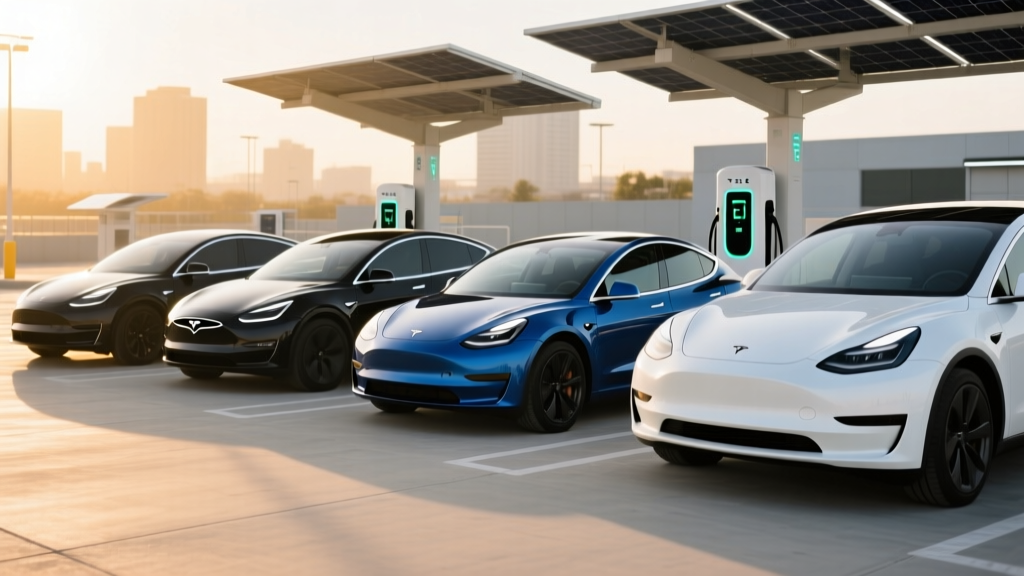
Tesla's Supercharger network is the gold standard for road-trip charging. As of 2026, Supercharger pricing averages $0.28–$0.36/kWh in most U.S. markets, with peak-hour rates in congested urban areas reaching $0.48/kWh. Tesla also opened its Supercharger network to non-Tesla EVs via the NACS standard, which has increased station utilization in some corridors.
| Model | Battery kWh | Cost @ $0.28/kWh | Cost @ $0.36/kWh | Cost @ $0.48/kWh (Peak) |
|---|---|---|---|---|
| Model 3 RWD | 60 | $16.80 | $21.60 | $28.80 |
| Model 3 / Y Long Range | 79 | $22.12 | $28.44 | $37.92 |
| Model S / X | 100 | $28.00 | $36.00 | $48.00 |
Important reality check: Almost nobody charges from 0→100% on a Supercharger. Charging slows dramatically above 80% due to the charge curve taper — Tesla's battery management system reduces current to protect cell health. Most road-trip sessions are 10–80%, which takes about 18–25 minutes on a V3/V4 Supercharger (peak 250 kW) and costs roughly $14–$20 for a Model Y. You're paying for speed, not a full fill.
Charging Speed Specs by Model
| Model | Max DC Fast Charge | 10–80% Time | Level 2 (Home) Rate | Miles Added/Hr (L2) |
|---|---|---|---|---|
| Model 3 RWD | 170 kW | ~25 min | 11.5 kW | ~37 mi/hr |
| Model 3 Long Range / Perf | 250 kW | ~18 min | 11.5 kW | ~44 mi/hr |
| Model Y Long Range / Perf | 250 kW | ~20 min | 11.5 kW | ~44 mi/hr |
| Model S / X | 250 kW | ~22 min | 11.5 kW | ~34 mi/hr |
Peak kW is not sustained kW. A Model 3 Long Range might hit 250 kW at 10% SoC but will taper to ~100 kW by 60% and ~40 kW by 80%. This is why the 10–80% time is the meaningful metric — it captures the real session, not the marketing peak.
Real-World Range: What the EPA Sticker Doesn't Tell You
EPA estimates assume mixed city/highway driving at moderate temperatures. In real-world testing:
• Highway (75 mph): Expect 85–90% of EPA range (e.g., Model Y LR: ~272–288 mi real)
• Cold weather (below 32°F): Expect 65–75% of EPA range due to cabin heating and battery resistance
• City driving with regen: Often matches or slightly exceeds EPA thanks to regenerative braking
Source: fueleconomy.gov and independent road-trip testing
Tesla's efficiency is a genuine competitive advantage. The Model 3 Long Range achieves 132 MPGe combined per the EPA — meaning it travels farther per kWh than almost any rival sedan. The Model Y Long Range returns 122 MPGe combined. For context, the Hyundai Ioniq 5 RWD achieves 114 MPGe, and the Ford Mustang Mach-E Extended Range AWD sits at 101 MPGe. Higher efficiency directly translates to lower charging costs per mile.
Tesla Pricing, Tax Credits, and Total Cost to Charge Annually
| Model / Trim | Base MSRP | §30D Credit Eligible? | Effective Price (after credit) |
|---|---|---|---|
| Model 3 RWD | $38,990 | Yes — up to $7,500 (battery sourcing dependent) | ~$31,490* |
| Model 3 Long Range AWD | $45,740 | Yes — up to $7,500 | ~$38,240* |
| Model 3 Performance | $52,990 | Yes — up to $7,500 | ~$45,490* |
| Model Y Long Range AWD | $46,630 | Yes — up to $7,500 | ~$39,130* |
| Model Y Performance | $51,490 | Yes — up to $7,500 | ~$43,990* |
| Model S Long Range | $79,990 | No — exceeds $55,000 sedan MSRP cap | $79,990 |
| Model X Long Range | $79,990 | No — exceeds $80,000 SUV MSRP cap | $79,990 |
*Effective price assumes full $7,500 §30D credit. Eligibility depends on buyer income (AGI ≤ $150K single / $300K joint for new vehicles), vehicle MSRP caps ($55K sedans, $80K SUVs/trucks), and battery critical-mineral and component sourcing requirements per IRS §30D rules. As of 2026, the point-of-sale transfer option lets dealers apply the credit directly at purchase. Always verify current eligibility with your tax professional.
Annual Charging Cost vs. Gas Equivalent
The average American drives 13,500 miles per year. Here's what that costs in a Tesla vs. a comparable gas car at $3.50/gallon and 28 MPG combined:
- Model Y LR (home charging at $0.17/kWh): ~$560/year
- Model Y LR (50% Supercharger at $0.32/kWh avg): ~$950/year
- Gas SUV (28 MPG at $3.50/gal): ~$1,688/year
Even with half your charging on Superchargers, the Model Y saves roughly $700–$1,100 annually in fuel cost alone. Over five years, that's $3,500–$5,500 in fuel savings — a meaningful offset to the Tesla's higher purchase price.
Who Should Buy a Tesla (and Who Shouldn't)
✓ Pros
- Class-leading efficiency (lowest cost per mile to charge)
- Supercharger network — still the most reliable DC fast-charging ecosystem
- Over-the-air updates continuously add features
- Strong resale value relative to EV segment average
- LFP battery in Model 3 RWD allows daily 100% charging
- Autopilot (Level 2 ADAS) included standard; competent highway assist
✗ Cons
- Model S/X no longer qualify for federal tax credit (MSRP cap)
- Minimal physical controls — everything through the touchscreen
- No Apple CarPlay or Android Auto
- FSD (Supervised) remains a Level 2 system requiring full driver attention — not self-driving
- Insurance premiums run 15–25% higher than segment average
- Build quality variability (panel gaps, interior trim) still noted by owners
- Home-charging commuters: If you can install a Level 2 charger at home, a Tesla (especially Model 3 RWD or Model Y LR) delivers the lowest per-mile fuel cost in the segment.
- Road-trip families: The Supercharger network makes cross-country travel more predictable than any competing EV. Model Y's 76 cu ft cargo space handles family gear.
- Tech-forward buyers: If you want OTA updates, a strong app, and an integrated ecosystem.
- NOT ideal for: Buyers who prioritize traditional luxury interiors (consider BMW iX, Genesis GV60), those without any home charging access, or fleets needing Apple CarPlay integration.
Performance, Warranty, and Key Specifications
| Model | 0–60 mph | HP | Drivetrain | Cargo (cu ft) | Battery Warranty |
|---|---|---|---|---|---|
| Model 3 RWD | 5.8 sec | 271 | RWD | 23 (trunk+frunk) | 8 yr / 100,000 mi |
| Model 3 LR AWD | 4.2 sec | 346 | Dual Motor AWD | 23 | 8 yr / 120,000 mi |
| Model 3 Performance | 2.9 sec | 510 | Dual Motor AWD | 23 | 8 yr / 120,000 mi |
| Model Y LR AWD | 4.8 sec | 384 | Dual Motor AWD | 76 (rear seats folded) | 8 yr / 120,000 mi |
| Model S LR | 3.1 sec | 670 | Dual Motor AWD | 28 + frunk | 8 yr / 150,000 mi |
| Model X LR | 3.8 sec | 670 | Dual Motor AWD | 88 (seats folded) | 8 yr / 150,000 mi |
Tesla's battery warranty guarantees 70% minimum capacity retention over the warranty period. In practice, Tesla fleet data and third-party studies show degradation of roughly 10–12% over 150,000 miles for NMC packs and slightly less for LFP. That's among the best in the industry, though Hyundai/Kia's 10-year/100,000-mile warranty offers a longer time horizon.
On the driver-assist front, NHTSA data and Tesla's own labeling confirm that Autopilot and FSD (Supervised) are SAE Level 2 systems. The driver must remain fully engaged — hands on or near the wheel, eyes on the road. These are not autonomous driving systems. They provide competent lane-centering and adaptive cruise on highways, but cannot handle construction zones, unmapped roads, or complex urban scenarios without intervention.
Frequently Asked Questions
Is it cheaper to charge a Tesla at home or at a Supercharger?
Home charging is dramatically cheaper. At the U.S. average of $0.17/kWh, a full Model Y charge costs ~$13.43 at home versus ~$25 at a Supercharger ($0.32/kWh average). Over a year of 13,500 miles, exclusive home charging saves roughly $500–$800 versus exclusive Supercharger use. Install a Level 2 home charger — it's the single highest-ROI investment in EV ownership.
Does Tesla still qualify for the $7,500 federal tax credit?
The Model 3 and Model Y qualify for up to $7,500 under IRS §30D, subject to buyer income caps ($150K single / $300K joint AGI), MSRP limits ($55K for sedans, $80K for SUVs), and battery sourcing requirements. The Model S and Model X exceed the MSRP cap and do not qualify. The point-of-sale transfer option lets you apply the credit as a down-payment reduction at the dealership. Always confirm current eligibility — sourcing rules tighten periodically.
How long does it take to fully charge a Tesla at home?
On a Tesla Wall Connector (11.5 kW / 48A), a full 0→100% charge takes approximately 5.5 hours for the Model 3 RWD (60 kWh), 7 hours for Model 3/Y Long Range (79 kWh), and 9 hours for Model S/X (100 kWh). Most owners arrive home at 30–50% SoC and only need 3–5 hours to top up overnight. A standard 120V outlet (Level 1) adds just 3–5 miles per hour — usable for low-mileage drivers but painfully slow for a full charge (40+ hours for a Model Y).
What happens to charging cost in winter?
Cold weather increases energy consumption by 20–35% due to battery heating, cabin climate demands, and increased air density. A Model Y that costs $13.43 to charge in summer might deliver only 220–250 miles of real range in a 20°F January, effectively raising your cost per mile. Preconditioning the battery while plugged in (a feature in the Tesla app) mitigates this by warming the pack using grid power rather than battery energy.
Is a Tesla cheaper to fuel than a gas car?
Yes, substantially — especially with home charging. At $0.17/kWh home rates, the Model Y costs roughly $0.042/mile to fuel. A comparable gas SUV at 28 MPG and $3.50/gallon costs $0.125/mile. That's a 66% per-mile fuel savings, or about $1,100/year for the average driver. Even at Supercharger rates ($0.32/kWh), the Tesla still costs roughly $0.08/mile — a 36% savings over gas.