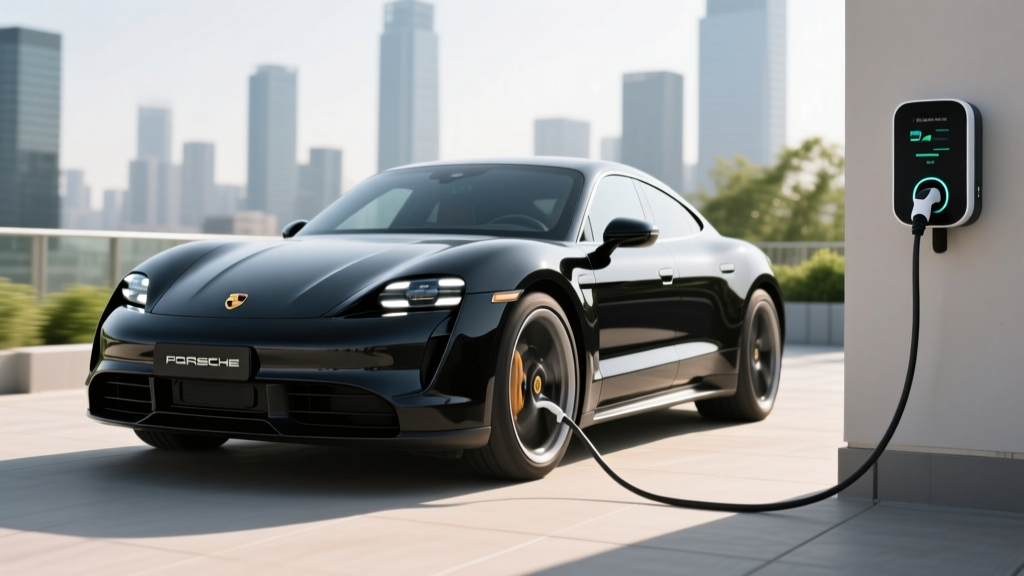
The Porsche Taycan Turbo S has always been the benchmark for electric performance sedans that refuse to compromise on driving feel. For the 2025 model year, Porsche overhauled the Taycan lineup with a larger battery, faster charging, and more power — changes that carry into the 2026 model year with minor refinements. If you've landed here searching for the Porsche Taycan Turbo S 0-60 time, the short answer is 2.2 seconds with launch control engaged. But a hypercar-rivaling sprint time is only one chapter of this car's story. This review covers everything else you need to know before writing a six-figure check: real-world range, charging speeds, daily usability, tax-credit eligibility, and how it stacks up against the Tesla Model S Plaid, Lucid Air Sapphire, and BMW i7.
Porsche Taycan Turbo S: Core Specifications at a Glance
| Specification | 2026 Porsche Taycan Turbo S |
|---|---|
| Base MSRP | $197,500 (plus $1,650 destination) |
| As-Tested Price (typical) | $215,000–$230,000 |
| EPA Range | 283 miles |
| Battery (Gross / Net Usable) | 105 kWh / ~97 kWh (NMC) |
| Drivetrain | Dual-motor AWD (permanent magnet sync) |
| Horsepower (Launch Control) | 939 hp (700 kW) |
| Torque | 815 lb-ft |
| 0–60 mph | 2.2 seconds |
| Top Speed | 162 mph |
| Max DC Fast Charge Rate | 320 kW (800V architecture) |
| 10–80% DC Charge Time | ~18 minutes |
| Level 2 Charge Rate | 11 kW (AC, onboard charger) |
| EPA Efficiency | 76 MPGe combined (44 kWh/100 mi) |
| Cargo (Rear Trunk + Frunk) | 14.3 cu ft + 2.9 cu ft |
| Rear Legroom | 32.7 inches |
| Curb Weight | ~5,335 lbs |
| Battery/Powertrain Warranty | 8 years / 100,000 miles |
| Vehicle Warranty | 4 years / 50,000 miles |
Real-World Range: What 283 EPA Miles Actually Means
EPA Sticker: 283 miles (combined)
Real-World Highway (70 mph, moderate weather): ~235–250 miles
Real-World City/Mixed Driving: ~260–275 miles
Cold Weather (below 32°F, highway): ~195–220 miles
Porsche's revised Taycan Turbo S uses a 105 kWh gross battery pack (approximately 97 kWh net usable) with updated NMC (nickel manganese cobalt) cells that offer improved energy density over the previous generation. The EPA combined rating of 283 miles represents a significant jump from the pre-refresh Turbo S, which managed only 222 miles on the same test cycle.
However, the Taycan Turbo S is a heavy, powerful performance sedan, and physics governs its efficiency. At sustained highway speeds of 70–80 mph, expect consumption to climb to roughly 48–52 kWh/100 miles, yielding an effective range closer to 235–250 miles. In city driving where regenerative braking recovers energy, you'll approach or even slightly exceed the EPA number. Cold weather remains the great equalizer for all EVs: battery chemistry slows and cabin heating draws power, so plan for a 20–30% range reduction in sub-freezing conditions.
The Taycan does feature a standard heat pump, which mitigates cold-weather HVAC energy draw compared to resistive heating systems. Porsche's thermal management system also preconditioning the battery when a DC fast charger is set as your navigation destination — a critical feature for achieving advertised charge speeds in cooler weather.
Charging Speed: 800-Volt Architecture Pays Off
The Taycan was the first production EV with an 800-volt electrical architecture, and the 2026 Turbo S pushes that advantage further with a peak DC fast-charge rate of 320 kW. That's among the fastest of any production EV currently sold in the US.
| Charging Level | Power (kW) | Speed / Notes |
|---|---|---|
| Level 1 (120V household) | ~1.4 kW | ~3 miles per hour — emergency only |
| Level 2 (240V home, 48A circuit) | 11 kW | ~25 miles per hour; full charge in ~9 hours |
| DC Fast Charge (peak) | 320 kW | 10–80% in ~18 min (optimal conditions) |
| DC Fast Charge (typical 150 kW station) | ~150 kW | 10–80% in ~28 min |
Here's where understanding the difference between kW (power, or the rate of energy transfer) and kWh (energy, or battery capacity) matters. The Taycan's 97 kWh usable battery can accept energy at up to 320 kW — but only under ideal conditions: battery preconditioned to optimal temperature, state of charge below 30%, and a charger capable of delivering that rate (such as Electrify America's newest 350 kW stalls or Porsche's own dealer chargers).
The charge curve is not flat. The Taycan Turbo S pulls its peak rate in the 10–40% SoC window, then tapers progressively. From 80–100%, charging slows dramatically to protect battery health, which is why Porsche and most EV makers quote 10–80% times rather than full-charge times. On a road trip, plan your stops around the 10–80% window for maximum efficiency — that ~18-minute stop gets you roughly 170 miles of real-world range.
For home charging, the 11 kW onboard charger means a Level 2 wall connector on a 60-amp circuit (48A continuous) will replenish the battery at roughly 25 miles of range per hour. A full overnight charge from 10% takes about 9 hours. If your home electrical panel supports it, a 240V/48A Level 2 setup is the practical minimum for daily Taycan ownership. Installation costs typically range from $800 to $2,500 depending on panel capacity and run length — consult a licensed electrician for your specific situation.
Performance: The 0-60 Number and Beyond
The headline figure: 2.2 seconds from 0–60 mph with launch control engaged, making the 2026 Taycan Turbo S one of the quickest production sedans ever built. Porsche achieves this through a dual-motor all-wheel-drive system producing a combined 939 horsepower and 815 lb-ft of torque in overboost mode (available for 2.5-second bursts during launch control).
The rear motor uses a two-speed transmission — a rarity among EVs — with a short first gear for explosive acceleration and a tall second gear for high-speed efficiency. The front motor is single-speed. This setup gives the Taycan a character distinct from single-gear EVs: you can actually feel a subtle shift during hard acceleration, and the car pulls with conviction well past 100 mph where some single-motor EVs begin to taper off.
Continuous (non-overboost) output is rated at approximately 619 hp, which is still devastatingly quick for normal driving. The Taycan Turbo S also features rear-axle steering (up to 2.8 degrees), Porsche Dynamic Chassis Control (active anti-roll bars), and PCCB ceramic composite brakes as standard — hardware that makes a 5,335-pound sedan handle like a much smaller car on back roads.
Regenerative braking recuperation peaks at up to 400 kW, one of the highest rates in the industry. In practice, this means one-pedal driving is possible in most scenarios, though Porsche's brake pedal feel remains one of the best in the EV segment — firm, linear, and free of the mushy blending that plagues some competitors.
Pricing, Trims, and Federal Tax Credit Eligibility
| Item | Amount |
|---|---|
| Base MSRP (Turbo S sedan) | $197,500 |
| Destination charge | $1,650 |
| Typical options (Premium Pkg, PCCB, Sport Chrono) | $15,000–$30,000 |
| As-tested range | $215,000–$230,000 |
| Federal §30D Tax Credit | Not eligible (exceeds MSRP cap) |
Let's address the tax-credit question directly: the Porsche Taycan Turbo S does not qualify for the $7,500 federal EV tax credit under current IRS §30D rules. The reason is straightforward — the §30D credit imposes an MSRP cap of $55,000 for sedans (and $80,000 for SUVs/vans/pickups). At nearly $200,000 base, the Turbo S exceeds that threshold by a wide margin. (Source: IRS §30D guidelines)
Additionally, §30D has buyer income limits ($150,000 single / $300,000 joint filers for modified AGI) and battery critical-mineral sourcing requirements. Even if a lower Taycan trim (such as the base RWD starting around $99,400) were to fall under the MSRP cap — which it does not for sedans — the sourcing and income rules would still apply. At this price point, buyers should not factor any federal incentive into their purchase calculations.
Some states offer their own EV rebates or tax credits that are not bound by the federal MSRP cap — check your state's energy office or DMV for specifics, as these vary widely and change frequently.
Interior, Tech, and Daily Usability
The Taycan's cabin is unmistakably Porsche: driver-focused, material-rich, and controlled through a mix of touchscreens and physical selectors. The standard 12.6-inch curved digital instrument cluster sits behind the steering wheel, while a 10.9-inch central infotainment touchscreen handles navigation, media, and vehicle settings. An optional 10.9-inch passenger display adds a third screen without distracting the driver.
Infotainment runs Porsche Communication Management (PCM), which supports wireless Apple CarPlay and Android Auto, onboard navigation with real-time traffic and EV-specific route planning (including charging stops), and over-the-air updates. Voice control is responsive and handles natural-language commands for climate and navigation.
Driver-assistance features include:
- Adaptive cruise control with stop-and-go (SAE Level 2 — driver must remain engaged)
- Lane-keeping assist with active lane centering
- Surround-view cameras and park assist
- Night Vision Assist (optional, thermal camera)
- InnoDrive predictive cruise (uses navigation data to adjust speed for curves and speed limits)
On practicality: the Taycan Turbo S is a four-seat sedan with a rear trunk offering 14.3 cubic feet and a front trunk (frunk) adding 2.9 cubic feet. Rear legroom measures 32.7 inches — adequate for adults on shorter trips but snug for tall passengers on long journeys. The Cross Turismo (wagon) variant offers more rear headroom and up to 44.6 cubic feet of cargo with rear seats folded, though it commands a price premium and is not offered in Turbo S trim for all model years.
Pros and Cons: The Honest Assessment
Pros
- Class-leading driving dynamics: Steering feel, chassis balance, and brake modulation set the standard for electric sports sedans
- 320 kW DC fast charging: Among the quickest-charging EVs available; 18-minute 10–80% stops make road trips viable
- 800V architecture maturity: Third-generation system with proven reliability and thermal management
- Build quality and materials: Fit, finish, and cabin insulation exceed rivals at this price
- Repeatable performance: Launch control is available multiple times without extended cool-down periods
- Strong resale value: Porsche brand equity and limited production support long-term value
Cons
- Range trails competitors: 283 miles EPA is respectable but falls short of the Lucid Air Grand Touring (516 mi) and Tesla Model S Long Range (402 mi)
- No federal tax credit: At ~$200K, buyers pay full price plus luxury gas-guzzler-equivalent registration fees in some states
- Rear seat space is tight: 32.7 inches of legroom limits long-distance comfort for tall rear passengers
- Options inflate price rapidly: A moderately optioned Turbo S easily exceeds $225,000
- Infotainment learning curve: PCM's menu structure requires more taps than some competitors for common adjustments
- Efficiency under hard driving drops sharply: Track or aggressive canyon driving can push consumption above 60 kWh/100 mi
How It Compares: Taycan Turbo S vs. Key Rivals
| Spec | Porsche Taycan Turbo S | Tesla Model S Plaid | Lucid Air Sapphire | BMW i7 M70 |
|---|---|---|---|---|
| Base MSRP | $197,500 | $89,990 | $249,000 | $168,695 |
| 0–60 mph | 2.2 sec | 1.99 sec | 1.89 sec | 3.5 sec |
| EPA Range | 283 mi | 396 mi | 427 mi | 295 mi |
| Peak DC Charge | 320 kW | 250 kW | 300 kW | 195 kW |
| 10–80% Time | ~18 min | ~27 min | ~20 min | ~34 min |
| Horsepower | 939 hp | 1,020 hp | 1,234 hp | 650 hp |
| Federal §30D Credit | No | No (MSRP cap) | No | No (sedan cap) |
The Model S Plaid is quicker in a straight line and costs less than half as much, but its interior quality, ride refinement, and steering feel don't match the Porsche. The Lucid Air Sapphire is the ultimate numbers car — fastest, longest-range — but at $249K it's even pricier and produced in extremely limited volume. The BMW i7 M70 is the luxury cruiser of the group, quieter and more spacious, but not in the same performance league.
The Taycan Turbo S occupies a specific niche: it's the EV you buy when driving engagement matters as much as acceleration figures. No competitor matches its blend of chassis communication, braking feel, and repeatable performance. (Source: EPA fueleconomy.gov)
Who Should Buy the Taycan Turbo S?
Buy the Taycan Turbo S if:
- You prioritize driving dynamics, steering feel, and chassis engagement over maximum range
- You have reliable home Level 2 charging and access to 150+ kW DC fast chargers for road trips
- You want a daily-drivable four-door that can genuinely substitute for a 911 on back roads
- Build quality, dealer service experience, and long-term resale value matter to you
Look elsewhere if:
- Maximum range is your top priority (consider the Lucid Air Grand Touring or Model S Long Range)
- You regularly carry four adults on long trips (rear seat space is limiting)
- You want the absolute quickest 0–60 time regardless of handling (Model S Plaid or Air Sapphire)
- Tax credit eligibility or sub-$100K pricing is a factor
Frequently Asked Questions
What is the real-world range of the Porsche Taycan Turbo S?
The EPA rates the 2026 Taycan Turbo S at 283 miles combined. In real-world highway driving at 70–80 mph, expect 235–250 miles. City driving with regenerative braking recovers more energy, yielding 260–275 miles. In cold weather below freezing, plan for 195–220 miles due to battery chemistry slowdown and cabin heating demand.
How fast does the Taycan Turbo S charge at home and on the road?
On a Level 2 home charger (240V, 11 kW), the Taycan adds roughly 25 miles of range per hour, with a full charge taking about 9 hours. On a 320 kW DC fast charger, it reaches 10–80% in approximately 18 minutes under optimal conditions. On more common 150 kW chargers, expect 10–80% in about 28 minutes.
Does the Porsche Taycan Turbo S qualify for the federal EV tax credit?
No. The IRS §30D federal tax credit imposes an MSRP cap of $55,000 for sedans. The Taycan Turbo S starts at $197,500, far exceeding that limit. Buyer income caps and battery-sourcing requirements would also need to be met, but the MSRP cap alone disqualifies it. Check your state for any local incentives that may apply.
Is the Taycan Turbo S worth it vs. the Tesla Model S Plaid?
It depends on priorities. The Model S Plaid is quicker (1.99 sec 0–60), offers nearly 400 miles of range, and costs under $90K. But the Taycan Turbo S delivers superior steering feel, chassis balance, build quality, braking modulation, and repeatable track performance. If driving engagement and luxury refinement justify a $100K+ premium, the Porsche is the better driver's car.
What is the battery warranty on the Taycan Turbo S?
Porsche covers the high-voltage battery and electric powertrain for 8 years or 100,000 miles, whichever comes first. Porsche guarantees a minimum of 70% battery capacity retention during that period. The general vehicle warranty is 4 years / 50,000 miles. (Source: Porsche USA warranty information)
What battery chemistry does the Taycan Turbo S use?
The 2026 Taycan Turbo S uses an NMC (nickel manganese cobalt) lithium-ion battery. NMC offers higher energy density than LFP (lithium iron phosphate), which is important in a performance sedan where weight and packaging space are at a premium. The trade-off is that NMC cells benefit more from keeping state of charge between 20–80% for daily use to maximize long-term longevity.
How much does it cost to charge a Taycan Turbo S?
With a 97 kWh usable battery, a full home charge at the US average electricity rate of $0.17/kWh costs roughly $16.50. DC fast charging on networks like Electrify America averages $0.40–$0.55/kWh, making a 10–80% road-trip charge approximately $27–$37. For comparison, fueling a gas-powered Panamera Turbo with a 16-gallon tank at $3.50/gallon costs about $56 per fill-up.