The Real Cost to Charge a Tesla: What Owners Actually Pay
If you're researching a Tesla purchase, one question dominates the decision: how much does it cost to charge a Tesla? The answer depends entirely on where and how you charge. A Model 3 owner charging at home on a residential rate in Washington State might pay $0.03 per mile, while the same owner relying exclusively on Superchargers in California could pay $0.14 per mile — a nearly 5x difference. This guide breaks down every charging scenario with real numbers from the 2026 Tesla lineup, so you can budget accurately before you buy.
2026 Tesla Lineup: Battery, Range, and Efficiency Specs
To calculate charging cost, you first need to know how much energy each model consumes. Here's the full 2026 lineup with EPA data from fueleconomy.gov and Tesla's official specifications.
| Model / Trim | Battery (kWh usable) | Chemistry | EPA Range (mi) | Efficiency (kWh/100mi) | MPGe (combined) |
|---|---|---|---|---|---|
| Model 3 RWD | 57.5 | LFP | 272 | 25 | 132 |
| Model 3 Long Range AWD | 75 | NMC | 341 | 24 | 137 |
| Model 3 Performance | 75 | NMC | 315 | 26 | 128 |
| Model Y Long Range AWD | 75 | NMC | 320 | 27 | 123 |
| Model Y Performance | 75 | NMC | 293 | 29 | 115 |
| Model S Long Range | 95 | NMC | 402 | 26 | 124 |
| Model S Plaid | 95 | NMC | 359 | 29 | 114 |
| Model X Long Range | 95 | NMC | 335 | 31 | 105 |
LFP vs NMC — what it means for charging cost: The Model 3 RWD uses a lithium iron phosphate (LFP) battery. LFP cells tolerate regular 100% charging without accelerated degradation, meaning you can charge to full daily and use the entire 272-mile EPA range. NMC models (Long Range, Performance, S, X) are best kept between 20–80% for daily use to preserve longevity, effectively giving you ~80% of the EPA range as your daily usable window. This doesn't change your cost per mile, but it does affect how often you need to charge.
Home Charging Costs: Level 1 and Level 2 Breakdown
For most Tesla owners, home charging covers 85–95% of all charging. The cost is your local electricity rate multiplied by the energy consumed. Here's how the math works.
Level 1 (120V Standard Outlet)
A standard household outlet delivers roughly 1.2–1.5 kW. That translates to about 3–5 miles of range per hour of charging. It's slow — a full charge of a Model 3 Long Range from empty takes roughly 50+ hours — but it costs the same per kWh as any other home charging. Level 1 works for owners who drive under 30 miles per day and can leave the car plugged in overnight.
Level 2 (240V — Wall Connector or NEMA 14-50)
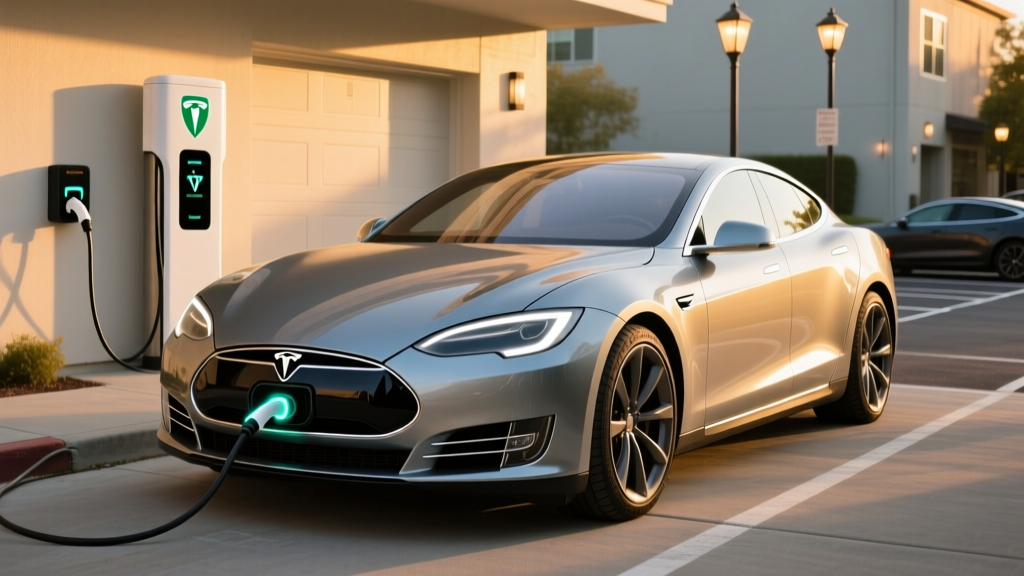
Tesla's Wall Connector delivers up to 11.5 kW (48 amps) on a 60-amp circuit, adding roughly 44 miles of range per hour for a Model 3. A full charge from 10–80% takes approximately 5–6 hours depending on the model. This is the sweet spot for daily charging.
| State | Avg $/kWh | Model 3 RWD (57.5 kWh) | Model Y LR (75 kWh) | Model S LR (95 kWh) | Cost per mile (Model 3) |
|---|---|---|---|---|---|
| Washington | $0.11 | $6.33 | $8.25 | $10.45 | $0.023 |
| Texas | $0.14 | $8.05 | $10.50 | $13.30 | $0.030 |
| National Avg | $0.17 | $9.78 | $12.75 | $16.15 | $0.036 |
| New York | $0.22 | $12.65 | $16.50 | $20.90 | $0.046 |
| California | $0.30 | $17.25 | $22.50 | $28.50 | $0.063 |
| Hawaii | $0.43 | $24.73 | $32.25 | $40.85 | $0.091 |
Time-of-use rates matter enormously. Many utilities offer off-peak rates between 10 PM and 6 AM that are 40–60% cheaper than peak afternoon rates. In California, PG&E's EV rate plan drops to roughly $0.14/kWh overnight versus $0.40+ during summer peak. If you can schedule charging for off-peak hours (easily done via the Tesla app), your effective cost drops substantially. Check your utility's EV-specific rate plans — they're often not advertised prominently.
Real-World Range vs EPA: What You'll Actually Use
EPA range figures assume a mix of city and highway driving at moderate temperatures. In practice:
• City driving (regen-heavy): You may match or slightly exceed EPA range, especially in stop-and-go traffic where regenerative braking recaptures energy.
• Highway driving (75+ mph): Expect 85–90% of EPA range. A Model 3 Long Range rated at 341 mi EPA typically delivers 285–305 mi at sustained 75 mph.
• Cold weather (below 32°F): Expect 20–30% range loss. Battery heating and cabin HVAC draw significant power. A Model Y Long Range may deliver 225–255 mi in single-digit temperatures.
• Preconditioning helps: Using the Tesla app to precondition the battery while plugged in warms the pack using grid power rather than battery power, preserving range and enabling faster DC charging.
Tesla Supercharger Costs: DC Fast Charging Pricing
Tesla's Supercharger network remains one of the most reliable DC fast-charging networks in the US, with over 6,000 stations and 65,000+ individual stalls as of early 2026. Pricing varies by location, time of day, and whether your vehicle qualifies for free Supercharging credits.
How Supercharger Pricing Works
Most Superchargers bill per kWh delivered (not per minute), though some legacy stations in certain states still bill per minute due to utility regulations. Typical 2026 rates:
- Off-peak hours: $0.25–$0.35 per kWh
- Peak hours: $0.35–$0.50 per kWh
- Average national rate: ~$0.35 per kWh
| Model | Energy for 10–80% (kWh) | Cost | Miles Added | Cost per Mile |
|---|---|---|---|---|
| Model 3 RWD (LFP) | 40.3 | $14.11 | 190 | $0.074 |
| Model 3 Long Range | 52.5 | $18.38 | 239 | $0.077 |
| Model Y Long Range | 52.5 | $18.38 | 224 | $0.082 |
| Model S Long Range | 66.5 | $23.28 | 281 | $0.083 |
| Model X Long Range | 66.5 | $23.28 | 235 | $0.099 |
Supercharger Charging Speeds
| Model | Peak DC Rate (kW) | 10–80% Time | Sustained Avg (kW) | Max Level 2 Rate (kW) |
|---|---|---|---|---|
| Model 3 RWD | 170 | ~25 min | ~100 | 11.5 |
| Model 3 LR / Perf | 250 | ~18 min | ~150 | 11.5 |
| Model Y LR / Perf | 250 | ~20 min | ~140 | 11.5 |
| Model S LR / Plaid | 250 | ~22 min | ~155 | 11.5 |
| Model X LR | 250 | ~24 min | ~145 | 11.5 |
Charging curve reality: The peak kW number is not sustained across the entire session. A Model 3 Long Range may peak at 250 kW between 10–25% SoC, then taper to 150 kW through 50%, and drop to 75 kW by 70%. This is why the 10–80% time is a more useful metric than peak kW. Charging above 80% slows dramatically — expect another 20–30 minutes just to go from 80–100%. On road trips, it's faster to charge to 80% and drive on than to wait for a full charge.
Public Level 2 and Destination Charging Costs
Tesla Destination Chargers (Level 2 units at hotels, restaurants, and shopping centers) are often free for customers, though some locations charge $0.10–$0.25 per kWh or a flat session fee. Third-party networks like ChargePoint and EVgo also offer Level 2 charging compatible with Teslas using the included J1772 adapter (or NACS adapter on newer non-Tesla networks that have adopted the standard).
Destination charging cost is typically $0–$5 per session, and the speed is 7–19 kW depending on the station. It's ideal for topping up during a multi-hour stop, not for rapid charging.
Tesla Pricing, Tax Credits, and Total Cost of Charging
Understanding charging cost in context requires knowing the vehicle's purchase price and available incentives. Here's the 2026 pricing breakdown.
| Model / Trim | Base MSRP | Federal §30D Credit | Effective Price |
|---|---|---|---|
| Model 3 RWD | $38,990 | $3,750–$7,500* | $31,490–$35,240 |
| Model 3 Long Range AWD | $42,990 | $3,750–$7,500* | $35,490–$39,240 |
| Model 3 Performance | $52,990 | $3,750–$7,500* | $45,490–$49,240 |
| Model Y Long Range AWD | $44,990 | $3,750–$7,500* | $37,490–$41,240 |
| Model Y Performance | $48,990 | $3,750–$7,500* | $41,490–$45,240 |
| Model S Long Range | $74,990 | $0** | $74,990 |
| Model X Long Range | $79,990 | $0** | $79,990 |
*Credit amount depends on battery component and critical mineral sourcing requirements under IRS §30D rules. As of 2026, Tesla's US-assembled vehicles generally qualify for at least $3,750, with $7,500 available for trims meeting full critical-mineral and battery-component sourcing thresholds. Buyer income caps apply: $150,000 single / $225,000 head of household / $300,000 joint filers. The credit can be transferred to the dealer at point of sale for an immediate price reduction.
**Model S and Model X exceed the §30D MSRP cap of $55,000 for sedans and $80,000 for SUVs/vans/pickups. Model S at $74,990 falls under the sedan cap, but specific battery sourcing requirements may reduce or eliminate the credit. Model X at $79,990 is under the $80,000 SUV cap but faces the same sourcing scrutiny. Verify current eligibility on the IRS clean vehicle credit page before purchasing.
Cost Per Mile: Tesla vs Gasoline Comparison
To put Tesla charging costs in perspective, here's how they compare to a gasoline equivalent at $3.50 per gallon (2026 national average).
| Scenario | Cost per Mile | Annual Cost (12,000 mi) |
|---|---|---|
| Model 3 LR — Home (WA, $0.11/kWh) | $0.026 | $317 |
| Model 3 LR — Home (National Avg, $0.17/kWh) | $0.041 | $490 |
| Model 3 LR — Home (CA, $0.30/kWh) | $0.072 | $864 |
| Model 3 LR — Supercharger ($0.35/kWh) | $0.084 | $1,008 |
| Model Y LR — Supercharger ($0.35/kWh) | $0.095 | $1,134 |
| Toyota Camry (32 MPG combined, $3.50/gal) | $0.109 | $1,313 |
| Toyota RAV4 (30 MPG combined, $3.50/gal) | $0.117 | $1,400 |
Even at California's high electricity rates, home-charging a Tesla costs less per mile than fueling a comparable gas car. The savings gap narrows significantly if you rely exclusively on Superchargers — at which point a fuel-efficient hybrid like the Camry becomes competitive on pure energy cost.
Tesla Warranty, Reliability, and Long-Term Charging Considerations
Tesla's warranty covers the battery and drive unit for 8 years, with mileage limits varying by model:
- Model 3 RWD: 8 years / 100,000 miles, minimum 70% capacity retention
- Model 3 LR/Perf, Model Y: 8 years / 120,000 miles, minimum 70% capacity retention
- Model S and Model X: 8 years / 150,000 miles, minimum 70% capacity retention
The 70% retention threshold is standard across the industry. Real-world data from Tesla's fleet suggests most NMC packs retain 85–90% capacity at 100,000 miles with proper charging habits (avoiding prolonged 100% storage, using preconditioning for fast charging). LFP packs in the Model 3 RWD show even slower degradation, partly because regular 100% charging helps the BMS calibrate accurately.
Supercharging and battery health: Frequent DC fast charging does accelerate degradation slightly compared to Level 2 home charging, but Tesla's thermal management system actively cools the pack during Supercharging. Owners who Supercharge 2–3 times per week for road trips see only marginally higher degradation than exclusive home chargers. The bigger risk is regularly letting the car sit at 100% SoC in hot weather — avoid that regardless of charging method.
Who Should Buy a Tesla — and Who Should Look Elsewhere
Pros
- Lowest cost-per-mile when charging at home, especially with off-peak rates
- Supercharger network remains the most reliable and widespread DC fast-charging option in the US
- Class-leading efficiency (kWh/100mi) across the lineup
- Over-the-air updates continuously add features and improve performance
- Strong resale value relative to most EV competitors
- Extensive cargo space (Model Y: 76 cu ft with seats folded; Model 3: 23 cu ft trunk + frunk)
Cons
- Supercharger-only owners pay nearly as much per mile as a fuel-efficient hybrid
- No Apple CarPlay or Android Auto — Tesla's proprietary infotainment is the only option
- Autopilot is SAE Level 2 driver assist, not self-driving — requires full driver attention
- Panel gap quality and interior materials still trail luxury competitors at similar price points
- Model S and X are ineligible for or receive reduced federal tax credits due to MSRP/sourcing rules
- Limited service center availability in rural areas — mobile service doesn't cover all repairs
Best for: Commuters and families with home charging access who want low daily operating costs and the flexibility to road-trip on the Supercharger network. The Model 3 RWD at ~$31,500 after tax credit is one of the most affordable new EVs available, and the Model Y Long Range remains the default family EV for good reason.
Consider alternatives if: You cannot install a home charger (apartment/condo without EV infrastructure), you need a third-row seat (look at the Rivian R1S or Kia EV9), or you want Apple CarPlay integration (Hyundai Ioniq 5, BMW i4).
Frequently Asked Questions
Is it cheaper to charge a Tesla at home or at a Supercharger?
Home charging is dramatically cheaper. At the national average electricity rate of $0.17/kWh, home charging costs about $0.04 per mile for a Model 3 Long Range. Supercharging at $0.35/kWh costs roughly $0.08 per mile — about double. In states with low electricity rates (Washington, Louisiana, Idaho), home charging can be as cheap as $0.02–0.03 per mile.
How much does it cost to charge a Tesla Model Y from empty to full?
A Model Y Long Range has approximately 75 kWh of usable battery capacity. At the national average home rate of $0.17/kWh, a full charge costs about $12.75. At a Supercharger averaging $0.35/kWh, that same charge costs about $26.25. Most owners rarely charge from true empty — a typical daily top-up from 30% to 80% uses about 37.5 kWh, costing $6.38 at home or $13.13 at a Supercharger.
Does frequent Supercharging damage the Tesla battery?
Tesla's active thermal management system limits damage from DC fast charging. Data from high-mileage Teslas shows that owners who Supercharge regularly see only 1–3% more degradation at 100,000 miles compared to exclusive home chargers. The bigger longevity risk is leaving the car at 100% SoC for extended periods in hot weather. For daily use, set your charge limit to 80% (or 100% for LFP Model 3 RWD) and Supercharge freely on road trips.
Do Teslas qualify for the $7,500 federal tax credit?
Eligibility varies by trim and buyer income. Under IRS §30D rules, the vehicle must be assembled in North America (all US-market Teslas qualify), must fall under MSRP caps ($55,000 sedans, $80,000 SUVs), and the buyer must be under income limits ($150K single / $300K joint). Battery sourcing requirements determine whether you get $3,750 or $7,500. The Model 3 RWD and Long Range currently qualify for at least partial credit. Model S and X face MSRP cap challenges. Always verify current eligibility before purchase.
Can I charge a Tesla on non-Tesla charging networks?
Yes. Tesla vehicles use the NACS (North American Charging Standard) connector natively. With Tesla's included J1772 adapter, you can use any Level 2 public charger. As of 2025–2026, many networks including Electrify America and EVgo have begun adding NACS connectors. For CCS1 DC fast chargers that haven't added NACS cables, Tesla sells an official CCS adapter ($175) that enables compatibility. In practice, the Supercharger network covers most road-trip needs, but having adapter options provides backup.
What's the cheapest way to own and charge a Tesla?
The lowest-cost scenario is a Model 3 RWD ($38,990 MSRP, potentially ~$31,490 after full tax credit) charged at home on an off-peak utility rate. Install a NEMA 14-50 outlet ($300–$800 depending on electrical panel proximity) rather than a full Wall Connector setup if budget is tight — the mobile connector included with the car handles 240V at up to 30 amps via the 14-50 adapter. Schedule charging for off-peak hours via the Tesla app. Total annual charging cost for 12,000 miles of driving: approximately $250–$400 depending on your state's electricity rates.