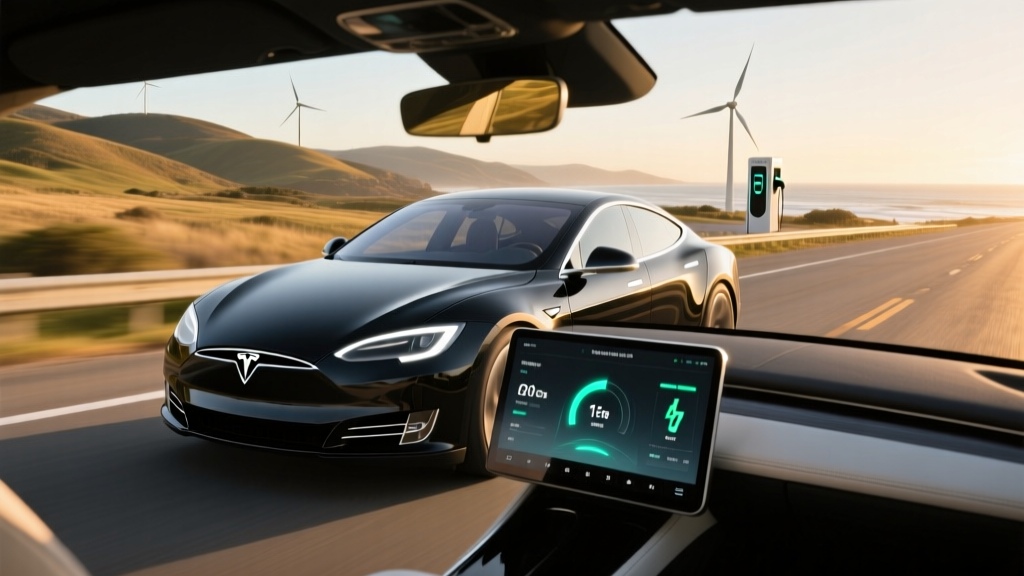
If you own or are considering a Tesla Model S in 2026, you already know it's one of the most capable electric sedans on the market. But the real story isn't just what the car does out of the box — it's what you can unlock with the right tweaks, settings adjustments, and ownership strategies. The "Tesla Model S hack" community has grown into a sophisticated ecosystem of range optimizers, charging-curve analysts, and software-feature exploiters who squeeze every last mile and minute out of this flagship EV.
This guide covers the 2026 Tesla Model S in full — official specs, real-world performance, and the most effective hacks that actually work. Whether you're chasing maximum highway range, faster DC charging sessions, or smarter Autopilot/FSD usage, the data below will help you get more from your Model S without voiding your warranty.
2026 Tesla Model S: Core Specifications at a Glance
| Specification | Long Range | Plaid |
|---|---|---|
| EPA Range | 402 miles | 359 miles |
| Battery (usable) | ~95 kWh (NMC) | ~95 kWh (NMC) |
| Drivetrain | Dual-Motor AWD | Tri-Motor AWD |
| Horsepower | 670 hp | 1,020 hp |
| 0–60 mph | 3.1 seconds | 1.99 seconds |
| Top Speed | 155 mph | 200 mph |
| Peak DC Charge Rate | 250 kW | 250 kW |
| 10–80% DCFC Time | ~27 minutes | ~27 minutes |
| Level 2 Charge Rate | 11.5 kW (~44 mi/hr) | 11.5 kW (~44 mi/hr) |
| EPA Efficiency | 124 MPGe (28 kWh/100mi) | 116 MPGe (30 kWh/100mi) |
| Cargo Volume | 28 cu ft (rear) + 5.3 cu ft (frunk) | 28 cu ft (rear) + 5.3 cu ft (frunk) |
| Rear Legroom | 40.9 inches | 40.9 inches |
| Base MSRP | $79,990 | $94,990 |
| Battery Warranty | 8 yr / 150,000 mi | 8 yr / 150,000 mi |
Sources: EPA fueleconomy.gov, Tesla Model S official specs.
The Real-World Range Hack: Beating the EPA Sticker
The single most effective "Tesla Model S hack" for range isn't a software trick — it's understanding how Tesla's thermal management system works and using it to your advantage.
Hack #1: Precondition Strategically
Preconditioning warms or cools the battery to its optimal operating temperature before driving or charging. When you set a departure time in the Tesla app or navigate to a Supercharger, the car automatically begins preconditioning the battery pack. In cold weather, this alone can recover 15–25 miles of range that would otherwise be lost to a cold battery's increased internal resistance.
Actionable tip: Always set a scheduled departure time, even if your routine varies by 30 minutes. The car will precondition based on your typical usage pattern, and the energy used comes from the charger (if plugged in), not your battery.
Hack #2: The 65 MPH Threshold
Aerodynamic drag scales with the square of velocity. Tesla's own range estimator (built into the trip planner) shows that dropping from 75 mph to 65 mph on the highway can add 35–50 miles of real-world range on the Long Range trim. If you're on a long road trip and the next Supercharger is tight, this speed adjustment is the single most impactful driving habit change you can make.
Hack #3: Chill Mode + Smooth Regen
Switching to Chill mode limits acceleration aggressiveness, which reduces energy spikes during merging and passing. Combined with regenerative braking set to "Standard" (which maximizes energy recapture), most owners report a 5–8% efficiency improvement on mixed driving routes. That's roughly 15–25 extra miles on a full charge.
Charging Speed Hacks: Faster Sessions, Less Waiting
The 2026 Model S supports a peak DC fast-charge rate of 250 kW on Tesla's V3 and V4 Superchargers. However, peak rate and sustained rate are very different things. Understanding the charge curve is essential for anyone who road-trips regularly.
| Charging Level | Power | Speed (miles added) | Best Use |
|---|---|---|---|
| Level 1 (120V household) | ~1.4 kW | ~5 mi/hr | Emergency / overnight trickle |
| Level 2 (240V, 48A Wall Connector) | 11.5 kW | ~44 mi/hr | Daily home charging |
| DC Fast Charge (V3 Supercharger) | Peak 250 kW | ~200 mi in 15 min | Road trips |
| DC Fast Charge (CCS adapter, non-Tesla) | Peak 150–250 kW | Varies by station | Non-Tesla network backup |
Hack #4: Arrive at 5–10% SoC for Fastest Charging
Tesla's charging curve is steepest at low states of charge. If you arrive at a Supercharger at 5% SoC, the car will pull close to 250 kW immediately. Arrive at 25% SoC, and peak rate may only hit 170–190 kW. The 10–80% charge takes roughly 27 minutes, but the 20–80% charge takes closer to 32 minutes. Planning your route to arrive at Superchargers with a lower battery state is a genuine time-saver on multi-stop road trips.
Hack #5: The CCS Adapter Unlock
Tesla now sells a CCS adapter (approximately $175) that enables the Model S to charge at non-Tesla DC fast-charging networks like Electrify America and EVgo. While Tesla's Supercharger network remains the most reliable option, having CCS access opens up thousands of additional chargers — especially useful in rural corridors where Supercharger spacing is wider. This is one of the most practical Tesla Model S hacks for cross-country travelers.
Hack #6: Precondition for Every DCFC Stop
Always enter your Supercharger destination into the car's navigation — even if you know the route by heart. This triggers battery preconditioning, warming the pack to the ideal temperature for fast charging. Without preconditioning, a cold battery can charge 30–40% slower during the first 5–10 minutes of a session, adding significant time to your stop.
Autopilot & FSD (Supervised): What the Software Can and Cannot Do
The 2026 Model S ships with Basic Autopilot standard. FSD (Supervised) remains an optional purchase at approximately $8,000 or $99/month. Here's how to get the most from both.
Hack #7: FSD Confidence Score Optimization
If you're enrolled in Tesla's FSD insurance program or tracking your safety score, the system rewards smooth inputs. Anticipatory braking (lifting off the accelerator early rather than hard-braking), gentle steering inputs, and maintaining following distance all contribute to a higher score. Some insurance programs offer meaningful premium discounts for consistently high scores.
Hack #8: Autopilot on Highway Commutes
For daily highway commuters, Basic Autopilot (Traffic-Aware Cruise Control + Autosteer) reduces fatigue significantly on repetitive routes. The 2026 software updates have improved lane-centering stability on faded lane markings and construction-zone cones. Pair it with the car's built-in trip energy graph to monitor efficiency hands-free (while still supervising).
Pricing, Tax Credits, and the Model S Value Equation
The 2026 Tesla Model S starts at $79,990 for the Long Range and $94,990 for the Plaid. With options like FSD, premium interior colors, and 21-inch wheels, as-tested prices frequently reach $88,000–$105,000.
| Item | Long Range | Plaid |
|---|---|---|
| Base MSRP | $79,990 | $94,990 |
| FSD (Supervised) add-on | +$8,000 | +$8,000 |
| Typical as-tested | ~$88,000 | ~$103,000 |
| Federal §30D Tax Credit | $0 (MSRP cap exceeded) | $0 (MSRP cap exceeded) |
Tax Credit Reality Check
The Model S does not qualify for the federal §30D new EV tax credit. The IRS imposes an MSRP cap of $55,000 for sedans, and the Model S exceeds this threshold in every trim. Additionally, the credit has buyer income caps ($150,000 single / $300,000 joint filer MAGI) and battery-critical-mineral sourcing requirements. Even if the MSRP cap didn't apply, many Model S buyers would face income-limitation hurdles. Always verify current rules at IRS.gov §30D or consult a tax professional.
Some states offer their own EV rebates or HOV-lane access that apply regardless of federal eligibility — check your state's energy office for details.
Interior, Tech, and Daily Livability
The 2026 Model S interior centers on a 17-inch touchscreen with Tesla's latest UI, a 12.3-inch instrument cluster, and a yoke-style steering wheel (a conventional round wheel is now a no-cost option). The 22-speaker audio system remains class-leading, and the HEPA air filtration system (Bioweapon Defense Mode) is a genuine differentiator for allergy sufferers and those in wildfire-prone regions.
Cargo: 28 cubic feet behind the rear seats (expandable with 60/40 split folding) plus a 5.3 cu ft front trunk. The hatchback design makes loading bulky items easier than a traditional sedan trunk. Rear legroom at 40.9 inches is adequate but trails the Mercedes EQS and BMW i7.
Notable drawbacks: The minimalist interior lacks physical buttons for climate and media, which frustrates some drivers. Panel-gap quality has improved but still doesn't match German luxury competitors. The yoke steering wheel, while optional now, remains polarizing and can complicate low-speed maneuvering for some drivers.
Pros and Cons: The Honest Verdict
- 402-mile EPA range (Long Range) — best-in-class for a luxury sedan
- Supercharger network access — still the most reliable DC fast-charging ecosystem
- 1,020 hp Plaid performance is supercar-rivaling at a fraction of the cost
- Over-the-air updates continuously add features post-purchase
- Excellent cargo versatility with hatchback + frunk design
- 8-year/150,000-mile battery warranty
- No federal tax credit eligibility (MSRP exceeds $55K sedan cap)
- Rear seat comfort and legroom trail German rivals
- Panel gaps and interior material quality still a step below luxury competitors
- Yoke steering is not intuitive for all drivers
- 250 kW peak charge rate is no longer class-leading (Hyundai/Kia E-GMP vehicles match it at lower prices)
- Insurance premiums tend to run 15–30% higher than comparable ICE sedans
Who Should Buy the 2026 Tesla Model S?
Choose the Model S Long Range if: You want the longest-range luxury EV sedan available, regularly take road trips (Supercharger access is a major advantage), value OTA software updates, and don't need rear-seat space for tall adults on long journeys.
Choose the Model S Plaid if: You want supercar-level acceleration in a practical daily driver, track-day performance matters to you, and budget is flexible above $95K.
Look elsewhere (Lucid Air, Mercedes EQS, BMW i7) if: Rear-seat luxury and ride comfort are priorities, you want federal tax credit eligibility (though most luxury EVs fail the MSRP cap), or you prefer physical controls and traditional luxury materials.
Competitive Comparison: Model S vs. Lucid Air vs. Mercedes EQS
| Spec | Tesla Model S LR | Lucid Air Pure | Mercedes EQS 450+ |
|---|---|---|---|
| EPA Range | 402 mi | 419 mi | 390 mi |
| Base MSRP | $79,990 | $69,900 | $104,400 |
| Peak DCFC | 250 kW | 200 kW | 200 kW |
| 0–60 mph | 3.1 sec | 5.2 sec | 5.9 sec |
| Rear Legroom | 40.9 in | 41.5 in | 41.7 in |
| Federal Credit | No | No (MSRP cap on sedan) | No |
The Model S holds a performance edge over the Lucid Air Pure and EQS 450+ while offering the broadest Supercharger infrastructure. The Lucid Air undercuts on price and slightly beats range, but its charging speed and service network trail Tesla. The EQS leads in interior luxury and ride quality but costs significantly more.
Frequently Asked Questions
What is the real-world range of the 2026 Tesla Model S?
The EPA rates the Long Range at 402 miles and the Plaid at 359 miles. In real-world highway driving at 70–75 mph, expect 330–360 miles (Long Range) and 280–310 miles (Plaid). Cold weather below 30°F can reduce range by 25–35%, bringing the Long Range down to roughly 260–300 miles. City driving with frequent regenerative braking typically yields closer to EPA or slightly above.
How fast does the Model S charge at home and on the road?
At home on a Tesla Wall Connector (Level 2, 48A/240V), the Model S charges at 11.5 kW, adding approximately 44 miles of range per hour — a full overnight session easily replenishes a day's driving. On DC fast chargers (V3 Supercharger), the peak rate is 250 kW, with a 10–80% charge taking roughly 27 minutes. Arriving at a lower state of charge (5–10%) yields the fastest session times due to the charging curve profile.
Does the 2026 Tesla Model S qualify for the federal EV tax credit?
No. The IRS §30D credit has an MSRP cap of $55,000 for sedans, and the Model S starts at $79,990. It does not qualify regardless of buyer income or battery sourcing. Some state-level incentives may still apply — check your state energy office. See IRS.gov for current rules.
Is the Tesla Model S worth buying vs. competitors in 2026?
If you prioritize range, Supercharger network access, performance, and software-driven features, the Model S Long Range remains the benchmark luxury EV sedan. If rear-seat comfort, traditional luxury materials, and ride quality matter more, the Mercedes EQS or BMW i7 are stronger choices — though both cost more and lack Supercharger access. The Lucid Air offers competitive range at a lower price but with a smaller service footprint.
What are the biggest pros and cons of the Model S?
Top pros: class-leading range, Supercharger access, exceptional performance, continuous OTA updates, practical hatchback cargo design, strong battery warranty. Top cons: no federal tax credit, interior quality doesn't match German luxury rivals, rear seat space is merely adequate, insurance costs are elevated, and 250 kW peak charging is no longer the fastest available.
What battery chemistry does the 2026 Model S use?
The 2026 Model S uses an NMC (nickel-manganese-cobalt) lithium-ion battery pack with approximately 95 kWh of usable capacity. NMC offers higher energy density than LFP (lithium iron phosphate), which is critical for achieving 400+ mile range in a sedan form factor. Tesla recommends daily charging to 80–90% for NMC batteries and 100% only for trips, to maximize long-term battery health. The battery warranty covers 8 years or 150,000 miles, whichever comes first, with a minimum 70% capacity retention threshold.
What's the best Tesla Model S hack for road trips?
The most impactful road-trip hack is a combination: precondition the battery by entering every Supercharger into navigation, arrive at chargers with 5–10% SoC for the fastest charge curve, and carry a CCS adapter as backup for non-Tesla chargers in remote areas. Together, these three practices can shave 15–20 minutes off a multi-stop road trip compared to arriving at higher SoC without preconditioning.