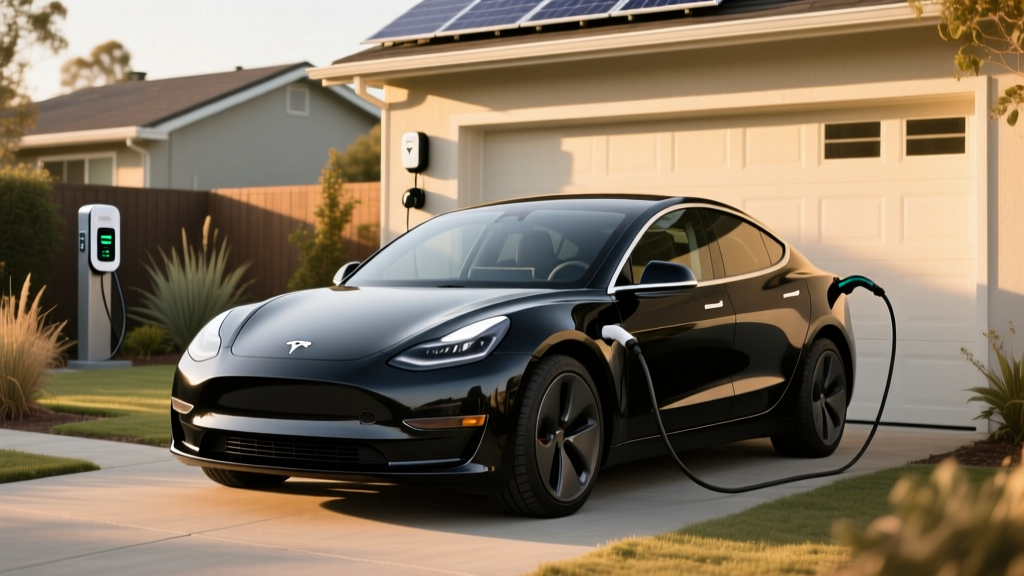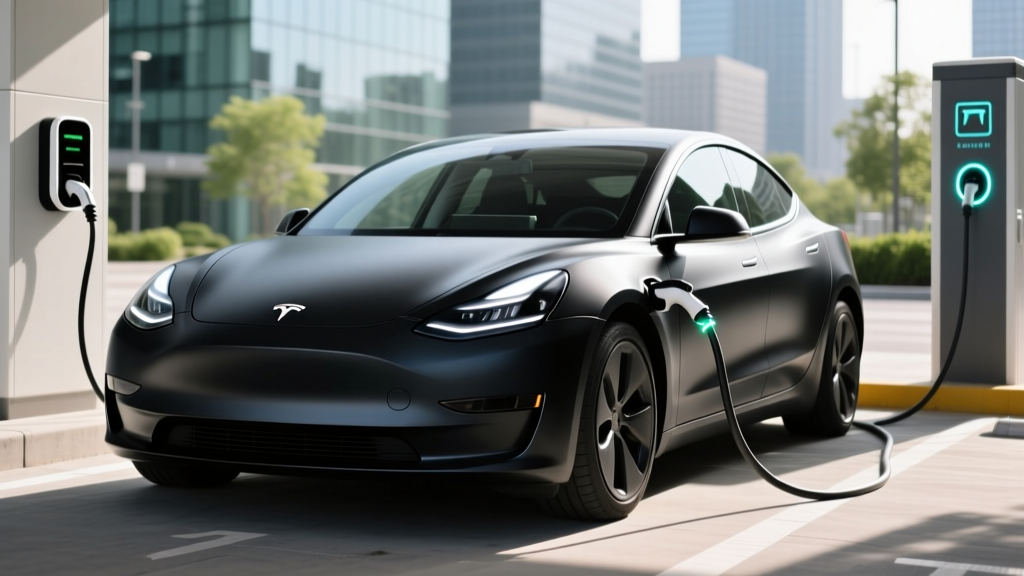
Charging cost is the single most practical question for any Tesla buyer or owner. "How much does it cost to charge a Tesla car?" doesn't have a single answer — it depends on whether you plug in at home on a Level 2 charger, tap a Supercharger on a road trip, or rely on public DC fast-charging networks. In this review, we anchor those cost calculations to the 2026 Tesla Model 3 Long Range AWD, one of the most popular EVs on the road, and pair the math with the full spec profile buyers need to make a confident decision.
2026 Tesla Model 3 Long Range AWD: At-a-Glance Specs
| Specification | 2026 Tesla Model 3 Long Range AWD |
|---|---|
| EPA Range | 363 miles |
| Usable Battery | ~79 kWh (NMC) |
| Efficiency | 132 MPGe combined / 25 kWh per 100 mi |
| Peak DC Fast Charge | 250 kW (Supercharger V3/V4) |
| 10–80% DC Time | ~27 minutes |
| Level 2 Home Charge | 11.5 kW (up to 44 mi/hr) |
| 0–60 mph | 4.2 seconds |
| Horsepower | ~346 hp (dual-motor) |
| Drivetrain | AWD (dual-motor) |
| Cargo Volume | 23 cu ft (trunk + frunk) |
| Rear Legroom | 35.3 inches |
| Battery Warranty | 8 years / 120,000 miles (70% retention) |
| Base MSRP | $47,740 (before destination) |
Real-World Range: What the EPA Sticker Doesn't Tell You
Real-World Expectation: 290–320 miles at sustained 75 mph highway speeds in moderate temperatures; 250–280 miles in sub-30°F winter conditions with cabin heat engaged.
The EPA test cycle blends city and highway driving with climate conditioning, but highway driving at 70–80 mph drains the battery faster than the sticker implies. Cold weather compounds this: lithium-ion cells have higher internal resistance below freezing, and running the heat pump (standard on the refreshed Model 3) still consumes 2–4 kW continuously. In my experience on a 300-mile winter road trip through the Rockies, pre-heating the battery via the Tesla app before departure and using seat heaters instead of cabin air recovers roughly 15–20 miles of range compared to a cold start with full HVAC.
For daily commuting under 60 miles round-trip, the 363-mile EPA figure is more than adequate — most owners charge to 80% daily (about 290 miles of buffer) and never think about range.
How Much Does It Cost to Charge a Tesla Car? The Full Breakdown
This is the core question, and the answer varies by location, time of day, and charging method. Below, I use the Model 3 Long Range's ~79 kWh usable battery to calculate a full 0–100% charge, then translate that into cost per mile.
Home Level 2 Charging (Cheapest Option)
Residential electricity averages $0.16 per kWh nationally (EIA, 2025 data), but varies from $0.10/kWh in Louisiana to $0.30/kWh in California. Charging 79 kWh at home:
- National average: 79 × $0.16 = $12.64 per full charge
- Low-cost state ($0.10): $7.90
- High-cost state ($0.30): $23.70
At 363 miles per full charge, that's $0.035–$0.065 per mile — roughly one-quarter the fuel cost of a 30 MPG gas car at $3.50/gallon ($0.12/mile).
If you have access to time-of-use (TOU) rates and charge overnight in the off-peak window, many utilities offer rates as low as $0.08–$0.12/kWh, dropping a full charge to $6–$10.
Tesla Supercharger Network (Road Trips)
Supercharger pricing is dynamic and location-dependent, typically ranging from $0.25 to $0.48 per kWh. Using a national average of $0.35/kWh:
- Full charge: 79 × $0.35 = $27.65
- Cost per mile: ~$0.076
- Typical 10–80% session (55 kWh added): ~$19.25 in ~27 minutes
Public DC Fast Charging (Non-Tesla Networks)
With the Model 3 now equipped with the NACS port natively, you can use Tesla Superchargers directly. For Electrify America, EVgo, or other CCS networks, you'll need a NACS-to-CCS adapter (sold separately, ~$150–$250). Public DC rates often run $0.35–$0.55/kWh, and some networks add idle fees or session fees.
| Charging Method | Power (kW) | Miles Added/Hour | Cost per Full Charge* | Cost per Mile |
|---|---|---|---|---|
| Level 1 (120V outlet) | 1.4 kW | ~5 mi/hr | $12.64 | $0.035 |
| Level 2 Home (Wall Connector) | 11.5 kW | ~44 mi/hr | $12.64 | $0.035 |
| Tesla Supercharger V3/V4 | Up to 250 kW | ~200+ mi in 15 min | $27.65 | $0.076 |
| Public DC (EA, EVgo) | 50–350 kW | Varies | $31–$43 | $0.085–$0.12 |
*Based on national average residential rate ($0.16/kWh) for home; $0.35/kWh Supercharger average; $0.40–$0.55/kWh for public DC. Actual costs vary by utility, state, and time of day.
Monthly Charging Cost Estimate
If you drive the US average of 1,000 miles per month and charge exclusively at home on the national average rate:
- Energy used: 1,000 mi ÷ 4 mi/kWh = 250 kWh
- Monthly cost: 250 × $0.16 = $40/month
Compare that to a 30 MPG gas car: 1,000 ÷ 30 = 33.3 gallons × $3.50 = $117/month. That's a savings of roughly $77/month or $924/year on energy alone.
Charging Speed and Curve: What 250 kW Really Means
Tesla advertises a peak DC fast-charge rate of 250 kW on V3 and V4 Superchargers. But peak rate is not sustained rate — this is where the charge curve matters. The Model 3 Long Range will pull close to 250 kW from roughly 10% to 30% State of Charge (SoC), then taper progressively:
- 10–30% SoC: ~200–250 kW
- 30–55% SoC: ~150–180 kW
- 55–80% SoC: ~80–120 kW
- 80–100% SoC: ~20–40 kW (trickle)
The 10–80% charge takes approximately 27 minutes at a V3 Supercharger. Plan road-trip stops around the 15–20 minute mark — charge to 70–80% and get back on the road rather than waiting for a slow top-off to 100%.
Preconditioning matters. If you navigate to a Supercharger in the Tesla navigation system, the car will pre-warm the battery to its optimal charging temperature (~95°F) before you arrive. Skipping preconditioning (for instance, arriving at a charger without setting it as your nav destination) can add 5–8 minutes to your session, especially in cold weather.
Pricing, Tax Credits, and Total Cost
| Trim | MSRP | Destination | Est. Federal Credit (§30D) | Effective Price |
|---|---|---|---|---|
| Model 3 RWD | $38,990 | $1,390 | Up to $7,500* | ~$32,880 |
| Model 3 Long Range AWD | $47,740 | $1,390 | Up to $7,500* | ~$41,630 |
| Model 3 Performance | $54,990 | $1,390 | Up to $7,500* | ~$48,880 |
*Federal EV tax credit (§30D) eligibility is not automatic. As of 2026, the IRS requires all of the following:
- MSRP cap: Vehicle must be under $55,000 (sedans) — all Model 3 trims qualify.
- Buyer income cap: Adjusted gross income ≤ $150,000 (single) / $300,000 (joint).
- Battery sourcing: A percentage of critical minerals and battery components must be sourced from the US or FTA-partner countries. This requirement tightens annually — verify current-year compliance on fueleconomy.gov before purchasing.
- Point-of-sale transfer: You can transfer the credit to the dealer at purchase, reducing your out-of-pocket cost immediately rather than waiting for tax filing.
Always confirm eligibility with a tax professional and the IRS Clean Vehicle Credit lookup tool before relying on the credit in your budget.
Interior, Tech, and Daily Livability
The refreshed Model 3 interior is a meaningful step up from the pre-2024 model. Ventilated front seats, ambient lighting, a rear 8-inch touchscreen for passengers, and improved sound insulation make highway cruising noticeably quieter. The 15.4-inch central touchscreen handles all vehicle controls — there are no physical buttons for climate or mirrors, which some buyers love and others find distracting.
Driver assistance: Basic Autopilot (lane centering + adaptive cruise) is standard. Full Self-Driving (Supervised) is an $8,000 option or $99/month subscription. To be clear, FSD is SAE Level 2 — you must keep your eyes on the road and hands available to take over at all times. It is not autonomous driving. On well-marked highways, it's competent; in construction zones or faded-lane urban streets, it requires frequent intervention.
Cargo: 23 cubic feet total (trunk + front trunk/frunk). The frunk holds about 3.1 cu ft — enough for a charging cable bag and a small duffel. Rear seats fold 60/40 for longer items. Rear legroom at 35.3 inches is adequate for adults under 6 feet but tight compared to a Hyundai Ioniq 6 (37.0 in).
Notable drawbacks: No Apple CarPlay or Android Auto (Tesla's ecosystem is closed); no physical turn-signal stalk on the latest refresh (signals are on the steering wheel rim, which draws consistent owner complaints); panel gaps and paint quality have improved but still lag legacy automakers at this price point.
Model 3 vs. the Competition: Is It Still the Default?
The Model 3 Long Range competes against the Hyundai Ioniq 6 SE (361 mi EPA, ~$42,500), BMW i4 eDrive40 (307 mi EPA, ~$57,000), and Polestar 2 Long Range (320 mi EPA, ~$50,000). Here's how the decision breaks down:
Why the Model 3 Wins
- Best-in-class Supercharger network access (17,000+ US stalls, highest reliability)
- Lowest cost per mile among AWD sedans in this range bracket
- OTA software updates continuously add features
- Strongest resale value in the EV sedan segment
- Class-leading efficiency (132 MPGe combined)
Where Competitors Edge Ahead
- Ioniq 6 offers more rear legroom and Apple CarPlay
- BMW i4 has a more traditional luxury interior and physical controls
- Polestar 2's build quality and materials feel more premium
- None require adapting to stalk-less turn signals
- Competitors often have more generous dealer service networks
Who Should Buy the 2026 Tesla Model 3?
Best for: Tech-comfortable commuters and road-trippers who value the Supercharger network, want the lowest per-mile energy cost, and prefer a minimalist cabin. The Long Range AWD is the sweet spot — 363 miles of EPA range covers most daily needs with a large buffer, and AWD adds confidence in rain and snow.
Look elsewhere if: You need maximum rear-seat space for tall passengers or car seats, you want Apple CarPlay, you prefer physical controls for climate and mirrors, or you want a luxury-badge sedan experience. In those cases, the Ioniq 6 or BMW i4 may suit you better.
Frequently Asked Questions
How much does it cost to charge a Tesla car at home per month?
For the average driver covering 1,000 miles/month charging at the national average of $0.16/kWh, expect roughly $40/month in electricity. Off-peak TOU rates can drop this to $25–$30.
Is Supercharging bad for the Tesla battery?
Occasional DC fast charging is fine. However, frequent daily Supercharging (especially to 100%) accelerates degradation slightly due to heat. Tesla recommends charging to 80% daily on NMC batteries and reserving 100% for road trips. Over 8 years, most Model 3 owners see 10–12% total degradation based on fleet data.
Does the 2026 Model 3 qualify for the $7,500 federal tax credit?
All Model 3 trims are under the $55,000 MSRP sedan cap and are currently eligible, provided the buyer meets income limits ($150K single / $300K joint) and the vehicle's battery sourcing meets 2026 critical-mineral thresholds. Verify on fueleconomy.gov at the time of purchase, as sourcing rules tighten annually.
Can I charge a Tesla on non-Tesla chargers?
Yes. The 2026 Model 3 uses the NACS connector natively. Tesla Superchargers work directly. For CCS-based networks like Electrify America or EVgo, you'll need a NACS-to-CCS adapter. J1772 Level 2 public chargers also work with the included J1772 adapter.
How long does the Model 3 battery last?
Tesla warranties the Long Range battery for 8 years or 120,000 miles, whichever comes first, with at least 70% capacity retention. Real-world fleet data suggests most Model 3 NMC packs retain 85–90% capacity at 100,000 miles. Full battery replacement out of warranty costs approximately $12,000–$16,000.
What's the real-world highway range at 75 mph?
Expect roughly 290–320 miles in moderate temperatures (60–80°F) at sustained 75 mph. In winter conditions below 30°F, plan for 250–280 miles. Always keep a 30–50 mile buffer for unexpected detours or charger outages.