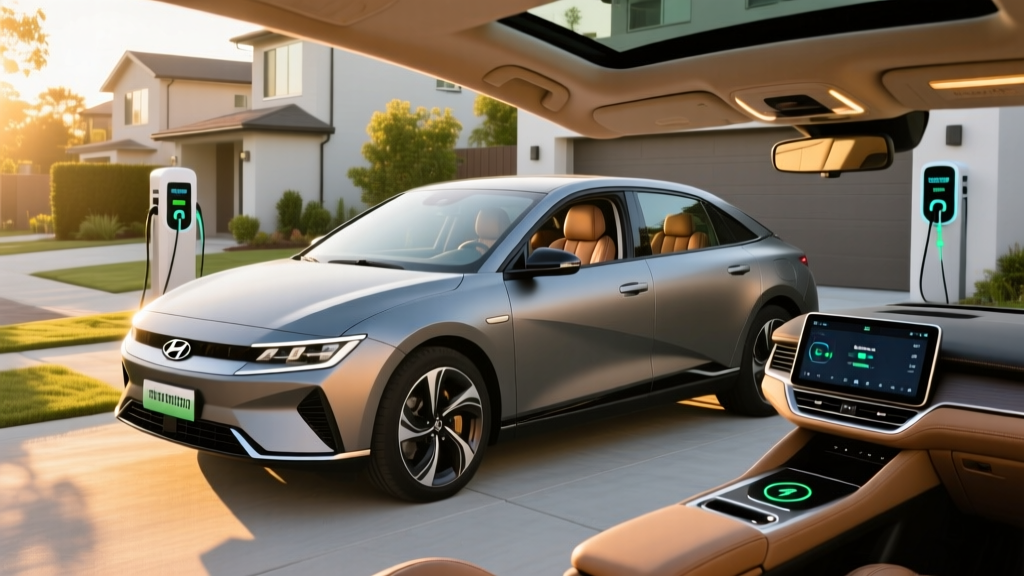
Quick Answer: How Long Does It Take to Charge an Electric Car?
The time it takes to charge an electric car depends entirely on the charger type and your battery size. Here are the real-world numbers for a typical 75 kWh battery (e.g., Tesla Model Y, Hyundai Ioniq 5, Ford Mustang Mach-E) charging from 10% to 80%:
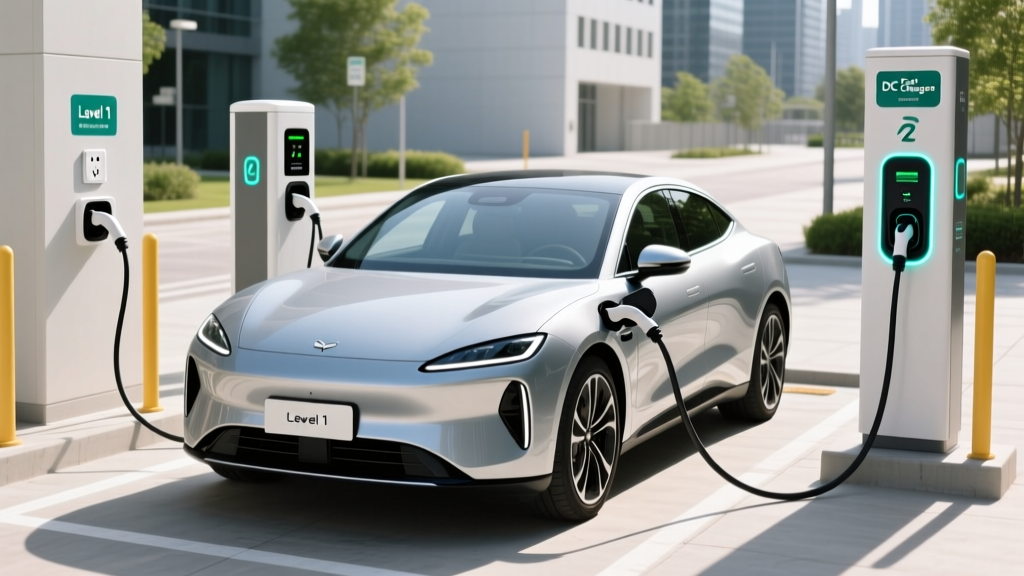
- Level 1 (120V household outlet, ~1.4 kW): 35–40 hours — not practical for a full charge; adds ~3–5 miles of range per hour.
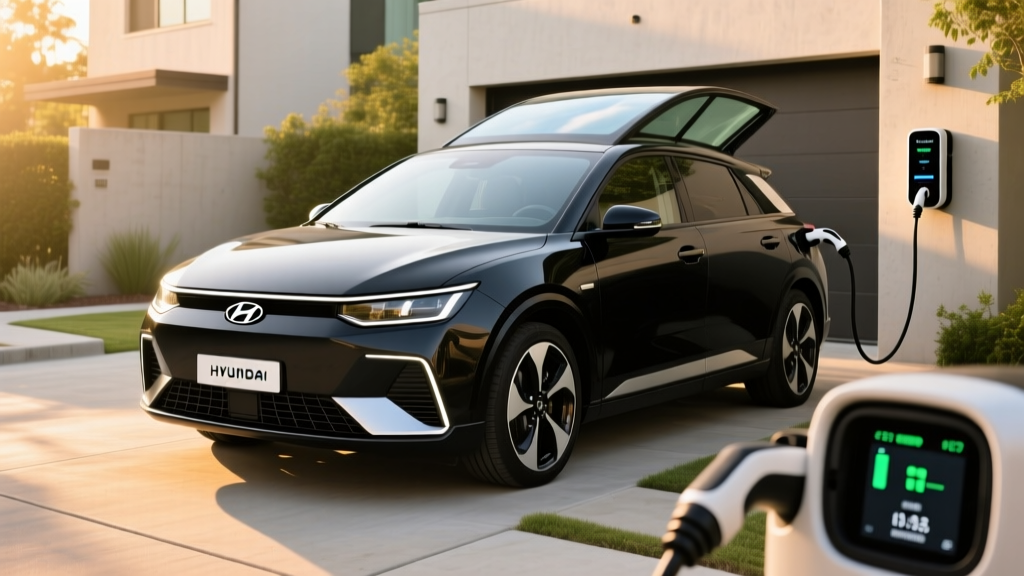
- Level 2 (240V home or public charger, 7.2–11.5 kW): 5–8 hours — ideal for overnight charging at home.
- DC Fast Charger (50–350 kW): 18–45 minutes depending on peak power — the only viable option for road-trip charging.
Charging is not linear. EVs charge fastest between 10% and 50% State of Charge (SoC), then taper significantly above 80% to protect the battery. That's why manufacturers quote "10–80%" times rather than 0–100%.
The Three Charging Levels Explained (With Real Numbers)
Before calculating your specific charge time, you need to understand the three charging levels and the critical difference between kW (kilowatts — the rate of power flow, like water pressure from a hose) and kWh (kilowatt-hours — the total energy stored in your battery, like the size of a water tank).
| Charging Level | Voltage | Power (kW) | Miles of Range Added Per Hour | Typical Use Case |
|---|---|---|---|---|
| Level 1 | 120V AC | 1.2–1.9 kW | 3–5 mi/hr | Emergency top-up, PHEV overnight |
| Level 2 | 240V AC | 3.3–19.2 kW | 12–75 mi/hr | Daily home/work charging |
| DC Fast Charging | 400–900V DC | 50–350 kW | 150–1,000+ mi/hr (peak) | Road trips, highway corridors |
Most EV owners do 80–90% of their charging at home on Level 2. The U.S. Department of Energy confirms that home Level 2 charging covers the daily needs of the vast majority of drivers, since the average American drives roughly 37 miles per day.
Charge Time by Popular EV Models (10–80% Real-World Estimates)
Not all EVs charge at the same speed. Battery size, chemistry (LFP vs. NMC), vehicle architecture (400V vs. 800V), and thermal management all affect how quickly electrons flow into the pack. Here's how current popular models stack up:
| Vehicle (2025–2026) | Battery (kWh usable) | Max DC Fast Charge (kW) | 10–80% Time (DCFC) | Level 2 Time (11.5 kW) | EPA Range |
|---|---|---|---|---|---|
| Tesla Model Y Long Range | 75 kWh (NMC) | 250 kW | ~25 min | ~6 hrs | 320 mi |
| Hyundai Ioniq 5 (Long Range) | 77.4 kWh (NMC) | 240 kW (800V) | ~18 min | ~6.5 hrs | 303 mi |
| Ford Mustang Mach-E Extended Range | 91 kWh (NMC) | 150 kW | ~38 min | ~8 hrs | 312 mi |
| Chevrolet Equinox EV 3RS | 85 kWh (NMC) | 150 kW | ~35 min | ~7.5 hrs | 319 mi |
| Tesla Model 3 RWD | 57.5 kWh (LFP) | 170 kW | ~25 min | ~5 hrs | 272 mi |
| Rivian R1T Dual-Motor (Max Pack) | 141 kWh (NMC) | 220 kW | ~42 min | ~12 hrs | 410 mi |
Real-world charging caveat: These 10–80% times assume optimal battery preconditioning (the car warming the battery to ideal temperature before arrival at the charger). In cold weather below 32°F, expect DC fast-charge times to increase by 20–40% if the battery isn't preconditioned. Highway driving at 75+ mph and headwinds also reduce the range you actually gain per charging stop.
The Charging Curve: Why Peak kW Is Not Sustained kW
This is where many first-time EV buyers get tripped up. A vehicle advertising "250 kW max charging" does not charge at 250 kW for the entire session. The charging curve looks more like a hill: power ramps up quickly, peaks in the 10–40% SoC range, and then tapers off progressively above 50%, 60%, and especially 80%.
For example, the Hyundai Ioniq 5 on a 350 kW charger might peak at 240 kW around 20% SoC but drop to 120 kW by 55% and just 60 kW by 75%. The advertised "18-minute 10–80%" time reflects the average speed across that curve, not the peak.
Why this matters for road trips: If you charge from 10% to 80% and drive on, you're using the fast part of the curve. But if you insist on charging to 100% at a DC fast charger, that final 20% can take as long as the first 70% — sometimes longer. On road trips, it's faster to make multiple shorter stops (10–80%) than one long stop (10–100%).
EV Charging Cost vs. Gas: The Real Ownership Math
Charging time matters, but cost is often the bigger question. Here's a concrete comparison using national averages:
| Cost Factor | Electric Vehicle (Home L2 Charging) | Gas Vehicle (28 MPG Combined) |
|---|---|---|
| Energy cost per mile | $0.04–$0.06 (at $0.16/kWh national avg) | $0.11–$0.13 (at $3.20/gal) |
| Annual fuel/energy (12,000 mi) | $480–$720 | $1,320–$1,560 |
| Annual maintenance | $300–$500 (no oil, fewer brakes) | $800–$1,200 |
| 5-year fuel + maintenance total | $3,900–$6,100 | $10,600–$13,800 |
However, public DC fast charging is significantly more expensive than home charging — often $0.35–$0.55/kWh at networks like Electrify America or EVgo. If you rely exclusively on public fast charging, your per-mile cost can equal or exceed gasoline. Home charging access is the single biggest cost variable in EV ownership.
For the purchase side, the IRS §30D federal tax credit can reduce the effective price by up to $7,500 for eligible new EVs — but eligibility depends on MSRP caps ($55,000 for cars, $80,000 for SUVs/trucks), buyer income limits ($150K single / $300K joint AGI), battery critical-mineral sourcing, and North American assembly requirements. Many popular models partially or fully qualify, but always verify on the IRS website before purchasing, as the eligible vehicle list changes frequently. The credit can now be transferred to the dealer at point of sale, reducing your out-of-pocket cost at purchase rather than waiting for tax filing.
Common EV Charging Myths vs. Facts
| Myth | Fact |
|---|---|
| "Charging an EV takes hours — you can't road trip." | DC fast chargers add 150–250 miles in 15–25 minutes on modern EVs. Road trips require planning, but 20–30 minute stops every 2–3 hours align with normal rest breaks. |
| "You need to charge to 100% every night." | Most manufacturers recommend daily charging to 80% (especially for NMC batteries). Charging to 100% is only needed before long trips. LFP batteries (Tesla Model 3 RWD, some BYD models) can be charged to 100% daily without degradation concerns. |
| "Fast charging ruins your battery." | Modern thermal management systems protect the battery during DC fast charging. Data from fleets of high-mileage Teslas and Hyundai/Kia EVs show 85–92% capacity retention after 100,000+ miles, even with regular fast charging. All major EV batteries carry an 8-year/100,000-mile warranty (10 years/150,000 miles in CARB states) with a 70% capacity retention guarantee. |
| "EVs are useless in cold weather." | Range drops 20–35% in sub-freezing temperatures due to battery chemistry and cabin heating demands. However, preconditioning while plugged in and using a heat pump (standard on many 2025–2026 models) significantly mitigates this. A 300-mile EV still delivers 200–240 real miles at 20°F — plenty for most daily driving. |
| "My home outlet is fine for charging." | Level 1 (120V) adds just 3–5 miles per hour. If you drive 40+ miles daily, Level 1 cannot keep up. A 240V Level 2 home charger ($500–$2,000 installed) is strongly recommended for BEV owners. |
Do You Have the Right Setup? A Charging-Access Decision Framework
How long charging takes for you depends on your living situation and driving patterns. Use this framework:
Choose a full BEV (battery electric vehicle) if:
- You can install a Level 2 charger at home (garage or driveway with 240V access) — this covers 90%+ of charging needs
- Your daily commute is under 80 miles round-trip
- You take road trips 2–4 times per year and can plan DC fast-charger stops
- You want the lowest per-mile operating cost and minimal maintenance
Choose a PHEV (plug-in hybrid) if:
- You lack reliable home Level 2 charging (apartment, street parking, HOA restrictions)
- You regularly drive 200+ miles in areas with sparse charging infrastructure
- You want electric-only commuting (25–45 miles) with gas-engine range insurance
- Examples: Toyota RAV4 Prime (42 mi electric, 38 MPG gas), Jeep Wrangler 4xe (22 mi electric)
Stick with a hybrid (HEV) or reconsider timing if:
- You have zero charging access at home or work and frequently drive long distances
- You live in an extreme-cold climate (regularly below 0°F) and lack a garage for preconditioning
- Your budget cannot accommodate the higher upfront cost, even after tax credits
First-Time EV Buyer Checklist: What to Know Before You Buy
- Audit your charging access first. Can you install a 240V Level 2 outlet? Get a quote from a licensed electrician — costs range from $500 (simple NEMA 14-50 outlet near your panel) to $2,500+ (long wire run, panel upgrade to 200A). This single factor determines whether EV ownership is convenient or frustrating.
- Match battery size to your actual needs. A 270-mile EPA range covers most daily driving with margin. Don't pay $10,000+ extra for a 350-mile battery if you charge at home every night and rarely road-trip.
- Check your electrical panel. Most homes need a 200-amp panel for a 48-amp Level 2 charger. Older homes with 100-amp service may need an upgrade ($1,500–$3,500) or a lower-amperage charger.
- Verify tax credit eligibility before signing. Check the IRS clean vehicle credit page for the current eligible vehicle list, your AGI against income caps, and whether the specific VIN qualifies based on battery sourcing.
- Factor in insurance. EV insurance premiums run 10–25% higher than comparable gas vehicles due to repair costs and battery replacement expense. Get quotes before purchasing.
- Download charging apps before delivery day. PlugShare, A Better Routeplanner (ABRP), and your vehicle's native navigation will show compatible chargers along your routes. Pre-plan your first road trip to build confidence.
Frequently Asked Questions
Can I charge an EV with a regular household outlet?
Yes, but slowly. A standard 120V outlet delivers about 1.4 kW, adding roughly 3–5 miles of range per hour. For a plug-in hybrid with a 15 kWh battery, Level 1 charging overnight (8–10 hours) is usually sufficient. For a full BEV with a 75+ kWh battery, Level 1 is impractical as a primary charging method — a full charge would take 2–3 days.
How much does it cost to install a Level 2 home charger?
Equipment costs $300–$700 for a quality Level 2 unit (e.g., ChargePoint Home Flex, Wallbox Pulsar Plus, Tesla Wall Connector). Professional installation by a licensed electrician adds $500–$2,000 depending on wire-run distance, whether a sub-panel is needed, and local permit fees. Total installed cost typically falls between $800 and $2,500. Homes needing a 200A panel upgrade should budget an additional $1,500–$3,500.
Does fast charging degrade my EV battery faster?
Marginally, but modern battery management systems minimize the effect. Long-term fleet data shows that vehicles using DC fast charging regularly retain approximately 85–90% of original capacity at 100,000 miles, compared to 90–93% for vehicles charged primarily on Level 2. The difference over a typical ownership period is small. All major manufacturers warranty the battery for 8 years/100,000 miles against dropping below 70% capacity.
How long does it take to charge an electric car at a Tesla Supercharger?
Tesla V3 Superchargers (250 kW) can add up to 200 miles in about 15 minutes on a Model Y or Model 3 under optimal conditions (preconditioned battery, low SoC at arrival). Tesla V4 Superchargers support up to 350 kW for newer architectures. Real-world 10–80% sessions typically take 20–30 minutes.
What happens if I run out of charge on the road?
Modern EVs provide extensive range warnings, route you to the nearest charger, and reduce power in a "turtle mode" to stretch the final miles. If you do reach 0%, the vehicle must be flatbed-towed (not dolly-towed, which can damage the motors) to the nearest charger. Roadside assistance programs from AAA and most manufacturers now offer mobile charging vans in major metro areas that can add 10–20 miles of emergency range.
Should I charge my EV to 100% every night?
For NMC/NCA batteries (most long-range EVs), manufacturers recommend setting the daily charge limit to 80% and only charging to 100% before long trips. This significantly extends long-term battery health. For LFP batteries (Tesla Model 3 RWD, Model Y Standard Range), Tesla recommends charging to 100% at least weekly because LFP chemistry has a flatter voltage curve that requires full charges for accurate range estimation.