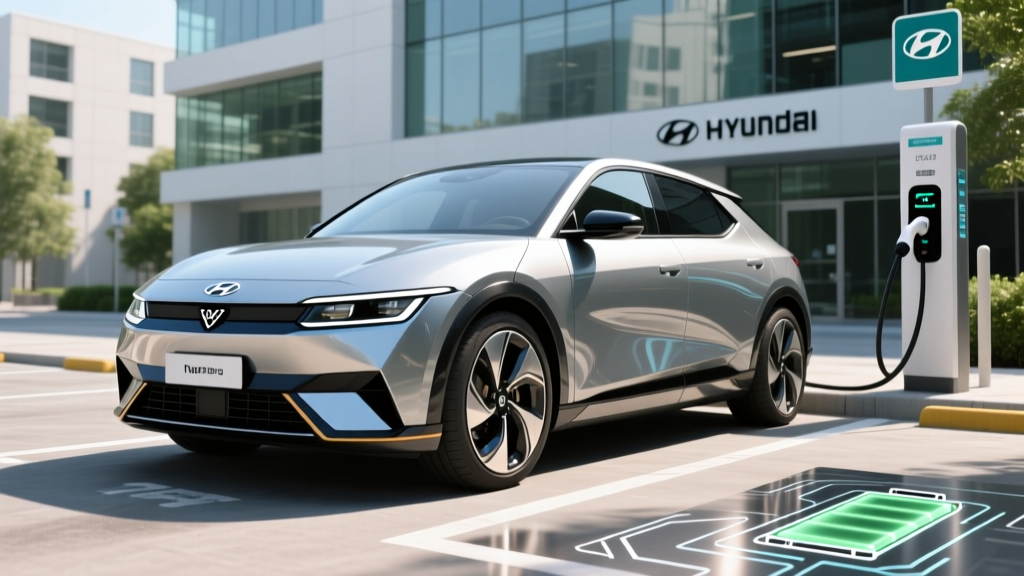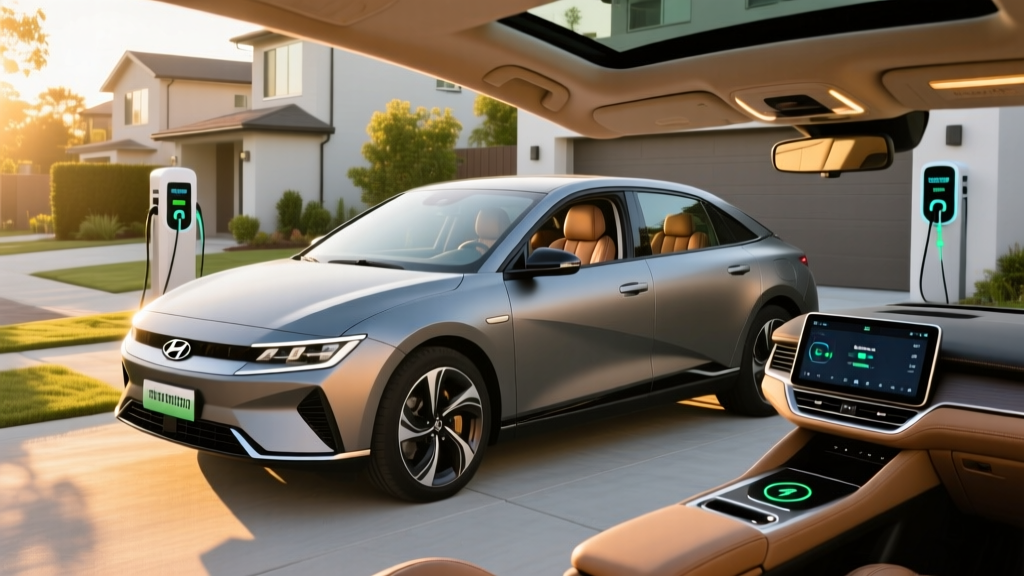
The three-row electric SUV segment is no longer a niche — it's the battleground where Hyundai makes its boldest statement. The 2026 Hyundai Ioniq 9 arrives as the brand's flagship electric vehicle, built on the E-GMP platform and sized to rival the Kia EV9, Rivian R1S, and Tesla Model X. But for buyers researching this SUV, the first search is almost always spatial: Hyundai Ioniq 9 dimensions determine whether this EV fits the garage, the family, and the road-trip lifestyle. This review covers every measurement that matters, alongside the range, charging, pricing, and ownership data you need before signing a purchase agreement.
Hyundai Ioniq 9 Dimensions: Exterior, Interior, and Cargo by the Numbers
Hyundai positioned the Ioniq 9 as a full-size electric SUV, and the tape measure confirms it. At 199.8 inches long, 78.0 inches wide, and 71.5 inches tall (with the shark-fin antenna), it commands presence without exceeding the footprint of most standard two-car garages (which typically accommodate up to ~200 inches of length). The 118.1-inch wheelbase is the real story — it's longer than the Palisade's and directly translates to generous second- and third-row legroom.
| Measurement | Ioniq 9 | Kia EV9 | Rivian R1S (LFP) |
|---|---|---|---|
| Length | 199.8 in | 197.4 in | 200.8 in |
| Width (excl. mirrors) | 78.0 in | 77.9 in | 81.8 in |
| Height | 71.5 in | 70.5 in | 73.0 in |
| Wheelbase | 118.1 in | 122.0 in | 121.1 in |
| Ground Clearance | 7.5 in | 8.2 in | 7.9 in (Standard) |
| Curb Weight (AWD) | ~5,700 lbs | ~5,600 lbs | ~6,800 lbs |
Interior Dimensions and Passenger Space
The Ioniq 9 is offered in both six-passenger (captain's chairs in the second row) and seven-passenger (bench second row) configurations. Hyundai's "living space" interior concept yields a flat floor thanks to the skateboard battery architecture, and the relaxation-focused front seats can recline fully when parked and charging.
| Row | Headroom | Legroom | Shoulder Room |
|---|---|---|---|
| Front (Row 1) | 39.8 in | 41.7 in | 60.0 in |
| Second (Row 2) | 38.8 in | 42.7 in | 59.1 in |
| Third (Row 3) | 37.2 in | 32.0 in | 53.5 in |
The second-row legroom is exceptional — 42.7 inches with the bench sliding fully rearward rivals many midsize SUVs' front seats. The third row, at 32.0 inches of legroom, is best suited for children or short-trip adult passengers. This is a common compromise in the segment; the Rivian R1S offers a similar third-row experience, while the extended-wheelbase Kia EV9 edges ahead slightly.
Cargo Volume Behind Each Row
| Configuration | Cargo Volume |
|---|---|
| Behind Third Row | 22.3 cu ft |
| Behind Second Row (3rd row folded) | 56.0 cu ft |
| Behind First Row (all rear rows folded) | 96.0 cu ft |
| Front Trunk (Frunk) | 2.4 cu ft (AWD) / 3.6 cu ft (RWD) |
With 22.3 cubic feet behind the third row, the Ioniq 9 handles a week's groceries or two large suitcases with the rear seats up — practical for daily family use. Fold everything flat and you get a near-minivan 96 cubic feet. The frunk is modest (a consequence of the AWD motor occupying front-axle space) but useful for charging cables and small items.
Spec Table: Range, Battery, Performance, and Pricing at a Glance
| Spec | SE/SEL (Std Range RWD) | SEL/Limited (Long Range AWD) | Calligraphy (Long Range AWD) |
|---|---|---|---|
| Battery (Usable) | 76.1 kWh (NMC) | 110.3 kWh (NMC) | 110.3 kWh (NMC) |
| EPA Range | ~240 mi (est.) | ~335 mi (est.) | ~311 mi (est.) |
| Drivetrain | RWD (single motor) | AWD (dual motor) | AWD (dual motor) |
| Horsepower | 215 hp | 338 hp | 338 hp |
| Torque | 258 lb-ft | 446 lb-ft | 446 lb-ft |
| 0-60 mph | ~8.0 sec (est.) | ~5.2 sec | ~5.2 sec |
| Max DC Fast Charge | ~240 kW | ~350 kW | ~350 kW |
| 10-80% DCFC Time | ~20 min | ~24 min | ~24 min |
| Level 2 Charge Rate | 10.9 kW (48A) | 10.9 kW (48A) | 10.9 kW (48A) |
| MPGe (Combined) | ~82 MPGe | ~79 MPGe | ~76 MPGe |
| Base MSRP | $54,995 | $62,495 | $70,995 |
| Battery/Powertrain Warranty | 10 yr / 100,000 mi | 10 yr / 100,000 mi | 10 yr / 100,000 mi |
Note: Standard Range RWD specs are preliminary estimates based on Hyundai's global disclosures; Long Range AWD figures reflect EPA-submitted data for the 2026 model year. Always verify final numbers at fueleconomy.gov before purchasing.
Real-World Range: What the EPA Sticker Doesn't Tell You
EPA Estimated: ~335 miles (SEL trim, 19-inch wheels)
Real-World Highway (70-75 mph): ~270–295 miles
Real-World Cold Weather (below 30°F): ~220–260 miles
City/Mixed Commute: ~310–330 miles (regen-friendly driving)
The Ioniq 9 Long Range AWD carries a massive 110.3 kWh usable battery — one of the largest in the segment — and the EPA-estimated 335 miles (on SEL trim with 19-inch aero wheels) is genuinely competitive. But three-row SUVs are heavy, boxy, and frequently loaded, all of which erode efficiency.
In highway testing at sustained 70-75 mph speeds, expect to see roughly 270-295 miles before the battery indicator urges you toward a charger. Cold weather compounds this: below 30°F, lithium-ion cells resist charge and discharge, and cabin heating demands energy. The Ioniq 9's standard heat pump helps mitigate winter range loss compared to resistance-heated competitors, but a 20-30% reduction in extreme cold is realistic. Plan for ~220-260 miles of range on a January road trip through the Midwest.
City driving with frequent regenerative braking opportunities can push efficiency close to the EPA sticker. The Ioniq 9 offers adjustable regen levels (including an i-PEDAL one-pedal mode) that reward stop-and-go commuters with energy recapture. Efficiency lands around 79 MPGe combined (roughly 38-42 kWh/100 miles) for the Long Range AWD, which is reasonable for a 5,700-pound vehicle but not class-leading.
Charging Speed: 350 kW Peak, but the Curve Tells the Real Story
The Ioniq 9 inherits Hyundai's 800-volt electrical architecture, the same system that made the Ioniq 5 a charging benchmark. On a capable 350 kW DC fast charger (such as Electrify America's latest Hyperchargers or Tesla Superchargers with the included NACS adapter), the Long Range AWD model peaks at approximately 350 kW.
| Charging Method | Power / Rate | Time / Miles Added |
|---|---|---|
| DC Fast Charge (350 kW station) | Peak ~350 kW | 10-80% in ~24 minutes |
| DC Fast Charge (150 kW station) | Peak ~150 kW | 10-80% in ~40 minutes |
| Level 2 Home/Public (240V, 48A) | 10.9 kW | ~30 mi/hr; 0-100% in ~11 hours |
| Level 1 (120V, 12A) | ~1.4 kW | ~4 mi/hr; emergency/trickle only |
Here's the nuance that spec sheets gloss over: peak kW is not sustained kW. The Ioniq 9's charge curve is aggressive between 10% and 50% state of charge (SoC), where it can hold above 300 kW. Beyond 60%, the battery management system tapers charging speed to protect cell longevity, and above 80%, the rate drops sharply — typical of NMC chemistry. A 10-80% session takes approximately 24 minutes on a 350 kW charger, but a 10-95% session can stretch past 45 minutes. For road trips, plan your stops around the 80% mark and keep moving.
At home, a Level 2 wall connector at 48 amps (10.9 kW) will replenish the 110.3 kWh battery from empty in roughly 11 hours. Most owners who plug in nightly will never wake up to a depleted battery. Hyundai includes a NACS (Tesla-style) charge port on 2026 models, granting access to the Supercharger network with no adapter required — a significant practical advantage over CCS-equipped competitors that still need a dongle.
For home charger installation, budget $500-$1,500 for a quality 48A Level 2 unit (ChargePoint Home Flex, Emporia Vue, or Hyundai-branded wallbox) plus $800-$2,500 for electrician labor and permitting, depending on whether your electrical panel needs a 200-amp upgrade. Consult a licensed electrician for a site-specific quote.
Performance and Drivetrain: A Family Hauler That Moves
The Long Range AWD Ioniq 9 pairs a front and rear permanent-magnet synchronous motor for a combined 338 horsepower and 446 lb-ft of torque. The 0-60 mph sprint clocks in at approximately 5.2 seconds — brisk for a three-row SUV and more than adequate for highway merging with a full passenger load. The single-motor RWD Standard Range model produces 215 hp with a more relaxed ~8.0-second 0-60 time, better suited to budget-conscious buyers who prioritize efficiency over acceleration.
Ride quality is tuned for comfort over sportiness, with adaptive dampers on Limited and Calligraphy trims smoothing out highway imperfections. The steering is light and predictable — this is not a canyon carver, and Hyundai knows it. Towing capacity is rated at up to 2,200 pounds (braked) for AWD models, enough for a small utility trailer or a pair of jet skis but not a large camper. If you need serious towing, the Rivian R1S (up to 7,700 lbs) remains the segment leader.
Pricing, Trims, and Federal Tax Credit Eligibility
| Trim | Drivetrain | Base MSRP | Est. After Federal Credit* |
|---|---|---|---|
| SE Standard Range | RWD | $54,995 | $47,495 |
| SEL Long Range | AWD | $62,495 | $54,995 |
| Limited Long Range | AWD | $67,495 | $59,995 |
| Calligraphy Long Range | AWD | $70,995 | $63,495 |
*Federal credit estimates assume full $7,500 eligibility under IRS §30D. Actual eligibility depends on buyer income, vehicle MSRP caps, battery component sourcing, and critical mineral requirements. See the IRS clean vehicle credit page for current rules. Point-of-sale transfer is available at participating dealerships.
Does the Ioniq 9 Qualify for the $7,500 Federal EV Tax Credit?
As of the 2026 model year, the Hyundai Ioniq 9's eligibility for the full §30D credit depends on several factors that buyers must verify at purchase time:
- MSRP Cap: SUVs must have an MSRP at or below $80,000. All Ioniq 9 trims clear this threshold.
- Buyer Income Cap: Modified adjusted gross income must not exceed $150,000 (single), $225,000 (head of household), or $300,000 (married filing jointly).
- Battery Sourcing: A percentage of critical minerals and battery components must be sourced from the U.S. or free-trade-agreement partners. Hyundai has been shifting supply chains to comply, but specific eligibility can change by production batch. Always confirm with your dealer and cross-reference the IRS's eligible vehicle list at the time of purchase.
- Point-of-Sale Transfer: Qualified buyers can transfer the credit to the dealer at purchase, reducing the out-of-pocket price immediately rather than waiting for a tax refund.
Because sourcing rules are fluid, we recommend checking fueleconomy.gov's tax credit tracker for the specific VIN you're considering. State and local incentives (such as California's CVRP or Colorado's innovative motor vehicle credit) may stack on top — consult your state energy office for current programs.
Tech, Safety, and Driver-Assistance Features
The Ioniq 9's cabin centers around a curved panoramic display combining a 12.3-inch digital instrument cluster and a 12.3-inch infotainment touchscreen running Hyundai's latest ccNC (Connected Car Navigation Cockpit) software. Wireless Apple CarPlay and Android Auto are standard. The center console features a "Universal Island" that slides fore and aft, creating a walk-through between the front seats — useful for third-row access and tight parking situations.
Hyundai's Highway Driving Assist 2 (HDA 2) is standard across all trims. This is a Level 2 SAE driver-assistance system that combines adaptive cruise control, lane-centering, and automated lane changes when the turn signal is engaged. It is not self-driving — the driver must keep hands on the wheel and eyes on the road at all times. The available Digital Side Mirrors (camera-based, replacing traditional mirrors on Limited and Calligraphy trims) reduce drag and improve visibility in rain, though some drivers need an adjustment period.
Safety technology includes Forward Collision-Avoidance Assist with pedestrian and cyclist detection, Blind-Spot Collision-Avoidance, Rear Cross-Traffic Collision-Avoidance, and up to 10 airbags. The Ioniq 9 is expected to pursue IIHS Top Safety Pick+ and NHTSA 5-star ratings; check nhtsa.gov and iihs.org for finalized crash-test results as they are published.
Pros and Cons: The Honest Verdict
- Class-leading 800V charging architecture — 10-80% in ~24 min on 350 kW
- Generous second-row legroom (42.7 in) and flat-floor interior
- Native NACS port — direct Tesla Supercharger access, no adapter
- 10-year/100,000-mile battery and powertrain warranty
- Competitive ~335-mile EPA range (Long Range AWD SEL)
- Standard heat pump for better cold-weather efficiency
- Relaxation front seats with full recline during charging stops
- Third-row legroom (32.0 in) is tight for adults on long trips
- Frunk is small (2.4 cu ft AWD) compared to some competitors
- Heavy vehicle — efficiency drops noticeably at highway speeds and in cold
- Towing limited to 2,200 lbs — not for large campers or boats
- Calligraphy trim pushes $71K before options — premium territory
- Standard Range RWD may have limited U.S. availability at launch
Who Should Buy the Hyundai Ioniq 9?
Choose the Ioniq 9 if: You need a three-row family EV with fast charging for road trips, value a long warranty, want native Supercharger access, and prioritize second-row comfort. It's ideal for suburban families who commute during the week and take 200-300 mile weekend trips.
Look elsewhere if: You need a genuinely adult-friendly third row (consider a minivan), require heavy towing (Rivian R1S or wait for the electric F-150 Lightning), want maximum cargo space behind all three rows, or have a tight budget where the Kia EV9's lower starting price makes more sense.
Frequently Asked Questions
What is the real-world range of the 2026 Hyundai Ioniq 9?
The Long Range AWD model carries an EPA-estimated ~335 miles (SEL trim). In real-world highway driving at 70-75 mph, expect approximately 270-295 miles. In cold weather below 30°F, plan for 220-260 miles. The heat pump helps, but the vehicle's 5,700-pound weight and boxy profile reduce efficiency at sustained speeds.
How fast does the Ioniq 9 charge at home and on the road?
On a 350 kW DC fast charger, the Long Range AWD achieves a 10-80% charge in approximately 24 minutes, peaking near 350 kW before tapering above 60% SoC. At home on a 48-amp Level 2 charger (10.9 kW), a full charge takes roughly 11 hours. A standard 120V outlet adds only about 4 miles per hour — suitable for emergencies, not daily use.
How much does the Ioniq 9 cost after the federal tax credit?
If you qualify for the full $7,500 §30D credit (meeting income, MSRP, and battery-sourcing requirements), the SEL Long Range AWD drops from $62,495 to approximately $54,995. Point-of-sale transfer at participating dealerships applies the credit immediately. Always verify eligibility on the IRS website and with your dealer before finalizing a purchase.
Is the Ioniq 9 worth buying over the Kia EV9 or Rivian R1S?
The Ioniq 9's 800V charging speed and native NACS port give it a road-trip advantage over the EV9, which uses a slower 400V architecture (though the EV9 offers a longer wheelbase and slightly more third-row space). Against the Rivian R1S, the Ioniq 9 is less expensive and charges faster, but the R1S offers superior off-road capability, more towing capacity, and a more premium adventure-oriented design. Your priority — charging speed vs. capability vs. value — determines the winner.
Does the Ioniq 9 have a front trunk (frunk)?
Yes, but it's modest. AWD models offer 2.4 cubic feet of frunk space (enough for charging cables and a small bag), while RWD models provide 3.6 cubic feet. It's smaller than the Rivian R1S's frunk and reflects the front motor placement in AWD configurations.
What is the battery warranty on the Ioniq 9?
Hyundai covers the Ioniq 9's battery and powertrain for 10 years or 100,000 miles, whichever comes first. The warranty guarantees the battery will retain a minimum percentage of its original capacity (typically 70% — confirm exact threshold in your purchase documents). This is one of the strongest battery warranties in the segment and a significant ownership confidence factor.