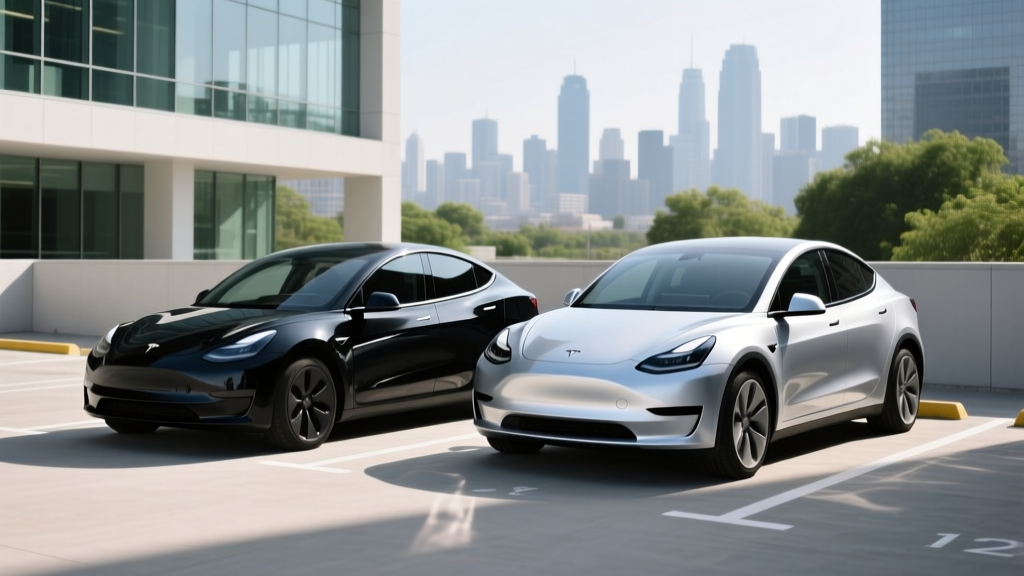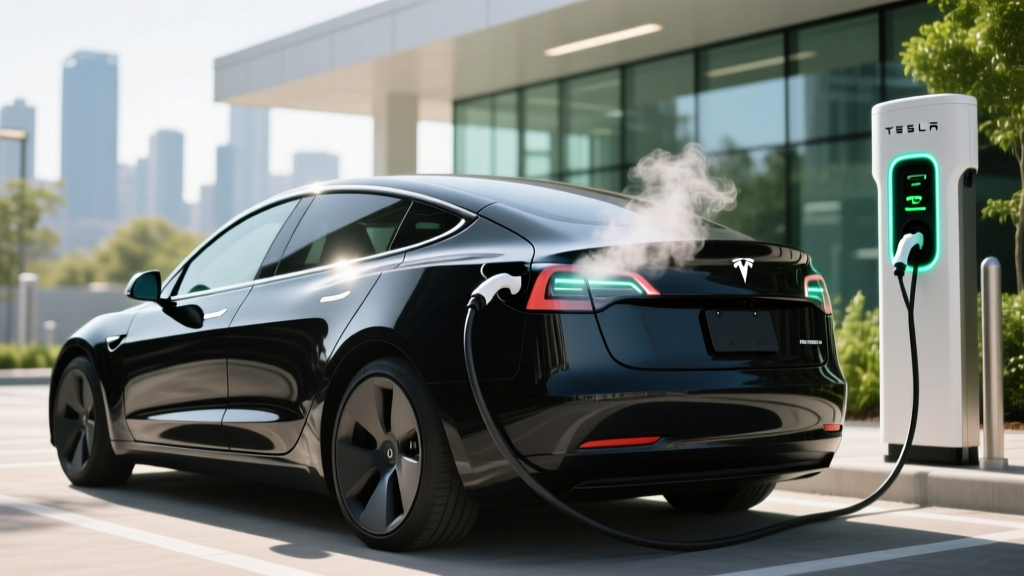
If you're researching your first electric vehicle, one question dominates the search bar: how long does a Tesla take to charge? The answer depends heavily on which Tesla model you drive, the battery chemistry inside it, and the charger you plug into. In this 2026 profile, we use the current-generation Tesla Model 3 — the brand's highest-volume sedan — as our primary data source, while noting where the Model Y, Model S, and Model X differ.
We'll walk through exact DC fast-charging times, home Level 2 speeds, real-world range versus the EPA sticker, and what you'll actually pay after federal tax credits. Every figure below comes from EPA data, Tesla's official spec sheets, and real-world charging-curve testing.
2026 Tesla Model 3: Quick Specs at a Glance
| Spec | Long Range AWD | Performance AWD | Rear-Wheel Drive (LFP) |
|---|---|---|---|
| EPA Range | 363 mi | 341 mi | 272 mi |
| Battery (usable) | ~79 kWh (NMC) | ~79 kWh (NMC) | ~60 kWh (LFP) |
| Peak DC Fast Charge | 250 kW | 250 kW | 170 kW |
| 10–80% DCFC Time | ~25 min | ~25 min | ~30 min |
| Level 2 (11.5 kW AC) | ~44 mi/hr | ~44 mi/hr | ~33 mi/hr |
| 0–60 mph | 4.2 sec | 2.9 sec | 5.8 sec |
| Horsepower | 346 hp | 510 hp | 271 hp |
| Drivetrain | Dual-Motor AWD | Dual-Motor AWD | RWD |
| MPGe (combined) | 132 MPGe | 125 MPGe | 132 MPGe |
| kWh/100 mi | 25 | 27 | 25 |
| Base MSRP | $47,740 | $52,740 | $38,990 |
Sources: fueleconomy.gov, Tesla Model 3 Design Studio. Prices reflect 2026 MSRP before destination or incentives.
Real-World Range: What the EPA Sticker Doesn't Tell You
EPA sticker: 363 miles
Highway (70–80 mph, 75°F): ~300–320 miles
City / mixed driving: ~340–360 miles
Cold weather (20°F, cabin heat): ~240–280 miles (30–35% reduction)
Real-world numbers based on aggregated owner data and independent highway-loop testing.
The Model 3 Long Range's 363-mile EPA figure is among the best in its class, but EPA tests use relatively low average speeds and moderate climate-control loads. On a sustained 75-mph interstate run in mild weather, expect to use about 27–29 kWh/100 mi, which nets roughly 300–320 miles before the buffer runs out.
Cold weather is the bigger variable. Lithium-ion cells lose efficiency below freezing, and cabin heating draws 2–5 kW continuously. In our experience and consistent with Recurrent's fleet data, a Model 3 Long Range at 20°F will deliver roughly 240–280 miles of usable range. The heat pump standard on all 2026 Model 3 trims helps, but physics still wins.
The RWD trim's smaller 60 kWh LFP battery yields a 272-mile EPA rating. LFP chemistry actually tolerates cold slightly better than NMC at low state-of-charge, but the smaller pack means less absolute buffer for long road trips.
How Long Does a Tesla Take to Charge? DC Fast, Level 2, and Level 1
This is where the keyword question gets a precise answer. Tesla's Supercharger network remains the most reliable public DC fast-charging infrastructure in the U.S., and the Model 3's charge curve is well-mapped. Here's what each charging level delivers:
| Charging Level | Power (kW) | Miles Added per Hour | Typical Use Case |
|---|---|---|---|
| Level 1 (120V, 12A) | ~1.4 kW | ~3–5 mi/hr | Overnight trickle, emergency top-up |
| Level 2 (240V, 48A) | 11.5 kW | ~44 mi/hr | Home Wall Connector, workplace |
| Level 2 (240V, 32A Mobile) | 7.7 kW | ~30 mi/hr | Mobile connector on dryer outlet |
| DC Fast (V3 Supercharger) | Peak 250 kW | ~1,000 mi/hr (peak) | Road trips, 10–80% in ~25 min |
| DC Fast (V4 Supercharger) | Peak 250 kW* | ~1,000 mi/hr (peak) | Newer stations; Model 3 limited to 250 kW |
*V4 Supercharger cabinets can deliver 350+ kW, but the 2026 Model 3's onboard architecture caps intake at 250 kW. The Cybertruck and refreshed Model S/X can accept higher rates.
The Charge Curve Reality
Peak kW is not sustained kW. When you plug a Model 3 Long Range into a V3 Supercharger at 10% state-of-charge, it ramps quickly to ~250 kW, holds that peak through roughly 35–40% SoC, then tapers. By 60% SoC, you're typically seeing 100–120 kW. Above 80%, the car deliberately slows to protect battery longevity — often below 50 kW. This is why Tesla (and every other automaker) quotes 10–80% times rather than 0–100%.
For the Long Range and Performance trims, 10–80% takes approximately 25 minutes on a V3 or V4 Supercharger operating at full capacity. The RWD trim with its LFP pack peaks at 170 kW, pushing the 10–80% window to roughly 30 minutes.
Preconditioning matters. If you navigate to a Supercharger in the Tesla nav system, the car automatically warms the battery to optimal charging temperature (~95°F). Arriving at a Supercharger without preconditioning — especially in cold weather — can add 5–10 minutes to your session as the pack heats up before accepting peak power.
Home Level 2 Charging: The Daily Reality
Most Tesla owners do 80–90% of their charging at home. A Tesla Wall Connector on a 60-amp circuit (48 amps continuous) delivers 11.5 kW, adding roughly 44 miles of range per hour. A full charge from 10% to 100% on the Long Range takes about 7.5 hours — easily handled overnight.
Installation cost for a Wall Connector typically runs $800–$2,000 including a licensed electrician, assuming your panel has capacity. If you need a service upgrade from 100A to 200A, add $1,500–$3,500. Always get a quote from a licensed electrician before committing.
Pricing, Trims, and Federal Tax Credit Eligibility
| Trim | Base MSRP | Est. Destination | §30D Credit* | Effective Price |
|---|---|---|---|---|
| RWD (LFP) | $38,990 | $1,390 | Up to $7,500 | ~$32,880 |
| Long Range AWD | $47,740 | $1,390 | Up to $7,500 | ~$41,630 |
| Performance AWD | $52,740 | $1,390 | Up to $7,500 | ~$46,630 |
*Federal tax credit under IRS §30D is subject to buyer income caps ($150K single / $300K joint MAGI), MSRP caps ($55,000 for sedans), and battery critical-mineral and component sourcing requirements that phase in annually. As of 2026, the RWD trim's LFP battery sourcing may limit partial credit eligibility — confirm at purchase. Point-of-sale transfer is available, letting you apply the credit as a down-payment reduction at delivery.
The Model 3 sedan must stay under a $55,000 MSRP cap to qualify. All three trims clear that threshold at base, but adding FSD (Supervised) or premium paint/wheels can push the Performance trim above it. Always configure carefully if credit eligibility is a priority.
Interior, Cargo, and Daily Livability
The refreshed Model 3 (internally called "Highland" and continued into 2026) addressed many of the prior generation's comfort complaints. Acoustic glass, improved seat padding, and rear-seat ventilation make it a genuinely comfortable commuter and road-trip car.
- Front legroom: 42.2 inches
- Rear legroom: 35.3 inches
- Cargo (trunk + frunk): 23 cu ft total (19.8 trunk + 3.1 frunk)
- Infotainment: 15.4-inch center touchscreen, no physical instrument cluster
- Driver assist: Basic Autopilot standard; FSD (Supervised) is a $8,000 option or $99/month
Cargo space trails the Model Y (76 cu ft with seats folded) and competitors like the Hyundai Ioniq 6, but the sedan trunk opening is wide and the frunk is practical for charging cables and groceries.
Tesla Autopilot and FSD (Supervised) are SAE Level 2 driver-assistance systems. You must keep your hands on the wheel and eyes on the road at all times. These are not self-driving systems. Only Level 4 robotaxi services like Waymo operate without a driver engaged.
Battery Warranty, Longevity, and Chemistry
Tesla's battery and drive-unit warranty covers 8 years / 100,000 miles on the RWD trim and 8 years / 120,000 miles on Long Range and Performance trims, with a minimum 70% capacity retention threshold. If the battery degrades below 70% of its original capacity within the warranty window, Tesla replaces or refurbishes it at no cost.
| Factor | LFP (RWD trim) | NMC (Long Range / Performance) |
|---|---|---|
| Energy density | Lower (~160 Wh/kg cell) | Higher (~250 Wh/kg cell) |
| Range per pack size | Less range, smaller pack | More range from same volume |
| Cycle life | 3,000+ cycles typical | 1,500–2,000 cycles typical |
| Daily charging to 100% | Recommended (Tesla advises 100% weekly) | 80% daily, 100% for trips |
| Cold-weather performance | Slightly weaker at very low temps | Better low-temp discharge |
| Cobalt / ethical sourcing | Cobalt-free | Contains cobalt and nickel |
If you plan to keep the car 8–10 years and charge daily at home, the LFP battery in the RWD trim offers exceptional longevity — thousands of cycles with minimal degradation. The trade-off is lower range. The NMC pack in the Long Range gives you the miles but benefits from daily charging limits of 80% to maximize lifespan.
Pros, Cons, and Who Should Buy the Model 3
- Best-in-class Supercharger network access
- Industry-leading efficiency (25 kWh/100 mi)
- Strong real-world range on Long Range trim
- Over-the-air updates improve the car over time
- Competitive pricing after tax credit
- Excellent safety ratings (IIHS Top Safety Pick+)
- No physical instrument cluster or stalks
- Rear seat is tighter than Model Y or Ioniq 5
- FSD (Supervised) remains expensive and Level 2 only
- Repair costs and insurance premiums run high
- RWD LFP range may not suit road-trip-heavy owners
- Minimal dealer network — service center dependent
Commuters: Ideal. Home Level 2 charging covers daily needs effortlessly, and efficiency keeps electricity costs under $0.04/mile in most states.
Road-trip families: The Long Range trim works, but the Model Y offers more cargo room and easier child-seat access.
Budget-focused buyers: The RWD at ~$32,880 after credit is one of the cheapest new premium EVs available, if 272 miles is enough range.
Towing: Not recommended. The Model 3 is rated for just 1,000 lbs — look to the Model Y (3,500 lbs) or a truck for towing.
How Does the Model 3 Compare to Key Competitors?
At the Model 3's price point, the most direct rivals are the Hyundai Ioniq 6 (360-mile EPA, 800V charging at up to 350 kW), the BMW i4 eDrive40 (307-mile EPA, premium interior), and the Tesla Model Y (sharing the same platform with more utility).
The Ioniq 6 charges faster in absolute terms — its 10–80% time is roughly 18 minutes on a 350 kW charger — but the Supercharger network's reliability and geographic coverage still give Tesla an edge for cross-country travel. The BMW i4 wins on interior materials and ride refinement but costs significantly more and lacks DC fast-charging speeds above 205 kW.
If charging speed is your top priority and you drive routes with Electrify America or Ionity coverage, the Ioniq 6 is a compelling alternative. If network reliability and software integration matter more, the Model 3 remains the benchmark.
Frequently Asked Questions
How long does a Tesla take to charge at a Supercharger?
On a V3 or V4 Supercharger, the 2026 Model 3 Long Range charges from 10% to 80% in approximately 25 minutes. The RWD trim takes about 30 minutes due to its lower 170 kW peak rate. Charging above 80% slows significantly — plan to unplug at 80% on road trips for the fastest overall travel time.
How long does a Tesla take to charge at home?
Using a Tesla Wall Connector at 11.5 kW (48 amps), a full charge from near-empty to 100% takes roughly 7–8 hours for the Long Range and 5–6 hours for the RWD. Most owners plug in nightly and wake up to a full battery, making daily charging essentially invisible.
Does the 2026 Model 3 qualify for the $7,500 federal tax credit?
All three trims fall under the $55,000 MSRP cap for sedans under IRS §30D. However, eligibility depends on your MAGI (under $150K single / $300K joint), and the battery must meet critical-mineral and component sourcing thresholds that tighten each year. As of 2026, the NMC Long Range trim is more likely to qualify for the full $7,500 than the LFP RWD trim, which sources from different supply chains. Confirm with your tax professional and check the latest fueleconomy.gov credit listings at purchase time.
Is the Tesla Model 3 worth buying over a Model Y?
If you prioritize driving dynamics, efficiency, and lower price, the Model 3 is the better car. If you need cargo space (76 cu ft in the Y vs. 23 in the 3), easier rear-seat access, or towing capacity, the Model Y is the practical choice. Both share the same powertrain options and Supercharger access.
How long do Tesla batteries last before replacement?
Tesla's warranty guarantees at least 70% capacity retention over 8 years / 100,000–120,000 miles. Real-world fleet data from Recurrent and Tesla's own impact reports show most Model 3 packs retain 85–90% capacity at 100,000 miles. Full battery replacement out of warranty currently costs $12,000–$16,000 depending on the pack, but most owners never need one.