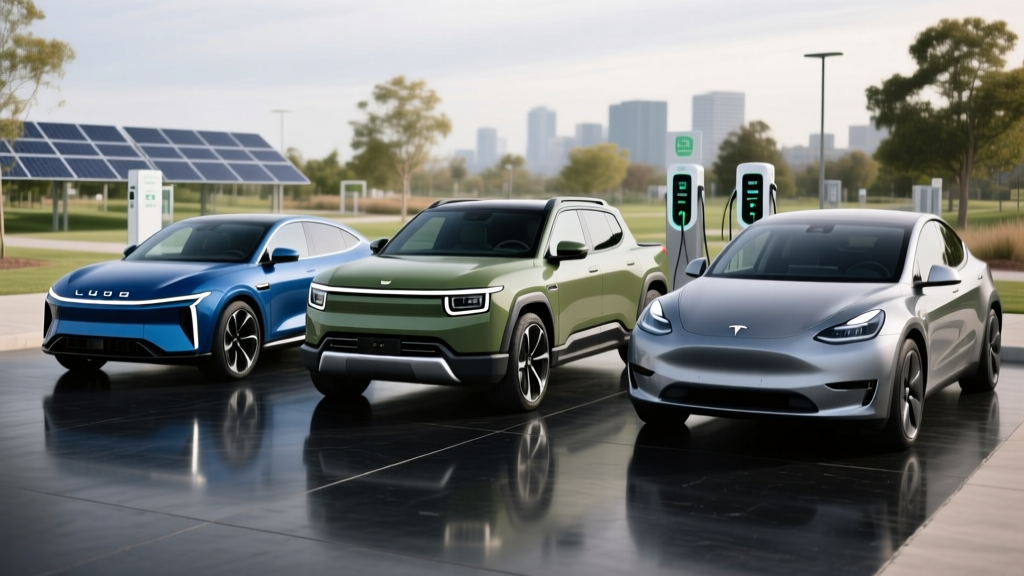
Upgrading from one premium electric vehicle to another isn't just about picking the shiniest badge on the lot. For owners weighing Lucid, Rivian, and Tesla trade-ins, the calculus involves real-world range retention, fast-charging infrastructure, residual value, and whether the next vehicle actually qualifies for federal incentives. This guide breaks down the three brands head-to-head using 2026 model-year data, so you can determine which trade-in path maximizes your investment.
Quick Verdict: Who Wins the Trade-In Game?
Tesla retains the strongest residual values and benefits from the most mature Supercharger network, making it the safest trade-in play. Lucid offers the best efficiency and range-per-kWh but suffers from steeper depreciation and limited service centers. Rivian occupies the adventure-SUV niche with strong loyalty but faces production-scaling headwinds that affect used pricing. Your ideal move depends on whether you prioritize range, utility, or charging convenience.
Side-by-Side Spec Table: 2026 Flagship Models
| Spec | Lucid Air Pure | Rivian R1S Dual-Motor | Tesla Model Y LR AWD |
|---|---|---|---|
| EPA Range | 419 mi | 352 mi | 320 mi |
| Battery (usable kWh) | 88 kWh (NMC) | 106 kWh (NMC) | 75 kWh (NMC) |
| Efficiency (kWh/100 mi) | 24 | 33 | 25 |
| MPGe (combined) | 140 | 102 | 122 |
| Peak DC Fast Charge | 200 kW | 200 kW | 250 kW |
| 10–80% DCFC Time | ~25 min | ~28 min | ~20 min |
| Level 2 Home Rate | 19.2 kW (~80 mi/hr) | 11.5 kW (~25 mi/hr) | 11.5 kW (~44 mi/hr) |
| 0–60 mph | 5.0 sec | 5.0 sec | 4.8 sec |
| Horsepower | 430 hp | 533 hp | 384 hp |
| Drivetrain | RWD | Dual-Motor AWD | Dual-Motor AWD |
| Cargo Volume | 32 cu ft (trunk) | 104 cu ft (max) | 76 cu ft (max) |
| Base MSRP | $69,900 | $75,900 | $48,990 |
| Battery Warranty | 8 yr / 100,000 mi | 8 yr / 120,000 mi | 8 yr / 120,000 mi |
Sources: fueleconomy.gov, manufacturer spec sheets.
Real-World Range: Sticker vs Reality
Charging Speed & Infrastructure
| Metric | Lucid Air | Rivian R1S | Tesla Model Y |
|---|---|---|---|
| Peak DC kW | 200 kW | 200 kW | 250 kW |
| Sustained Avg (10–80%) | ~130 kW | ~120 kW | ~170 kW |
| 10–80% Time | ~25 min | ~28 min | ~20 min |
| Miles Added in 15 min | ~150 mi | ~120 mi | ~180 mi |
| Connector | CCS (NACS adapter avail.) | NACS (native 2025+) | NACS (native) |
| Network Access | Electrify America + Tesla (adapter) | Tesla Supercharger (native) | Tesla Supercharger (native) |
Charging-curve reality: all three vehicles taper significantly above 80% SoC. Plan to charge to 80% on road trips for optimal time efficiency; the final 20% can double your stop duration.
For home Level 2 charging, the Lucid Air's optional 19.2 kW onboard charger is a standout — it requires a 100-amp dedicated circuit (consult a licensed electrician for panel capacity). The Rivian and Tesla max out at 11.5 kW on a 60-amp circuit, which covers most daily needs.
Trade-In Value & Depreciation
Three-year residual value estimates (as a percentage of original MSRP, per industry data):
- Tesla Model Y: ~58–62% — strongest in the segment, buoyed by high demand and Supercharger network lock-in.
- Rivian R1S: ~50–55% — loyal owner base, but production scaling and newer competition soften used pricing.
- Lucid Air: ~45–50% — steeper depreciation due to limited service centers, lower brand recognition, and niche sedan market.
If you bought a 2023 Tesla Model Y LR for $52,990, expect a trade-in offer around $30,000–$33,000 in 2026. A comparably equipped 2023 Lucid Air Pure (originally ~$87,400 before price cuts) might fetch $38,000–$43,000. Rivian R1S Launch Edition owners (MSRP ~$90,000) typically see $42,000–$48,000.
Trade-in tip: get quotes from Carvana, CarMax, and the OEM's own trade-in program. Tesla's trade-in tool often undervalues non-Tesla vehicles; third-party offers can be 10–15% higher.
Federal Tax Credit Eligibility (IRS §30D, 2026 Rules)
| Model | Base MSRP | Max §30D Credit | Effective Price (if eligible) |
|---|---|---|---|
| Lucid Air Pure | $69,900 | $0 (exceeds sedan MSRP cap of $55,000) | $69,900 |
| Rivian R1S Dual-Motor | $75,900 | $0 (exceeds SUV MSRP cap of $80,000 — eligible trims may qualify) | Varies by trim |
| Tesla Model Y LR AWD | $48,990 | Up to $7,500 (point-of-sale transfer available) | ~$41,490 |
Critical caveats: The §30D credit has buyer income caps ($150k single / $300k joint for new vehicles), battery critical-mineral and component sourcing requirements, and MSRP caps ($55,000 for sedans, $80,000 for SUVs/trucks/vans). The Lucid Air sedan exceeds the sedan cap entirely. Rivian R1S trims under $80,000 MSRP may qualify if sourcing rules are met. The Tesla Model Y is the most credit-friendly of the three. Always verify current-year rules at IRS.gov and consult a tax professional.
Who Should Trade Into What?
Pros & Cons at a Glance
Lucid Air Pure
Pros: Best-in-class efficiency (4.1 mi/kWh), 419-mi EPA range, spacious rear legroom (41.3 in), 19.2 kW home charging option.
Cons: Limited service centers, steep depreciation, no federal tax credit, CCS connector requires adapter for Superchargers.
Rivian R1S Dual-Motor
Pros: 3-row seating (7 passengers), 7,700-lb towing, native NACS/Supercharger access, strong build quality, 8 yr/120k battery warranty.
Cons: Heavy (6,400 lb), 352-mi range drops sharply when towing, higher MSRP, limited off-road service support.
Tesla Model Y LR AWD
Pros: 250 kW peak charging, ~$7,500 federal credit eligible, best residual value, 21,000+ Superchargers globally, OTA updates.
Cons: Aging platform (2020 launch), firm ride quality, minimalist interior polarizes, panel-gap inconsistencies.
FAQ: Lucid, Rivian, Tesla Trade-In Questions
What is the real-world range of the Lucid Air Pure?
EPA-rated at 419 miles, but expect 340–360 miles on highway road trips and 280–300 miles in sub-freezing temperatures. Its 4.1 mi/kWh efficiency is the best of any production EV, which cushions real-world losses.
How fast does the Rivian R1S charge at home and on the road?
On a Level 2 home charger (11.5 kW), you'll add ~25 miles per hour — a full overnight charge from 20% to 80% takes ~6 hours. On DC fast chargers, it peaks at 200 kW and reaches 10–80% in ~28 minutes, though sustained rates average ~120 kW.
Does the Tesla Model Y still qualify for the $7,500 federal tax credit in 2026?
Yes, the Model Y Long Range AWD (MSRP $48,990) is under the $80,000 SUV cap and has historically met battery-sourcing requirements. However, buyer income caps ($300k joint / $150k single) and critical-mineral rules apply. Verify at IRS.gov before purchasing. Point-of-sale transfer is available, reducing your out-of-pocket at the dealer.
Is it worth trading in a Lucid for a Tesla?
If you value charging convenience and residual value, yes. Tesla's Supercharger network and faster 250 kW peak charging save 5–10 minutes per road-trip stop. But you'll sacrifice ~100 miles of EPA range and the Lucid's superior ride refinement.
Can I trade in my Rivian for a Lucid Air?
Yes, but expect a significant depreciation hit on the Rivian (roughly 45–50% of original MSRP after 3 years). Lucid's trade-in program is less mature than Tesla's, so get third-party appraisals from Carvana or CarMax first.
Which of these three holds value best?
Tesla Model Y retains ~58–62% of MSRP after 3 years, significantly outperforming Lucid (~45–50%) and Rivian (~50–55%). If resale value is your priority, Tesla is the clear winner.