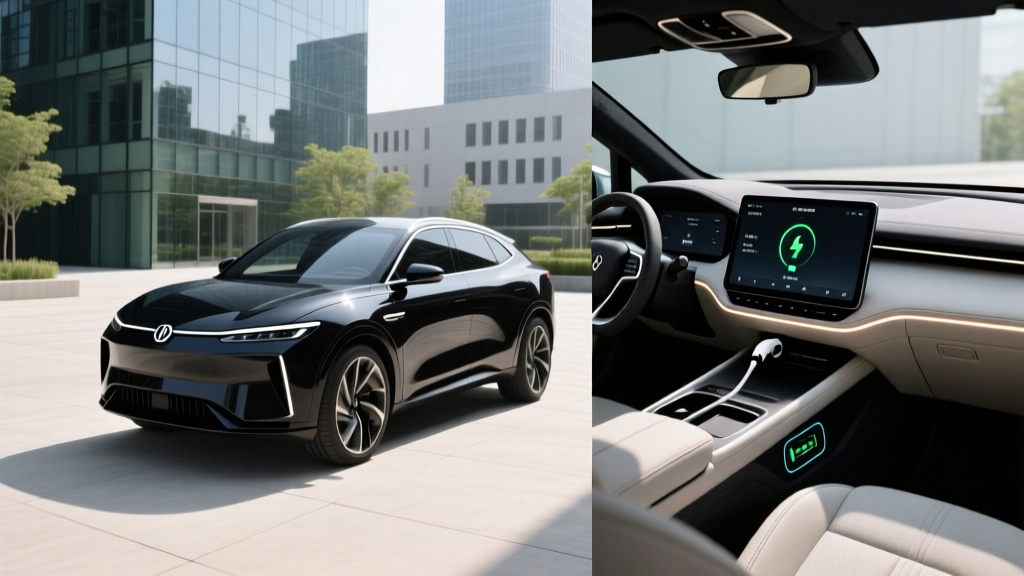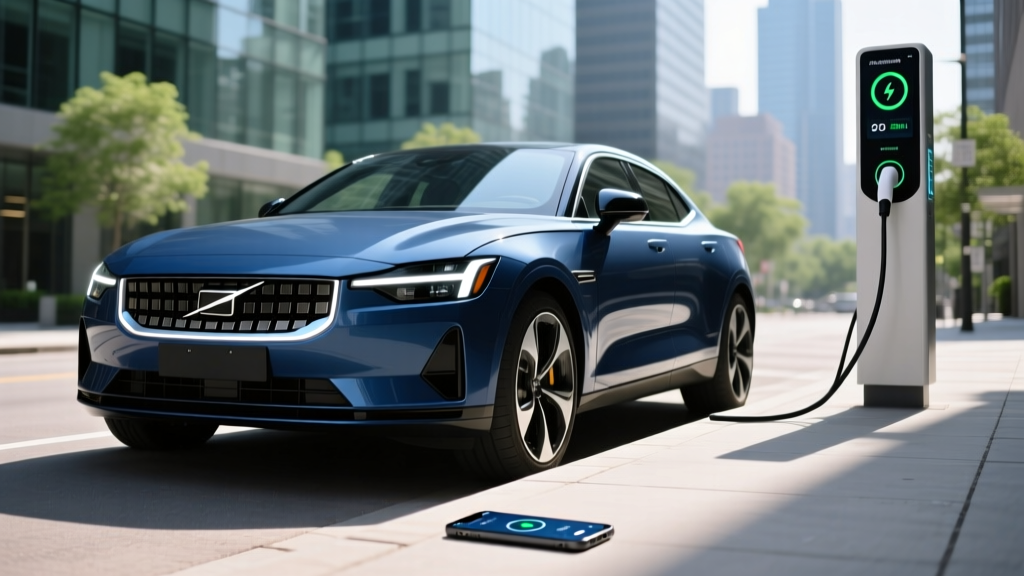
If you have ever searched Polestar Wikipedia trying to piece together what this Swedish-Chinese EV brand actually offers, you are not alone. Polestar occupies an unusual space in the electric-vehicle market: Volvo's performance-oriented, design-first EV spinoff, now fully independent and publicly traded. The 2026 Polestar 2 remains the brand's volume seller — a premium electric fastback that competes directly with the Tesla Model 3, BMW i4, and Hyundai Ioniq 6. This review cuts through the marketing to give you the exact numbers that matter: real-world range, charging speeds, ownership costs, and whether the federal tax credit actually applies.
2026 Polestar 2 at a Glance: Full Spec Sheet
| Specification | Standard Range (RWD) | Long Range Single Motor | Long Range Dual Motor |
|---|---|---|---|
| EPA Range | 276 mi | 320 mi | 276 mi |
| Battery (usable) | 69 kWh (LFP) | 82 kWh (NMC) | 82 kWh (NMC) |
| Drivetrain | RWD | RWD | AWD (dual motor) |
| Horsepower | 299 hp | 299 hp | 421 hp |
| 0-60 mph | 5.9 sec | 5.9 sec | 4.1 sec (4.3 w/ Performance) |
| Max DC Charge Rate | 135 kW | 200 kW | 200 kW |
| 10-80% DC Time | ~26 min | ~27 min | ~27 min |
| Level 2 Home Rate | 11 kW (~37 mi/hr) | 11 kW (~37 mi/hr) | 11 kW (~37 mi/hr) |
| MPGe (combined) | 107 MPGe | 111 MPGe | 98 MPGe |
| Efficiency | 31 kWh/100mi | 30 kWh/100mi | 34 kWh/100mi |
| Base MSRP | $49,900 | $53,400 | $58,900 |
| As-Tested (Pilot + Plus) | ~$54,500 | ~$58,000 | ~$63,500 |
Source: fueleconomy.gov and Polestar USA specifications, 2026 model year.
Real-World Range: What the EPA Sticker Doesn't Tell You
EPA sticker: 320 miles
Real-world highway (70-75 mph, moderate climate): ~265-285 miles
Real-world highway (winter, 30°F or below): ~220-250 miles
Mixed city/highway commute: ~280-305 miles
The 82 kWh NMC pack in the Long Range models delivers strong city efficiency thanks to regenerative braking, but highway speeds above 70 mph and cold temperatures erode range noticeably. The Standard Range LFP model is more resilient to calendar degradation over time but starts with a lower ceiling at 276 miles EPA — expect roughly 230-245 miles on a real highway run.
Range is the single most scrutinized EV metric, and the Polestar 2's 320-mile EPA figure for the Long Range Single Motor is competitive — though it trails the Tesla Model 3 Long Range (341 mi) and the Hyundai Ioniq 6 SE Long Range (361 mi). In practice, the Polestar 2's boxier fastback shape creates more aerodynamic drag than the Ioniq 6's teardrop profile, which explains the efficiency gap at highway speed.
For daily commuting under 60 miles round-trip, even the Standard Range model provides ample buffer. Road trippers should plan charging stops around the 200-220 mile mark on the Long Range to keep state of charge above 15% and avoid the steep charging-curve taper above 80%.
Charging Speed: DC Fast Charge and Home Level 2
| Charging Method | Power (kW) | Speed (miles added/hr) | Notes |
|---|---|---|---|
| Level 1 (120V household) | ~1.4 kW | ~4-5 mi/hr | Emergency/top-up only; ~60+ hours for full charge |
| Level 2 (240V, 48A home charger) | 11 kW | ~37 mi/hr | Full charge in ~7-8 hours; standard overnight solution |
| DC Fast Charge (Std Range) | 135 kW peak | ~170 mi in 26 min (10-80%) | LFP chemistry; tapers significantly above 80% |
| DC Fast Charge (Long Range) | 200 kW peak | ~210 mi in 27 min (10-80%) | NMC chemistry; peak rate sustained to ~40% SoC, then steps down |
The 200 kW peak DC rate on Long Range models is respectable but not class-leading — the Hyundai Ioniq 6 peaks at 240 kW on its 800V architecture and can do 10-80% in roughly 18 minutes. The Polestar 2 runs on a 400V architecture, which limits its ceiling. In real-world fast-charging sessions at Electrify America or Tesla Superchargers (via the included NACS adapter, now standard on 2026 models), expect the Long Range to sustain 150-180 kW between 15-50% SoC before stepping down to ~80 kW through 70%, and ~40 kW from 80-90%.
Preconditioning matters. The Polestar 2 does not offer a manual battery preconditioning button for DC charging navigation the way Tesla does. Instead, when you set a DC charger as your navigation destination, the thermal management system begins warming the battery. In cold weather (below 40°F), arriving at a charger without preconditioning can cut your peak charge rate by 30-40%. Always navigate to your charger rather than just driving there.
For home charging, the 11 kW onboard charger is a strong point. A full Level 2 installation on a 60A circuit (delivering 48A continuous) will replenish the 82 kWh pack in roughly 7.5 hours — easily overnight. Budget $800-$1,500 for a quality Level 2 charger (ChargePoint Home Flex, Emporia Level 2, or Wallbox Pulsar Plus) plus electrician installation. If your home has a 200A electrical panel with available capacity, total installed cost typically runs $1,200-$2,500 including the charger, wiring, and permit. Homes needing a panel upgrade to 200A should add $2,000-$4,000.
Performance and Driving Dynamics
The 2026 Polestar 2's driving character is where the Volvo DNA shows through. This is a tuned, composed machine — not a drag-strip monster. The Long Range Dual Motor with the Performance Pack ($5,000 option) adds Öhlins dampers, Brembo front brakes, and a software bump to 421 hp and 487 lb-ft of torque, dropping the 0-60 time to 4.1 seconds. Without the Performance Pack, the dual-motor still hits 60 in a brisk 4.3 seconds.
The single-motor RWD models (299 hp) prioritize efficiency over acceleration at 5.9 seconds to 60. For most buyers, that is more than adequate — it matches or exceeds the acceleration of a Toyota Camry V6. The RWD layout also contributes to the Long Range Single Motor's superior 320-mile range and 111 MPGe combined rating.
Ride quality is firm but controlled, especially with the standard 19-inch wheels. The 20-inch option looks better but transmits more road imperfections. Steering is precise and weighted appropriately for a grand-touring fastback, though it lacks the communicative feel of a BMW i4. The low center of gravity from the under-floor battery pack keeps body roll minimal through corners.
Interior, Cargo, and Technology
The Polestar 2 interior follows Scandinavian minimalism: clean lines, sustainable materials (the standard upholstery is a vegan textile called WeaveTech), and a portrait-oriented 11.2-inch center touchscreen running Android Automotive OS with built-in Google Maps, Google Assistant, and the Google Play Store. Wireless Apple CarPlay is standard.
Cargo space is one area where the fastback form factor imposes compromises:
- Rear cargo (behind rear seats): 14.4 cu ft
- Rear cargo (seats folded): 40.5 cu ft
- Front trunk (frunk): 1.4 cu ft (enough for charging cables and a small bag)
- Rear legroom: 35.6 inches
- Front headroom: 40.1 inches
Compared to the Tesla Model 3 (23 cu ft rear, 65 cu ft folded), the Polestar 2 gives up significant cargo versatility. The hatchback-style liftgate is more practical than a traditional sedan trunk, but the total volume trails crossover-shaped competitors. If you regularly haul gear, child seats, or large items, this is a genuine limitation.
Driver assistance comes via Polestar's Pilot Pack ($3,200), which adds Pilot Assist — a SAE Level 2 system providing adaptive cruise control with lane centering. It works well on highways but requires hands-on-wheel supervision at all times. This is not an autonomous driving system. The 360-degree camera and Park Assist Pilot are included in the Plus Pack ($4,200).
Pricing, Trims, and Federal Tax Credit Eligibility
| Trim | Base MSRP | Typical As-Tested | §30D Credit Eligible? | Effective Price (w/ max credit) |
|---|---|---|---|---|
| Standard Range RWD | $49,900 | ~$54,500 | Potentially up to $7,500* | ~$42,400 - $47,000 |
| Long Range Single Motor | $53,400 | ~$58,000 | Potentially up to $7,500* | ~$45,900 - $50,500 |
| Long Range Dual Motor | $58,900 | ~$63,500 | Potentially up to $7,500* | ~$51,400 - $56,000 |
The Polestar 2 may qualify for up to $7,500 in federal tax credits, but eligibility depends on several conditions that change frequently:
- MSRP cap: Sedans/fastbacks must be under $55,000 MSRP. The Standard Range ($49,900) and Long Range Single Motor ($53,400) qualify on base price, but options can push the Long Range above the cap.
- Buyer income cap: AGI must not exceed $150,000 (single), $225,000 (head of household), or $300,000 (joint).
- Battery sourcing: The credit splits into two halves — $3,750 for critical minerals and $3,750 for battery component assembly, each with separate North American sourcing thresholds that tighten annually. Check current IRS guidance for the exact Polestar 2 battery sourcing status in 2026.
- Point-of-sale transfer: Since 2024, buyers can transfer the credit to the dealer for an upfront price reduction rather than waiting for a tax refund.
Consult a tax professional before assuming full credit eligibility. Battery sourcing requirements have disqualified several previously eligible models.
The Dual Motor's $58,900 base MSRP exceeds the $55,000 sedan cap, making it ineligible for the §30D credit unless reclassified. This is a significant financial consideration — the dual-motor variant effectively costs $7,500 more than its sticker suggests relative to the single-motor models.
Warranty and Long-Term Ownership
Polestar backs the 2026 Polestar 2 with:
- Limited vehicle warranty: 4 years / 50,000 miles
- Battery and drive unit warranty: 8 years / 100,000 miles (whichever comes first), covering defects and capacity loss below 70% of original capacity
- Corrosion warranty: 12 years, unlimited mileage
- Roadside assistance: 4 years / 50,000 miles
The 70% capacity retention threshold is industry-standard, matching Tesla, BMW, and Hyundai. Real-world degradation data for the 82 kWh NMC pack shows approximately 5-8% loss over the first 100,000 miles based on fleet data from European-market Polestar 2 vehicles (which have been on sale since 2020). The LFP pack in the Standard Range model is expected to degrade more slowly — LFP chemistry typically retains 90%+ capacity over 2,000 full charge cycles — though long-term Polestar-specific data is still accumulating.
Insurance costs tend to run 15-25% higher than equivalent gas-powered sedans. Expect annual premiums of $2,200-$3,400 depending on your state, driving record, and coverage level. Get quotes before purchasing — this is a meaningful line item in your total cost of ownership.
Pros and Cons: The Honest Verdict
- Distinctive Scandinavian design stands out in a sea of Tesla ubiquity
- Android Automotive OS with native Google Maps is excellent for EV route planning
- Firm, composed ride quality with genuine driving engagement
- NACS adapter included standard for Tesla Supercharger access
- 11 kW Level 2 onboard charger enables fast home replenishment
- WeaveTech vegan interior is durable and attractive
- Strong build quality consistent with Volvo manufacturing standards
- Cargo space (14.4 cu ft) trails Model 3 and all EV crossovers
- 400V architecture limits DC charging to 200 kW — competitors charge faster
- Dual Motor exceeds $55K MSRP cap, losing federal tax credit eligibility
- Rear seat space is tight for taller passengers (35.6" legroom)
- Options packs are expensive and not granular (Pilot + Plus are all-or-nothing)
- No battery preconditioning toggle — must use navigation for optimal charging
- Dealer network is sparse compared to Tesla, Ford, or Hyundai
Is the Polestar 2 Worth Buying in 2026?
- You want a premium EV that is not a Tesla and values design and build quality
- Your daily commute is under 80 miles round-trip and you can charge at home
- You primarily drive solo or with one passenger and do not need maximum cargo space
- You value Android Automotive's native Google integration for navigation and apps
- You want NACS Supercharger access without buying a Tesla
- You need family-hauler cargo space (consider the Hyundai Ioniq 5, Kia EV6, or Tesla Model Y)
- Fastest possible DC charging is a priority (Ioniq 6's 800V / 240 kW is faster)
- You want the dual-motor AWD version and need the $7,500 federal credit (it does not qualify)
- You live in an area with limited Polestar service centers
The 2026 Polestar 2 occupies a specific niche: a premium, design-forward electric fastback for buyers who find the Tesla Model 3 too ubiquitous and the BMW i4 too traditional. Its 320-mile EPA range, competent 200 kW charging, and refined driving dynamics make it a strong daily driver. Its weaknesses — limited cargo, moderate charging speed, and tax-credit complications on the dual-motor — are real but manageable if your use case aligns.
Frequently Asked Questions
What is the real-world range of the 2026 Polestar 2?
The Long Range Single Motor is EPA-rated at 320 miles. In real-world mixed driving, expect 280-305 miles. Highway driving at 70-75 mph drops this to roughly 265-285 miles, and cold weather (below 30°F) can reduce range to 220-250 miles. The Standard Range LFP model (276 mi EPA) delivers approximately 230-260 miles in real-world conditions.
How fast does the Polestar 2 charge at home and on the road?
At home on a Level 2 (240V, 48A) charger, the Polestar 2 charges at up to 11 kW, adding roughly 37 miles of range per hour and fully recharging in 7-8 hours. On DC fast chargers, the Long Range models peak at 200 kW and achieve 10-80% in approximately 27 minutes. The Standard Range model peaks at 135 kW with a similar 10-80% time of about 26 minutes due to its smaller battery.
Does the 2026 Polestar 2 qualify for the $7,500 federal EV tax credit?
It depends on the trim and your income. The Standard Range ($49,900) and Long Range Single Motor ($53,400) are under the $55,000 MSRP cap for sedans and may qualify for up to $7,500, subject to buyer income limits and battery sourcing requirements. The Dual Motor ($58,900) exceeds the MSRP cap and does not qualify. Always verify current sourcing rules on irs.gov before purchasing.
Is the Polestar 2 better than the Tesla Model 3?
They serve different priorities. The Model 3 Long Range offers more range (341 mi EPA), faster Supercharger-native charging, more cargo space (23 cu ft), and a broader service network. The Polestar 2 counters with more distinctive design, a higher-quality interior, Android Automotive OS, and a less ubiquitous presence. If you want the most efficient, practical EV sedan, the Model 3 wins on specs. If you want a premium experience that stands apart, the Polestar 2 has the edge.
What is the battery chemistry and how long will it last?
The Standard Range uses a 69 kWh LFP (lithium iron phosphate) battery, which offers slower degradation and can be regularly charged to 100% without harm. The Long Range models use an 82 kWh NMC (nickel manganese cobalt) pack, which has higher energy density but benefits from being kept between 20-80% for daily use. Both are warranted for 8 years / 100,000 miles against capacity loss below 70%. Real-world data suggests 90-95% capacity retention at 100,000 miles for both chemistries under normal use.
Can the Polestar 2 use Tesla Superchargers?
Yes. The 2026 Polestar 2 ships with a NACS (North American Charging Standard) adapter included at no extra cost, enabling access to Tesla's Supercharger network. The car's native CCS1 port remains available for Electrify America, EVgo, and other networks.