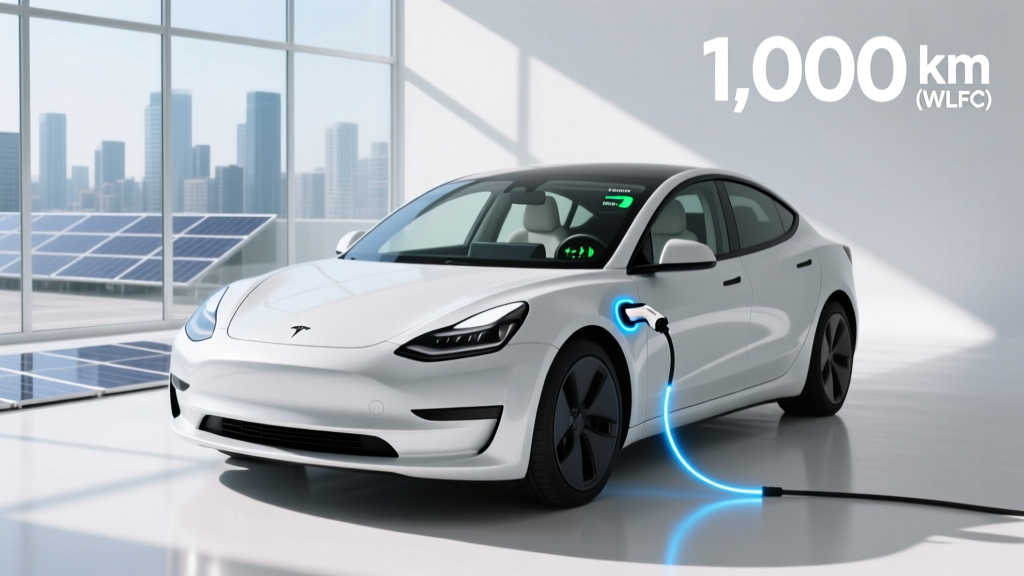
The Quick Answer: Tesla Charge Times at a Glance
If you've ever typed "how long does it take for a tesla to charge" into a search bar and gotten a vague answer, you're not alone. The truth is that Tesla charge time depends on three variables: which model you drive, what battery chemistry it carries, and what charger you're plugged into. A Model 3 RWD on a 250 kW Supercharger adds 175 miles in 15 minutes; that same car on a standard 120V wall outlet gains roughly 3 miles per hour. That's a 58x difference.
Below, we break down exact charge times across the entire 2026 Tesla lineup — Model 3, Model Y, Model S, Model X, and Cybertruck — using manufacturer data, EPA figures, and real-world testing context. We'll also cover the home charging setup that most Tesla owners actually rely on day-to-day, because the vast majority of charging happens in your garage, not at a Supercharger.
| Model | Battery (kWh usable) | Chemistry | Peak DC kW | 10–80% DCFC | Level 2 (mi/hr) | Level 1 (mi/hr) |
|---|---|---|---|---|---|---|
| Model 3 RWD | ~60 | LFP | 170 | ~25 min | ~33 | ~3 |
| Model 3 Long Range AWD | ~79 | NMC | 250 | ~22 min | ~44 | ~4 |
| Model Y Long Range AWD | ~79 | NMC | 250 | ~24 min | ~44 | ~4 |
| Model S Long Range | ~100 | NMC | 250 | ~27 min | ~44 | ~4 |
| Model X Long Range | ~100 | NMC | 250 | ~29 min | ~40 | ~3 |
| Cybertruck AWD | ~123 | NMC | 350* | ~20 min | ~37 | ~3 |
*Cybertruck 350 kW peak requires V4 Supercharger stalls with adequate ambient temps; sustained rate tapers significantly above 60% SoC.
Understanding kW vs. kWh: The Single Biggest Source of Confusion
Before we go deeper, let's clear up the most common mix-up in EV charging. kWh (kilowatt-hours) measures energy — think of it as the size of your battery tank. A Model 3 Long Range has roughly 79 kWh of usable capacity. kW (kilowatts) measures power — the rate at which energy flows into the battery. A 250 kW Supercharger is pushing energy in at 250 kilowatts, but only at peak; that rate tapers as the battery fills.
Here's the practical math: if you sustain an average of 150 kW (realistic for a 10–80% session on a V3 Supercharger), you're adding roughly 2.5 kWh per minute. Over 25 minutes, that's about 62 kWh — enough to take a 79 kWh battery from 10% to nearly 88%. The charge curve matters enormously, and we'll break down why below.
DC Fast Charging: Supercharger Times by Model
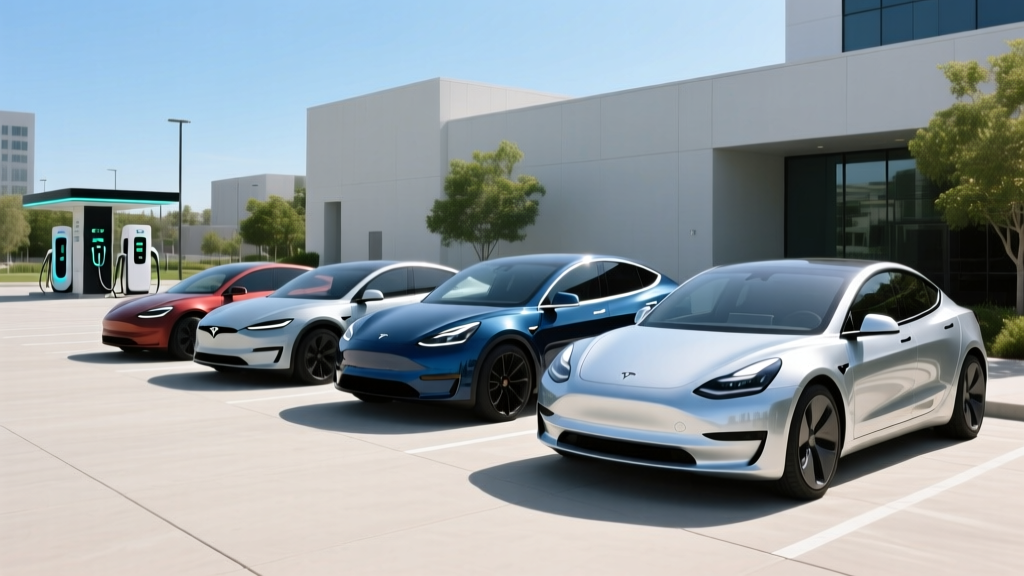
Tesla's Supercharger network remains the gold standard for public EV charging reliability. As of 2026, the network includes V2 (150 kW peak), V3 (250 kW peak), and expanding V4 (up to 350 kW peak for Cybertruck) stalls across North America. Here's what actual charge sessions look like for each model.
| Model | Peak kW | Avg kW (10–80%) | 10–80% Time | Miles Added (approx.) | Best Charger Type |
|---|---|---|---|---|---|
| Model 3 RWD (LFP) | 170 | ~105 | 25 min | ~140 mi | V3 / V4 Supercharger |
| Model 3 LR AWD | 250 | ~150 | 22 min | ~175 mi | V3 / V4 Supercharger |
| Model Y LR AWD | 250 | ~145 | 24 min | ~165 mi | V3 / V4 Supercharger |
| Model S LR | 250 | ~155 | 27 min | ~200 mi | V3 / V4 Supercharger |
| Model X LR | 250 | ~140 | 29 min | ~175 mi | V3 / V4 Supercharger |
| Cybertruck AWD | 350 | ~200 | 20 min | ~130 mi | V4 Supercharger required |
What About Non-Tesla Fast Chargers?
All 2026 Teslas sold in North America come with the NACS (North American Charging Standard) connector natively. Tesla's Supercharger network is now open to non-Tesla EVs at many locations, but for Tesla owners the advantage remains: seamless plug-and-charge authentication, no adapter needed, and the highest reliability rates in the industry. If you use a third-party CCS charger with the Tesla CCS adapter (included with recent vehicles), expect similar peak rates at compatible Electrify America or EVgo 350 kW stalls, though session initiation is less frictionless.
Home Charging: Where 80%+ of Tesla Charging Actually Happens
The honest answer to "how long does it take for a Tesla to charge" is: overnight, in your garage, while you sleep. Most Tesla owners do the vast majority of their charging at home on Level 2 equipment. Here's the breakdown.
| Setup | Voltage/Amps | Power (kW) | Model 3 LR (0–100%) | Cost Range |
|---|---|---|---|---|
| Level 1: Standard 120V outlet | 120V / 12A | ~1.4 | ~56 hours | $0 (included Mobile Connector) |
| Level 2: NEMA 14-50 outlet | 240V / 32A | ~7.7 | ~10 hours | $300–$800 (outlet install) |
| Level 2: Tesla Wall Connector | 240V / 48A | ~11.5 | ~7 hours | $600–$1,500 (unit + install) |
| Level 2: Wall Connector (60A circuit) | 240V / 48A max | ~11.5 | ~7 hours | $800–$2,000 (w/ panel work) |
The Tesla Wall Connector at 48 amps delivers up to 44 miles of range per hour for a Model 3 Long Range and roughly 37 miles per hour for the heavier Model X. For most owners, a 240V/48A setup means a full overnight charge from any realistic daily driving distance. If you drive 60 miles round-trip, you'll replenish that in under 90 minutes on a Wall Connector.
Panel upgrade note: If your home's electrical panel is near capacity (common in older homes with 100A service), adding a 60A circuit for a Wall Connector may require a panel upgrade to 200A, which adds $1,500–$3,000 to your installation cost. Always consult a licensed electrician for a site assessment before purchasing equipment.
Range & Efficiency: EPA Numbers vs. Real-World Expectations
Charging speed only matters in context of how far that charge takes you. Here's the full efficiency picture across the 2026 Tesla lineup, with EPA data sourced from fueleconomy.gov.
| Model | EPA Range | MPGe (combined) | kWh/100mi | 0–60 mph | HP | Drivetrain |
|---|---|---|---|---|---|---|
| Model 3 RWD | 272 mi | 132 | 25 | 5.8s | 271 | RWD |
| Model 3 LR AWD | 341 mi | 134 | 25 | 4.2s | 384 | Dual Motor AWD |
| Model Y LR AWD | 320 mi | 122 | 28 | 4.8s | 384 | Dual Motor AWD |
| Model S LR | 402 mi | 124 | 27 | 3.1s | 670 | Dual Motor AWD |
| Model X LR | 348 mi | 109 | 31 | 3.8s | 670 | Dual Motor AWD |
| Cybertruck AWD | 340 mi | 84 | 40 | 4.1s | 600 | Dual Motor AWD |
• Highway-only at 75 mph: Expect 10–15% less than EPA (e.g., Model 3 LR delivers ~290–305 mi).
• Cold weather (below 32°F): Range drops 15–30% depending on severity, cabin heating load, and whether you precondition. An LFP Model 3 RWD may deliver ~190–210 mi in sub-freezing highway conditions.
• Cargo load + roof rack: The Cybertruck and Model X are particularly sensitive to aerodynamic add-ons; expect 5–10% range reduction with a loaded bed or roof box.
• Preconditioning helps: Setting a scheduled departure time warms the battery, improving both range and regenerative braking in cold weather.
LFP vs. NMC: Why Chemistry Affects Your Charging Routine
The base Model 3 RWD uses an LFP (lithium iron phosphate) battery, while Long Range, Performance, Model S, Model X, and Cybertruck variants use NMC (nickel manganese cobalt) chemistry. This matters for charging habits:
- LFP batteries can (and should) be charged to 100% regularly. Tesla recommends daily 100% charges for LFP vehicles to maintain battery calibration and longevity. They also tolerate DC fast charging to high SoC better.
- NMC batteries last longest when daily charging is limited to 80–90%. Reserve 100% charges for road trips. Fast charging to 100% regularly accelerates degradation in NMC cells.
- Cold-weather charging: LFP batteries are more sensitive to cold during fast charging. Always precondition (navigate to a Supercharger in the Tesla app or nav) to warm the battery before a DC session — this can cut 10–80% charge time by 5–10 minutes in winter.
Pricing, Trims & Federal Tax Credit Eligibility
Here's where the rubber meets the road for buyers. Tesla pricing fluctuates more frequently than legacy automakers, so treat these as current early-2026 MSRP figures. The federal EV tax credit under IRS §30D has strict eligibility rules that vary by model, buyer income, and battery sourcing.
| Model / Trim | Base MSRP | As-Tested (typical) | §30D Credit Eligible? | Est. After Credit |
|---|---|---|---|---|
| Model 3 RWD | $38,990 | $39,990 | Partial — verify sourcing | ~$31,490–$38,990 |
| Model 3 Long Range AWD | $45,490 | $47,490 | Partial — verify sourcing | ~$37,990–$45,490 |
| Model Y Long Range AWD | $44,990 | $46,990 | Yes — $7,500 (if qualified) | ~$37,490 |
| Model S Long Range | $79,990 | $84,990 | Yes — $7,500 (if qualified) | ~$72,490 |
| Model X Long Range | $84,990 | $89,990 | Yes — $7,500 (if qualified) | ~$77,490 |
| Cybertruck AWD | $79,990 | $84,990 | Likely — verify at purchase | ~$72,490 |
- Income caps: Modified AGI ≤ $150,000 (single) / $225,000 (head of household) / $300,000 (joint)
- MSRP caps: ≤ $55,000 for sedans (Model 3) / ≤ $80,000 for SUVs and trucks (Model Y, Model X, Cybertruck)
- Battery sourcing: Critical minerals and battery components must meet phased-in domestic/free-trade sourcing thresholds — these tighten annually and can reduce the credit to $3,750 or $0 depending on the specific build
- Point-of-sale transfer: Qualified buyers can apply the credit as an upfront price reduction at the dealer, rather than waiting for tax filing
- Always verify: Check fueleconomy.gov for the specific VIN's credit status before purchase — eligibility can change with battery supply chain shifts
Tech, Interior, Cargo & Warranty
Beyond charging and range, Tesla's value proposition rests on its software ecosystem, driver assistance, and minimalist interior. Here's what to expect across the lineup.
Standout Tech Features
- 15.4" touchscreen (Model 3/Y) or 17" (Model S/X/Cybertruck): Central infotainment with Netflix, YouTube, gaming, and full vehicle controls — no physical instrument cluster
- Autopilot (standard): SAE Level 2 adaptive cruise + lane centering; requires continuous driver supervision
- Full Self-Driving (Supervised) — $8,000 option: Enhanced Level 2 with city-street navigation, traffic light recognition, and parking features. Still requires active driver oversight at all times
- Over-the-air updates: Regular feature additions and performance improvements delivered wirelessly
- Sentry Mode & Dashcam: 360° camera recording when parked; valuable for urban parking
- Heat pump (all models): Significantly improves cold-weather efficiency vs. resistive heating, reducing winter range loss
Cargo & Passenger Space
| Model | Cargo (rear seats up) | Cargo (seats folded) | Frunk | Rear Legroom |
|---|---|---|---|---|
| Model 3 | 23 cu ft | — | 3.1 cu ft | 35.2 in |
| Model Y | 30 cu ft | 72 cu ft | 4.1 cu ft | 36.5 in |
| Model S | 28 cu ft | 63 cu ft | 5.3 cu ft | 35.4 in |
| Model X | 15 cu ft (behind 3rd row) | 82 cu ft | 6.6 cu ft | 35.5 in |
| Cybertruck | 67 cu ft (bed) | — | 7.1 cu ft | 36.0 in |
Warranty Coverage
- Basic vehicle: 4 years / 50,000 miles
- Battery & drive unit (Model 3 RWD, LFP): 8 years / 100,000 miles, minimum 70% capacity retention
- Battery & drive unit (Long Range, Model S/X, Cybertruck): 8 years / 120,000 miles, minimum 70% capacity retention
- Roadside assistance: 4 years / 50,000 miles
Pros, Cons & Who Should Buy a Tesla in 2026
- Supercharger network: most reliable, fastest-growing DC network in North America
- Class-leading efficiency: Tesla's kWh/mi figures consistently beat competitors
- OTA updates: the car improves over time with new features
- Strong resale value relative to most EVs
- Heat pump standard: real winter range advantage
- Extensive Supercharger coverage makes road trips genuinely practical
- Minimalist interior not for everyone — no physical climate or volume controls
- Panel gaps and build consistency still trail German/Japanese luxury brands
- Model 3 rear visibility is poor; no rear wiper
- FSD (Supervised) remains Level 2 despite the "Full Self-Driving" name
- Insurance costs 15–30% higher than comparable ICE vehicles in most states
- Cybertruck polarizing design limits resale audience
- Service center wait times can stretch weeks in high-demand metro areas
- You want the most reliable public fast-charging network for road trips
- You value efficiency and software-driven features over traditional luxury materials
- You can charge at home (garage or driveway with 240V access)
- You want strong long-term resale and OTA feature updates
- You prefer physical controls and a more traditional cockpit layout
- Build quality and panel fit are top priorities
- You need a hatchback or wagon body style Tesla doesn't offer
- You want a more competitive insurance rate in your state
Frequently Asked Questions
How long does it take to charge a Tesla at a Supercharger?
At a V3 Supercharger (250 kW peak), most Tesla models charge from 10% to 80% in 20–29 minutes depending on battery size and temperature. The Model 3 Long Range achieves this in roughly 22 minutes, adding about 175 miles of range. Cybertruck on a V4 stall can do 10–80% in approximately 20 minutes at its 350 kW peak, though sustained rates taper quickly above 60% SoC.
How long does a Tesla take to charge at home?
On a Tesla Wall Connector (240V, 48A), a full 0–100% charge takes approximately 7 hours for a Model 3 Long Range and about 9 hours for a Model S. On a standard NEMA 14-50 outlet (240V, 32A), add roughly 30–40% more time. On a 120V household outlet, expect 2+ days for a full charge — Level 1 is viable only for low-mileage daily top-ups.
Is it bad to fast charge a Tesla every day?
For NMC batteries (Long Range, Model S/X), frequent DC fast charging accelerates degradation slightly — studies show ~2–4% more capacity loss over 100,000 miles compared to Level 2-only charging. For LFP batteries (Model 3 RWD), the impact is smaller. For most owners, daily Level 2 home charging with occasional Supercharger road trips is the ideal balance.
Does a Tesla charge faster when the battery is warm?
Yes, significantly. Tesla's battery preconditioning — activated when you navigate to a Supercharger — warms the pack to optimal temperature, which can reduce 10–80% charge time by 5–10 minutes in cold weather. Always navigate to the charger rather than just driving there in winter.
How much does it cost to charge a Tesla at home vs. a Supercharger?
At the US average residential electricity rate (~$0.17/kWh in 2026), fully charging a Model 3 Long Range (79 kWh) costs roughly $13.50 at home. Supercharger pricing averages $0.28–$0.36/kWh depending on location and time of day, making the same charge $22–$28. Home charging saves most owners $400–$800 annually compared to exclusive Supercharger use.
Does the Tesla Model 3 RWD qualify for the $7,500 tax credit?
Eligibility depends on battery sourcing requirements that tighten annually under IRS §30D. As of early 2026, some Model 3 builds qualify for the full $7,500 credit, others for $3,750, and some for none — depending on the specific battery cell origin in that production batch. Always verify the exact VIN on fueleconomy.gov before purchasing. Buyer income caps ($150K single / $300K joint) also apply.
What's the real-world range of the Tesla Model Y in winter?
The Model Y Long Range AWD carries an EPA rating of 320 miles. In sustained highway driving at 70 mph with temperatures around 30°F, expect approximately 240–270 miles with cabin heating active. Preconditioning the battery and using seat heaters instead of cabin heat can recover 15–20 miles. In extreme cold (below 10°F), range may drop to 210–230 miles.