If you've been searching for nuro lucid news, you've likely encountered headlines about a collaboration between two of the most talked-about names in electric mobility. Nuro, the autonomous delivery company that secured the first FMCSA exemption for a driverless commercial vehicle, and Lucid Motors, the luxury EV maker known for class-leading efficiency and range, have joined forces on a next-generation autonomous delivery platform. This article breaks down everything confirmed about the Nuro-Lucid vehicle, its technology, its commercial implications, and what it signals for the broader EV and autonomous driving landscape in 2026.
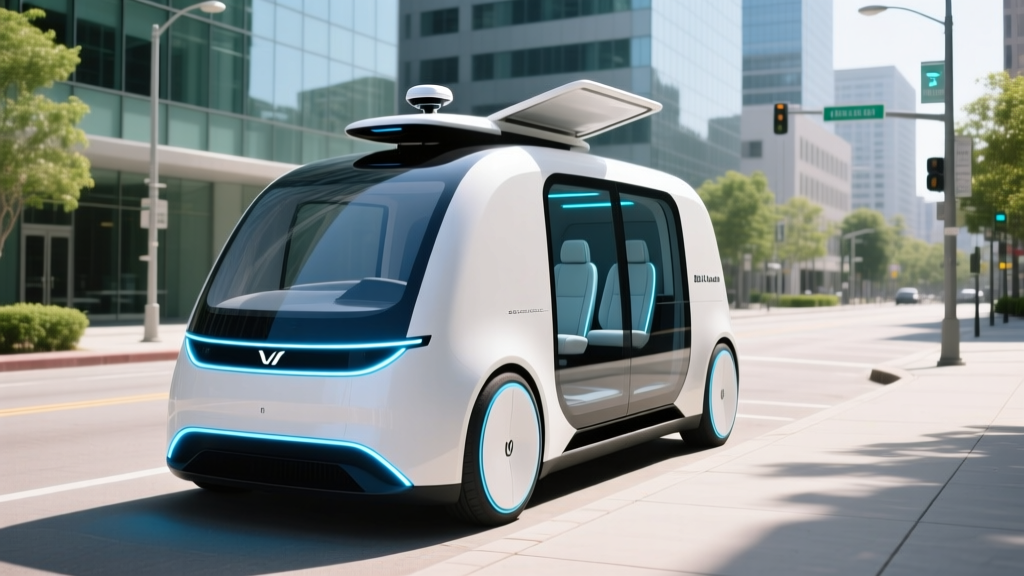
The Nuro-Lucid delivery vehicle is designed for driverless operation in defined geographic zones under specific conditions. Unlike consumer Level 2 systems (Tesla Autopilot, GM Super Cruise), this vehicle has no steering wheel, no pedals, and no expectation of human intervention during its operational design domain (ODD). This is the same SAE Level as Waymo's robotaxi fleet.
The Nuro-Lucid Partnership: What We Know
Nuro has been building autonomous delivery pods since 2018, progressing from its R1 prototype to the R2 and the production-intent R3. The company's core thesis is simple: replace human-driven last-mile delivery with purpose-built, compact, electric autonomous vehicles that carry goods — not passengers — through neighborhoods and commercial corridors.
Lucid Motors enters this partnership as a technology supplier rather than a co-branded automaker. Lucid's miniaturized electric powertrain — the same compact drive unit architecture found in the Lucid Air — offers exceptional power density in a small physical footprint. For a compact delivery pod like Nuro's, where every cubic inch of interior volume matters for cargo capacity, Lucid's motors and inverter packaging are a significant advantage over bulkier OEM drivetrains.
As of early 2026, the Nuro R3 platform with Lucid powertrain components has been in limited commercial pilot programs in select U.S. metro areas. The vehicle is not available for consumer purchase. It is a commercial fleet product sold to logistics partners, retailers, and delivery platforms.
Vehicle Specifications and Powertrain
| Specification | Detail |
|---|---|
| Vehicle Type | Autonomous last-mile delivery pod (cargo only) |
| Powertrain Source | Lucid miniaturized drive unit (single motor, RWD) |
| Battery Capacity | ~35 kWh usable (LFP chemistry) |
| Estimated Range | ~100–120 miles per charge (stop-and-go urban routes) |
| Top Speed | 25 mph (electronically limited, neighborhood ODD) |
| Max DC Fast Charge | ~50 kW (CCS) |
| Level 2 Charging | ~7.2 kW (depot overnight charging) |
| Cargo Volume | ~55 cu ft (climate-controlled compartments) |
| Dimensions (L×W×H) | ~118" × 45" × 68" |
| Curb Weight | ~1,800 lbs (estimated) |
| Autonomy Level | SAE Level 4 (defined ODD) |
Battery Chemistry: Why LFP Makes Sense Here
The Nuro-Lucid delivery pod uses lithium iron phosphate (LFP) battery cells rather than the nickel-manganese-cobalt (NMC) chemistry common in long-range passenger EVs. This is a deliberate engineering choice, not a cost-cutting shortcut.
LFP cells offer several advantages for a commercial delivery fleet:
- Cycle life: LFP batteries routinely deliver 3,000–5,000 full charge cycles before reaching 80% state of health (SoH), compared to ~1,000–2,000 cycles for NMC. A delivery pod charged daily will accumulate cycles far faster than a personal vehicle, making longevity critical.
- Thermal stability: LFP chemistry is inherently more resistant to thermal runaway, a crucial safety factor for a driverless vehicle operating near pedestrians and property with no occupant to evacuate.
- Cost per kWh: LFP cells are roughly 20–30% cheaper than NMC at the cell level, reducing fleet acquisition cost.
- Daily charging to 100%: Unlike NMC batteries, which degrade faster when routinely charged to full, LFP tolerates daily 100% charges — essential for a fleet vehicle that needs maximum range every morning.
The trade-off is lower energy density. LFP cells are heavier and bulkier per kWh than NMC, but for a compact delivery pod with a ~35 kWh pack operating at low speeds, the weight penalty is manageable.
Charging Infrastructure and Fleet Operations
| Charge Level | Power (kW) | Time (10–80%) | Use Case |
|---|---|---|---|
| Level 2 (Depot AC) | 7.2 kW | ~3.5 hours (full) | Overnight fleet depot charging |
| DC Fast Charge | ~50 kW peak | ~30 min (10–80%) | Mid-day opportunity charging |
The 50 kW DC fast-charge rate may seem modest compared to the 250+ kW rates on passenger EVs like the Lucid Air or Hyundai Ioniq 5. But context matters: a 35 kWh battery charging at 50 kW reaches a 1C+ charge rate, which is aggressive for LFP chemistry. The charge curve holds near peak for the bulk of the session before tapering above 80% SoC — standard behavior for any lithium-ion cell managed by a battery management system (BMS) prioritizing longevity.
Fleet operators typically charge overnight at depot Level 2 stations and use DC fast charging only for mid-day top-ups if a vehicle's route extends beyond its single-charge range. This operational model keeps the battery in a healthier SoC window (20–80%) for most of its life, further extending cycle life.
Autonomous Sensor Suite and Safety
The Nuro R3 platform carries a comprehensive sensor array enabling SAE Level 4 driverless operation within its defined ODD (typically suburban and light-urban roads at speeds under 35 mph):
- LiDAR: Multiple solid-state or semi-solid-state LiDAR units providing 360° 3D point-cloud mapping of the vehicle's surroundings, critical for detecting pedestrians, cyclists, and obstacles at intersections.
- Cameras: A surround-view camera array (typically 8–12 cameras) for object classification, traffic signal recognition, and lane detection.
- Radar: Short- and medium-range radar for velocity detection of nearby objects and redundancy in adverse weather (rain, fog) where camera and LiDAR performance degrades.
- Ultrasonic sensors: Close-range proximity detection for loading/unloading operations and low-speed maneuvering.
- HD mapping + GPS/IMU: Pre-mapped route data fused with real-time localization for centimeter-level positioning accuracy.
Nuro's safety record has drawn scrutiny, as has the entire autonomous vehicle industry. According to NHTSA's Standing General Order, all Level 4 operators must report crashes involving their vehicles. Nuro has reported a small number of incidents across its pilot fleet, and the company has iterated on its software stack in response. The FMCSA exemption Nuro received for its R2 (allowing operation without mirrors or a steering wheel) was a regulatory milestone, but each new deployment metro area requires separate approvals and operational permits from local and state authorities.
- This vehicle is not available for consumer purchase. It is a commercial fleet product for logistics companies and retailers.
- Operation is restricted to pre-approved geographic zones (ODDs) — typically specific neighborhoods or commercial districts within pilot metro areas.
- The vehicle does not carry passengers. It is cargo-only, with externally accessible compartments for recipients to retrieve deliveries.
- Adverse weather (heavy snow, ice, flooding) may suspend operations as sensor performance and traction fall below safety thresholds.
What This Means for Consumer EV Buyers
If you're researching the nuro lucid partnership wondering whether you can buy one — you can't. But the partnership has real implications for consumer EV buyers in several ways:
1. Lucid's powertrain technology is being validated in commercial applications. Lucid's miniaturized drive units are among the most power-dense in the industry. Seeing them deployed in an autonomous delivery pod demonstrates their reliability under high-cycle, high-utilization conditions — the most demanding use case an EV powertrain can face. This bodes well for the longevity of Lucid's consumer vehicles (Air, Gravity, and the upcoming midsize platform).
2. Autonomous delivery reduces the cost of goods delivery. As Nuro and competitors (including Waymo-adjacent logistics efforts and Amazon's Zoox) scale driverless delivery, the per-mile cost of last-mile logistics drops. This doesn't change your EV purchase decision directly, but it signals the broader economic shift toward autonomous electric fleets — which will influence charging infrastructure buildout, urban planning, and eventually consumer robotaxi availability.
3. Battery chemistry trends filter down. The LFP choice in the Nuro pod mirrors a broader industry shift. Tesla, Ford, and others have adopted LFP for standard-range consumer models. The cycle-life and safety data generated by commercial fleets like Nuro's will accelerate LFP adoption in passenger vehicles, particularly for buyers who prioritize longevity over maximum range.
Competitive Landscape: Nuro vs. Other Autonomous Delivery Players
- Purpose-built vehicle (not a retrofitted passenger car)
- FMCSA exemption precedent for driverless commercial operation
- Lucid's industry-leading drive unit efficiency and packaging
- LFP battery optimized for daily full-cycle fleet use
- Compact footprint for neighborhood navigation
- Not available for consumer purchase — fleet only
- Limited to pre-approved ODDs in select metros
- Weather-dependent operational windows
- Modest 100–120 mi range requires route planning
- Regulatory approval pace is slow and jurisdiction-by-jurisdiction
- Public trust in driverless vehicles remains fragile after industry incidents
Nuro competes with several other autonomous delivery and logistics platforms: Serve Robotics (backed by Uber and NVIDIA), Udelv, and various in-house programs from Amazon and Walmart. The Lucid powertrain partnership gives Nuro a differentiation in powertrain efficiency and packaging that competitors using off-the-shelf EV platforms struggle to match.
Pricing, Availability, and the Tax Credit Question
Because the Nuro R3 is a commercial fleet vehicle sold B2B, it does not carry a consumer MSRP and is not eligible for the IRS §30D federal EV tax credit that applies to new passenger vehicles purchased by individuals. The §30D credit has specific requirements including MSRP caps ($55,000 for sedans, $80,000 for SUVs/trucks), buyer income limits, and battery critical-mineral sourcing rules — none of which apply to commercial fleet procurement.
However, fleet operators may benefit from the Commercial Clean Vehicle Credit (§45W), which provides up to $7,500 for light commercial EVs (under 14,000 lbs GVWR) or up to $40,000 for heavier vehicles. This credit has different eligibility requirements than §30D and is claimed by the business entity purchasing the vehicle. Consult a tax professional and the IRS clean vehicle credit guidelines for current-year specifics.
Nuro does not publicly disclose per-unit pricing for its R3 platform. Industry estimates place the cost in the range of $50,000–$80,000 per vehicle for fleet buyers, depending on sensor configuration and volume commitments. This is broadly comparable to the cost of a human driver's annual salary, meaning fleet ROI calculations typically model payback within 1–2 years of continuous operation.
Frequently Asked Questions
Can I buy a Nuro-Lucid delivery vehicle for personal use?
No. The Nuro R3 with Lucid powertrain is a commercial fleet product designed for autonomous last-mile delivery. It has no steering wheel, no pedals, and no passenger seating. It is sold to logistics companies, retailers, and delivery platforms — not individual consumers.
What is the real-world range of the Nuro R3?
The vehicle achieves approximately 100–120 miles per charge on typical urban delivery routes at speeds under 25 mph. This range benefits from frequent regenerative braking in stop-and-go traffic. In cold weather (below 32°F), expect a 15–25% reduction due to LFP battery characteristics, compressing range to roughly 80–90 miles. The vehicle does not operate on highways, so highway-range comparisons to passenger EVs are not applicable.
How fast does the Nuro R3 charge?
On a DC fast charger, the vehicle peaks at approximately 50 kW, reaching 10–80% in roughly 30 minutes. On Level 2 depot charging at 7.2 kW, a full charge takes about 3.5 hours — typically done overnight between operational shifts.
Does the Nuro R3 qualify for any EV tax credits?
Not the consumer §30D credit. However, commercial fleet buyers may qualify for the §45W Commercial Clean Vehicle Credit (up to $7,500 for qualifying light commercial EVs). Eligibility depends on the business's tax situation and the vehicle's specifications. Consult the IRS and a tax professional for current-year rules.
Is the Nuro-Lucid vehicle actually self-driving?
Yes — within its defined operational design domain (ODD). This is SAE Level 4 automation, meaning the vehicle handles all driving tasks without human intervention in pre-approved geographic areas under specified conditions. This is fundamentally different from consumer Level 2 driver-assist systems (like Tesla Autopilot or GM Super Cruise), which require continuous driver supervision. Outside its ODD — for example, on highways or in heavy snow — the vehicle does not operate.
How does the Lucid partnership benefit Nuro?
Lucid's miniaturized electric drive units are among the smallest and most power-dense in the industry. For a compact delivery pod where interior cargo volume is paramount, Lucid's powertrain packaging allows more usable space without sacrificing propulsion capability. Lucid's efficiency engineering also contributes to maximizing range from a relatively small (~35 kWh) battery pack.
Where is the Nuro R3 currently operating?
As of early 2026, Nuro has conducted pilot programs in select U.S. metro areas including parts of Texas, California, and Arizona. Each deployment requires local regulatory approval. Expansion to new cities is ongoing but proceeds at the pace of regulatory clearance, not technology readiness.
Sources: NHTSA Automated Vehicles Safety, IRS Clean Vehicle Credits, Nuro official site, Lucid Motors. Specifications are based on publicly available information and industry reporting as of early 2026. Some figures are estimates based on pilot-program data and may differ from final production specifications.