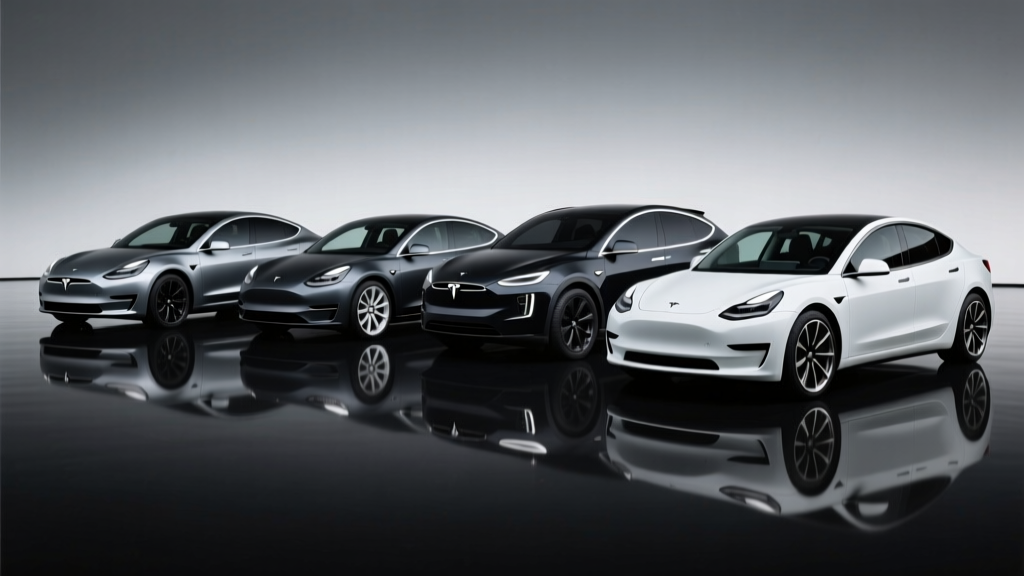
If you've ever searched "how long Tesla charge" and gotten a mess of conflicting forum answers, you're not alone. Charging time depends on which Tesla Model 3 trim you own, what charger you're plugged into, and even the ambient temperature. In this 2026 profile, we run the exact numbers for the current-generation Tesla Model 3 lineup — from the base Rear-Wheel Drive to the Long Range AWD and Performance trims — so you know precisely how many minutes you'll spend at a Supercharger and how many miles you'll actually get.
2026 Tesla Model 3: Quick Specs at a Glance
| Spec | RWD (Base) | Long Range AWD | Performance AWD |
|---|---|---|---|
| EPA Range | 272 mi | 341 mi | 315 mi |
| Battery (usable) | ~60 kWh (LFP) | ~79 kWh (NMC) | ~79 kWh (NMC) |
| Peak DC Fast Charge | 170 kW | 250 kW | 250 kW |
| 10–80% DC Time | ~25 min | ~28 min | ~28 min |
| Level 2 Home Charge | 11.5 kW (~37 mi/hr) | 11.5 kW (~44 mi/hr) | 11.5 kW (~44 mi/hr) |
| 0–60 mph | 5.8 sec | 4.2 sec | 2.9 sec |
| Horsepower | 271 hp | 346 hp | 510 hp |
| Drivetrain | RWD (single motor) | AWD (dual motor) | AWD (dual motor) |
| Efficiency (MPGe) | 132 MPGe combined | 131 MPGe combined | 121 MPGe combined |
| Base MSRP | $38,990 | $45,740 | $52,990 |
Sources: EPA / fueleconomy.gov, Tesla.com. Prices exclude destination fee.
Real-World Range: What the EPA Number Doesn't Tell You
EPA Sticker: 272 mi (RWD) / 341 mi (Long Range) / 315 mi (Performance)
Expect on the highway (70+ mph): ~230–250 mi (RWD) / ~290–310 mi (Long Range) / ~265–285 mi (Performance)
Cold weather (below 32°F): Subtract 20–30% from EPA figures. An LFP-equipped RWD Model 3 can drop to ~190–200 mi of usable range in sub-freezing conditions without preconditioning.
The EPA combined cycle blends city and highway driving at moderate temperatures. In practice, highway speeds above 70 mph push energy consumption to roughly 28–32 kWh/100 mi on the Long Range AWD, cutting range noticeably. The LFP battery in the RWD trim is more resilient to daily 100% charging (Tesla recommends you charge LFP to 100% at least once per week), but LFP cells lose more capacity in extreme cold than NMC chemistry. If you live in a northern climate and lack a garage, the Long Range AWD's NMC pack with its more robust thermal management is the safer bet for winter reliability.
How Long Does a Tesla Take to Charge? (Every Method, Timed)
This is the question most shoppers actually want answered. Charging speed isn't a single number — it varies by charger type, battery state of charge (SoC), and whether you preconditioned the battery. Here's what to expect with the 2026 Model 3 lineup.
| Charging Method | Power / Connector | Miles Added per Hour | 10–80% Time (Long Range) |
|---|---|---|---|
| Level 1 (standard 120V outlet) | ~1.4 kW / NACS (built-in) | ~3–5 mi/hr | ~40+ hours (impractical) |
| Level 2 (home wall connector, 48A) | 11.5 kW / NACS | ~44 mi/hr (LR) / ~37 mi/hr (RWD) | ~6.5 hours (full 0–100%) |
| Level 2 (public, 7.2 kW typical) | 7.2 kW / NACS or J1772 w/ adapter | ~28 mi/hr | ~9 hours |
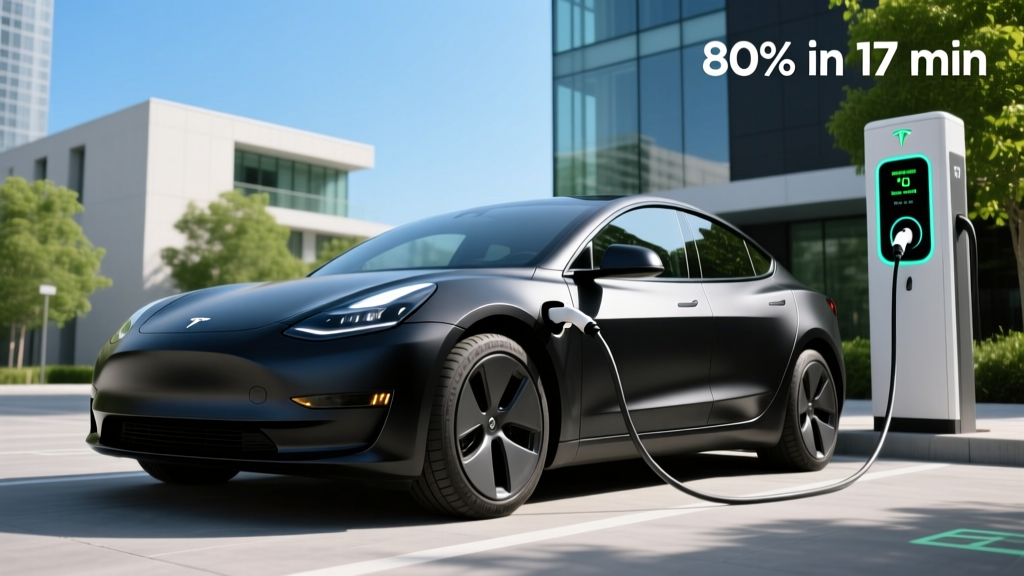
| Tesla Supercharger V3 | 250 kW peak / NACS | ~170 mi in 15 min (peak) | ~28 min |
| Tesla Supercharger V4 | Up to 350 kW / NACS | Higher sustained rate | ~22–25 min (est.) |
| Non-Tesla DCFC (CCS w/ adapter) | 50–150 kW typical | Varies | 35–55 min |
Understanding the Charge Curve
The "28-minute" 10–80% figure is real but comes with nuance. A Model 3 Long Range on a V3 Supercharger will pull its peak 250 kW only between roughly 10–30% SoC. From 30–60%, it tapers to around 150–180 kW. Above 80%, it drops sharply to ~50 kW and below 25 kW past 90%. This is why Tesla's navigation system routes you to arrive at Superchargers at low SoC — the bottom half of the battery charges dramatically faster than the top half.
For the RWD trim with its smaller ~60 kWh LFP pack, peak charge rate is capped at 170 kW. The smaller battery means fewer total kWh to push, so the 10–80% time (~25 min) is competitive despite the lower peak rate.
Pro tip: Always enable battery preconditioning by navigating to a Supercharger in the car's built-in nav, even if you're using a third-party map. The Model 3 will warm the battery to optimal charging temperature, shaving 5–10 minutes off your session in cold weather.
Pricing, Trims, and Federal Tax Credit Eligibility
| Trim | Base MSRP | As-Tested (typical options) | §30D Credit Eligibility | Effective Price (with max credit) |
|---|---|---|---|---|
| RWD | $38,990 | $39,490 (w/ destination) | ✅ Eligible (up to $3,750–$7,500 depending on sourcing) | ~$31,990–$35,740 |
| Long Range AWD | $45,740 | $47,740 (w/ destination + paint) | ✅ Eligible (up to $3,750–$7,500 depending on sourcing) | ~$38,240–$44,240 |
| Performance AWD | $52,990 | $55,490 (w/ destination + paint) | ✅ Eligible (up to $3,750–$7,500 depending on sourcing) | ~$45,490–$51,740 |
- MSRP cap: Sedans must be ≤ $55,000 MSRP. All Model 3 trims qualify.
- Buyer income cap: AGI ≤ $150,000 (single) / $225,000 (head of household) / $300,000 (joint).
- Battery sourcing: Up to $3,750 for critical minerals + $3,750 for battery component requirements. Full $7,500 requires meeting both thresholds. Sourcing rules tighten annually — verify current-year compliance on IRS.gov.
- Point-of-sale transfer: You can transfer the credit to the dealer at purchase for an immediate price reduction, rather than waiting for tax filing.
Consult a tax professional for your specific eligibility. Rules are subject to change.
Interior, Cargo, and Daily Livability
The refreshed Model 3 (codenamed "Highland") that continues into the 2026 model year brought meaningful improvements in ride quality, cabin noise isolation, and material quality over the pre-2024 versions. The minimalist interior remains polarizing — there are no physical stalks for turn signals (they're steering-wheel buttons now) and no instrument cluster.
Cargo volume: 23 cu ft trunk + 3.1 cu ft frunk = 26.1 cu ft total. That's competitive with compact sedans but trails hatchbacks and crossovers. The 60/40 split-folding rear seat opens up longer-item capacity.
Passenger space: Front legroom is generous at 42.2 inches. Rear legroom measures 35.3 inches — adequate for adults on shorter trips but snug for anyone over 6 feet on long rides. Headroom is good front and rear thanks to the glass roof, though it does contribute to cabin heat in summer.
Infotainment: A 15.4-inch center touchscreen handles everything — climate, media, navigation, vehicle settings. The system is fast, responsive, and includes built-in streaming (Netflix, YouTube, Spotify) while parked. There is no Apple CarPlay or Android Auto, which remains a dealbreaker for some buyers.
Driver Assistance and Safety Tech
Tesla's Autopilot and Full Self-Driving (Supervised) are Level 2 driver-assistance systems, not self-driving. The driver must remain fully attentive, keep hands on the wheel, and be prepared to take over at any moment. No Tesla vehicle currently operates at Level 3 or above on public roads.
Standard Autopilot includes Traffic-Aware Cruise Control and Autosteer (lane centering) on marked roads. It's competent for highway commuting but requires active supervision.
Full Self-Driving (Supervised) — a $8,000 add-on or $99/month subscription — adds automatic lane changes, navigation-based on/off-ramp handling, traffic-light and stop-sign recognition, and a parking-lot "summon" feature. As of early 2026, FSD (Supervised) has improved significantly in urban environments but still makes occasional errors at complex intersections and construction zones. Treat it as an advanced cruise control, not a chauffeur.
Safety ratings are strong: the Model 3 earned a 5-star overall rating from NHTSA and a TOP SAFETY PICK+ designation from IIHS.
Battery Warranty, Degradation, and Long-Term Ownership
Tesla provides the following warranty coverage for the 2026 Model 3:
- Basic vehicle: 4 years / 50,000 miles
- Battery & drive unit (RWD): 8 years / 100,000 miles (whichever comes first), with minimum 70% capacity retention
- Battery & drive unit (Long Range / Performance): 8 years / 120,000 miles, with minimum 70% capacity retention
Real-world degradation data from high-mileage Tesla fleets suggests the NMC packs in Long Range and Performance models typically lose 8–12% capacity over the first 100,000 miles, with most of that loss occurring in the first 20,000 miles before the curve flattens. The LFP pack in the RWD model shows similar or slightly better longevity, partly because owners can (and should) charge it to 100% regularly, which keeps the battery management system calibrated.
Battery replacement out of warranty is expensive — expect $12,000–$16,000 for a Model 3 pack replacement at a Tesla service center. However, catastrophic battery failure within the warranty period is rare.
Who Should Buy the 2026 Tesla Model 3?
- You have reliable home Level 2 charging and a mostly urban/suburban commute under 40 miles round-trip
- You want the lowest entry price and don't need AWD
- You're comfortable charging to 100% daily (LFP best practice)
- You regularly take road trips of 200+ miles and want Supercharger headroom
- You live in a cold climate and need AWD plus NMC's better cold-weather performance
- You want the best range-per-dollar in the Tesla lineup
- Acceleration thrills matter to you (2.9-second 0–60 is supercar territory)
- You want track mode and adaptive damping
- You're willing to sacrifice ~26 miles of range for the performance hardware
- You need Apple CarPlay / Android Auto
- You want a hatchback or SUV cargo area (consider the Model Y instead)
- You lack access to any form of home or workplace charging
Pros and Cons
- Best-in-class Supercharger network reliability and coverage
- Excellent efficiency (kWh/100 mi) across all trims
- 250 kW peak DC fast charging on Long Range/Performance
- Strong safety ratings (NHTSA 5-star, IIHS TSP+)
- Over-the-air updates continuously add features
- Low running costs vs. gas competitors (~$0.04–0.06/mi on home charging)
- No Apple CarPlay or Android Auto
- Rear seat is tight for tall adults
- Turn-signal buttons on steering wheel take adaptation
- FSD (Supervised) remains Level 2 — expensive for what it is
- LFP RWD model has noticeably less cold-weather range
- Insurance premiums tend to run 15–25% higher than gas equivalents
Frequently Asked Questions
How long does it take to charge a Tesla Model 3 at home?
With a Tesla Wall Connector on a 60-amp circuit (48A continuous), a Model 3 Long Range charges at 11.5 kW, adding roughly 44 miles of range per hour. A full 0–100% charge takes about 6.5 hours. Most owners plug in nightly and wake up to a full battery, so the total charge time rarely matters in daily use.
How long does a Tesla Supercharger take for a Model 3?
On a V3 Supercharger (250 kW), the Model 3 Long Range and Performance charge from 10–80% in approximately 28 minutes. The RWD model peaks at 170 kW and takes about 25 minutes for the same window. Charging past 80% slows significantly — plan to unplug at 80% on road trips to save time.
Does the Tesla Model 3 qualify for the $7,500 federal tax credit?
All 2026 Model 3 trims fall under the $55,000 MSRP cap for sedans under IRS §30D. However, the full $7,500 credit requires meeting both critical-mineral and battery-component sourcing thresholds, which change annually. Some Model 3 configurations may qualify for $3,750 (half credit) depending on the current sourcing rules. Income caps also apply. Check the latest requirements on IRS.gov and confirm with your tax advisor.
Is the Tesla Model 3 worth it vs. the Hyundai Ioniq 6 or BMW i4?
The Model 3 Long Range offers the best combination of range (341 mi EPA), charging speed (250 kW peak), and Supercharger network access. The Hyundai Ioniq 6 SE Long Range is close on range (~361 mi EPA) and charges faster at 350 kW-capable DCFC stations, but lacks Supercharger access (though Hyundai is gaining NACS compatibility). The BMW i4 eDrive40 offers a more traditional interior with physical controls and Apple CarPlay but trails on range (~307 mi) and costs more. If charging infrastructure reliability is your top priority, the Tesla ecosystem remains the strongest in North America.
What is the real-world range of the Tesla Model 3 in winter?
In sustained below-freezing temperatures, expect a 20–30% reduction from EPA figures. A Long Range AWD rated at 341 miles EPA may deliver 240–270 miles in cold highway driving. Preconditioning the battery while plugged in and using seat heaters instead of cabin heat can recover 10–15 miles of that loss.