The Short Answer on Electric McLaren
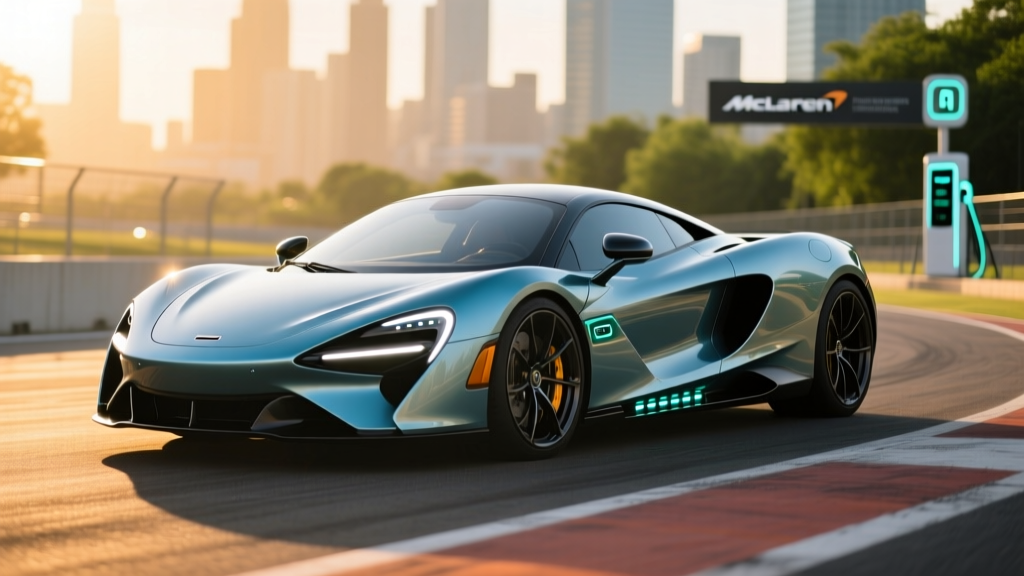
As of early 2026, McLaren has not released a fully electric (BEV) production car. The closest electrified model available is the McLaren Artura, a plug-in hybrid supercar (PHEV) with an EPA-estimated 11 miles of electric-only range and a combined 671 horsepower. McLaren has confirmed it is developing its first battery-electric vehicle, but no production model has been officially unveiled or priced. If you're searching for an "electric McLaren" today, your only real option is the Artura PHEV — or waiting for the anticipated BEV, which industry analysts project could arrive around 2028–2029.
McLaren's Electrification Roadmap: Where Things Stand in 2026
McLaren Automotive has been more cautious about full electrification than rivals like Porsche (Taycan), Lotus (Evija), and Rimac (Nevera). The Woking-based automaker's strategy has centered on hybridization as a bridge technology, leveraging its Formula 1 and motorsport hybrid expertise.
The McLaren Artura, introduced for the 2023 model year and updated through 2026, remains the brand's sole electrified offering. It pairs a twin-turbocharged 3.0-liter V6 with an axial-flux electric motor integrated into the transmission housing. The result is a PHEV supercar that can silently exit your neighborhood on electric power before the V6 roars to life on open roads.
McLaren CEO Michael Leiters has acknowledged that a fully electric McLaren is in development, with the company investing in a new lightweight battery architecture. However, McLaren has been candid about the engineering challenge: supercars demand extreme power-to-weight ratios, and current battery energy density makes a sub-3,300-lb electric supercar extremely difficult. For context, the Rimac Nevera — the benchmark electric hypercar — weighs 4,748 lbs despite its 1,914 hp output.
The Artura PHEV: McLaren's Current Electrified Option
If you want McLaren electrification today, the Artura is your car. Here are the exact figures that matter:
| Specification | 2026 McLaren Artura |
|---|---|
| Powertrain | 3.0L Twin-Turbo V6 + Axial-Flux Electric Motor (PHEV) |
| Combined Output | 671 hp / 531 lb-ft torque |
| Electric Motor Output | 94 hp / 166 lb-ft |
| Battery Capacity | 7.4 kWh usable (lithium-ion, NMC chemistry) |
| EPA Electric-Only Range | 11 miles |
| EPA Combined MPGe | 46 MPGe (electric + gas) |
| EPA Combined MPG (gas only) | 18 MPG |
| 0–60 mph | 3.0 seconds |
| Top Speed | 205 mph |
| Charging (Level 2, 7.4 kW) | ~2.5 hours (0–100%) |
| Curb Weight | ~3,303 lbs (dry weight lighter) |
| Base MSRP | ~$249,750 (Coupe) |
| Federal Tax Credit (§30D) | Not eligible (MSRP and income caps exceeded; PHEV battery sourcing) |
| Powertrain Warranty | 3 years / unlimited miles |
Real-World Electric Range Reality
The Artura's EPA-rated 11 miles of electric-only range assumes moderate temperatures and gentle driving. In practice, expect 8–10 miles of silent EV driving in warm conditions and as few as 6–7 miles in cold weather (below 40°F), where battery efficiency drops 20–30%. This is enough for a quiet neighborhood departure but not meaningful commuting range. The Artura is a hybrid supercar, not an EV commuter.
Electric McLaren vs. Gas and Hybrid Supercar Rivals
Understanding where an electric McLaren would fit requires comparing the Artura against both traditional gas supercars and existing electric performance cars:
| Model | Powertrain | 0–60 mph | Combined Output | EPA Range / MPG | Base MSRP |
|---|---|---|---|---|---|
| McLaren Artura | PHEV (V6 + EV) | 3.0 sec | 671 hp | 11 mi EV / 18 MPG | $249,750 |
| Ferrari 296 GTB | PHEV (V6 + EV) | 2.9 sec | 819 hp | 15 mi EV / 16 MPG | $338,000 |
| Porsche Taycan Turbo GT | BEV | 2.1 sec | 1,092 hp | 269 mi (EPA) | $230,000 |
| Lamborghini Revuelto | PHEV (V12 + EV) | 2.5 sec | 1,001 hp | 6 mi EV / 14 MPG | $608,358 |
| Lotus Evija | BEV | <3.0 sec | 2,011 hp | ~250 mi (est.) | $2,300,000 |
The data reveals a clear split: electric performance cars (Taycan, Evija) dominate on raw acceleration and zero tailpipe emissions but carry substantial weight penalties. Hybrid supercars (Artura, 296 GTB, Revuelto) preserve the emotional engine note and lighter chassis dynamics that supercar buyers crave, while offering modest electric-only functionality.
A fully electric McLaren would need to resolve this tension — delivering sub-3,300-lb dynamics with 600+ hp from batteries alone. Current battery energy density (~250–300 Wh/kg at the cell level) makes this a formidable engineering challenge, which explains McLaren's patience.
Ownership Costs: What an Artura Actually Costs to Run
Supercar ownership economics are never cheap, but the Artura's hybrid system does introduce some cost variables compared to a pure gas McLaren like the outgoing 720S. Here's a realistic 3-year ownership projection:
| Cost Category | McLaren Artura (PHEV) | McLaren 750S (Gas Only) |
|---|---|---|
| Purchase Price (base) | $249,750 | $324,750 |
| Federal EV Tax Credit | $0 (not eligible) | $0 |
| Insurance (annual avg.) | $7,200–$9,500/yr | $6,800–$9,000/yr |
| Fuel/Energy (3 yrs, 10k mi/yr) | $5,400–$7,200 | $7,800–$9,600 |
| Maintenance (3 yrs) | $3,500–$5,000 | $4,000–$6,000 |
| Depreciation (3-yr est.) | ~35–45% | ~30–40% |
| 3-Year Total Running Cost | ~$26,000–$36,000 | ~$26,000–$37,000 |
Key takeaway: The Artura's fuel savings over a gas-only McLaren are modest — roughly $2,000–$3,000 over three years — because most miles will still be driven on gasoline. The 11-mile EV range only offsets short trips. The real value of the hybrid system is performance augmentation (instant torque fill) and quiet neighborhood driving, not economics.
For insurance, supercar premiums are driven primarily by vehicle value, repair costs, and driver profile rather than powertrain type. Expect quotes from specialty insurers like Hagerty or Chubb rather than standard carriers. Source: IIHS does not rate low-volume supercars, so crash-test data is limited.
Charging the Artura: What PHEV Owners Need to Know
The Artura's 7.4 kWh battery is small by EV standards, which simplifies charging considerably:
| Charging Level | Power | Time (0–100%) | Practicality |
|---|---|---|---|
| Level 1 (120V household) | ~1.4 kW | ~5–6 hours | Overnight top-up; viable for low daily use |
| Level 2 (240V, home wallbox) | 7.4 kW (max) | ~2.5 hours | Ideal; full charge during a workday or dinner |
| DC Fast Charging | Not supported | N/A | No DC fast-charge capability on the Artura |
Home charging setup: A Level 2 home charger (such as a ChargePoint Home Flex or Emporia Level 2) on a 240V/40A circuit will fully replenish the Artura's battery in about 2.5 hours. Installation costs for a Level 2 home station typically range from $800–$2,500 depending on panel proximity and whether a panel upgrade (to 200A service) is needed. For a supercar owner, this is a minor expense.
Because the Artura lacks DC fast charging, it is not designed for electric road-tripping. The hybrid system is optimized for short EV bursts and performance enhancement, not long-distance electric travel.
Common Misconceptions About Electric McLarens
| Myth | Fact |
|---|---|
| "McLaren already sells an electric supercar" | False. McLaren's only electrified car is the Artura PHEV. No BEV is currently in production. |
| "The Artura qualifies for the $7,500 federal tax credit" | False. The Artura exceeds the §30D MSRP cap ($80,000 for sedans; supercars are not classified favorably), buyer income limits often apply, and battery sourcing requirements are unlikely met. See IRS §30D guidelines. |
| "An electric McLaren would be heavier and slower" | Not necessarily on acceleration. Electric motors deliver instant torque, enabling faster 0–60 times. The challenge is weight and sustained high-speed performance — battery cooling under track use remains an engineering hurdle. |
| "I can charge the Artura at a Tesla Supercharger" | Partially true but irrelevant. The Artura uses a J1772 connector for Level 2 AC charging, and adapters exist for NACS stations. However, the Artura does not support DC fast charging, so Supercharger stalls (which are DC) cannot charge it. |
| "The hybrid battery will need expensive replacement soon" | McLaren's hybrid battery warranty covers 6 years/45,000 miles for capacity retention. The 7.4 kWh pack is relatively small and less stressed than a full BEV battery, making premature degradation unlikely under normal use. |
What a First-Time EV (or PHEV) Supercar Buyer Should Know
If you're considering the Artura as your first electrified performance car, these practical considerations matter more than spec-sheet numbers:
Home charging is nearly essential. Without a Level 2 home charger, you'll rely on the car's regenerative braking and gas engine to maintain battery charge, which defeats the purpose of the PHEV system. Budget $1,000–$2,500 for professional Level 2 installation.
The electric range is a feature, not a lifestyle. Eleven miles of EV driving means you'll use gasoline for 95%+ of your miles. Think of the electric motor as a performance and refinement tool, not a fuel-cost strategy.
Cold weather affects the battery. If you live in a climate with winters below 40°F, expect the already-modest electric range to shrink by 20–30%. Battery preconditioning is limited on the Artura compared to full BEVs with active thermal management.
Maintenance is different, not necessarily cheaper. The Artura still has a combustion engine requiring oil changes, spark plugs, and exhaust service. The hybrid system adds complexity (power electronics, electric motor, high-voltage battery) but reduces brake wear thanks to regenerative braking.
Resale value is uncertain. PHEV supercars occupy a niche market. Early adopters may face steeper depreciation than established gas-only McLarens until the collector market establishes pricing patterns for hybrid exotics.
Should You Buy the Artura Now or Wait for an Electric McLaren?
Buy the Artura now if:
- You want a McLaren with electrified performance today and don't need long EV range
- You value the V6 engine note and lightweight chassis dynamics (~3,300 lbs) over zero-emission driving
- You plan to keep the car 3–5 years and accept supercar depreciation
- You have home Level 2 charging and want silent EV neighborhood departures
Wait for a full electric McLaren if:
- Zero tailpipe emissions are a priority for your purchase
- You want 200+ miles of electric range and DC fast charging for road trips
- You're willing to wait until 2028–2029 (at earliest) for a production BEV McLaren
- You want maximum instant torque and are comfortable with a likely 4,000+ lb curb weight
- You're considering alternatives like the Porsche Taycan Turbo GT (269 mi EPA, 0–60 in 2.1 sec, $230,000) or Lotus Eletre (BEV SUV) in the meantime
Looking Ahead: What We Know About McLaren's Electric Future
McLaren has confirmed that its first battery-electric vehicle is in active development, built on a new lightweight architecture. Based on industry reporting and McLaren's public statements, here is what is known and what remains speculative:
- Timeline: A production electric McLaren is not expected before 2028. The company has prioritized getting its hybrid technology right before committing to a BEV.
- Platform: McLaren is developing a new carbon-fiber-intensive chassis designed to offset battery weight — a critical differentiator vs. rivals using aluminum or steel platforms.
- Battery chemistry: No official announcement, but high-energy-density NMC or potentially next-generation silicon-anode cells are likely candidates to maximize energy per kilogram.
- Performance target: Expect 700+ hp, sub-3-second 0–60, and active aerodynamics. The question is whether McLaren can keep weight under 3,800 lbs — a feat no current BEV supercar has achieved.
- Price: Given the Artura's $249,750 starting point, an electric McLaren will likely start above $275,000 and could exceed $350,000 depending on battery costs and positioning.
For buyers who want electric performance now, the EPA's fueleconomy.gov database lists the Porsche Taycan Turbo GT at 269 miles EPA range and 92 MPGe combined — a fully electric performance benchmark that McLaren's future BEV will need to match or exceed in dynamics while competing on weight.
Frequently Asked Questions
Does McLaren currently make a fully electric car?
No. As of 2026, McLaren's only electrified production vehicle is the Artura, a plug-in hybrid (PHEV) supercar with 11 miles of electric-only range. A fully electric McLaren BEV is in development but has not been unveiled or priced.
How much does the McLaren Artura cost?
The 2026 McLaren Artura Coupe starts at approximately $249,750 MSRP. The Artura Spider (convertible) starts around $273,000. Options, bespoke configurations through McLaren Special Operations (MSO), and destination charges can push well-equipped examples above $300,000.
Does the Artura qualify for any EV tax credits?
No. The Artura does not qualify for the federal §30D clean vehicle credit. It exceeds MSRP caps, and its battery sourcing likely does not meet critical-mineral and component requirements. Always verify current rules at IRS.gov and consult a tax professional.
Can I charge the Artura at public charging stations?
You can charge at public Level 2 (AC) stations using its J1772 connector. However, the Artura does not support DC fast charging, so CCS or NACS DC fast-charger stalls will not work. For practical use, home Level 2 charging is the primary refueling method for the battery.
When will McLaren release a fully electric supercar?
McLaren has confirmed BEV development but has not announced a specific launch date. Industry analysts project a reveal no earlier than 2027, with customer deliveries likely in 2028–2029. All specifications remain preliminary and unconfirmed.
How does the Artura compare to the Ferrari 296 GTB?
Both are twin-turbo V6 PHEV supercars. The Ferrari 296 GTB produces 819 hp (vs. the Artura's 671 hp), offers 15 miles of EV range (vs. 11), and starts at $338,000 (vs. $249,750). The Artura is lighter and less expensive; the 296 GTB is more powerful and carries the Ferrari premium.
Is the Artura's hybrid battery expensive to replace?
McLaren covers the high-voltage battery with a 6-year/45,000-mile warranty. Replacement cost for a 7.4 kWh supercar battery is not publicly listed but is estimated at $8,000–$15,000 based on comparable PHEV systems. Given the small capacity and moderate cycling, premature failure is unlikely.