Why Tesla Curb Weight Matters More Than You Think
When shoppers compare electric vehicles, curb weight rarely tops the checklist — but it should. A vehicle's mass directly influences real-world range, tire consumption, braking distances, and even how quickly a battery degrades over time. Tesla's lineup spans from the relatively svelte Model 3 Rear-Wheel Drive to the 6,800-pound Cybertruck, and that ~2,800-pound spread produces dramatically different ownership experiences.
This guide breaks down the curb weight of every current-production Tesla, explains the physics behind why mass matters for EVs specifically, and shows you how to translate those numbers into practical buying decisions around range, efficiency, and long-term cost.
2025–2026 Tesla Curb Weight: Full Model-by-Model Breakdown
Below is the complete curb weight table for Tesla's current U.S. lineup. Figures reflect the latest model-year specifications published by Tesla and the EPA's fueleconomy.gov database. Curb weight includes all standard equipment, fluids, and a full battery but no passengers or cargo.
| Model / Trim | Curb Weight (lbs) | Battery (kWh usable) | Chemistry | Drivetrain | EPA Range (mi) |
|---|---|---|---|---|---|
| Model 3 RWD | 3,862 | ~57.5 | LFP | RWD | 272 |
| Model 3 Long Range AWD | 4,034 | ~78 | NMC | Dual-Motor AWD | 341 |
| Model 3 Performance | 4,065 | ~78 | NMC | Dual-Motor AWD | 315 |
| Model Y RWD | 4,129 | ~60 | LFP | RWD | 302 |
| Model Y Long Range AWD | 4,363 | ~78 | NMC | Dual-Motor AWD | 320 |
| Model Y Performance | 4,398 | ~78 | NMC | Dual-Motor AWD | 292 |
| Model S Long Range | 4,561 | ~95 | NMC | Dual-Motor AWD | 402 |
| Model S Plaid | 4,766 | ~95 | NMC | Tri-Motor AWD | 396 |
| Model X Long Range | 5,185 | ~95 | NMC | Dual-Motor AWD | 335 |
| Model X Plaid | 5,390 | ~95 | NMC | Tri-Motor AWD | 326 |
| Cybertruck AWD | 6,603 | ~123 | NMC | Dual-Motor AWD | 340 |
| Cybertruck Cyberbeast | 6,843 | ~123 | NMC | Tri-Motor AWD | 320 |
The Physics: How Curb Weight Drains EV Range
Every pound of vehicle mass requires energy to accelerate and to carry uphill. In stop-and-go city driving, regenerative braking recovers some of that kinetic energy — which is why EVs often achieve better range in the city than on the highway, the opposite of gas cars. But on sustained highway climbs or aggressive driving routes, mass becomes a pure penalty with no regen recovery.
Here's the practical math: increasing curb weight by roughly 500 lbs typically costs an EV about 3–5% of its range, all else equal. That's why the Model 3 Long Range (4,034 lbs, 341 mi EPA) outdistances the Model Y Long Range (4,363 lbs, 320 mi EPA) despite sharing essentially the same ~78 kWh NMC pack and dual-motor powertrain. The 330-pound weight penalty plus the Y's taller, less aerodynamic profile accounts for the 21-mile gap.
The effect compounds with the Cybertruck. At 6,603–6,843 lbs with a frontal area pushing 40+ square feet, the truck needs its massive ~123 kWh pack just to reach the mid-300s. Compare that to the Model S Long Range at 4,561 lbs achieving 402 miles on a ~95 kWh pack — a stunning efficiency gap driven primarily by mass and aerodynamics.
Efficiency Deep Dive: kWh/100mi Across the Tesla Lineup
Miles per gallon equivalent (MPGe) and kWh per 100 miles are the best metrics for comparing EVs of different weights. Lower kWh/100mi means the vehicle converts battery energy into distance more efficiently — and lighter Teslas consistently win this contest.
| Model | MPGe (combined) | kWh / 100 mi | Curb Weight (lbs) |
|---|---|---|---|
| Model 3 RWD | 132 | 25 | 3,862 |
| Model 3 LR AWD | 131 | 26 | 4,034 |
| Model Y RWD | 127 | 27 | 4,129 |
| Model Y LR AWD | 122 | 28 | 4,363 |
| Model S LR | 120 | 28 | 4,561 |
| Model X LR | 102 | 33 | 5,185 |
| Cybertruck AWD | 79 | 43 | 6,603 |
The efficiency spread is dramatic. The Model 3 RWD sips 25 kWh per 100 miles — roughly $3.75 at a national average residential rate of $0.15/kWh. The Cybertruck burns 43 kWh for the same distance, costing $6.45. Over 15,000 annual miles, that's a ~$405 electricity cost gap. Factor in the Cybertruck's steeper tire wear (more on that below), and the total-cost delta widens further.
Charging Speed: Does Weight Affect How Fast You Charge?
Curb weight doesn't directly change a battery's charge acceptance rate — that's a function of pack chemistry, thermal management, and the battery management system (BMS). However, heavier Teslas tend to carry larger packs, and larger packs can accept higher absolute kW for longer before the charge curve tapers. Here's the full charging picture across the current lineup:
| Model | Peak DC kW | 10–80% Time | Level 2 Rate (kW) | Mi/hr at L2 |
|---|---|---|---|---|
| Model 3 RWD (LFP) | 170 | ~25 min | 11.5 | ~40 |
| Model 3 LR / Perf | 250 | ~18 min | 11.5 | ~44 |
| Model Y RWD (LFP) | 170 | ~25 min | 11.5 | ~38 |
| Model Y LR / Perf | 250 | ~20 min | 11.5 | ~42 |
| Model S / X LR | 250 | ~22 min | 11.5 | ~40 |
| Model S / X Plaid | 250 | ~22 min | 11.5 | ~38 |
| Cybertruck AWD | 350 (800V) | ~15 min | 11.5 | ~34 |
| Cybertruck Beast | 350 (800V) | ~15 min | 11.5 | ~32 |
The Cybertruck's 800-volt architecture allows peak rates up to 350 kW at V4 Superchargers, giving it the fastest 10–80% time despite carrying the largest pack. But note the miles-per-hour column: because the truck is so inefficient (43 kWh/100mi), each hour of Level 2 charging adds only ~34 miles of range versus ~44 for a Model 3 LR. The heavier the vehicle, the more "patience per mile" you need at any charger.
Charge curve reality: Peak kW is not sustained kW. A Model 3 LR may hit 250 kW briefly around 15–20% SoC, then taper to ~150 kW by 50% and ~60 kW by 75%. The published 10–80% times reflect the integrated area under that curve, not the peak number multiplied by time. Always precondition your battery via the car's navigation-routed Supercharger preconditioning to hit these figures.
Tire Wear, Brakes, and the Hidden Costs of Heavy EVs
Mass is the single biggest predictor of tire consumption. A 5,200-lb Model X will wear through a set of tires in roughly 25,000–30,000 miles under mixed driving; a 6,800-lb Cybertruck may need replacements at 20,000–25,000 miles. The Model 3 RWD at 3,862 lbs, by contrast, often sees 40,000+ miles on its OEM rubber. At $250–$400 per tire for EV-rated compounds, that's a meaningful ownership cost over five years.
Brake wear is actually lower on heavier Teslas because regenerative braking handles most deceleration, sparing the friction pads. But suspension components — control arm bushings, ball joints, struts — endure higher loads on heavier vehicles and may require earlier service. Budget accordingly if you're choosing a Model X or Cybertruck.
Pricing, Tax Credits, and the Weight-Value Equation
Tesla's pricing shifts periodically, so the figures below reflect the latest published MSRP as of early 2026. Federal tax credit eligibility under IRS §30D depends on MSRP caps ($55,000 for sedans, $80,000 for SUVs/trucks), buyer income limits ($150K single / $300K joint), and battery critical-mineral and component sourcing requirements that tighten annually. Always verify current eligibility on IRS.gov and confirm with a tax professional before purchase.
| Model / Trim | Base MSRP | Vehicle Class | MSRP Cap | Est. §30D Credit* |
|---|---|---|---|---|
| Model 3 RWD | $38,990 | Sedan | $55,000 | Up to $7,500 |
| Model 3 LR AWD | $45,490 | Sedan | $55,000 | Up to $7,500 |
| Model 3 Performance | $52,990 | Sedan | $55,000 | Up to $7,500 |
| Model Y RWD | $44,990 | SUV | $80,000 | Up to $7,500 |
| Model Y LR AWD | $48,490 | SUV | $80,000 | Up to $7,500 |
| Model Y Performance | $52,490 | SUV | $80,000 | Up to $7,500 |
| Model S LR | $79,990 | Sedan | $55,000 | Not eligible |
| Model S Plaid | $94,990 | Sedan | $55,000 | Not eligible |
| Model X LR | $79,990 | SUV | $80,000 | Borderline** |
| Model X Plaid | $94,990 | SUV | $80,000 | Not eligible |
| Cybertruck AWD | $79,990 | Truck | $80,000 | Borderline** |
| Cybertruck Beast | $99,990 | Truck | $80,000 | Not eligible |
*Credit amount depends on battery sourcing compliance, which tightens each calendar year. Confirm on IRS.gov before purchasing.
**Base MSRP sits at or near the cap; options can push the vehicle over the limit. Verify the exact build price.
The point-of-sale transfer option allows eligible buyers to apply the credit as an immediate price reduction at delivery rather than waiting for a tax refund. This effectively drops the Model 3 RWD to roughly $31,490 — a compelling entry point for the lightest, most efficient Tesla in the lineup.
Performance, Cargo, and Warranty at a Glance
| Model | 0–60 mph | HP | Cargo (cu ft) | Rear Legroom (in) | Battery Warranty |
|---|---|---|---|---|---|
| Model 3 RWD | 5.8s | 271 | 23 | 35.2 | 8 yr / 100K mi |
| Model 3 LR AWD | 4.2s | 346 | 23 | 35.2 | 8 yr / 120K mi |
| Model 3 Performance | 2.9s | 510 | 23 | 35.2 | 8 yr / 120K mi |
| Model Y RWD | 6.2s | 295 | 34 / 76*** | 37.0 | 8 yr / 100K mi |
| Model Y LR AWD | 4.8s | 384 | 34 / 76*** | 37.0 | 8 yr / 120K mi |
| Model Y Performance | 3.5s | 455 | 34 / 76*** | 37.0 | 8 yr / 120K mi |
| Model S LR | 3.1s | 670 | 28 / 79*** | 35.4 | 8 yr / 150K mi |
| Model X LR | 3.8s | 670 | 42 / 88*** | 34.9 | 8 yr / 150K mi |
| Cybertruck AWD | 3.9s | 600 | 67 bed + 7 frunk | 38.0 | 8 yr / 120K mi |
*** Cargo figure shown behind 2nd row / with rear seats folded.
All Tesla battery warranties guarantee a minimum 70% capacity retention over the warranty period. The basic vehicle limited warranty covers 4 years / 50,000 miles. Tesla's powertrain warranty effectively doubles as the battery warranty since the drive units are covered under the same term.
Standout Tech and Notable Drawbacks
Tech highlights: Tesla's infotainment remains the segment benchmark — 15.4-inch center display (Model 3/Y), 17-inch (Model S/X/Cybertruck), native Supercharger routing with battery preconditioning, over-the-air updates, and the expanding FSD (Supervised) neural-net stack. Note that FSD is an SAE Level 2 driver-assist system — the driver must remain fully engaged at all times. It is not self-driving.
Drawbacks worth flagging: The absence of Apple CarPlay and Android Auto remains a dealbreaker for some buyers. The Model 3 Highland refresh eliminated turn-signal stalks and ultrasonic sensors, relying on camera-based proximity estimation that some owners find imprecise. The Cybertruck's stainless-steel body panels resist dents but are difficult and expensive to repair if creased. Model X falcon-wing doors add drama but introduce complexity and occasional seal issues.
Who Should Buy Which Tesla? A Weight-Informed Decision Framework
Choose Model 3 RWD if: You want the lightest, most efficient Tesla (3,862 lbs, 25 kWh/100mi), commute under 50 miles round-trip, and want the lowest total cost of ownership. The LFP battery can be charged to 100% daily without degradation concerns.
Choose Model 3 LR AWD if: You need 340+ miles of EPA range for frequent road trips and want dual-motor traction in snow, accepting a 172-lb weight penalty over the RWD.
Choose Model Y LR AWD if: You need crossover cargo space (76 cu ft seats-folded), have kids or gear to haul, and can tolerate a ~20-mile range hit versus the Model 3 LR due to the Y's additional 329 lbs and taller profile.
Choose Model S LR if: You want 400+ miles of range, premium interior materials, and don't mind the 4,561-lb mass or the $79,990 price that excludes it from the federal tax credit.
Choose Cybertruck AWD if: You need a truck bed, 11,000-lb towing capacity, and off-road ground clearance — and accept that 6,603 lbs of stainless steel will cost you at the charger, at the tire shop, and at the DMV (registration fees often scale with weight).
Tesla Curb Weight vs. Key Competitors
Context matters. Here's how the Tesla lineup stacks up against rival EVs in the same segments:
| Vehicle | Curb Weight (lbs) | EPA Range | kWh/100mi |
|---|---|---|---|
| Tesla Model 3 LR AWD | 4,034 | 341 mi | 26 |
| BMW i4 eDrive40 | 4,682 | 307 mi | 29 |
| Hyundai Ioniq 6 SEL AWD | 4,541 | 316 mi | 28 |
| Tesla Model Y LR AWD | 4,363 | 320 mi | 28 |
| Ford Mustang Mach-E Premium AWD | 4,620 | 290 mi | 32 |
| Hyundai Ioniq 5 Limited AWD | 4,663 | 290 mi | 31 |
| Tesla Model S LR | 4,561 | 402 mi | 28 |
| Lucid Air Pure | 4,686 | 419 mi | 25 |
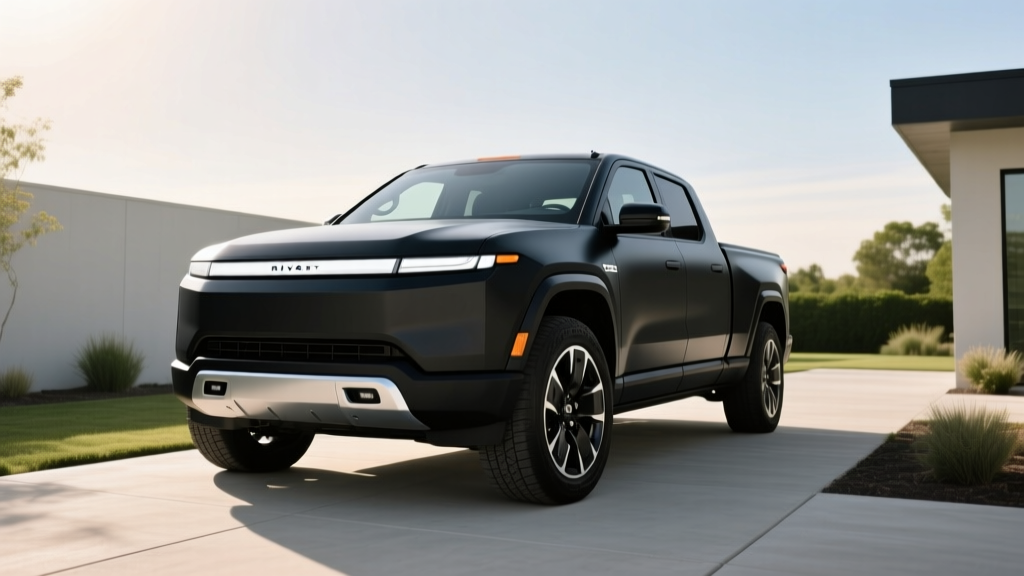
| Rivian R1T Dual-Motor | 7,148 | 352 mi | 44 |
Tesla consistently runs lighter than its direct competitors — often by 200–500 lbs — thanks to structural battery pack integration and gigacasting that reduces part count. That mass advantage translates directly into the efficiency numbers above. The Lucid Air is the notable exception, matching or beating Tesla's efficiency through its own advanced powertrain and aero work.
Pros
- Class-leading curb weight — 200–500 lbs lighter than most rivals
- Best-in-segment efficiency (kWh/100mi) across Model 3 and Model Y
- Supercharger network with preconditioned fast-charging
- LFP option on RWD trims allows daily 100% charging without degradation worry
- OTA updates continuously improve powertrain efficiency over time
Cons
- Heavier trims (Model X, Cybertruck) suffer steep efficiency penalties
- No Apple CarPlay / Android Auto
- Model S and X exceed §30D MSRP caps — no federal tax credit
- Cybertruck's 6,800-lb mass drives high tire and suspension wear costs
- Camera-only proximity sensing (no ultrasonics) frustrates some drivers
Frequently Asked Questions
What is the curb weight of the most popular Tesla, the Model Y?
The 2025–2026 Tesla Model Y ranges from 4,129 lbs (RWD with LFP battery) to 4,398 lbs (Performance AWD with NMC pack). The volume-selling Long Range AWD sits at 4,363 lbs — roughly 330 lbs heavier than the equivalent Model 3 LR, which explains the Model Y's ~21-mile range deficit despite sharing the same battery.
Does a heavier Tesla cost more to charge?
Yes, indirectly. A heavier Tesla consumes more kWh per mile, so every mile driven costs more in electricity. The Cybertruck at 43 kWh/100mi costs roughly 72% more per mile to fuel than the Model 3 RWD at 25 kWh/100mi. At $0.15/kWh residential rates, that's $6.45 vs. $3.75 per 100 miles.
How does Tesla curb weight affect tire lifespan?
Heavier EVs wear tires faster. Expect 25,000–35,000 miles from a set on a Model 3 or Model Y, 20,000–28,000 on a Model X, and as few as 18,000–25,000 on a Cybertruck. Always choose EV-rated tires (marked HL for High Load) designed for the instant torque and elevated mass of electric vehicles.
Which Tesla qualifies for the $7,500 federal tax credit?
Under current IRS §30D rules, the Model 3 (all trims) and Model Y (all trims) are eligible, provided the buyer meets income caps ($150K single / $300K joint) and the vehicle's battery sourcing complies with annual critical-mineral and component thresholds. The Model S, Model X, and Cybertruck exceed the MSRP cap for their respective vehicle classes and do not qualify. Always verify current-year rules on IRS.gov.
Is the Cybertruck too heavy for daily driving?
At 6,603–6,843 lbs, the Cybertruck is among the heaviest consumer vehicles on the road. Daily commuting is perfectly feasible — the powertrain handles the mass effortlessly — but you'll pay for it at the charger (43 kWh/100mi), at the tire shop (frequent replacements), and potentially in higher registration fees in weight-based fee states. If your daily needs don't require a truck bed, a Model Y LR delivers more range, lower cost, and easier parking.
Does Tesla's lighter weight mean it's less safe in a crash?
No. In vehicle-to-vehicle collisions, greater mass is advantageous — but Tesla's structural battery pack creates an extremely rigid safety cell with a very low center of gravity, reducing rollover risk. Both the Model 3 and Model Y have earned IIHS Top Safety Pick+ ratings and 5-star NHTSA overall scores. The physics of crash safety favor good structural design over mass alone.