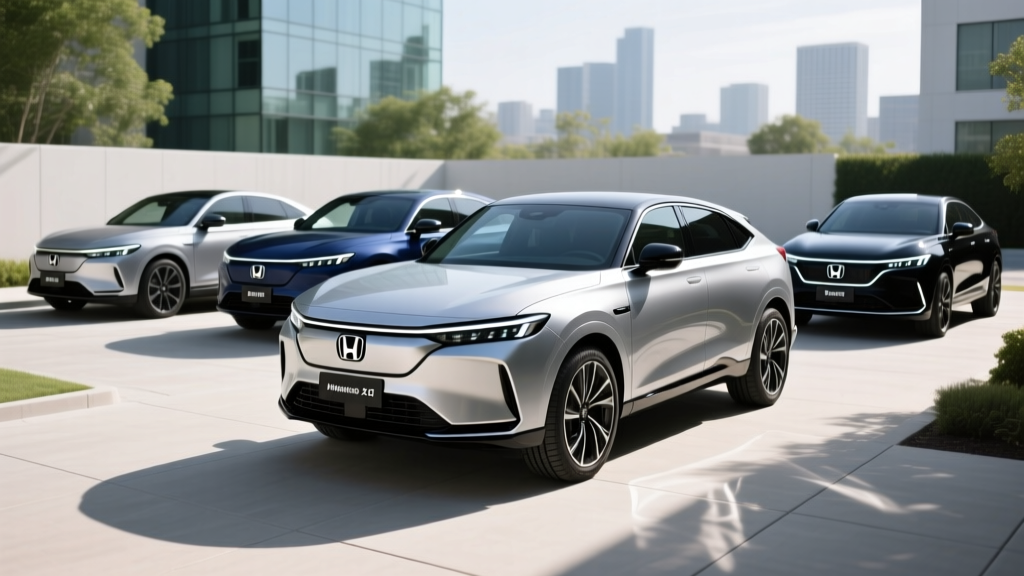
The Honda Prologue is a midsize electric SUV built on General Motors' Ultium platform, blending Honda's interior ergonomics with GM's battery and powertrain architecture. For 2025, Honda offers the Prologue in three distinct trim levels—EX, Touring, and Elite—each with meaningful differences in drivetrain, range, and feature content. This review breaks down every Honda Prologue trim level with exact specs, real-world range expectations, charging performance, and tax-credit-adjusted pricing so you can pick the right one.
2025 Honda Prologue Spec Overview
| Spec | EX (FWD) | EX (AWD) | Touring (AWD) | Elite (AWD) |
|---|---|---|---|---|
| EPA Range | 296 mi | 281 mi | 281 mi | 273 mi |
| Battery (usable) | ~85 kWh, NMC (Ultium) | |||
| Horsepower | 212 hp | 288 hp | 288 hp | 288 hp |
| 0–60 mph | ~7.5 sec | ~5.9 sec | ~5.9 sec | ~5.9 sec |
| Max DC Fast Charge | 150 kW (peak) | |||
| 10–80% DC Time | ~34 minutes | |||
| Level 2 Home Rate | 11.5 kW (~29 mi/hr) | |||
| MPGe (combined) | 107 MPGe | 100 MPGe | 100 MPGe | 96 MPGe |
| Base MSRP | $47,400 | $49,400 | $53,400 | $57,900 |
| Destination | +$1,495 | |||
| Battery Warranty | 8 yr / 100,000 mi | |||
Source: fueleconomy.gov and Honda Newsroom. EPA estimates; your results will vary.
Real-World Range: What to Actually Expect
The FWD EX posts a 296-mile EPA estimate, but real-world highway driving at 70–75 mph typically yields 245–265 miles before requiring a charge. AWD trims with the 281-mile sticker should plan for 230–250 miles on the open road. In cold weather (below 30°F), expect a further 15–25% reduction, dropping AWD range to roughly 185–210 miles on the highway. The Prologue's Ultium pack uses NMC (nickel manganese cobalt) chemistry, which is energy-dense but more cold-sensitive than LFP. Honda's heat pump, standard on all trims, helps mitigate winter losses compared to resistive heating, but physics still wins in deep cold.
If your commute is under 60 miles round-trip with home charging, range is a non-issue on any trim. For road trips exceeding 250 miles, you'll want to plan one DC fast-charge stop regardless of trim—the 150 kW peak charge rate means you're adding roughly 190 miles in 34 minutes under ideal conditions, though real-world charging curves taper significantly above 80% state of charge.
Charging Performance: DC Fast, Level 2, and the Curve
The Prologue's 150 kW peak DC fast-charge rate is its most debated spec. In a segment where the Hyundai Ioniq 5 pulls 350 kW on 800V architecture and the Tesla Model Y sustains 250 kW, the Prologue's Ultium platform tops out lower. Here's what that means in practice:
| Charging Method | Power / Rate | Time or Miles Added |
|---|---|---|
| Level 1 (120V household) | ~1.4 kW | ~3.5 mi/hr |
| Level 2 (240V, 48A home) | 11.5 kW | ~29 mi/hr; full charge in ~9.5 hr |
| DC Fast (150 kW peak) | 150 kW → tapers to ~90 kW avg | 10–80% in ~34 min |
| DC Fast (50 kW station) | 50 kW | 10–80% in ~85 min |
The 10–80% time of roughly 34 minutes assumes optimal battery preconditioning (the Prologue begins this when you navigate to a DC charger in the infotainment system) and a station capable of delivering the full 150 kW. In practice, sustained charge rates average closer to 90–100 kW across the 10–80% window because the curve tapers sharply past 60% SoC. For frequent road trippers, this is the Prologue's most significant competitive limitation—expect 40–45 minutes per stop in real-world conditions when accounting for plug-in, authentication, and taper.
At home, the 11.5 kW Level 2 rate is competitive and will replenish the battery overnight on any trim. Honda provides a complimentary Level 2 home-charging solution for qualifying buyers (installation details vary; budget $500–$1,800 for a licensed electrician depending on panel capacity and run length).
Trim-by-Trim Breakdown: EX, Touring, and Elite
Prologue EX — The Value Pick
Starting at $47,400 (FWD) or $49,400 (AWD), the EX is the volume trim and the most range-efficient option. Standard equipment includes an 11.3-inch touchscreen with Google Built-in, wireless Apple CarPlay and Android Auto, heated front seats, a power liftgate, Honda Sensing ADAS suite (adaptive cruise, lane-keeping, collision mitigation), and 19-inch alloy wheels. The FWD EX's 296-mile EPA range is the highest in the lineup, and its 212 hp single-motor setup is adequate for commuting and suburban driving. AWD bumps output to 288 hp with dual motors and drops range to 281 miles.
Prologue Touring — The Feature Upgrade
At $53,400, the Touring trim adds AWD standard (288 hp, 281-mile range), a 12-speaker Bose audio system, a panoramic moonroof, ventilated front seats, heated rear seats, a heated steering wheel, wireless phone charging, and a surround-view camera. You also get 21-inch wheels, which slightly reduce efficiency compared to the EX's 19-inchers. The Touring occupies a middle ground: more premium feel without the Elite's top-dollar pricing. For most families, this is the comfort sweet spot.
Prologue Elite — The Loaded Flagship
The Elite tops the range at $57,900 with AWD, 288 hp, and 273 miles of EPA range (the lowest in the lineup, owing to 21-inch wheels and added weight from premium features). It adds a head-up display, a digital rearview mirror, perforated leather upholstery, and a hands-free power liftgate. The Elite competes directly with well-equipped Hyundai Ioniq 5 Limited and Tesla Model Y Long Range AWD models in price, though neither of those rivals offers Honda's dealership service network familiarity.
Pricing, Tax Credits, and Total Cost
Federal tax credit eligibility is a moving target under IRS §30D rules. As of the 2025 tax year, the Prologue's eligibility depends on battery component sourcing and critical-mineral requirements that shift annually. The Prologue is assembled in Spring Hill, Tennessee, using GM's Ultium cells manufactured in the U.S., which positions it favorably—but buyers must verify current-year sourcing compliance on the IRS qualified vehicles list before purchasing.
| Trim | MSRP + Dest. | Est. $7,500 Credit | Effective Price* |
|---|---|---|---|
| EX FWD | $48,895 | Eligible (verify) | ~$41,395 |
| EX AWD | $50,895 | Eligible (verify) | ~$43,395 |
| Touring AWD | $54,895 | Eligible (verify) | ~$47,395 |
| Elite AWD | $59,395 | Eligible (verify) | ~$51,895 |
*Effective price assumes full $7,500 §30D credit applied at point of sale. Buyer must meet income caps ($150K single / $300K joint for new vehicles), and the vehicle must satisfy battery-sourcing requirements current at time of delivery. Always confirm with your dealer and tax professional. The Prologue's MSRP is under the $80,000 SUV cap for §30D eligibility.
Space, Tech, and Daily Livability
Interior dimensions are generous for the segment. Rear-seat legroom measures 41.0 inches, which outpaces the Tesla Model Y's 37.7 inches and rivals the Hyundai Ioniq 5. Cargo volume behind the second row is 25.2 cubic feet, expanding to 57.7 cu ft with the rear seats folded. There is no frunk (front trunk)—the space under the hood is occupied by power electronics—a notable omission versus the Ioniq 5's 2.1 cu ft frunk and the Tesla Model Y's 4.1 cu ft frunk.
The Prologue's infotainment runs Google Built-in, meaning native Google Maps navigation, Google Assistant voice control, and Play Store apps. This is a polarizing choice: some buyers love the integration, while others prefer Honda's previous system or Apple/Android native interfaces. The 11.3-inch screen (EX) or 11.3-inch with digital instrument cluster layout works well, but the lack of physical knobs for climate control (managed via touchscreen) draws criticism from owners accustomed to tactile controls.
Honda Sensing is standard across all trims and includes adaptive cruise control with low-speed follow, lane-keeping assist, road-departure mitigation, and automatic emergency braking with pedestrian detection. This is an SAE Level 2 driver-assistance system—the driver must remain fully engaged with hands on the wheel and eyes on the road. It does not provide autonomous or hands-free driving. For comparison, GM's Super Cruise (available on the Chevrolet Blazer EV, which shares the Ultium platform) offers hands-free highway driving on mapped roads, but Honda has not equipped the Prologue with this capability.
Pros and Cons
Pros
- Best-in-class rear-seat legroom (41.0 in)
- FWD EX offers 296-mile EPA range at $48,895 delivered
- Google Built-in infotainment with native Maps/Assistant
- Honda dealership network for service familiarity
- Standard heat pump across all trims
- Likely §30D federal tax credit eligible (verify at purchase)
Cons
- 150 kW peak DC charge rate trails segment leaders (Ioniq 5: 350 kW)
- No front trunk (frunk)
- No hands-free driving option (no Super Cruise equivalent)
- Elite trim at $59,395 overlaps with better-charging competitors
- Climate controls buried in touchscreen—no physical knobs
- Real-world highway range 15–20% below EPA on all trims
Who Should Buy the Honda Prologue?
Best fit: Suburban families and commuters who prioritize rear-seat space, want a familiar dealership experience, and charge primarily at home. The EX FWD at under $49K (before credits) is a strong value for a 296-mile midsize electric SUV. If you drive less than 80 miles daily and road-trip a few times a year, the Prologue's charging speed is manageable, not disqualifying.
Look elsewhere if: You road-trip frequently and need the fastest possible DC charging (consider the Hyundai Ioniq 5 or Kia EV6 with 800V/350 kW capability), want hands-free highway driving (check the Chevy Blazer EV with Super Cruise), or need a frunk for gear storage. The Elite trim's $59K+ pricing enters territory where rivals offer meaningfully faster charging and more advanced driver assist.
Frequently Asked Questions
What is the real-world range of the Honda Prologue?
The EPA rates the FWD EX at 296 miles and AWD trims between 273–281 miles. In real-world highway driving at 70+ mph, expect 245–265 miles for FWD and 230–250 miles for AWD. Cold weather (below 30°F) can reduce these figures by an additional 15–25%. For mixed city/highway driving in moderate temperatures, most owners report results within 5–10% of the EPA sticker.
How fast does the Honda Prologue charge?
On a DC fast charger, the Prologue peaks at 150 kW and achieves a 10–80% charge in approximately 34 minutes under ideal conditions, though real-world stops average 40–45 minutes due to charge-curve taper above 60% SoC. At home on a Level 2 (240V, 48A) charger, the 11.5 kW rate adds roughly 29 miles of range per hour, fully replenishing the battery in about 9.5 hours.
Does the Honda Prologue qualify for the federal EV tax credit?
The Prologue is expected to qualify for the full $7,500 federal tax credit under IRS §30D, as it is assembled in Tennessee with U.S.-manufactured Ultium battery cells. However, eligibility depends on current-year battery component and critical-mineral sourcing rules, which tighten annually. Buyers must also meet income limits ($150,000 single / $300,000 joint) and the vehicle's MSRP must be under the $80,000 SUV cap (all Prologue trims comply). The credit can be transferred to the dealer at point of sale as an instant discount. Always verify on the IRS qualified vehicle list before signing.
Is the Honda Prologue worth buying vs. the Hyundai Ioniq 5 or Tesla Model Y?
It depends on your priorities. The Prologue EX FWD offers more rear-seat legroom and a lower entry price than a comparably equipped Ioniq 5 SEL or Model Y Long Range. However, both rivals charge significantly faster on DC (Ioniq 5 at 350 kW peak; Model Y at 250 kW), and the Tesla Supercharger network remains the most reliable public charging ecosystem. If home charging is your primary routine and you value Honda's service network, the Prologue is a rational choice. If road-trip charging speed is a top priority, the Ioniq 5 or Model Y is the stronger pick.
What warranty covers the Prologue's battery?
Honda covers the Prologue's high-voltage battery and electric powertrain for 8 years or 100,000 miles, whichever comes first. This warranty guarantees that the battery will retain a minimum capacity threshold (typically 70% of original capacity, though confirm exact terms in your warranty booklet). The limited vehicle warranty is 3 years / 36,000 miles. This coverage is in line with industry standards and matches the GM Ultium platform warranty on the Chevrolet Blazer EV.
Can the Honda Prologue tow?
Honda rates the Prologue for light towing, but the official tow rating is modest compared to truck-based EVs. Check your specific trim's owner's manual for the exact figure (typically around 1,500 lbs for the AWD models). If towing is a regular need, the Prologue is not the right tool—consider the Ford F-150 Lightning or Rivian R1S instead.