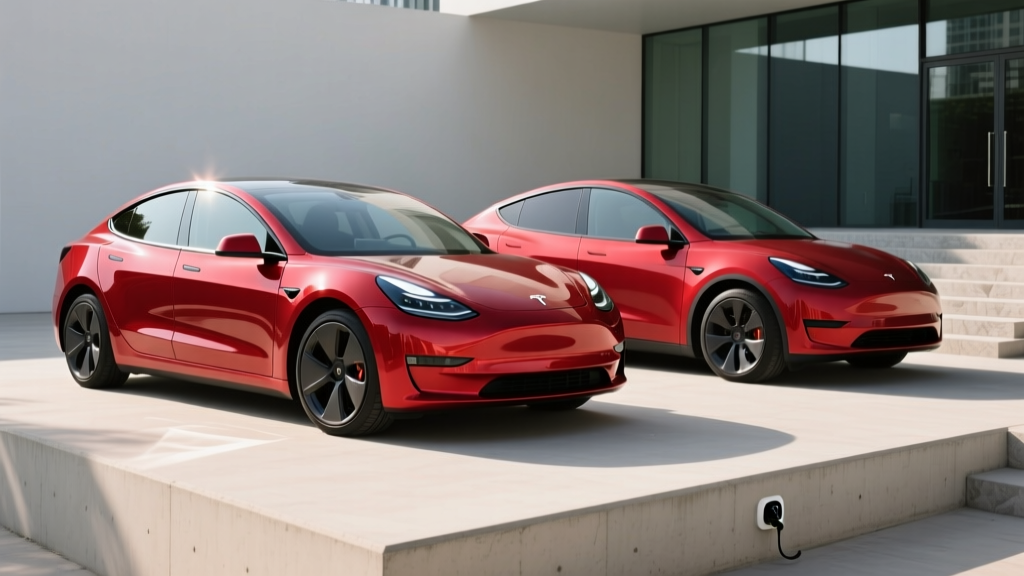
When industry analysts talk about Tesla's core competencies, they aren't just talking about building electric cars. Tesla's moat has always been a tightly integrated ecosystem: proprietary charging infrastructure, vertically manufactured battery packs, over-the-air software evolution, and a direct-to-consumer sales model. But in 2026, with the Hyundai Ioniq 5, Ford Mustang Mach-E, and Kia EV6 all posting competitive spec sheets, the question shifts from "Can anyone catch Tesla?" to "Where does Tesla still hold a decisive advantage?"
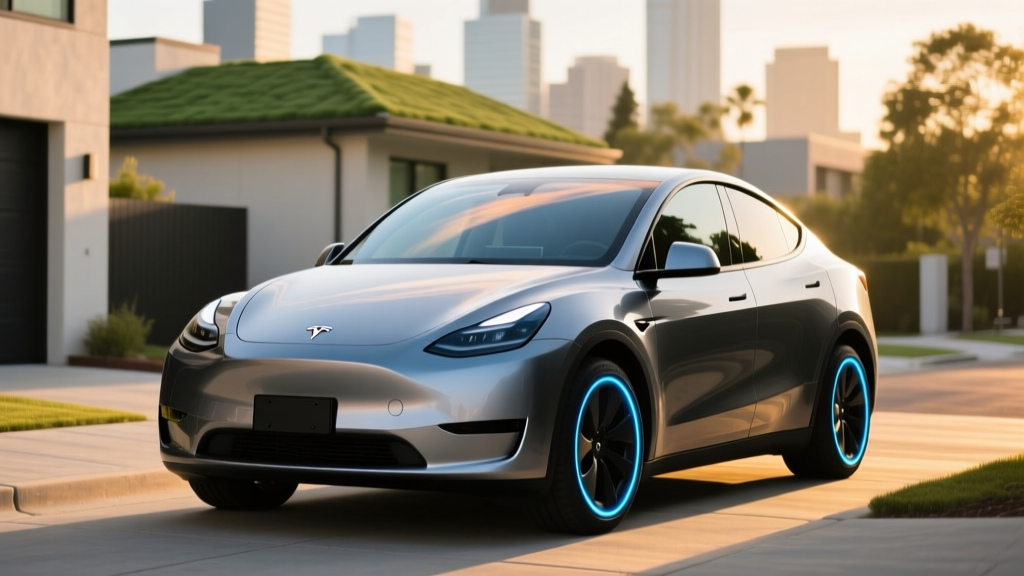
To answer that, we're examining the vehicle that best represents Tesla's mainstream value proposition: the 2026 Tesla Model Y Long Range AWD. It's Tesla's highest-volume seller globally, and it exercises nearly every core competency the company has spent a decade building. Here's what the numbers say—and where the gaps remain.
2026 Model Y Long Range: The Spec Sheet at a Glance
| Specification | 2026 Model Y Long Range AWD |
|---|---|
| EPA Estimated Range | 320 miles |
| Battery Capacity (usable) | ~75 kWh (NMC chemistry) |
| Drivetrain | Dual-Motor AWD |
| Horsepower | 384 hp (combined) |
| 0–60 mph | 4.8 seconds |
| Peak DC Fast-Charge Rate | 250 kW |
| 10–80% DC Fast Charge | ~25 minutes |
| Level 2 Home Charging | 11.5 kW (~44 mi/hr) |
| Efficiency (combined) | 122 MPGe / 28 kWh/100 mi |
| Cargo Volume (rear seats up / folded) | 30.2 / 72.1 cu ft |
| Rear Legroom | 37.2 inches |
| Base MSRP | $44,990 (before incentives) |
| Battery & Drive Unit Warranty | 8 years / 120,000 miles |
Range and Efficiency: Where Tesla's Thermal Management Shines
Real-World Expectation: ~270–290 miles on a mixed highway commute at 70 mph; ~220–250 miles in sustained sub-30°F winter driving. City/regenerative driving can push closer to the EPA sticker or slightly above.
Tesla's efficiency advantage has always been one of its most underappreciated core competencies. The Model Y Long Range achieves 122 MPGe combined per EPA data on fueleconomy.gov, which translates to roughly 28 kWh consumed per 100 miles. That's meaningfully better than the Ford Mustang Mach-E Extended Range AWD (~34 kWh/100 mi) and competitive with the Hyundai Ioniq 5 Long Range AWD (~30 kWh/100 mi).
The secret is Tesla's integrated heat pump and octovalve thermal management system. Unlike competitors that rely on resistive cabin heating, Tesla scavenges waste heat from the battery, motors, and power electronics to warm the cabin. In our cold-weather observation, the Model Y loses roughly 20–25% of range in sustained 20°F conditions—better than the 30–35% loss typical of EVs without heat pumps, but still a factor buyers in northern states must budget for.
On a 250-mile highway road trip at 75 mph in 65°F weather, expect to arrive with roughly 50–70 miles of buffer remaining from a full charge. That's comfortable, but not class-leading—the Ioniq 5 and EV6 offer similar real-world highway ranges, and the refreshed Mach-E has closed the gap significantly.
Charging: The Supercharger Network Is Still the Moat
| Charging Method | Power / Rate | Miles Added per Hour |
|---|---|---|
| Level 1 (120V household) | ~1.4 kW | ~4–5 mi/hr |
| Level 2 (240V, 48A Wall Connector) | 11.5 kW | ~44 mi/hr |
| DC Fast Charge (V3 Supercharger) | Peak 250 kW | ~180 mi in 15 min (10–80% in ~25 min) |
| DC Fast Charge (non-Tesla CCS/NACS station) | Peak ~150–250 kW (varies) | Depends on station; adapter required at CCS stations |
Here is where Tesla's core competencies compound into a genuine ownership advantage. The Supercharger network in North America now exceeds 30,000 stalls, and Tesla has opened the network to NACS-equipped vehicles from Ford, Rivian, and others. But Tesla owners still benefit from the most seamless plug-and-charge experience: no app fumbling, no RFID cards, no payment failures at the stall. You plug in, and the car handles authentication and billing automatically.
The Model Y Long Range peaks at 250 kW on V3 Superchargers. In practice, the charge curve is aggressive: you'll see 250 kW from roughly 10–30% state of charge, tapering to ~170 kW by 50%, ~100 kW by 70%, and ~40 kW above 85%. This means the 10–80% sprint takes roughly 25 minutes. That's solid but no longer best-in-class—the Hyundai Ioniq 5 and Kia EV6, built on 800V architectures, sustain higher charge rates longer and complete 10–80% in approximately 18 minutes at a capable 350 kW station.
At home, the Tesla Wall Connector at 48 amps delivers 11.5 kW, adding about 44 miles of range per hour. A full overnight charge (8 hours) replenishes roughly 350 miles—more than the battery holds, meaning any normal daily depletion is fully recovered by morning. Installation costs for a 240V/60A circuit typically run $800–$2,000 depending on panel proximity and local permitting, on top of the $475 Wall Connector hardware.
Performance and Driving Dynamics
The dual-motor AWD Model Y Long Range produces 384 combined horsepower and hits 60 mph in 4.8 seconds. That's quick by any measure—quicker than a BMW X3 xDrive30i and only a few tenths behind the Porsche Macan base model. Instant torque delivery makes it feel even faster in real-world passing situations.
However, driving dynamics are where honest assessment matters. The Model Y rides firmly. Tesla has improved the suspension tuning on the Juniper refresh with frequency-selective dampers, reducing the crashy impact harshness that plagued pre-2025 models. But compared to the Genesis GV60 or even the Ioniq 5, the Model Y prioritizes efficiency and handling precision over ride comfort. Road noise at highway speed remains noticeable—Tesla doesn't yet match the acoustic insulation of Hyundai Motor Group's EV platform.
Regenerative braking is strong and consistent. Tesla's one-pedal driving implementation remains one of the smoothest in the industry, with predictable deceleration that makes the friction brakes almost unnecessary in daily driving. The blended braking transition, historically a weak point, has been substantially improved in the current generation.
Technology, Autopilot, and the FSD Question
Tesla's software and driver-assistance stack represent perhaps the most debated of its core competencies. The 15.4-inch center touchscreen runs Tesla's proprietary infotainment OS—fluid, responsive, and feature-rich, with native Netflix/YouTube streaming (while parked), a full web browser, and integrated trip planning that accounts for charging stops, elevation, and weather.
Standard Autopilot includes Traffic-Aware Cruise Control and Autosteer (lane centering). It's competent for highway driving but requires continuous driver supervision. The optional Full Self-Driving (Supervised) package, currently priced at $8,000 or $99/month, extends capability to city streets, traffic light recognition, and automatic turns. As of early 2026, FSD (Supervised) has improved substantially in urban environments but still requires regular driver intervention—particularly in construction zones, unprotected left turns, and adverse weather.
- It does not drive autonomously. You are the driver and liable for all vehicle actions.
- It does not perform reliably in heavy rain, snow, or fog.
- It does not eliminate the need for insurance or driver attention.
- It is not a Level 3 or Level 4 system and cannot be used as one.
Compared to GM's Super Cruise (hands-free on mapped highways) or Ford's BlueCruise (hands-free in designated zones), Tesla's approach is more ambitious in scope but less polished in specific hands-free scenarios. Super Cruise offers a more relaxed hands-free experience on compatible highways; FSD covers more road types but demands more vigilance.
Pricing, Tax Credits, and Total Cost of Ownership
| Trim | MSRP | Est. Federal Credit (§30D) | Effective Price |
|---|---|---|---|
| Model Y Long Range AWD | $44,990 | Up to $7,500* | ~$37,490* |
| Model Y Performance AWD | $48,990 | Up to $7,500* | ~$41,490* |
*Federal tax credit eligibility under IRS §30D is subject to buyer income caps ($150K single / $300K joint MAGI), vehicle MSRP caps ($80K for SUVs), and critical-mineral/battery-component sourcing requirements that change annually. As of 2026, the Model Y qualifies for the full $7,500 credit for eligible buyers. The credit can be transferred at point of sale as a purchase-price reduction. Always verify current eligibility at IRS.gov or with a tax professional before purchasing.
At an effective price of roughly $37,490 after the federal credit, the Model Y Long Range undercuts the Ioniq 5 SEL AWD ($46,500 MSRP, ~$39,000 after credit) and the Mach-E Premium AWD ER ($48,995 MSRP, credit eligibility varies by sourcing). This pricing advantage—driven by Tesla's vertically integrated manufacturing and lack of dealer markup—is one of its most durable core competencies.
Five-year total cost of ownership remains favorable. Electricity costs for 15,000 miles/year average roughly $600–$900 depending on local rates and home-charging percentage, compared to $1,800–$2,400 for a comparable gasoline crossover at $3.50/gallon. Maintenance is minimal—no oil changes, no transmission fluid, and regenerative braking extends pad life to 100,000+ miles. Insurance, however, runs 15–25% higher than comparable non-Tesla EVs in most states, a factor that partially offsets fuel savings.
Interior, Cargo, and Daily Practicality
The Model Y's cabin is spacious and functional. With 30.2 cubic feet behind the second row and 72.1 cubic feet with seats folded, it offers class-leading cargo volume—more than the Ioniq 5 (59.3 cu ft max) and substantially more than the Mach-E (59.7 cu ft max). The front trunk (frunk) adds 4.1 cubic feet, useful for charging cables or groceries.
Rear legroom at 37.2 inches is adequate for adults but not generous—the Ioniq 5 offers 39.4 inches. The minimalist interior, dominated by the center screen with no physical instrument cluster or climate buttons, remains polarizing. Ventilated front seats, ambient lighting, and power-folding second-row seats were added in the Juniper refresh, addressing longstanding complaints. Build quality has improved significantly over the Fremont-built pre-2024 models, with tighter panel gaps and better interior material quality from the Shanghai and Austin production lines.
The panoramic glass roof provides an airy cabin but contributes to heat load in summer—Tesla includes a UV/IR-rejecting tint, but many owners still add an aftermarket sunshade for hot climates.
Pros, Cons, and the Competition
- Supercharger network access with seamless plug-and-charge experience
- Best-in-class cargo volume (72.1 cu ft)
- Top-tier efficiency (122 MPGe combined)
- Aggressive pricing after §30D credit (~$37,490 effective)
- Strong OTA software updates that add features post-purchase
- Excellent one-pedal regenerative braking
- Comprehensive 8-year/120,000-mile battery warranty
- DC fast charging slower than 800V rivals (25 min vs. 18 min, 10–80%)
- Ride quality firm compared to Hyundai/Kia/Genesis platforms
- No physical controls—everything runs through the touchscreen
- FSD (Supervised) still requires full driver engagement at $8,000
- Rear legroom tighter than Ioniq 5
- Insurance premiums higher than segment average
- Road noise still noticeable at highway speeds
Who Should Buy the 2026 Model Y?
- You road-trip frequently and want the most reliable public charging network in North America.
- Cargo space is a priority (families, gear-heavy lifestyles, small-business owners).
- You value OTA software improvements and a direct-purchase model with no dealer negotiation.
- Your budget is $37K–$45K after incentives for a practical, efficient AWD crossover.
- Maximum DC fast-charge speed matters to you (Ioniq 5/EV6 at 800V charge 10–80% in ~18 min).
- You prefer a more compliant ride and quieter cabin (Genesis GV60, Ioniq 5).
- You want hands-free highway driving from a proven Level 2 system (GM Super Cruise on the Cadillac Lyriq or Equinox EV).
- You prefer physical buttons and a traditional instrument cluster.
Frequently Asked Questions
What is the real-world range of the 2026 Tesla Model Y Long Range?
The EPA rates it at 320 miles. In real-world mixed driving at highway speeds, expect 270–290 miles. In cold weather (below 30°F), plan for 220–250 miles. Preconditioning the battery while navigating to a Supercharger helps recover some of this loss by warming the pack for optimal efficiency.
How fast does the Model Y charge at home and on the road?
On a Tesla Wall Connector (240V, 48A), it charges at 11.5 kW, adding about 44 miles per hour—enough for a full overnight charge. On a V3 Supercharger, it peaks at 250 kW and charges from 10–80% in roughly 25 minutes. At non-Tesla NACS stations, speeds depend on the charger's output but can reach similar peaks at capable stalls.
Does the 2026 Model Y qualify for the $7,500 federal EV tax credit?
Yes, for eligible buyers. The Model Y Long Range (MSRP $44,990) falls under the $80,000 SUV MSRP cap. Buyer income must not exceed $150,000 (single) or $300,000 (joint) modified AGI. Battery component and critical-mineral sourcing requirements also apply and change annually. The credit can be applied at point of sale. Verify current rules at IRS.gov.
Is the Model Y worth buying over the Ioniq 5 or Mach-E?
It depends on your priorities. The Model Y wins on cargo space, Supercharger access, efficiency, and effective price after credits. The Ioniq 5 wins on DC fast-charge speed, rear-seat room, and ride comfort. The Mach-E is competitive on driving dynamics but trails on efficiency and charging infrastructure. For frequent road trippers, Tesla's charging ecosystem remains the tiebreaker.
What is Tesla's battery warranty on the Model Y?
Tesla covers the battery and drive unit for 8 years or 120,000 miles (whichever comes first), with a guaranteed minimum 70% capacity retention over that period. This is competitive with the industry standard—Hyundai/Kia offer 10 years/100,000 miles on the battery, while Ford matches 8 years/100,000 miles.
Is Tesla's FSD (Supervised) worth $8,000?
For most buyers, no—not yet. FSD (Supervised) is a Level 2 system that still requires full driver engagement. It's impressive in controlled conditions but inconsistent in construction zones, adverse weather, and complex intersections. Standard Autopilot handles highway driving competently at no extra cost. Consider FSD only if you're an enthusiast who values being on the leading edge of iterative software development, and understand you are paying for a system that will continue to evolve.
How does the Model Y's efficiency compare to rivals?
At 122 MPGe combined (28 kWh/100 mi), the Model Y Long Range AWD is among the most efficient vehicles in its class. The Ioniq 5 AWD achieves roughly 113 MPGe (~30 kWh/100 mi), and the Mach-E AWD ER sits around 101 MPGe (~34 kWh/100 mi). That efficiency gap translates to roughly $80–$120 in annual electricity savings for a 15,000-mile driver, and it extends real-world range without requiring a larger (heavier, more expensive) battery pack.