Quick Verdict: Honda's First EV, Built on GM's Ultium Bones
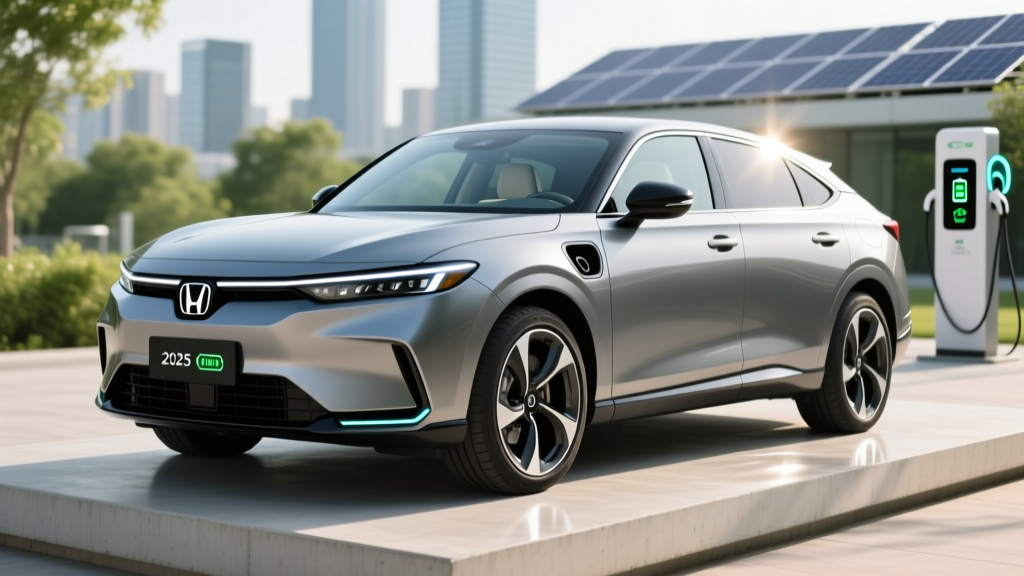
The 2025 Honda Prologue Elite is the top-trim expression of Honda's first mass-market electric vehicle — a midsize crossover engineered on General Motors' Ultium platform and assembled alongside the Chevrolet Blazer EV. For buyers who want Honda's design language, dealership network, and Honda Sensing safety suite paired with proven GM battery architecture, the Elite trim delivers dual-motor AWD, a 283-mile EPA range estimate, and a well-equipped cabin. But at a base MSRP of $59,300 (before any incentives), it occupies a competitive segment where the Hyundai Ioniq 5, Tesla Model Y, and Ford Mustang Mach-E offer compelling alternatives.
This review covers the Elite trim specifically — the range-topping model with 21-inch wheels, a panoramic sunroof, head-up display, and a premium audio system. We'll break down real-world range expectations, charging behavior, tax credit eligibility under current IRS §30D rules, and whether this EV earns its premium price.
| Spec | Value |
|---|---|
| EPA Range | 283 miles |
| Battery (usable) | 85 kWh, NMC (nickel manganese cobalt) |
| Drivetrain | Dual-motor AWD |
| Horsepower / Torque | 288 hp / 333 lb-ft |
| 0–60 mph | ~5.8 seconds |
| Max DC Fast Charge | 155 kW peak |
| 10–80% DC Charge Time | ~34 minutes |
| Level 2 Home Charge Rate | 11.5 kW (up to ~31 mi/hr) |
| EPA Efficiency | 91 MPGe combined (37 kWh/100 mi) |
| Cargo Volume (behind 2nd row) | 25.2 cu ft (57.7 cu ft max) |
| Base MSRP (Elite AWD) | $59,300 |
| Federal Tax Credit (§30D) | Up to $7,500 (eligibility varies) |
| Battery/Powertrain Warranty | 8 years / 100,000 miles |
Range and Efficiency: 283 EPA Miles, but Plan for Less on the Highway
The Prologue Elite's dual-motor AWD powertrain and 21-inch wheels carry a range penalty compared to the front-wheel-drive EX and Touring trims, which achieve an EPA-estimated 296 miles on a full charge. The Elite's EPA-estimated 283 miles is respectable for a two-row midsize crossover, but real-world conditions rarely match the sticker.
Real-World Range Expectations — Prologue Elite AWD
- City / mixed driving (mild weather): ~265–280 miles — close to EPA, aided by regenerative braking in stop-and-go traffic.
- Highway cruising (70–75 mph, 70°F): ~230–250 miles — aerodynamic drag reduces efficiency significantly above 65 mph.
- Cold weather (below 32°F, mixed driving): ~200–230 miles — NMC batteries lose 15–25% capacity in freezing temps; cabin heating draws additional energy.
- Worst case (highway + cold + headwind): ~185–200 miles — plan charging stops conservatively on winter road trips.
The Prologue uses GM's Ultium battery platform with an NMC (nickel manganese cobalt) chemistry — the same cell architecture found in the Cadillac Lyriq and Chevrolet Blazer EV. NMC offers higher energy density than LFP (lithium iron phosphate), which helps keep the pack compact, but it requires more careful thermal management and benefits from keeping state of charge between 20–80% for daily driving to minimize long-term degradation.
Efficiency lands at an EPA-rated 91 MPGe combined, which translates to 37 kWh per 100 miles. That's average for the class — the Hyundai Ioniq 5 AWD achieves 98 MPGe, while the Tesla Model Y Long Range AWD posts 117 MPGe. On a 300-mile road trip, expect to consume roughly 111 kWh of energy, meaning two DC fast-charge stops at realistic charge-curve rates.
Charging Speed: 155 kW Peak, but the Curve Tapers Early
Honda rates the Prologue for a peak DC fast-charge rate of 155 kW on a CCS1 connector. That figure is achievable under ideal conditions — a preconditioned battery at a low state of charge on a 350 kW-capable station. But peak kW is only part of the story; sustained charge rate and the taper above 80% determine how long you're actually plugged in.
| Charging Level | Power / Rate | Miles Added per Hour | Notes |
|---|---|---|---|
| Level 1 (120V household) | ~1.4 kW | ~3–4 mi/hr | Emergency/trickle only; ~80+ hours for full charge |
| Level 2 (240V home/public) | 11.5 kW max | ~31 mi/hr | ~9–10 hours for 10–100%; ideal for overnight charging |
| DC Fast Charge (CCS) | 155 kW peak | — | 10–80% in ~34 min; tapers sharply above 80% |
In real-world DC fast-charging, expect the Prologue to sustain roughly 120–140 kW between 10–50% state of charge, then taper to 80–100 kW through 70%, and drop below 50 kW past 80%. The 10–80% charge takes approximately 34 minutes at a properly rated station — competitive with the Blazer EV but slower than the Hyundai Ioniq 5's 800V architecture, which achieves 10–80% in roughly 18 minutes at 240 kW.
Preconditioning matters. The Prologue supports battery preconditioning when you navigate to a DC fast charger via the infotainment system. This warms the NMC cells to an optimal temperature for accepting maximum charge current. Skipping preconditioning — especially in cold weather — can add 10–15 minutes to your charging session as the battery limits intake to protect cell health.
For home charging, the 11.5 kW onboard charger is a strong point. With a professionally installed 48-amp Level 2 wall connector on a 60-amp circuit, you'll recover roughly 31 miles of range per hour, meaning a depleted battery fully replenishes overnight in about 9 hours. Honda includes a dual-level charge cord (120V/240V) with the vehicle, though a dedicated Level 2 wall unit is strongly recommended for daily use.
Performance and Driving Dynamics
The Elite trim comes exclusively with dual-motor all-wheel drive, producing a combined 288 horsepower and 333 lb-ft of torque. That's a meaningful step up from the single-motor FWD trims (213 hp / 236 lb-ft), and the difference is evident in highway merging and passing confidence.
Honda hasn't published an official 0–60 mph time, but independent testing places the AWD Prologue at approximately 5.8 seconds — adequate for a family crossover but not class-leading. The Tesla Model Y Long Range AWD hits 60 mph in roughly 4.8 seconds, while the Ford Mustang Mach-E Premium AWD clocks around 5.1 seconds.
Ride quality is where the Prologue distinguishes itself. The suspension tuning is compliant and well-damped, absorbing road imperfections more gracefully than the firmer-riding Ioniq 5. Steering is light and predictable — tuned for comfort over sportiness. The 21-inch wheels on the Elite add visual appeal but introduce slightly more road noise and reduce range compared to the 19-inch wheels on lower trims.
Regenerative braking is adjustable via paddle shifters behind the steering wheel, offering four levels of regen intensity. At maximum setting, you can achieve near one-pedal driving in city traffic, though the Prologue doesn't come to a complete stop without touching the brake pedal — unlike the stronger one-pedal modes in the Chevrolet Bolt EUV or Nissan Ariya.
Interior, Tech, and Cargo Space
The Prologue's cabin reflects Honda's design philosophy: clean lines, physical climate controls, and a driver-focused layout. The Elite trim adds a 11.3-inch infotainment touchscreen running Google Built-In (Google Maps, Google Assistant, Play Store), an 11-inch digital instrument cluster, a head-up display, and a Bose premium audio system.
Google Built-In is a strong choice for EV navigation — Google Maps automatically factors in charging stops, battery state of charge, and elevation changes when planning routes. Wireless Apple CarPlay and Android Auto are standard across all trims.
Honda Sensing driver-assistance features include adaptive cruise control with low-speed follow, lane-keeping assist, blind-spot monitoring, rear cross-traffic alert, and traffic sign recognition. This is an SAE Level 2 driver-assist system — the driver must remain fully engaged with hands on the wheel and eyes on the road at all times. The Prologue does not offer hands-free driving like GM's Super Cruise or Ford's BlueCruise.
Driver-Assist Limitation: Honda Sensing is a Level 2 ADAS, not autonomous driving. The system requires continuous driver supervision. It does not handle construction zones, unmapped roads, or severe weather autonomously. Keep your hands on the wheel.
Passenger space is generous for the class. Front legroom measures 41.4 inches, with 39.3 inches in the rear — enough for tall adults on longer trips. Cargo volume behind the second row is 25.2 cubic feet, expanding to 57.7 cubic feet with the rear seats folded. That's competitive with the Blazer EV (27.7 / 55.5 cu ft) but trails the Model Y (30.2 / 72.1 cu ft) due to the Prologue's lack of a front trunk (frunk).
One notable omission: the Prologue has no frunk. The space under the hood is occupied by power electronics and HVAC components, so all cargo must go in the rear. For a vehicle at this price point, that's a missed opportunity for differentiated storage.
Pricing, Trims, and Federal Tax Credit Eligibility
The 2025 Honda Prologue is offered in three trims, all sharing the 85 kWh Ultium battery:
- EX (FWD): $48,300 MSRP — 296-mile EPA range, 19-inch wheels, cloth/leatherette seats
- Touring (FWD or AWD): $51,300 (FWD) / $54,300 (AWD) — adds leather, panoramic roof, Bose audio
- Elite (AWD only): $59,300 — 21-inch wheels, head-up display, ventilated front seats, heated rear seats, hands-free liftgate
The Elite's $59,300 base price pushes into luxury-crossover territory, and adding a destination charge ($1,350) and any dealer-installed accessories can bring the as-tested price above $61,000.
| Item | Amount |
|---|---|
| Base MSRP (Elite AWD) | $59,300 |
| Destination Charge | $1,350 |
| Total Before Incentives | $60,650 |
| Federal §30D Tax Credit (max, if eligible) | –$7,500 |
| Effective Price (with full credit) | $53,150 |
Does the Prologue Qualify for the $7,500 Federal EV Tax Credit?
The Prologue is assembled at GM's Spring Hill, Tennessee plant, and its Ultium battery cells are manufactured in the U.S. As of the current IRS guidance under §30D clean vehicle credit rules, the Prologue is eligible for the full $7,500 federal tax credit — but buyer eligibility depends on several factors:
- MSRP cap: SUVs/crossovers must have an MSRP at or below $80,000. The Prologue Elite at $59,300 qualifies. ✓
- Buyer income cap: Modified adjusted gross income (MAGI) must not exceed $150,000 (single), $225,000 (head of household), or $300,000 (joint). ✓ Check your prior-year or current-year MAGI.
- Battery sourcing: A percentage of critical minerals and battery components must be sourced from the U.S. or free-trade-agreement countries. The Prologue's U.S.-built Ultium battery currently meets these thresholds. ✓ (Rules tighten annually — verify with your dealer and IRS guidance at time of purchase.)
- Point-of-sale transfer: As of 2024, buyers can transfer the credit to the dealer at purchase, reducing the out-of-pocket price immediately rather than waiting for a tax refund. The dealer must be IRS-registered.
Important: Tax credit rules are subject to change. Battery-sourcing requirements tighten each calendar year, and legislative changes could alter or eliminate §30D credits. Always confirm eligibility with a tax professional and check the latest IRS clean vehicle credit page before purchasing.
How Does the Prologue Elite Compare to Key Rivals?
At ~$53,000 after the federal credit, the Prologue Elite competes against several well-established electric crossovers. Here's how the numbers stack up:
| Vehicle | EPA Range | Battery | Peak DC kW | 10–80% Time | 0–60 mph | AWD MSRP |
|---|---|---|---|---|---|---|
| Honda Prologue Elite | 283 mi | 85 kWh NMC | 155 kW | ~34 min | ~5.8s | $59,300 |
| Hyundai Ioniq 5 SEL AWD | 290 mi | 77.4 kWh NMC | 240 kW (800V) | ~18 min | ~5.0s | $50,950 |
| Tesla Model Y LR AWD | 311 mi | ~75 kWh NMC | 250 kW | ~22 min | ~4.8s | $48,990 |
| Ford Mach-E Premium AWD | 290 mi | 91 kWh NMC | 150 kW | ~36 min | ~5.1s | $51,875 |
| Chevrolet Blazer EV RS AWD | 279 mi | 102 kWh NMC | 190 kW | ~30 min | ~5.4s | $56,595 |
The Prologue Elite's advantages lie in ride comfort, Honda's dealership and service network, and interior material quality at the Elite tier. Its disadvantages are clear: slower DC charging than the 800V Ioniq 5, less range than the Model Y, and a higher entry price than most competitors. The Blazer EV shares the Ultium platform and is mechanically similar but costs less and offers a slightly larger battery.
Choose the Honda Prologue Elite if:
- You value Honda's brand, dealer network, and resale reputation
- Ride comfort and quiet refinement matter more than outright performance
- You want Google Built-In navigation with integrated EV route planning
- You primarily charge at home and DC fast-charge only on road trips
Look elsewhere if:
- You road-trip frequently and need the fastest DC charging (Ioniq 5 or Model Y)
- Maximum range is your top priority (Model Y Long Range at 311 mi)
- You want one-pedal driving that brings the car to a complete stop
- Budget is tight — the Touring AWD at $54,300 offers most of the Elite's features for $5,000 less
Warranty and Long-Term Ownership
Honda backs the Prologue with a competitive warranty package:
- Battery & powertrain: 8 years / 100,000 miles (whichever comes first), covering capacity loss below a specified threshold (typically 70% state of health, consistent with GM's Ultium warranty terms)
- Bumper-to-bumper: 3 years / 36,000 miles
- Corrosion: 5 years / unlimited miles
- Roadside assistance: 3 years / 36,000 miles
NMC battery degradation in the Ultium platform has been modest based on early data from GM's EV fleet. Expect roughly 5–8% capacity loss over the first 100,000 miles under normal use — meaning the 283-mile range could settle to approximately 260–268 miles after several years. The active thermal management system helps mitigate degradation, especially compared to passively cooled packs.
Insurance costs for the Prologue Elite are likely to be higher than Honda's gas-powered Passport or Pilot, reflecting the vehicle's MSRP, repair complexity, and EV-specific parts costs. Expect annual premiums in the $1,800–$2,400 range depending on your profile and state — get quotes before purchasing.
Pros and Cons
Pros
- Comfortable, quiet ride quality that outshines sportier rivals
- Google Built-In with native EV route planning and charging integration
- Honda Sensing safety suite standard across all trims
- Strong 11.5 kW Level 2 home charging for overnight replenishment
- Eligible for $7,500 federal tax credit (subject to buyer eligibility)
- Spacious rear seat with 39.3 inches of legroom
- Honda dealership service network — over 1,000 U.S. locations
Cons
- DC fast charging is slower than 800V rivals (34 min vs 18 min, 10–80%)
- No front trunk (frunk) — a notable omission at this price
- 21-inch wheels reduce range and increase road noise vs lower trims
- Elite trim pricing ($59,300) overlaps with luxury EVs offering more performance
- Regenerative braking doesn't enable true one-pedal driving to a full stop
- No hands-free driving option (Honda Sensing requires hands on wheel)
- Real-world highway range drops to ~230–250 miles, less in cold weather
Frequently Asked Questions
What is the real-world range of the 2025 Honda Prologue Elite?
The EPA rates the Prologue Elite AWD at 283 miles. In real-world driving, expect 265–280 miles in city and mixed conditions, 230–250 miles on the highway at 70+ mph, and 200–230 miles in freezing weather. On a cold-weather highway trip, plan conservatively for 185–200 miles between charges.
How fast does the Prologue charge at home and on DC fast chargers?
At home on a 240V Level 2 charger (11.5 kW), the Prologue adds roughly 31 miles of range per hour, fully charging overnight in about 9 hours. On DC fast chargers, it peaks at 155 kW and charges from 10–80% in approximately 34 minutes — adequate but slower than 800V competitors like the Ioniq 5.
Does the 2025 Honda Prologue qualify for the federal EV tax credit?
Yes — the Prologue is U.S.-assembled with a U.S.-built Ultium battery and currently meets IRS §30D requirements for the full $7,500 credit. However, buyer eligibility depends on income caps ($150K single / $300K joint), the $80,000 MSRP cap for SUVs, and battery-sourcing rules that tighten annually. Verify with a tax professional before purchase.
How much does the Prologue Elite cost after the tax credit?
The Elite AWD starts at $59,300 plus a $1,350 destination charge ($60,650 total). If you qualify for the full $7,500 federal credit — applied as a point-of-sale reduction at a registered dealer — the effective price drops to approximately $53,150. State and local incentives may reduce the cost further; check your jurisdiction's programs.
Is the Honda Prologue Elite worth buying over the Ioniq 5 or Model Y?
It depends on your priorities. The Prologue Elite excels in ride comfort, cabin quietness, and Honda's service network. But the Ioniq 5 charges nearly twice as fast (18 min vs 34 min, 10–80%), the Model Y offers more range (311 mi) at a lower price, and the Blazer EV shares the same Ultium platform for less money. Test-drive all three before deciding.
What is the Prologue's battery warranty?
Honda covers the battery and powertrain for 8 years or 100,000 miles, whichever comes first. This warranty covers defects and capacity loss below a specified threshold (expected to be ~70% state of health). The bumper-to-bumper warranty is 3 years / 36,000 miles.
Does the Prologue have a frunk (front trunk)?
No. The Prologue does not have a front trunk. The space under the hood houses power electronics, the onboard charger, and HVAC components. All cargo must be stored in the rear cargo area (25.2 cu ft behind the second row, 57.7 cu ft with seats folded).