Quick Answer: Is the Electric Volkswagen Bus Worth Buying?
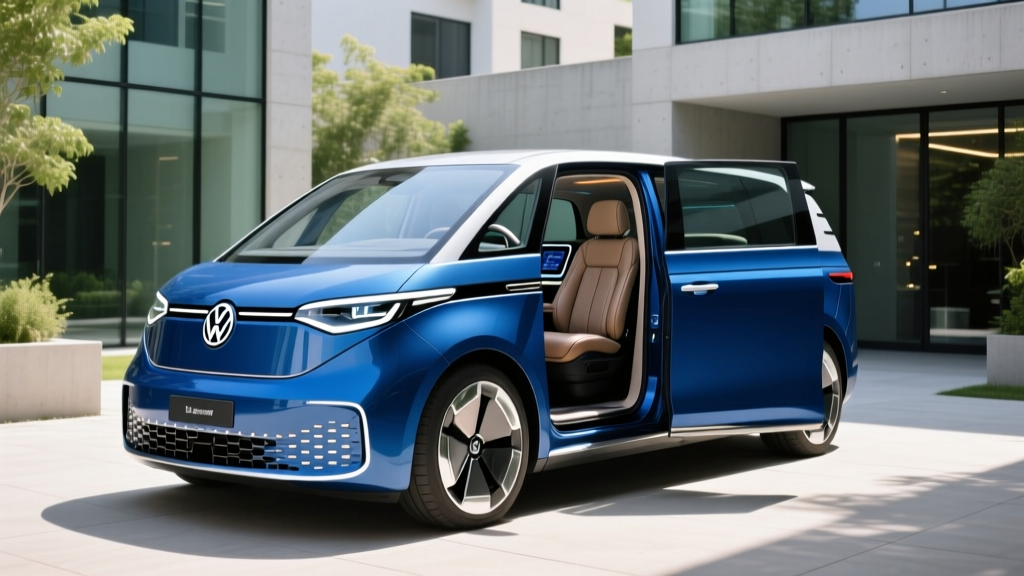
The electric Volkswagen Bus — officially the 2026 VW ID. Buzz — is a three-row electric van with an EPA-estimated 234 miles of range (RWD) or 231 miles (AWD), a 91 kWh (usable) NMC battery, and DC fast charging that peaks at 170 kW (10–80% in ~26 minutes). Pricing starts at $59,995 before destination. It qualifies for the $7,500 federal tax credit (via point-of-sale transfer) if you meet IRS §30D income and sourcing requirements, effectively bringing the base price to roughly $52,495. It's best suited for families who need three-row seating, want a distinctive design, and have access to home Level 2 charging. Highway-heavy drivers and those in extreme cold climates should budget for ~170–190 real-world miles.
2026 VW ID. Buzz: Full Spec Breakdown
The ID. Buzz arrived in the U.S. for the 2025 model year as a long-wheelbase, three-row vehicle — a very different proposition from the short-wheelbase European two-row version. For 2026, VW has carried over the core powertrain with minor software and trim adjustments. Here's what you're working with across the lineup:
| Spec | RWD (Pro S) | AWD (Pro S Plus) |
|---|---|---|
| EPA Range | 234 mi | 231 mi |
| Battery (usable) | 91 kWh, NMC | 91 kWh, NMC |
| Horsepower | 282 hp | 335 hp |
| 0–60 mph | ~6.9 sec | ~5.7 sec |
| Peak DC Charge Rate | 170 kW | 170 kW |
| 10–80% DC Charge | ~26 min | ~26 min |
| Level 2 Charge Rate | 11 kW (AC) | 11 kW (AC) |
| MPGe (combined) | 87 MPGe | 85 MPGe |
| Cargo (behind 3rd row) | 18.4 cu ft | 18.4 cu ft |
| Max Cargo (seats folded) | 131.6 cu ft | 131.6 cu ft |
| Towing Capacity | Not rated | Not rated |
| Base MSRP | $59,995 | $65,495 |
| Battery Warranty | 8 yr / 100,000 mi | 8 yr / 100,000 mi |
Source: EPA / fueleconomy.gov and Volkswagen USA.
Real-World Range vs. EPA Sticker: What to Actually Expect
EPA Sticker: 234 mi (RWD) / 231 mi (AWD)
Real-World Expectation:
- Mixed city/suburban (65–75°F): 215–235 mi — close to sticker
- Highway sustained (70–80 mph): 185–205 mi — the boxy shape creates significant aerodynamic drag
- Cold weather (below 32°F, highway): 155–180 mi — NMC chemistry plus cabin heating takes a 20–30% toll
- Hot weather (95°F+, A/C running): 200–215 mi — thermal management is adequate but not class-leading
The ID. Buzz's brick-like aerodynamics (drag coefficient around 0.29, which is good for a van but poor compared to a sedan like the Hyundai Ioniq 6 at 0.21) mean that highway efficiency suffers disproportionately. If your daily driving is suburban stop-and-go with regenerative braking doing the work, you'll stay closer to the EPA number. But a 300-mile road trip will require at least one charging stop — plan for it.
The 91 kWh usable battery is large, but it's pushing a 5,800+ lb vehicle. Efficiency of roughly 2.6–2.8 kWh/mile in mixed driving means you're consuming more energy per mile than a Tesla Model Y (~3.5 mi/kWh) or even the Rivian R1S. That matters for charging costs and road-trip planning.
Charging Speed, Networks, and Home Setup
The ID. Buzz uses the CCS1 connector for DC fast charging and J1772 for Level 2 AC. VW has not adopted NACS (Tesla's plug) for the ID. Buzz as of the 2026 model year, though adapters for Tesla Superchargers are available through VW's partnership network.
| Level | Power | Miles Added per Hour | Typical Use Case |
|---|---|---|---|
| Level 1 (120V) | ~1.4 kW | ~4 mi/hr | Emergency / overnight trickle |
| Level 2 (240V, 48A) | 11 kW | ~33 mi/hr | Home daily charging (full in ~9 hrs) |
| DC Fast Charge | 170 kW peak | ~180 mi in 26 min (10–80%) | Road trips |
Charging curve reality: The 170 kW peak only sustains from roughly 10–40% State of Charge. From 40–60%, expect ~130 kW. Above 80%, the curve tapers sharply to ~50 kW and below. This is typical for NMC chemistry but means a 10–90% charge takes closer to 40–45 minutes, not 26. Plan road-trip stops accordingly — charge to 80% and move on rather than waiting for a full battery.
Home charging setup: The 11 kW onboard charger is a strong point — it fills the 91 kWh battery from empty in about 8.5–9 hours, meaning a standard overnight session easily replenishes a full day's driving. You'll need a 240V / 60A circuit (NEMA 14-50 or hardwired wallbox). Installation typically runs $800–$2,500 depending on panel proximity and local permitting. If your electrical panel is at capacity (common in older homes with 100A service), a panel upgrade to 200A can add $1,500–$4,000.
ID. Buzz vs. Gas Minivan vs. Electric SUV: The Cost Comparison
The ID. Buzz doesn't have a direct electric rival in the three-row van segment, so the natural cross-shops are gas minivans (Toyota Sienna, Honda Odyssey, Chrysler Pacifica) and three-row electric SUVs (Kia EV9, Tesla Model X). Here's how the numbers stack up over five years and 75,000 miles:
| Cost Factor | VW ID. Buzz RWD | Toyota Sienna Hybrid AWD | Kia EV9 GT-Line AWD |
|---|---|---|---|
| Base MSRP | $59,995 | $40,135 | $65,395 |
| Federal Tax Credit | Up to $7,500 (§30D) | $0 | Up to $7,500 (§30D) |
| Effective Purchase Price | ~$52,495 | $40,135 | ~$57,895 |
| Fuel/Energy (75k mi) | ~$5,400 (electricity at $0.16/kWh) | ~$7,875 (gas at $3.50/gal, 36 MPG) | ~$5,100 |
| Maintenance (5 yr) | ~$1,500 | ~$3,200 | ~$1,400 |
| Insurance (5 yr avg) | ~$12,500 | ~$9,000 | ~$13,000 |
| 5-Year Total Cost | ~$71,895 | ~$60,210 | ~$77,395 |
Fuel costs based on national averages; electricity rates and gas prices vary significantly by state. Insurance estimates are illustrative — get actual quotes. Source: fueleconomy.gov, IRS §30D.
The honest takeaway: The ID. Buzz costs more upfront than a Sienna Hybrid and won't break even on fuel savings within five years. You're paying a premium for the EV driving experience, the design, and the zero tailpipe emissions. Against the Kia EV9, the ID. Buzz is slightly cheaper after incentives but gives up ~60 miles of range and more cargo versatility. The Sienna Hybrid remains the cost-champion for budget-conscious families who don't have home charging access.
Federal Tax Credit & Incentive Eligibility
The 2026 ID. Buzz is eligible for the §30D Clean Vehicle Credit of up to $7,500, which can be transferred to the dealer as a point-of-sale discount. However, eligibility depends on several conditions that change and vary by buyer:
- Buyer income cap: AGI must not exceed $150,000 (single), $225,000 (head of household), or $300,000 (joint filing)
- MSRP cap: Vans/SUVs/trucks capped at $80,000 — all ID. Buzz trims qualify
- Battery sourcing: Critical minerals and battery components must meet phased-in percentage thresholds from U.S. or FTA-partner countries (verify current-year compliance at IRS.gov)
- Transfer option: You can elect to transfer the credit to the dealer at purchase, reducing your out-of-pocket cost even if you don't have sufficient tax liability to claim it
- One credit per VIN: The vehicle must not have previously been titled or claimed for the credit
Important: Battery-sourcing requirements have tightened since 2024 and continue phasing in. Always confirm current-year eligibility on IRS.gov or with your tax professional before relying on the credit in your purchase budget. Some states (California, Colorado, Massachusetts, New York) offer additional rebates of $1,000–$5,000 — check your state energy office.
Ownership Realities: What First-Time EV Buyers Should Know
Common Misconceptions About the ID. Buzz
| Myth | Fact |
|---|---|
| "It charges as fast as a Tesla" | 170 kW peak vs. Tesla Model X at 250 kW. The ID. Buzz is 30–40% slower at DC fast chargers. |
| "234 miles is enough for any road trip" | Highway and cold weather can reduce range to 155–190 mi. Plan stops every ~160 mi in winter. |
| "I don't need home charging" | Public DC charging at $0.35–$0.55/kWh makes the ID. Buzz more expensive per mile than a Sienna Hybrid. Home charging at $0.12–$0.18/kWh is essential for cost savings. |
| "EV batteries need replacing every few years" | VW warranties the battery for 8 years/100,000 miles against dropping below 70% capacity. NMC degradation typically runs 10–15% over 8 years with normal use. |
| "It can tow my camper" | The ID. Buzz is not rated for towing in the U.S. market. If you need towing, look at the Rivian R1S or Kia EV9 (up to 5,000 lbs). |
Home Charging Access Is Non-Negotiable
If you cannot install a Level 2 charger at home (apartment living, HOA restrictions, street parking only), the ID. Buzz becomes significantly less practical. At 87 MPGe and 2.7 kWh/mile, public fast charging at $0.48/kWh national average costs roughly $0.13/mile — comparable to a 36 MPG gas minivan at $3.50/gallon ($0.10/mile). The cost advantage of going electric essentially disappears without home charging, and the convenience advantage inverts when you're making weekly trips to a DC station.
Cold Climate Considerations
The ID. Buzz uses a resistive PTC heater (not a heat pump, which VW reserves for some European-market models). This means cold-weather cabin heating draws heavily from the traction battery. In sustained sub-freezing temperatures, expect 20–30% range loss. If you live in Minnesota, upstate New York, or similar climates, preconditioning while plugged in is essential — it warms the battery and cabin using grid power before you depart, preserving range.
Decision Framework: Should You Buy the Electric Volkswagen Bus?
Choose the ID. Buzz If:
- You want a three-row EV with distinctive styling and don't need 300+ miles of range
- You have Level 2 home charging and drive under 200 miles/day
- You value a comfortable, quiet ride and carpool-lane access
- You qualify for the §30D tax credit (bringing effective price to ~$52,500)
- You prioritize design and driving experience over maximum efficiency
Choose the Toyota Sienna Hybrid If:
- Budget is your top priority ($40k base, no charging needed)
- You lack home charging access
- You regularly drive 400+ mile road trips and don't want to plan charging stops
- You need proven long-term reliability data with minimal depreciation risk
Choose the Kia EV9 If:
- You want an electric three-row vehicle with 300+ miles of range (304 mi EPA)
- You need faster DC charging (210 kW peak, 10–80% in ~20 min)
- You want more trim options and a lower starting point for AWD
- Towing capability matters (up to 5,000 lbs with towing package)
Frequently Asked Questions
How long does it take to charge the VW ID. Buzz at home?
From empty to full on a Level 2 (240V, 48A) home charger, expect approximately 8.5 to 9 hours. In practice, most owners plug in overnight and wake up to a full battery. A typical daily drive of 40–60 miles only requires 2–3 hours of Level 2 charging to replenish.
Does the ID. Buzz qualify for the $7,500 federal tax credit in 2026?
Yes, the 2026 ID. Buzz is on the IRS eligible vehicle list, subject to buyer income caps ($150k single / $300k joint), MSRP caps ($80k for vans — all trims qualify), and battery sourcing requirements that phase in annually. You can transfer the credit to the dealer at point of sale. Verify current-year eligibility at IRS.gov before purchasing.
Is the ID. Buzz good for road trips?
It's adequate but not ideal. With real-world highway range of roughly 185–205 miles (RWD, temperate weather), you'll need a DC fast-charge stop every 2.5–3 hours of driving. The 170 kW peak charge rate adds ~180 miles in 26 minutes (10–80%), but taper above 80% means a full stop takes 40+ minutes. For families who road-trip 2–3 times a year, it's manageable with planning. For frequent long-distance drivers, the Kia EV9's 304-mile range and 210 kW charging make it a better fit.
What is the ID. Buzz battery replacement cost?
VW has not published an official out-of-warranty replacement price for the 91 kWh ID. Buzz battery. Based on current NMC pack pricing trends and comparable vehicles, expect $15,000–$22,000 for a full replacement if needed outside the 8-year/100,000-mile warranty. However, industry data from Recurrent and GeoTab shows NMC batteries typically retain 85–90% capacity after 8 years of normal use, making full replacement rare.
Can the VW ID. Buzz use Tesla Superchargers?
Not natively. The ID. Buzz has a CCS1 port. VW has partnered with Electrify America (which VW owns a stake in) and provides complimentary charging credits with new purchases. For Tesla Supercharger access, VW has indicated adapter compatibility through the NACS adapter pathway, but confirm adapter availability with your dealer at time of purchase. Electrify America's network remains the primary DC fast-charging partner.
How does insurance cost compare to a gas minivan?
Expect to pay 25–40% more for insurance on the ID. Buzz compared to a Toyota Sienna. National averages put EV insurance at roughly $2,400–$2,800/year for the ID. Buzz versus $1,700–$2,000/year for the Sienna. Higher repair costs, specialized parts, and the vehicle's MSRP all factor in. Get quotes from at least three insurers before committing — some companies now offer EV-specific discounts.