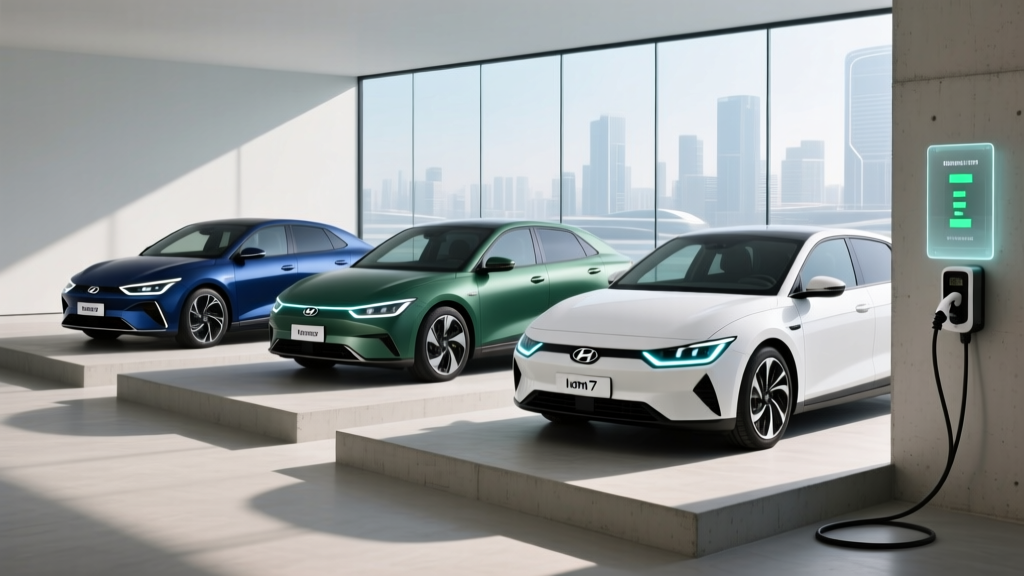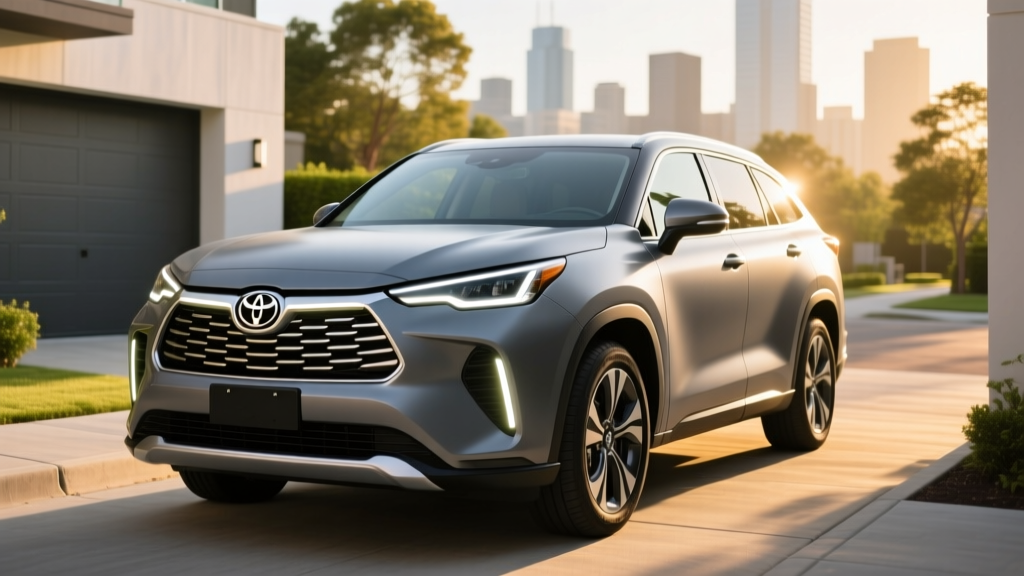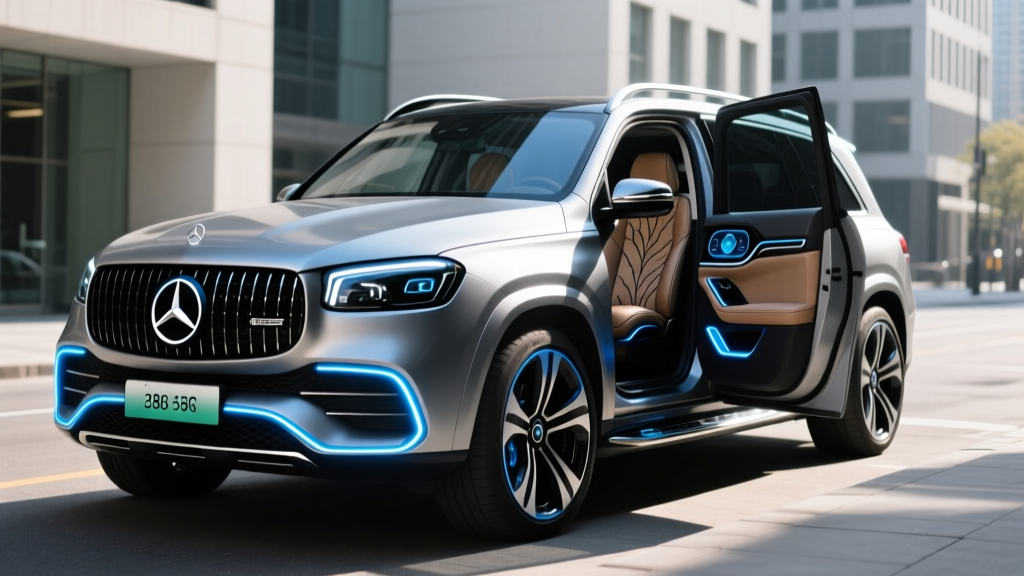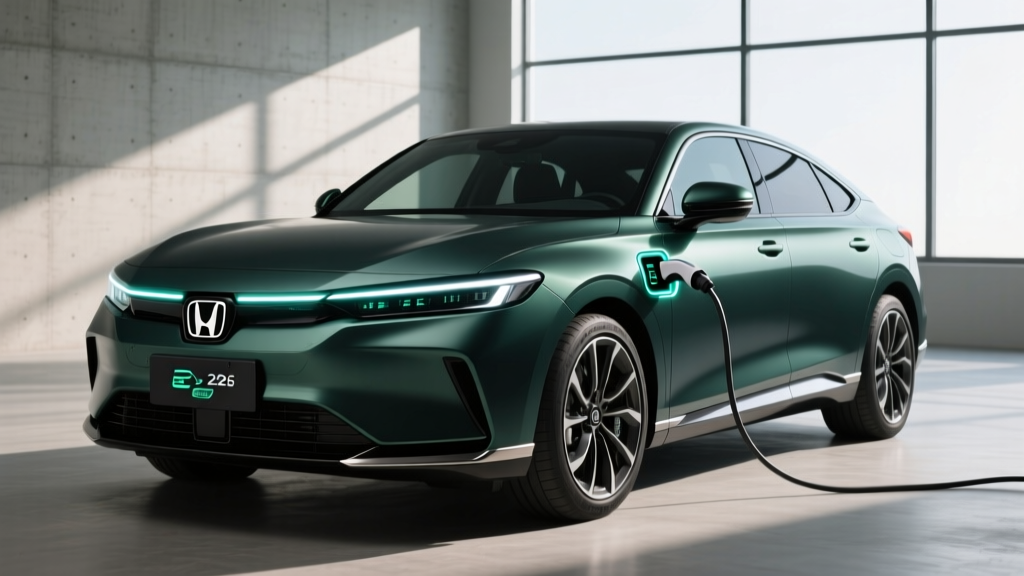
The Honda Prologue remains Honda's flagship electric SUV, built on General Motors' Ultium platform through a partnership that gave Honda a credible entry into the BEV market. For 2026, the Prologue carries over with minor palette adjustments and continued eligibility for the full federal tax credit when leased — making it one of the more accessible mid-size electric crossovers for families transitioning from gas. But beyond the paint options, does the Prologue's Ultium underpinnings deliver where it counts: range, charging speed, and daily usability?
This review covers every 2026 Honda Prologue color, trim, and specification you need before heading to the dealer — including real-world range expectations, DC fast-charging behavior, and the nuances of the §30D tax credit that determine your actual out-of-pocket cost.
2026 Honda Prologue Colors and Exterior Options
For 2026, Honda offers the Prologue in a curated selection of exterior colors across its three trims (EX, Touring, Elite). The palette leans conservative — fitting for a family-oriented SUV — but includes a few standouts:
- Raven Black — Metallic black, available on all trims
- Sonic Gray Pearl — A popular neutral metallic, all trims
- Pearl White Diamond — Tri-coat premium white, all trims
- Modern Steel Metallic — Dark gray, all trims
- North Shore Pearl — A warm off-white/cream, Touring and Elite only
- Pacific Blue Metallic — Deep blue, Touring and Elite only
- Scarlet Red Metallic — Rich burgundy-red, Elite exclusive
Elite trims also feature a two-tone roof option (black roof with select body colors), adding visual contrast that distinguishes it from lower trims. All colors use standard clear-coat finishes; Honda does not currently offer a matte or satin wrap option from the factory.
Wheel options scale with trim: the EX rides on 19-inch alloy wheels, while Touring and Elite step up to 21-inch wheels. Note that the larger 21-inch wheels reduce EPA range by approximately 10–15 miles compared to the 19-inch setup — a trade-off worth considering if maximizing range matters more than aesthetics.
Range, Efficiency, and Real-World Expectations
The 2026 Prologue is available with front-wheel drive (single motor) or all-wheel drive (dual motor). EPA range varies by drivetrain and wheel size:
| Trim / Drivetrain | EPA Range | MPGe (Combined) | kWh/100 mi |
|---|---|---|---|
| EX (FWD, 19" wheels) | 308 mi | 99 MPGe | 34 kWh |
| Touring (FWD, 19" wheels) | 308 mi | 99 MPGe | 34 kWh |
| Touring (AWD, 21" wheels) | 281 mi | 91 MPGe | 37 kWh |
| Elite (AWD, 21" wheels) | 281 mi | 91 MPGe | 37 kWh |
Battery Capacity, Chemistry, and Warranty
The Prologue uses GM's 85 kWh usable Ultium battery pack (approximately 102 kWh gross). The chemistry is NMC (nickel manganese cobalt), which is standard across the Ultium platform. NMC offers higher energy density than LFP (lithium iron phosphate), enabling the Prologue's competitive range in a mid-size SUV footprint, but it does not tolerate frequent 100% charging as well as LFP.
Battery care recommendation: For daily driving, set your charge limit to 80% to prolong long-term battery health. Reserve 100% charges for road trips. The Ultium battery management system includes a buffer (the difference between gross and usable capacity) that protects against deep discharge and overcharge degradation.
Honda backs the Prologue's battery and drive system with an 8-year/100,000-mile warranty, consistent with the federal mandate for EV powertrain components. The limited vehicle warranty covers 3 years/36,000 miles.
Charging Speed: DC Fast Charge and Home Level 2
Charging speed is where Ultium-platform vehicles have drawn scrutiny. The Prologue peaks at 155 kW on DC fast charging — adequate but not class-leading compared to Hyundai/Kia's 800V architecture (which peaks above 230 kW). Here's what the charge curve looks like in practice:
| Charging Level | Max Power | Speed / Time |
|---|---|---|
| Level 1 (120V household) | ~1.4 kW | ~3–4 miles per hour |
| Level 2 (240V, home/public) | 11.5 kW (48A) | ~30 miles per hour; full charge in ~9 hours |
| DC Fast Charge (CCS) | 155 kW peak | 10–80% in approximately 32 minutes |
Charge curve reality: The 155 kW peak is sustained only between roughly 10–40% state of charge. Above 60%, the rate tapers significantly — expect around 80–100 kW through the 60–80% window, and a crawl above 90%. This means a 10–80% session takes about 32 minutes at a capable 150+ kW charger, but a 10–95% session could stretch past 50 minutes. Preconditioning the battery (via the navigation-routed charging feature) is essential for achieving peak rates in cooler weather.
The Prologue uses the CCS1 connector for DC fast charging and the J1772 connector for Level 2 AC charging. Honda has not announced a transition to NACS (Tesla's connector) for the Prologue, though future models on Honda's own e-Architecture will adopt NACS. For now, CCS gives you access to Electrify America, EVgo, ChargePoint, and (via adapter) Tesla Superchargers.
Performance and Driving Dynamics
| Specification | FWD (EX/Touring) | AWD (Touring/Elite) |
|---|---|---|
| Horsepower | 220 hp | 288 hp |
| Torque | 236 lb-ft | 325 lb-ft |
| 0–60 mph | ~7.4 seconds | ~5.9 seconds |
| Drivetrain | Single front motor | Dual motor (front + rear) |
| Towing Capacity | Not rated | 1,500 lbs |
The AWD dual-motor setup transforms the Prologue from a competent commuter into a genuinely quick crossover. The 5.9-second 0–60 time is competitive with the Hyundai Ioniq 5 AWD and noticeably quicker than the Toyota bZ4X. Ride quality is tuned for comfort over sportiness — the Prologue absorbs highway imperfections well, though the 21-inch wheels on Touring and Elite trims transmit more road texture than the 19-inch setup on the EX.
Regenerative braking is adjustable via steering-wheel paddles, allowing a near-one-pedal driving experience at the strongest setting. It won't bring the Prologue to a complete stop and hold it (as some competitors do), but it handles most deceleration in city driving.
Interior Space, Cargo, and Technology
The Prologue's cabin dimensions reflect its mid-size SUV positioning:
- Front legroom: 41.4 inches
- Rear legroom: 38.3 inches
- Cargo volume (rear seats up): 25.2 cu ft
- Cargo volume (rear seats folded): 57.7 cu ft
- Front trunk (frunk): Not available — the Ultium platform packaging does not include a front cargo compartment
Rear-seat space is generous enough for adult passengers on longer trips, a genuine advantage over the Hyundai Ioniq 5's tighter rear quarters. Cargo capacity trails the Ioniq 5 and Tesla Model Y slightly, but the Prologue's flat load floor and 60/40 split-folding rear seats make it practical for family gear.
Infotainment: An 11.3-inch touchscreen with Google Built-in (Google Maps, Google Assistant, Play Store) runs the infotainment system. Wireless Apple CarPlay and Android Auto are standard on all trims. The system is responsive, though some Honda loyalists may miss the simpler interface of past Honda systems.
Driver assistance: Honda Sensing is standard across all trims, including adaptive cruise control with stop-and-go, lane-keeping assist, blind-spot monitoring, and rear cross-traffic alert. This is SAE Level 2 driver assistance — it requires continuous driver engagement and does not offer hands-free driving like GM's Super Cruise or Ford's BlueCruise.
Pricing, Trims, and Federal Tax Credit Eligibility
| Trim | Drivetrain | Base MSRP | Est. After Lease Credit* |
|---|---|---|---|
| EX | FWD | $47,400 | ~$39,900 |
| Touring | FWD | $51,400 | ~$43,900 |
| Touring | AWD | $53,400 | ~$45,900 |
| Elite | AWD | $57,900 | ~$50,400 |
*Lease credit estimate reflects the $7,500 commercial clean vehicle credit (§45W) that leasing companies can pass through to lessees as a capitalized-cost reduction. Actual dealer pricing varies.
Tax credit details: The Prologue qualifies for the full $7,500 federal EV tax credit under §30D when purchased, provided the buyer meets all requirements. However, the purchase credit has strict eligibility rules. The more accessible path for most buyers is leasing: under the IRS commercial vehicle credit (§45W), the leasing company claims the $7,500 credit and typically passes it to the lessee as a cap-cost reduction — no income caps, no MSRP caps, no battery-sourcing requirements apply to the lessee.
- MSRP must not exceed $80,000 for SUVs (Prologue qualifies)
- Buyer AGI: ≤ $150,000 single / ≤ $300,000 married filing jointly
- Battery critical minerals and components must meet phased sourcing thresholds (check fueleconomy.gov for current-year compliance)
- Vehicle must be assembled in North America (Prologue: assembled in Ramos Arizpe, Mexico — confirm current eligibility at purchase time)
- Credit is non-refundable but can be transferred to the dealer as a point-of-sale rebate
How the Prologue Compares to Key Competitors
The Prologue competes in a crowded mid-size electric SUV segment. Here's how it stacks up against the most common cross-shops:
- vs. Hyundai Ioniq 5: The Ioniq 5 charges significantly faster (233 kW peak, 10–80% in ~18 min) and offers a frunk, but has less rear legroom. The Prologue wins on interior space and traditional SUV styling; the Ioniq 5 wins on charging speed and retro-futuristic design.
- vs. Tesla Model Y: The Model Y offers more cargo space, access to the native Supercharger network, and faster acceleration. The Prologue counters with a more conventional cabin layout, physical buttons for climate controls, and — for many buyers — a more familiar dealership experience for service.
- vs. Toyota bZ4X: The Prologue is quicker, has more range, and charges faster than the bZ4X. The Toyota is only competitive on price at the base trim and lacks the Prologue's powertrain refinement.
- vs. Chevrolet Equinox EV: A close cousin on the Ultium platform. The Equinox EV offers slightly more range (up to 319 mi) and a lower starting price, but the Prologue's interior materials and ride tuning feel more premium.
Pros, Cons, and Who Should Buy the Prologue
- Comfortable, spacious cabin with generous rear legroom
- Google Built-in infotainment is intuitive and well-integrated
- AWD Elite is genuinely quick (5.9s 0–60)
- $7,500 lease credit makes pricing very competitive
- Honda Sensing ADAS suite is standard on all trims
- Heat pump for improved cold-weather efficiency
- 155 kW DC fast-charging peak is below segment leaders
- No frunk (front trunk) — missed cargo opportunity
- MSRP is high without the lease credit incentive
- CCS connector requires adapter for Tesla Superchargers
- 21-inch wheels noticeably reduce range
- No hands-free driving feature (only Level 2 ADAS)
- Choose the Prologue if you want a comfortable, spacious mid-size electric SUV with a traditional driving feel, value Google-integrated infotainment, and plan to lease to capture the full $7,500 credit. It's ideal for suburban families with home Level 2 charging who need rear-seat space for kids or adults.
- Look elsewhere if fast DC charging on road trips is your top priority (consider the Ioniq 5 or Kia EV6), you need a frunk for gear, or you want access to the Tesla Supercharger network without adapters.
Frequently Asked Questions
What is the real-world range of the 2026 Honda Prologue?
The EPA rates the FWD Prologue at 308 miles and the AWD at 281 miles. In real-world highway driving at 70–75 mph, expect approximately 260–275 miles (FWD) or 235–250 miles (AWD). In cold weather below 30°F, subtract another 20–30%, bringing AWD winter highway range to roughly 195–220 miles.
How fast does the Prologue charge at home and on the road?
On a Level 2 home charger (240V, 48A), the Prologue charges at 11.5 kW, adding about 30 miles of range per hour — a full charge takes roughly 9 hours. On DC fast chargers, it peaks at 155 kW and charges from 10–80% in about 32 minutes, though the rate tapers above 60% SoC.
How much does the Honda Prologue cost after tax credits?
When leased, most buyers can capture a $7,500 credit passed through from the leasing company, bringing the effective EX trim price to approximately $39,900. When purchasing, the §30D credit of up to $7,500 is available if you meet income, MSRP, and battery-sourcing requirements — consult a tax professional and check fueleconomy.gov for current eligibility.
Does the Honda Prologue qualify for the federal EV tax credit?
Yes, but with important caveats. When leased, the $7,500 commercial clean vehicle credit (§45W) applies with no buyer income or MSRP restrictions. When purchased, §30D eligibility depends on buyer AGI (≤$150K single / ≤$300K joint), the vehicle's MSRP (must be under $80K for SUVs — Prologue qualifies), and battery component/critical-mineral sourcing requirements that change annually. Assembly location (Mexico) may affect purchase eligibility depending on current-year rules.
Is the Honda Prologue worth buying over the competition?
The Prologue is a strong choice for buyers who prioritize interior space, comfort, and a conventional SUV experience, especially at lease-adjusted pricing. It falls short of the Hyundai Ioniq 5 and Kia EV6 on DC charging speed, and it lacks the cargo versatility (frunk) and native Supercharger access of the Tesla Model Y. For Honda-loyal families wanting their first EV, the Prologue delivers a refined, well-equipped package — just plan road-trip charging stops carefully given the 155 kW peak rate.
What colors are exclusive to certain Prologue trims?
North Shore Pearl and Pacific Blue Metallic are available only on Touring and Elite trims. Scarlet Red Metallic is exclusive to the Elite trim. All trims share Raven Black, Sonic Gray Pearl, Pearl White Diamond, and Modern Steel Metallic. The Elite also offers a two-tone roof option.