Quick Verdict: Is the Electric G-Wagon Worth It?
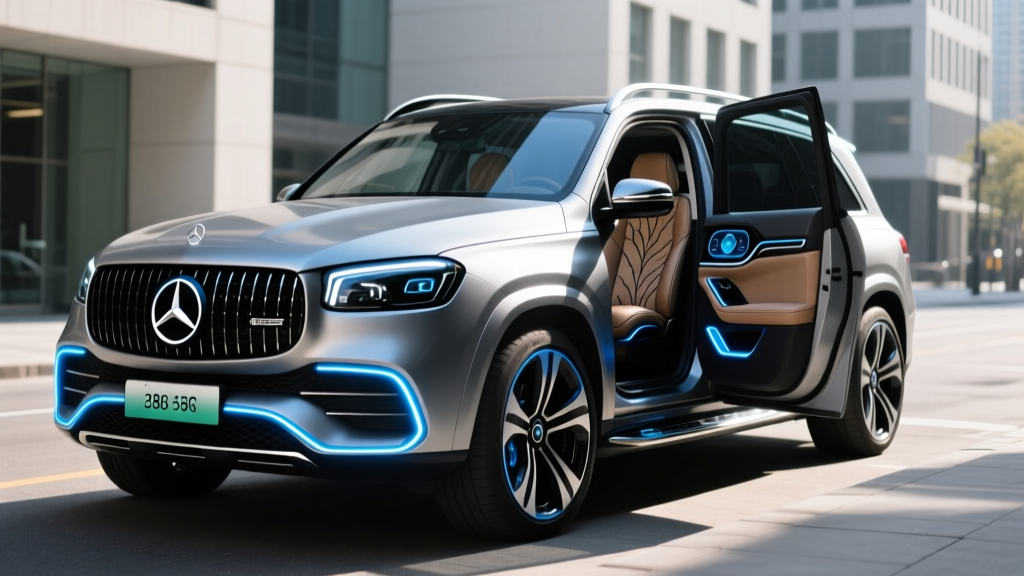
The 2026 Mercedes-Benz G 580 with EQ Technology — the electric G-Wagon — starts at $162,900 MSRP (including destination) and delivers an EPA-estimated 239 miles of range from a 116 kWh (usable) lithium-ion battery. With 576 horsepower, 855 lb-ft of torque, and a 0-60 mph time of 4.6 seconds, it matches or exceeds the outgoing G 550 in performance while eliminating tailpipe emissions. However, its real-world highway range drops to roughly 190-210 miles, DC fast charging peaks at 200 kW (10-80% in approximately 32 minutes), and it does not qualify for the $7,500 federal EV tax credit due to its price exceeding the IRS §30D SUV MSRP cap of $80,000. This is a luxury statement vehicle, not a value play — buyers should expect total first-year ownership costs near $180,000-$195,000 when factoring insurance, charging infrastructure, and taxes.
Range, Battery, and Real-World Efficiency
The G 580 EQ uses a floor-mounted battery pack with a usable capacity of approximately 116 kWh, employing NMC (nickel-manganese-cobalt) chemistry for high energy density. The EPA rates it at 239 miles of combined range, with an efficiency figure of roughly 54 MPGe (combined) — a reflection of the G-Wagon's brick-like aerodynamics (Cd of approximately 0.53) and 6,100+ lb curb weight.
Real-World Range Expectations
EPA Sticker: 239 miles (combined)
Highway (70 mph, 75°F): ~190-210 miles — the boxy shape and tall frontal area punish efficiency at speed
Cold Weather (30°F, mixed driving): ~165-185 miles — expect 20-25% range loss without preconditioning
City/Stop-and-Go: ~240-260 miles — regenerative braking recovers energy effectively in urban traffic
Bottom line: Plan trips around a 180-mile practical range buffer for highway road trips. The G 580 is at its best as a city and suburban luxury cruiser.
| Specification | Value |
|---|---|
| EPA Range | 239 miles |
| Battery (usable) | 116 kWh, NMC chemistry |
| Peak DC Fast Charge | 200 kW |
| 10-80% DC Charge Time | ~32 minutes |
| Level 2 AC Charge (11 kW) | ~11 hours (0-100%) |
| Horsepower | 576 HP (4 electric motors) |
| Torque | 855 lb-ft |
| 0-60 mph | 4.6 seconds |
| Drivetrain | AWD (individual motor per wheel) |
| Towing Capacity | Not yet rated (estimated ~5,000 lbs) |
| Base MSRP | $162,900 (incl. destination) |
| Battery Warranty | 10 years / 155,000 miles |
| Vehicle Warranty | 4 years / 50,000 miles |
Charging: Home Setup and Public Network Reality
The G 580 EQ charges via a CCS1 connector in North America (Mercedes has confirmed NACS adapter availability for Tesla Supercharger access). Its 800-volt architecture enables a peak DC fast-charge rate of 200 kW, though the large 116 kWh pack means even at peak rate, a 10-80% session takes approximately 32 minutes. The charge curve tapers significantly above 80% SoC — a 10-100% session will run closer to 55 minutes.
| Charging Level | Power (kW) | Miles Added per Hour | Notes |
|---|---|---|---|
| Level 1 (120V / 12A) | ~1.4 kW | ~3 mi/hr | Emergency/trickle only — impractical for daily use |
| Level 2 (240V / 48A) | 11.5 kW | ~25 mi/hr | Full charge in ~11 hours; ideal for overnight |
| Level 2 (240V / 80A circuit) | 11 kW (vehicle-limited) | ~24 mi/hr | Vehicle onboard charger caps at 11 kW AC |
| DC Fast Charge | Up to 200 kW | ~250+ mi/hr (peak) | 10-80% in ~32 min; tapers above 80% |
Home charging is effectively mandatory for G 580 ownership. A Level 2 home charger (240V, 60A circuit with a 48A charger) will replenish approximately 250 miles overnight — more than enough for daily driving. Expect a professional installation to cost $1,200-$3,500 depending on panel capacity and wiring distance. Homes with 100A electrical panels may need a $2,000-$5,000 panel upgrade to 200A to support continuous Level 2 charging alongside other household loads.
For public charging, the G 580 can use Electrify America, EVgo, and ChargePoint DC fast-charger networks via CCS1, or Tesla Superchargers (V3 and V4) with the NACS adapter. At a 350 kW Electrify America stall, the G 580 will be limited by its own 200 kW peak — so don't expect to match a Porsche Taycan's charge speed.
Electric G-Wagon vs. Gas G 550: Cost and Performance Comparison
The most direct comparison for the G 580 EQ is the gas-powered Mercedes-Benz G 550, which continues alongside it. Here's how they stack up on paper and in practice:
| Attribute | G 580 EQ (Electric) | G 550 (Gas) |
|---|---|---|
| Base MSRP | $162,900 | $149,900 |
| Powertrain | Quad-motor AWD, 576 HP | 3.0L Turbo I6 + 48V mild hybrid, 443 HP |
| 0-60 mph | 4.6 seconds | 5.3 seconds |
| EPA Range / Fuel Economy | 239 mi / 54 MPGe | ~17 MPG combined |
| Annual Fuel/Energy Cost* | ~$1,450 (electricity) | ~$4,350 (premium gas) |
| Estimated Annual Maintenance | ~$400-$600 | ~$1,200-$1,800 |
| Federal Tax Credit (§30D) | Not eligible (MSRP > $80K cap) | N/A |
| Estimated Annual Insurance | ~$5,500-$7,500 | ~$4,800-$6,500 |
*Based on 12,000 miles/year, $0.16/kWh national average electricity rate, and $4.50/gallon premium unleaded. Your costs will vary by state and utility rate. Source: fueleconomy.gov and AAA fuel cost data.
The G 580 costs approximately $13,000 more upfront than the G 550, but saves roughly $3,000-$3,500 per year in combined fuel and maintenance costs. That means the electric version breaks even on operating costs in about 4 years — though depreciation on a $163K luxury EV remains an open question. Early data suggests high-end EVs depreciate faster than their gas counterparts in the first 3 years, potentially offsetting operational savings.
Total Cost of Ownership: 5-Year Breakdown
| Cost Category | G 580 EQ (Electric) | G 550 (Gas) |
|---|---|---|
| Purchase Price (MSRP) | $162,900 | $149,900 |
| Federal Tax Credit | $0 | $0 |
| Home Charger Install | $2,500 | $0 |
| Fuel/Energy (5 yrs, 60K mi) | $7,250 | $21,750 |
| Maintenance (5 yrs) | $2,500 | $7,500 |
| Insurance (5 yrs, estimated) | $32,500 | $28,000 |
| Estimated Depreciation (5 yrs) | ~$85,000-$95,000 | ~$65,000-$75,000 |
| Total Estimated 5-Yr Cost | ~$290,000-$300,000 | ~$270,000-$280,000 |
Depreciation estimates based on luxury EV resale trends (2023-2025 data). Actual values will depend on market conditions, mileage, and condition. Insurance estimates based on luxury SUV profiles from major carriers.
The numbers are clear: the G 580 EQ will likely cost more over 5 years than the G 550, primarily due to steeper projected depreciation and higher insurance premiums. The fuel and maintenance savings are real but not enough to close the gap at this price point. Buyers motivated by performance, instant torque, novelty, and zero tailpipe emissions will find the premium worthwhile. Pure-cost buyers should opt for the G 550.
Common Misconceptions About the Electric G-Wagon
| Myth | Fact |
|---|---|
| "It gets the $7,500 federal tax credit." | No. IRS §30D caps SUV credits at $80,000 MSRP. At $162,900, the G 580 is well above the threshold. See IRS §30D guidelines. |
| "It can't go off-road because it's electric." | Wrong. The quad-motor setup enables G-Turns (tank turns), individual wheel torque vectoring, and wading depth of 33.5 inches — exceeding the gas G-Wagon's capability in several metrics. |
| "Range is the same as the EPA sticker." | The 239-mile EPA figure is a combined cycle. Highway driving at 75+ mph drops range to ~190-210 miles. Cold weather can push it below 180 miles. |
| "Charging takes too long for road trips." | A 10-80% DC fast charge takes ~32 minutes at a 200 kW+ station. That's longer than a Porsche Taycan (~22 min) but comparable to other large-battery EVs. Plan stops accordingly. |
| "Electric motors can't handle off-road abuse." | Electric motors deliver instant, precise torque at zero RPM — an advantage for rock crawling. The G 580 includes underbody protection for the battery pack and IP67-rated motor housings. |
Who Should Buy the G 580 EQ — and Who Shouldn't
The electric G-Wagon occupies a narrow but real niche. Here's a practical decision framework:
Choose the G 580 EQ (Electric) If:
- You have reliable home Level 2 charging — a 240V/48A setup is essential. Without it, daily ownership becomes a public-charging chore.
- Your daily driving is under 120 miles round-trip — the G 580 excels as a city/suburban luxury SUV where regenerative braking maximizes range.
- You want cutting-edge off-road tech — G-Turns, torque vectoring, and silent trail running are genuine advantages over the gas version.
- Performance and novelty matter more than resale value — 576 HP with instant torque and head-turning factor are the real draws.
- You live in a region with reliable DC fast-charging infrastructure — Electrify America, EVgo, or Tesla Supercharger coverage within 15 minutes of your home.
Choose the G 550 (Gas) Instead If:
- You regularly drive 300+ miles between stops — the gas G 550's ~400-mile range and 5-minute refueling make road trips significantly easier.
- You lack home charging access — apartment/condo living without a dedicated charger makes EV ownership frustrating at this price point.
- 5-year total cost matters — the G 550 will likely retain value better and costs ~$20,000-$30,000 less over 5 years.
- You live in extreme cold climates — North Dakota, Montana, or interior Alaska winters will compress the G 580's range to 160-170 miles. The gas version is more predictable.
- You tow regularly — the G 550 has a proven 7,000-lb tow rating. The G 580's towing capacity is not yet fully rated and heavy towing will drastically reduce range.
What First-Time EV Buyers Need to Know Before Ordering
If the G 580 EQ is your first EV, here are the practical realities that don't appear in the brochure:
1. Home electrical assessment first. Before placing a deposit, hire a licensed electrician to evaluate your panel. A 200A panel with available breaker slots is ideal. If you need a panel upgrade, budget $2,000-$5,000 and a 2-6 week permitting timeline depending on your municipality.
2. Preconditioning is non-negotiable for fast charging. The G 580's battery thermal management system works best when you navigate to a DC fast charger using the built-in navigation. This triggers battery preconditioning — warming or cooling the pack to optimal temperature. Skip this step and your peak charge rate may drop from 200 kW to 120-140 kW, adding 10-15 minutes to your stop.
3. Insurance will be significantly higher. Luxury EVs carry premium insurance costs due to expensive battery replacement ($30,000-$45,000 estimated for the G 580's pack), specialized repair requirements, and higher parts costs. Get quotes from at least three carriers before committing. Expect $5,500-$7,500/year for a clean-record driver in a major metro area.
4. Tire costs are real. The G 580's quad-motor torque and 6,100+ lb weight will wear through tires faster than the gas version. Budget $1,500-$2,500 for a set of premium all-season or all-terrain tires every 25,000-35,000 miles.
5. Software updates and connectivity. Mercedes-Benz MBUX in the G 580 receives over-the-air updates. Some features (e.g., certain drive modes, navigation enhancements) may require a Mercedes me connect subscription after the initial trial period — typically $10-$25/month depending on the package.
Frequently Asked Questions
Does the electric G-Wagon qualify for any federal or state EV incentives?
No federal incentive. The IRS §30D new clean vehicle credit caps SUVs at $80,000 MSRP, and the G 580 starts at $162,900. Some states offer additional rebates or HOV lane access regardless of price — check your state's EV incentive program. Consult a tax professional for eligibility details, as rules change frequently.
How long will the G 580's battery last?
Mercedes-Benz warranties the battery for 10 years or 155,000 miles, guaranteeing a minimum of 70% capacity retention. NMC chemistry typically degrades 1-2% per year under normal use. Based on industry data, expect 85-90% state of health (SoH) at 100,000 miles. Avoid frequent DC fast charging above 90% SoC and storing the vehicle at 100% charge for extended periods to maximize longevity.
Can the G 580 EQ handle serious off-roading?
Yes, and in some ways it outperforms the gas G-Wagon. The four independent motors allow precise torque vectoring to individual wheels, G-Turns (360° tank turns on loose surfaces), and crawl modes with instant torque at zero RPM. Ground clearance is approximately 9.5 inches, and the battery is protected by a reinforced underbody plate. Wading depth reaches 33.5 inches. That said, deep remote trails without charging access remain a limitation — plan accordingly.
What happens if I need to replace the battery out of warranty?
Out-of-warranty battery replacement for a 116 kWh pack is estimated at $30,000-$45,000 based on current luxury EV battery pricing. This is a worst-case scenario — most degradation issues are covered under the 10-year warranty. Mercedes has indicated that individual module replacement (rather than full pack replacement) may be possible, which could reduce costs, but pricing is not yet confirmed for the G 580.
Is the electric G-Wagon heavier than the gas version?
Yes. The G 580 EQ has a curb weight of approximately 6,400 lbs, compared to roughly 5,500 lbs for the G 550. The 900-lb difference comes from the battery pack. This additional mass affects tire wear, braking distances, and off-road dynamics on soft surfaces, though the low center of gravity from the floor-mounted pack improves on-road stability.
How does the G 580 compare to the Rivian R1S or Tesla Model X as an electric SUV?
These are fundamentally different vehicles. The Rivian R1S (starting ~$79,900, up to 410 miles EPA range) and Tesla Model X (starting ~$84,990, up to 335 miles EPA range) offer more range, lower prices, and better efficiency. The G 580's value proposition is heritage design, off-road prestige, and the Mercedes luxury experience — not efficiency or range-per-dollar. Buyers cross-shopping on specs alone will find better numbers elsewhere.
Sources: Mercedes-Benz USA G-Class specifications, fueleconomy.gov (EPA range and efficiency data), IRS §30D New Clean Vehicle Credit. All pricing and specifications reflect the 2026 model year and are subject to change. Verify current figures with your local Mercedes-Benz dealer and the IRS before purchasing.