The Short Answer: Is the New Electric Honda Worth It?
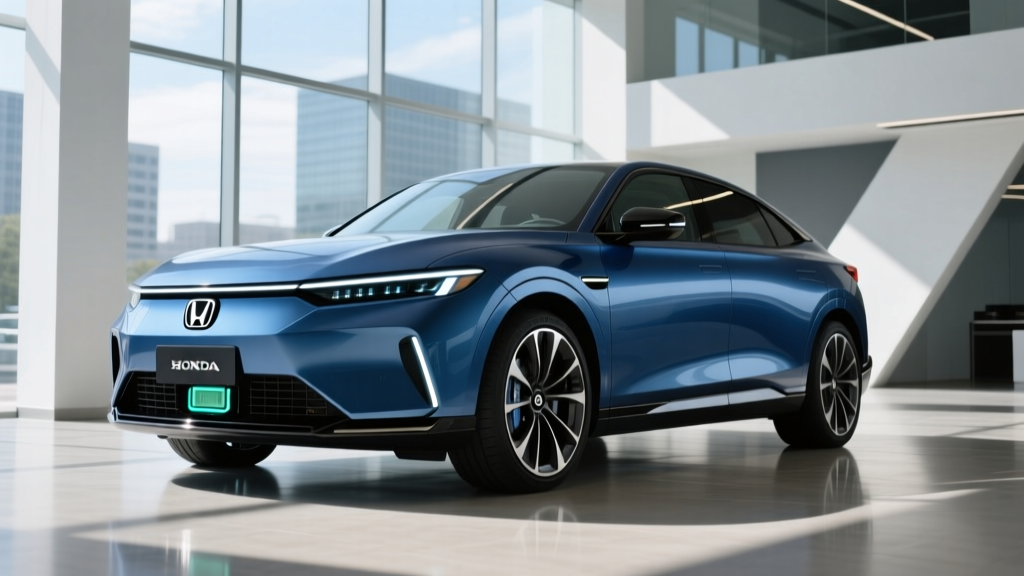
If you're researching a new electric Honda, you're looking at the 2026 Honda Prologue — Honda's only fully electric vehicle currently on sale in the US. Built on GM's Ultium platform, the Prologue delivers an EPA-estimated 296 miles of range (FWD trims), a usable 85 kWh NMC battery, and DC fast charging up to 150 kW (10–80% in roughly 32 minutes). Pricing starts at approximately $47,400 before destination, though federal and state incentives can significantly reduce your out-of-pocket cost. It's a competent midsize electric SUV for daily commuting and road trips, but buyers should weigh it carefully against Honda's own hybrid lineup and competing EVs before committing.
2026 Honda Prologue: Core Specs at a Glance
| Specification | FWD (EX/LX) | AWD (EX-L/Touring) |
|---|---|---|
| EPA Range | 296 mi | 281 mi |
| Battery (Usable) | 85 kWh, NMC (Nickel Manganese Cobalt) | |
| Horsepower | 212 hp | 288 hp |
| 0–60 mph | ~7.5 sec | ~6.2 sec |
| Max DC Fast Charge | 150 kW peak | |
| 10–80% DC Charge Time | ~32 minutes | |
| Level 2 (240V) Rate | 11.5 kW (~7.7 kW sustained on some trims) | |
| MPGe (Combined) | 100 MPGe | 94 MPGe |
| Cargo Volume | 25.2 cu ft (rear up) / 57.7 cu ft (rear folded) | |
| Starting MSRP | ~$47,400 | ~$52,900 (Touring) |
| Battery/Powertrain Warranty | 8 years / 100,000 miles | |
Sources: fueleconomy.gov, Honda Prologue Official Specs. Real-world range in cold weather (below 32°F) or sustained highway driving at 75+ mph typically drops 15–25% — expect roughly 220–250 miles in those conditions.
Real-World Range Reality Check
The EPA's 296-mile sticker applies to FWD trims under mixed driving. On a 70-mph highway run in moderate temperatures, expect 250–265 miles before needing a charge. In winter conditions (20°F or below), plan for 210–230 miles of usable range. The Prologue lacks a heat pump (it uses resistive cabin heating), which increases energy draw in cold weather compared to EVs equipped with heat-pump HVAC systems.
Prologue EV vs. Honda CR-V Hybrid: The Cost Comparison Buyers Need
The most common cross-shop for Prologue buyers isn't another EV — it's Honda's own CR-V Hybrid, which starts around $35,700 and returns an EPA-estimated 40 MPG combined. Here's how a 5-year ownership comparison breaks down for a driver covering 12,000 miles per year:
| Cost Factor (5 Years / 60,000 mi) | 2026 Prologue FWD | 2026 CR-V Hybrid AWD |
|---|---|---|
| Base MSRP | $47,400 | $35,700 |
| Est. Federal Tax Credit (§30D) | Up to $7,500* | $0 |
| Effective Purchase Price | ~$39,900 | $35,700 |
| Fuel / Energy Cost | ~$3,600 (home charging at $0.14/kWh) | ~$5,850 (gas at $3.25/gal, 40 MPG) |
| Maintenance (est.) | ~$1,200 | ~$2,800 |
| Insurance (est. avg) | ~$9,500 | ~$7,800 |
| 5-Year Total (excl. depreciation) | ~$54,200 | ~$52,150 |
*Federal §30D credit eligibility depends on MSRP caps (SUVs: $80,000), buyer income limits ($150K single / $300K joint AGI), battery sourcing requirements, and point-of-sale transfer rules. Verify current-year eligibility at irs.gov and consult a tax professional. Credit amounts and sourcing rules are subject to legislative change.
The Prologue saves roughly $2,250 on fuel and $1,600 on maintenance over five years (no oil changes, fewer brake replacements due to regenerative braking). However, higher insurance premiums — typically 15–25% more for EVs — and a higher starting price narrow the gap. If you qualify for the full $7,500 credit and primarily charge at home, the Prologue reaches near cost-parity. Without the credit or without home charging access, the CR-V Hybrid remains the more economical choice.
Charging the Prologue: What You Actually Need to Know
Understanding the difference between kW (power, or how fast energy flows) and kWh (energy, or how much the battery holds) is essential. The Prologue's battery stores 85 kWh of usable energy. Its charger can accept power at up to 150 kW. Here's what charging looks like across the three levels:
| Charging Level | Power Output | Miles Added per Hour | Best For |
|---|---|---|---|
| Level 1 (120V household) | ~1.2 kW | ~4–5 mi/hr | Overnight top-ups, low-mileage drivers |
| Level 2 (240V home/public) | 7.7–11.5 kW | ~25–38 mi/hr | Daily home charging, full overnight refill |
| DC Fast Charge | Up to 150 kW peak | ~150+ mi in 15 min (peak) | Road trips, quick top-ups |
Home charging setup: A Level 2 home charger (240V, 48-amp circuit) will refill the Prologue's 85 kWh battery from empty in approximately 9–10 hours. Installation costs vary widely:
| Item | Typical Cost Range |
|---|---|
| Level 2 Charger (hardware) | $400–$750 |
| Electrician labor (240V run, 50-amp circuit) | $800–$2,500 |
| Permit & inspection | $100–$400 |
| Panel upgrade (if needed, 200A service) | $1,500–$4,000 |
| Total (without panel upgrade) | $1,300–$3,650 |
Always have a licensed electrician assess your panel capacity before purchasing equipment. Homes with older 100-amp service may require an upgrade to support a dedicated 48-amp EV circuit alongside existing loads.
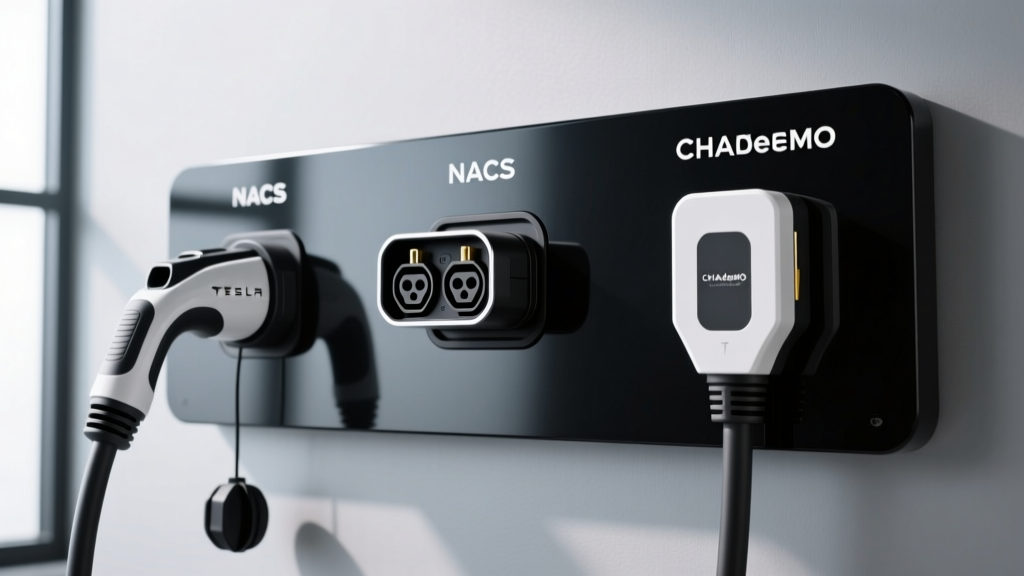
DC fast charging reality: The Prologue peaks at 150 kW but doesn't sustain that rate. The charge curve tapers significantly above 80% State of Charge (SoC) to protect battery health. A 10–80% session takes roughly 32 minutes, but pushing from 80–100% can add another 25–30 minutes. On road trips, plan stops around the 10–80% window for maximum efficiency. The Prologue uses the CCS1 connector for DC fast charging (with a NACS adapter available for Tesla Supercharger access via Honda's partnership).
Federal Tax Credit Eligibility: Can You Actually Get $7,500?
The §30D Clean Vehicle Credit is the single biggest financial variable in your Prologue purchase. Here's the current eligibility checklist:
- MSRP cap: Vehicle MSRP must not exceed $80,000 for SUVs (Prologue qualifies)
- Buyer income cap: Modified AGI ≤ $150,000 (single) / $225,000 (head of household) / $300,000 (joint)
- Battery sourcing: Critical minerals and battery components must meet phased-in percentages from US or free-trade-agreement countries — Honda has worked to qualify, but verify the specific model year/build on the IRS eligible vehicle list
- Assembly: Final assembly must occur in North America (Prologue is assembled in Ramos Arizpe, Mexico — qualifies)
- Point-of-sale transfer: You can transfer the credit to the dealer at purchase for an immediate price reduction, or claim it on your tax return
- One-time use: You can only claim the new-vehicle credit once every three years
Rules are subject to legislative and regulatory change. Always verify on irs.gov before purchasing. State incentives (California, Colorado, Massachusetts, and others offer additional rebates) are separate and vary by jurisdiction — check your state's energy or DMV website.
EV vs. Hybrid vs. Gas: Which Honda Is Right for You?
| Factor | Prologue (BEV) | CR-V Hybrid (HEV) | CR-V (Gas) |
|---|---|---|---|
| EPA Range / MPG | 296 mi / 100 MPGe | ~520 mi / 40 MPG | ~440 mi / 30 MPG |
| Energy Cost per Mile | ~$0.06 (home) | ~$0.08 | ~$0.11 |
| Home Refueling? | Yes (Level 2) | No (gas station) | No (gas station) |
| Road-Trip Convenience | 30-min charge stops | 5-min gas stops | 5-min gas stops |
| Cold-Weather Impact | 15–25% range loss | Minimal MPG loss | Minimal MPG loss |
| Maintenance Needs | Minimal (tires, cabin filter) | Moderate (oil, brakes, filters) | Moderate (oil, brakes, filters) |
| Tax Credit Eligible? | Up to $7,500 | No | No |
Decision Framework: Which Honda Should You Buy?
Choose the Prologue (EV) if:
- You have reliable home charging (garage or driveway with 240V access)
- Your daily commute is under 80 miles round-trip
- You qualify for the federal tax credit and/or state EV rebates
- You want minimal maintenance and lower per-mile energy cost
- You take road trips 3–4 times per year or fewer (manageable DC charging)
Choose the CR-V Hybrid if:
- You lack home charging access (apartment, street parking, no 240V circuit)
- You regularly drive 300+ miles between stops or live in a charging-desert region
- You live in an extreme cold-weather climate where EV range loss is a daily concern
- You want a lower purchase price and don't qualify for the EV tax credit (income above cap)
- You tow or carry heavy loads frequently (hybrid range is unaffected by load)
Common Misconceptions About the New Electric Honda
| Myth | Fact |
|---|---|
| "The Prologue is just a rebadged Chevy Blazer EV." | While it shares GM's Ultium platform and battery architecture, Honda engineered its own suspension tuning, interior, infotainment (Honda-specific software), and exterior design. Driving dynamics and cabin experience differ. |
| "EV batteries need replacing every 5 years." | NMC batteries in modern EVs like the Prologue are warrantied for 8 years/100,000 miles with a capacity-retention threshold (typically 70%+). Real-world degradation data from similar Ultium packs shows roughly 5–8% capacity loss over 100,000 miles. Full replacement is rarely needed within the vehicle's practical lifespan. |
| "I can't take it on road trips." | With 281–296 miles of range and 150 kW DC fast charging (adding ~150 miles in 15 minutes at peak), the Prologue handles road trips with 25–35 minute stops every 2.5–3 hours. Apps like PlugShare and A Better Routeplanner make trip planning straightforward. |
| "Electricity from coal makes EVs worse than gas cars." | Even on the most coal-heavy US grids, lifecycle emissions for EVs are lower than comparable gas vehicles (per DOE/Argonne analysis). On the average US grid mix, the Prologue produces roughly 50–60% fewer lifecycle CO₂ emissions than the gas CR-V. As grids decarbonize, this gap widens further. |
| "Home charging is too expensive to install." | A basic Level 2 install without a panel upgrade averages $1,300–$3,650. Some utilities offer rebates of $250–$1,000 for charger installation. Over 5 years, home-charging fuel savings ($2,250+ vs. gas) often recoup the installation cost entirely. |
What First-Time EV Buyers Should Know Before Purchasing
If the Prologue is your first EV, here are the practical ownership realities no brochure will tell you:
Preconditioning matters. The Prologue can precondition its battery (warm it to optimal temperature) before a DC fast-charging session. Navigating to a charger via the built-in navigation triggers this automatically. Skipping preconditioning in cold weather can cut your peak charge rate by 30–50%, turning a 32-minute stop into a 50-minute stop.
Regenerative braking changes how you drive. The Prologue offers adjustable regen levels via paddle shifters. At maximum regen, you can drive in near-one-pedal mode — lifting off the accelerator slows the car significantly, recapturing energy back into the battery. This extends range in stop-and-go traffic and reduces brake pad wear (many EV owners go 80,000+ miles on original brake pads).
Tire costs are higher. EVs are heavier (the Prologue weighs ~4,700 lbs) and deliver instant torque, which accelerates tire wear. Budget for replacement tires every 30,000–40,000 miles rather than the 50,000–60,000 miles typical for gas SUVs. EV-specific touring tires (like the Michelin e.Primacy or Continental EcoContact EV) can help optimize range and noise.
Insurance is typically 15–25% higher. EV repair costs (especially battery-adjacent damage) and higher vehicle prices drive premiums up. Get an insurance quote before purchasing — the difference can be $200–$500 per year depending on your profile and state.
Public charging reliability varies. Networks like Electrify America and EVgo work well in many areas but can have offline or broken chargers. Always have a backup charging location on road trips. Honda provides access to multiple networks through the HondaLink app, and the available NACS adapter opens the Tesla Supercharger network (15,000+ stalls) for additional coverage.
Frequently Asked Questions
Is Honda making any other electric vehicles besides the Prologue?
As of 2026, the Prologue is Honda's only all-electric vehicle sold in the US. Honda has announced a next-generation EV lineup built on its own dedicated "Honda e:Architecture" platform, with models expected starting in the 2026–2027 timeframe, but these are not yet available for purchase. The smaller Honda Motocompacto is an electric scooter, not a car.
Does the Prologue qualify for the full $7,500 federal tax credit?
The Prologue has qualified for partial or full §30D credit depending on the model year and build date, but eligibility hinges on battery-sourcing requirements that change annually. Verify the specific VIN on the IRS eligible vehicle list at irs.gov before purchase, and confirm your income falls within the AGI caps.
How long does the Prologue battery last?
Honda warranties the battery for 8 years / 100,000 miles against defects and excessive capacity loss (below ~70% State of Health). Based on degradation patterns from similar NMC Ultium packs, expect roughly 5–10% capacity loss over the first 100,000 miles — meaning a 296-mile range might become approximately 270–280 miles after several years of normal use. Full battery replacement costs, if ever needed out of warranty, are estimated at $12,000–$18,000 but are extremely rare within the first decade.
Can I charge the Prologue at Tesla Superchargers?
Yes, Honda offers a NACS adapter that enables Prologue owners to access Tesla's Supercharger network (V2 and V3 stalls). The Prologue's native connector is CCS1 for non-Tesla DC fast chargers. Confirm adapter availability and any cost with your dealer at purchase.
Is the Prologue good in snow and cold weather?
The AWD trims (EX-L and Touring) provide capable all-weather traction, and the instant torque delivery helps in slippery conditions. However, expect 15–25% range reduction in sustained sub-freezing temperatures due to battery chemistry and resistive cabin heating (the Prologue does not use a heat pump). Preconditioning while plugged in mitigates some of this loss. If you live in a harsh-winter climate, the AWD Touring trim with its 281-mile EPA range provides a reasonable buffer.