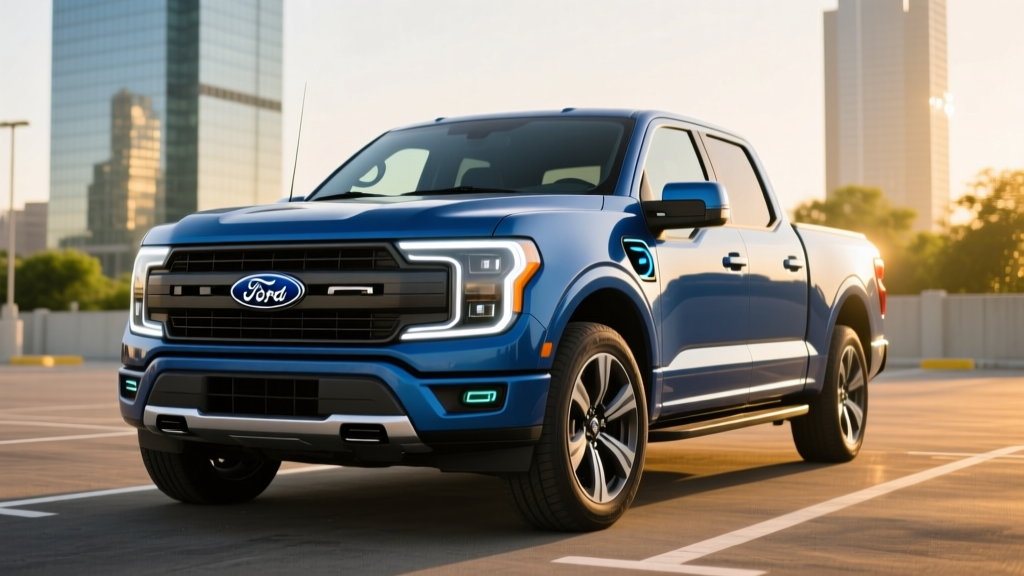
The Ford F-150 Lightning remains one of the most practical full-size electric pickups on the market, balancing work-truck capability with daily-driver comfort. For the 2025 model year, Ford has streamlined the Lightning lineup while retaining the dual-motor, all-wheel-drive architecture that made it a hit with both fleet buyers and suburban families. If you're researching 2025 Ford F-150 Lightning specs, this guide covers every critical number — from real-world range and charging curves to towing capacity and federal tax credit eligibility — so you can make an informed purchase decision.
Quick Verdict: Who the Lightning Is For
The 2025 F-150 Lightning is best suited for truck owners who need a full-size bed and crew cab but want to eliminate fuel costs for daily commuting, job-site travel, and moderate towing. It excels as a workhorse with Pro Power Onboard (up to 9.6 kW of exportable AC power) and a massive front trunk. It's less ideal for buyers who regularly tow over 8,000 lbs on long highway stretches, where range drops significantly. For those who need maximum range, the Extended Range battery is a near-must.
2025 Ford F-150 Lightning Spec Table
| Specification | Standard Range | Extended Range |
|---|---|---|
| EPA Range | 230 miles | 320 miles |
| Battery Capacity (usable) | 98 kWh | 131 kWh |
| Battery Chemistry | NMC (Nickel Manganese Cobalt) | NMC (Nickel Manganese Cobalt) |
| Drivetrain | Dual-Motor AWD | Dual-Motor AWD |
| Horsepower | 452 hp | 580 hp |
| Torque | 775 lb-ft | 775 lb-ft |
| 0–60 mph | ~3.8 sec | |
| Max DC Fast Charge Rate | 150 kW | 150 kW |
| 10–80% DC Fast Charge | ~36 min | ~41 min |
| Level 2 Home Charge Rate | 11.3 kW (~19 mi/hr) | 19.2 kW (~30 mi/hr)* |
| Efficiency (MPGe combined) | 68 MPGe | 66 MPGe |
| Efficiency (kWh/100 mi) | 49 kWh/100 mi | 51 kWh/100 mi |
| Max Towing Capacity | 7,700 lbs | 10,000 lbs |
| Max Payload | 2,235 lbs | 1,800 lbs |
| Bed Length | 5.5 ft | 5.5 ft |
| Frunk Volume | 14.1 cu ft | 14.1 cu ft |
| Rear Legroom | 43.6 in | 43.6 in |
| Battery Warranty | 8 years / 100,000 miles (≥70% capacity retention) | |
| Base MSRP (Pro trim) | $54,995 | $72,495 (Lariat) |
*19.2 kW Level 2 requires the optional 80A Ford Charge Station Pro and a hardwired 100A circuit. Standard mobile charger delivers ~3.3 kW on a 240V/30A outlet.
Real-World Range: What the EPA Sticker Doesn't Tell You
Standard Range (EPA 230 mi): Expect ~190–210 mi on mixed highway driving at 70 mph; ~150–170 mi in sub-30°F winter conditions.
Extended Range (EPA 320 mi): Expect ~260–290 mi mixed highway; ~210–240 mi in cold weather. Towing a 6,000-lb trailer at highway speeds can cut range to 130–160 mi regardless of battery.
The Lightning's boxy aerodynamics and 6,000+ lb curb weight work against highway efficiency. According to fueleconomy.gov, the Extended Range model achieves 66 MPGe combined, but sustained 75–80 mph interstate driving typically drops real-world consumption to the equivalent of ~55–60 MPGe. Cold weather compounds this: battery heating demands energy, and cabin heating (the Lightning uses a resistive heater, not a heat pump) further reduces range by 20–30% in freezing temperatures.
If your daily commute is under 80 miles round-trip and you have home charging, the Standard Range battery covers most needs. But for road trips or towing, the Extended Range pack's 131 kWh of usable capacity is a significant buffer against range anxiety.
Charging Speed: DC Fast, Level 2, and the Charge Curve Reality
| Charging Level | Power / Voltage | Miles Added per Hour | Notes |
|---|---|---|---|
| Level 1 (120V) | 1.4 kW | ~2 mi/hr | Emergency/trickle only; 131 kWh pack takes ~90+ hours |
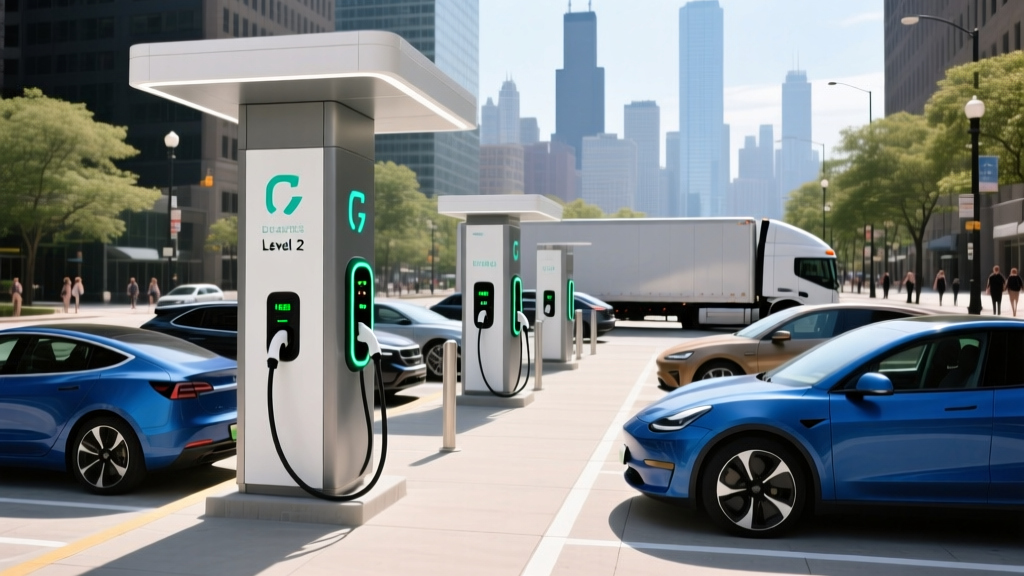
| Level 2 (240V, 32A mobile) | 7.7 kW | ~13 mi/hr | Standard mobile charger; overnight for Standard Range |
| Level 2 (240V, 48A) | 11.3 kW | ~19 mi/hr | Common wallbox; full overnight charge for both packs |
| Level 2 (240V, 80A hardwired) | 19.2 kW | ~30 mi/hr | Requires Ford Charge Station Pro + 100A circuit; fastest home option |
| DC Fast Charge | Up to 150 kW | ~120–150 mi in 15 min (10–40% SoC) | Peak rate only at low SoC; tapers significantly above 60% |
A critical detail many buyers miss: the Lightning's DC fast-charging curve is not flat. The truck peaks near 150 kW only between roughly 10–40% State of Charge (SoC). Above 60%, the rate drops to ~80 kW, and above 80% it falls to ~35 kW. This means a 10–80% charge on the Extended Range pack takes approximately 41 minutes at a 150+ kW station — competitive, but not class-leading. The Rivian R1T and Tesla Cybertruck both sustain higher peak rates.
For home charging, the 80A Ford Charge Station Pro is a worthwhile investment if you drive the Extended Range model heavily. It requires a licensed electrician to install a dedicated 100-amp circuit — expect $800–$2,000 in installation costs depending on your panel capacity. If your home has a 200A main panel with limited spare capacity, a 48A charger on a 60A circuit is the practical sweet spot.
Performance, Towing, and Payload
Every 2025 F-150 Lightning comes with dual electric motors and all-wheel drive. The Standard Range produces 452 hp and 775 lb-ft of torque — enough for a ~4.5-second 0–60 mph time that embarrasses most gas-powered F-150s. The Extended Range bumps output to 580 hp, dropping the 0–60 sprint to approximately 3.8 seconds.
Towing is where physics reasserts itself. The Extended Range model, when properly equipped with the Max Trailer Tow Package, is rated for up to 10,000 lbs — respectable for a half-ton pickup. However, towing near that limit at highway speeds will consume energy at roughly 2.0–2.5 kWh per mile, cutting effective range to 130–160 miles. Ford's onboard range calculator adjusts estimates in real time when a trailer is connected, which is a valuable feature for trip planning.
Payload capacity maxes out at 2,235 lbs on the Standard Range Pro trim, though the heavier Extended Range battery reduces payload to around 1,800 lbs. The 14.1-cubic-foot Mega Power Frunk (front trunk) is a standout feature — lockable, weather-sealed, and equipped with four 120V outlets and USB ports. It transforms the Lightning into a mobile workstation.
Pricing, Trims, and Federal Tax Credit Eligibility
| Trim | Battery | MSRP (incl. destination) | Est. Price After §30D Credit |
|---|---|---|---|
| Pro | Standard Range | $54,995 | $47,495* |
| XLT | Standard Range | $62,995 | $55,495* |
| Lariat | Extended Range | $72,495 | $64,995* |
| Platinum | Extended Range | $86,495 | $78,995* |
*Assumes full $7,500 federal tax credit. Actual eligibility depends on your individual tax situation, income, and vehicle sourcing compliance.
The federal EV tax credit under IRS §30D offers up to $7,500 for qualifying new EVs, but eligibility is governed by several rules that change periodically:
- MSRP Cap: Pickup trucks must have an MSRP at or below $80,000. This disqualifies the Platinum trim from the credit.
- Buyer Income Cap: Modified adjusted gross income must not exceed $150,000 (single), $225,000 (head of household), or $300,000 (joint).
- Battery Sourcing: The credit is split into two halves ($3,750 each) — one for critical minerals sourcing and one for battery component manufacturing. Ford sources NMC cells from SK On (South Korea/Japan), and sourcing compliance has shifted across model years. Verify current-year eligibility on the IRS clean vehicle credit page before purchasing.
- Point-of-Sale Transfer: As of 2024, buyers can transfer the credit to the dealer at purchase, reducing the purchase price directly rather than waiting for a tax refund. This requires the dealer to be registered with the IRS Energy Credits Online portal.
Consult a tax professional to confirm your personal eligibility. State and local incentives (such as utility rebates for home charger installation) may stack on top of the federal credit — check your state's energy office or AFDC incentive database for details.
Interior, Tech, and Driver Assistance
The Lightning's cabin is essentially identical to the gas F-150 SuperCrew — spacious, with 43.6 inches of rear legroom and a flat floor that makes the middle seat genuinely usable. The 12-inch touchscreen (15.5-inch on Lariat and Platinum) runs Ford's SYNC 4A system, which supports wireless Apple CarPlay, Android Auto, and over-the-air updates via Ford Power-Up.
Driver assistance comes via Ford Co-Pilot360 2.0, which includes adaptive cruise control with stop-and-go, lane centering, evasive steering assist, and intersection assist. BlueCruise (Ford's hands-on-wheel-optional highway driving system) is available on Lariat and above, enabling hands-free driving on pre-mapped divided highways. Note: BlueCruise is an SAE Level 2 system — the driver must remain attentive, and the system monitors eye gaze via an infrared camera. It is not autonomous driving.
Pro Power Onboard is arguably the Lightning's most differentiated feature. The 9.6 kW system (standard on XLT and above, optional on Pro) provides up to 240V/30A of exportable AC power through outlets in the bed and frunk. It can run power tools at a job site, serve as a tailgate power source, or — with the optional Home Integration System — provide backup power to your house during an outage (up to 3 days of essential circuits, per Ford's estimates).
Ownership Costs and Warranty
Ford covers the Lightning's high-voltage battery and electric powertrain for 8 years or 100,000 miles, whichever comes first, with a capacity retention threshold of 70%. The bumper-to-bumper warranty is 3 years/36,000 miles. Real-world battery degradation data from early 2022–2023 Lightning owners suggests typical capacity loss of 3–6% over the first 30,000 miles — within normal NMC expectations.
Charging costs vary by region, but at the national average electricity rate of ~$0.17/kWh (per EIA data), fully charging the 131 kWh Extended Range pack at home costs approximately $22. At an efficiency of ~51 kWh/100 mi, that works out to roughly $0.087 per mile — compared to ~$0.17–$0.20/mi for a gas F-150 getting 20 MPG at $3.50/gallon. Public DC fast charging at $0.35–$0.50/kWh raises the per-mile cost to $0.18–$0.26, narrowing the gap with gas.
Insurance premiums for the Lightning tend to run 15–25% higher than comparable gas F-150s, reflecting the higher repair costs associated with EV battery packs and aluminum body panels. Get quotes before purchasing.
Pros and Cons
- Massive 14.1 cu-ft frunk with 120V outlets
- Pro Power Onboard (up to 9.6 kW) for job-site and home backup
- Smooth, quiet daily-driver experience with instant torque
- Spacious SuperCrew cabin with flat rear floor
- Competitive 10,000-lb towing (Extended Range)
- Over-the-air updates improve features over time
- DC fast charging peaks at 150 kW — slower than Rivian R1T and Cybertruck
- No heat pump — cold-weather range loss is significant
- Towing drastically reduces range (expect 50%+ loss)
- Platinum trim exceeds $80K MSRP cap — no federal tax credit
- 5.5-ft bed is short for full-size truck buyers
- Insurance costs higher than gas F-150 equivalents
Frequently Asked Questions
What is the real-world range of the 2025 Ford F-150 Lightning?
The Extended Range model's EPA rating is 320 miles, but real-world highway driving at 70+ mph typically yields 260–290 miles. In freezing weather, expect 210–240 miles. The Standard Range model delivers roughly 190–210 real-world highway miles.
How fast does the F-150 Lightning charge at home and on the road?
On a 150 kW DC fast charger, the 10–80% charge takes about 36 minutes (Standard Range) or 41 minutes (Extended Range). At home, a 48A Level 2 charger adds ~19 miles per hour; the optional 80A Ford Charge Station Pro adds ~30 miles per hour.
Does the 2025 F-150 Lightning qualify for the $7,500 federal EV tax credit?
It can — but only trims with an MSRP at or below $80,000 (Pro, XLT, Lariat), and only if the buyer meets income caps ($300K joint / $150K single). Battery-sourcing compliance under §30D changes periodically, so verify current eligibility on IRS.gov before purchasing.
Is the F-150 Lightning worth buying over the Rivian R1T or Chevy Silverado EV?
The Lightning wins on price (starting ~$55K vs. the R1T's ~$70K), frunk utility, and Pro Power Onboard. The Rivian R1T offers better range (up to 410 mi), faster DC charging, and a more adventurous off-road platform. The Chevy Silverado EV offers up to 440 miles of range but starts at a higher price point and uses a different bed configuration. If you need a traditional truck experience with the lowest entry price, the Lightning is the strongest pick.
Can the F-150 Lightning power my house during an outage?
Yes, with the optional Ford Home Integration System and a compatible transfer switch installed by a licensed electrician. The 9.6 kW Pro Power Onboard system can supply essential circuits (lights, refrigerator, HVAC fan) for up to approximately 3 days, depending on load. This requires the Extended Range battery for meaningful runtime.
What is the battery warranty on the F-150 Lightning?
Ford provides an 8-year / 100,000-mile warranty on the high-voltage battery pack and electric drivetrain components, guaranteeing at least 70% capacity retention over that period.