Quick Answer: Is the Honda Fit EV Hatchback Worth It in 2026?
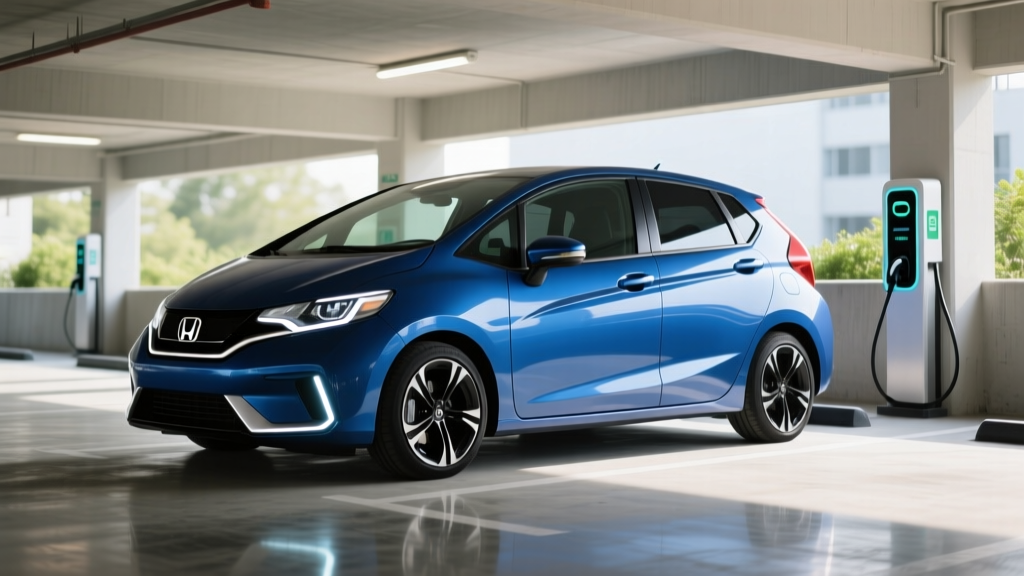
The Honda Fit EV was only sold in the U.S. from 2013 to 2015 as a lease-only compliance car, making it one of the rarest EVs on the used market today. With an EPA-rated range of just 82 miles and a 20 kWh battery, it's strictly a city commuter. In 2026, used examples typically sell for $8,000–$13,000 depending on battery health. It qualifies for the up-to-$4,000 used EV tax credit (IRS §25E) if you meet income caps and the sale price is under $25,000. Honda has not announced any new Fit EV for the U.S. market — the current global Honda e:NY1/e:Ny1 is not sold stateside.
What Exactly Is the Honda Fit EV Hatchback?
The Honda Fit EV debuted at the 2012 Los Angeles Auto Show and reached select California and Oregon lessees starting in mid-2013. Honda built roughly 1,100 units for the U.S. market before ending the program in 2015. Unlike the gas-powered Fit — beloved for its Magic Seat cargo flexibility and peppy 1.5L engine — the Fit EV was a compliance vehicle designed to satisfy California's ZEV mandate.
Under the hood, it used a 92 kW (123 hp) AC synchronous motor and a 20 kWh lithium-ion battery pack (Toshiba SCiB cells), which Honda chose for their exceptional cycle life rather than maximum energy density. The result was an EPA range of 82 miles — modest even for its era, but paired with a battery chemistry that has aged remarkably well compared to early Nissan Leaf packs.
| Spec | Value |
|---|---|
| Battery Capacity | 20 kWh (Toshiba SCiB lithium-ion) |
| EPA Range | 82 miles |
| Real-World Range (city/combined) | 65–80 miles (70°F); 45–60 miles (32°F) |
| Motor Output | 92 kW / 123 hp |
| 0–60 mph | ~9.0 seconds |
| Level 2 Charging (AC) | 6.6 kW onboard charger; 0–100% in ~3 hours |
| DC Fast Charging | Not available (CHAdeMO not equipped) |
| EPA Efficiency | 118 MPGe combined |
| Original MSRP (Lease) | $259/month, 36 months, $0 down |
| Used Market Price (2026) | $8,000–$13,000 |
| Battery Warranty (Original) | 8 years / 100,000 miles (expired on most units) |
The SCiB (Super Charge ion Battery) chemistry is the Fit EV's secret weapon. While early Nissan Leaf owners saw 20–30% degradation within five years, Fit EV batteries have shown minimal capacity loss — many owners report 90%+ state of health (SoH) even at 80,000+ miles. This is because SCiB cells use a lithium titanate oxide anode that resists the dendrite formation and electrolyte breakdown that plague conventional graphite-anode cells.
How Does the Fit EV Compare to a Gas Car or Hybrid?
If you're cross-shopping a used Honda Fit EV against a conventional gas Fit or a modern hybrid, here's how the numbers stack up:
| Metric | Honda Fit EV (2013–15) | Honda Fit Gas (2015) | Chevrolet Bolt EV (2022, used) |
|---|---|---|---|
| Used Price (2026) | $8,000–$13,000 | $9,000–$14,000 | $14,000–$19,000 |
| EPA Range | 82 mi | ~380 mi (11.4 gal tank) | 259 mi |
| Fuel/Energy Cost per Mile | ~$0.04 (home charging) | ~$0.13 (gas at $3.40/gal, 33 MPG) | ~$0.04 |
| Annual Fuel/Energy (12,000 mi) | ~$480 | ~$1,236 | ~$480 |
| Annual Maintenance | ~$200 | ~$500 | ~$200 |
| DC Fast Charging | No | N/A (gas) | Yes (55 kW CCS) |
| Cargo Volume | 20.9 cu ft (rear up) | 16.6 cu ft (rear up) | 16.6 cu ft |
| Federal Tax Credit (Used, §25E) | Up to $4,000 | None | Up to $4,000 |
The Fit EV wins on running costs — saving roughly $750–$1,000/year over the gas Fit in fuel and maintenance. But the 82-mile range is a hard constraint. If your daily round-trip commute exceeds 60 miles, or you regularly drive in sub-freezing temperatures (expect 25–35% range loss in winter), the Fit EV becomes impractical. The gas Fit or a used Bolt EV — with 259 miles of range and DC fast charging — are safer bets for varied driving.
Real Costs and Savings: 5-Year Ownership Breakdown
Let's model a realistic five-year ownership scenario for a used Honda Fit EV purchased in 2026, compared to holding onto a 2015 gas Honda Fit:
| Cost Category | Honda Fit EV (Used, ~$10,000) | Honda Fit Gas (Owned Outright) |
|---|---|---|
| Purchase Price | $10,000 | $0 (already owned) |
| Used EV Tax Credit (§25E) | –$4,000 | $0 |
| Net Acquisition Cost | $6,000 | $0 |
| Home Charger Install (Level 2) | $600–$1,200 | $0 |
| Energy/Fuel (5 yrs, 60,000 mi) | $2,400 | $6,180 |
| Maintenance (5 yrs) | $1,000 | $2,500 |
| Insurance (5 yrs, avg.) | $5,500 | $4,500 |
| Estimated Resale Value (Year 5) | –$5,000 | –$5,000 |
| Total 5-Year Net Cost | ~$10,500–$11,100 | ~$8,180 |
If you already own a paid-off gas Fit, keeping it is cheaper in pure cash terms. But if you're buying either car fresh, the Fit EV's lower operating costs and the §25E credit narrow the gap significantly. The key variable is home charging access — without it, you'll rely on public Level 2 chargers at $0.20–$0.40/kWh, pushing energy costs to $1,200–$2,400 over five years and erasing much of the savings.
Insurance for older EVs tends to run 10–20% higher than equivalent gas cars due to specialized repair networks and battery replacement risk. Get quotes from Geico, Progressive, and State Farm before committing — rates vary wildly for low-volume EVs.
First-Time EV Buyer Checklist: What to Know Before Buying a Fit EV
If the Fit EV is your entry point into electric driving, here's what you need to verify before signing any paperwork:
Battery State of Health (SoH)
While SCiB cells degrade slowly, you still want documentation. Ask the seller for a recent battery health report — ideally from a Honda dealer using the HDS (Honda Diagnostic System) tool, or from a third-party EV shop. Look for SoH above 85%. Below 80%, negotiate hard; a replacement pack, if one can even be sourced, would exceed the car's value.
Charging Setup
The Fit EV has a J1772 inlet and a 6.6 kW onboard charger. You'll need at minimum a standard 120V outlet (Level 1, ~1.4 kW, adding about 7 miles per hour — a full charge takes roughly 14 hours). A 240V Level 2 home charger is strongly recommended for daily usability. Installation typically runs $600–$1,200 if your electrical panel has capacity, but can reach $2,500+ if a panel upgrade is needed.
No DC fast charging. This is the Fit EV's biggest limitation. You cannot road-trip this car. Plan for a strict local-commute role.
Climate Considerations
The Fit EV uses a resistive heater rather than a heat pump, which draws significant battery power in cold weather. Owners in northern climates report winter range dropping to 45–55 miles. If you live where temperatures regularly dip below 30°F, budget for a 30–35% range penalty and plan accordingly.
Tax Credit Eligibility (§25E Used EV Credit)
The Fit EV can qualify for the federal used EV tax credit, but eligibility depends on multiple factors. Per IRS guidelines on the §25E credit:
- Sale price: Must be $25,000 or less (most Fit EVs qualify)
- Credit amount: 30% of sale price, up to $4,000 maximum
- Income caps (2026): AGI ≤ $75,000 single / $112,500 head of household / $150,000 married filing jointly
- Vehicle requirements: Must be at least 2 model years old, battery ≥ 4 kWh, purchased from a licensed dealer
- Transfer option: Point-of-sale transfer to the dealer is available, reducing your purchase price directly
- Frequency limit: One §25E credit per taxpayer every 3 years
A Fit EV bought for $10,000 from a dealer would yield a $3,000 credit (30% × $10,000). If bought for $13,000, the credit is $3,900. Consult a tax professional to confirm your specific eligibility.
Common Misconceptions About the Honda Fit EV
| Myth | Fact |
|---|---|
| "The Fit EV battery will need expensive replacement soon." | SCiB chemistry has shown <10% degradation over 10+ years in most units. Battery replacement is extremely rare. |
| "Honda is releasing a new Fit EV for 2026." | Honda has not announced a U.S.-market Fit EV. The Honda Prologue (Ultium-based, 287–308 mi range) is Honda's current U.S. EV, starting around $47,400. |
| "It can fast-charge on road trips." | The Fit EV has no DC fast-charge port. Level 2 at 6.6 kW is the maximum — 3 hours for a full charge. |
| "It qualifies for the $7,500 new EV tax credit." | The §30D credit applies to new vehicles only. The Fit EV is only available used, qualifying for the up-to-$4,000 §25E used credit. |
| "82 miles of range is useless." | For a single-driver city commute under 40 miles round-trip with home charging, 82 miles is adequate and the cost-per-mile is among the lowest of any car ever sold. |
Decision Framework: Should You Buy the Honda Fit EV Hatchback?
Buy the Fit EV If:
- Your daily round-trip driving is under 50 miles
- You have reliable home Level 2 charging (or can install it)
- You live in a mild climate (rarely below 35°F)
- You want the cheapest possible cost-per-mile commuter
- You qualify for the §25E used EV credit (income under caps)
- You value cargo space — the Fit EV offers 20.9 cu ft with rear seats up, more than most subcompacts
- You accept this will be a second car, not your only vehicle
Skip the Fit EV If:
- Your commute exceeds 50 miles round-trip or includes highway stretches over 40 miles
- You live in an apartment or lack home charging access
- You need a single-car solution for commuting, errands, and occasional road trips
- You experience harsh winters (range drops to ~50 miles)
- You want modern features: the Fit EV lacks Apple CarPlay, Android Auto, adaptive cruise, and lane-keeping
- You want DC fast charging for any flexibility beyond your neighborhood
Better Alternatives to Consider:
- Used Chevrolet Bolt EV (2017–2023): 238–259 mi range, DC fast charging, ~$12,000–$19,000 used. More versatile, still cheap to run.
- Used Nissan Leaf (2018+, 40 kWh): 149 mi range, CHAdeMO DC charging, ~$10,000–$15,000. More range but watch for battery degradation on air-cooled packs.
- Honda Fit Gas (2015–2020): If range and road trips matter, a late-model gas Fit at similar used prices eliminates range concerns entirely, at the cost of higher fuel spend.
Frequently Asked Questions
Can I still buy a Honda Fit EV in 2026?
Yes, but only on the used market. Honda built approximately 1,100 U.S. units between 2013 and 2015, all originally leased. Most have since been sold to private owners. Check AutoTrader, Cars.com, and EV-specific listing sites like MyEV.com. Availability is sparse — you may need to search across multiple states.
What happens if the Fit EV battery fails?
Given SCiB chemistry's longevity, outright battery failure is rare. However, if it does occur, replacement is problematic: Honda does not sell new Fit EV battery packs at retail, and used salvage units are scarce. Budget $3,000–$6,000 for a third-party rebuild or salvage replacement. This cost could exceed the car's value, effectively totaling the vehicle.
Does the Honda Fit EV have a frunk?
No. The Fit EV retains the same general layout as the gas Fit, with the battery mounted low under the floor. There is no front trunk. Cargo space is 20.9 cu ft behind the rear seats and up to 57.3 cu ft with seats folded — slightly less than the gas Fit due to battery packaging.
How much does it cost to charge a Fit EV at home?
With a 20 kWh battery and the U.S. average electricity rate of ~$0.16/kWh (per EIA data), a full charge costs approximately $3.20. For a 60-mile daily commute using about 15 kWh, expect roughly $2.40/day or $72/month in electricity. Compare that to ~$105/month in gas for the same distance in a 33 MPG Fit at $3.40/gallon.
Is the Honda Fit EV safe?
The Fit EV was not crash-tested by the IIHS or NHTSA as a separate model. The conventional 2013–2015 Honda Fit received an IIHS "Acceptable" rating in the moderate overlap front test and "Good" in side impact. Standard safety features include stability control, ABS, and six airbags, but it lacks modern ADAS — no automatic emergency braking, lane-keeping, or blind-spot monitoring.
Will Honda ever make a new Fit EV for the U.S.?
As of early 2026, Honda has not announced a Fit EV successor for the U.S. market. Honda's U.S. EV strategy centers on the Prologue (GM Ultium platform) and upcoming models on Honda's own e:Architecture. The Fit nameplate was discontinued in the U.S. after the 2020 model year. For a similarly sized Honda EV, you'd need to look at international models like the e:Ny1, which Honda has not confirmed for American sale.