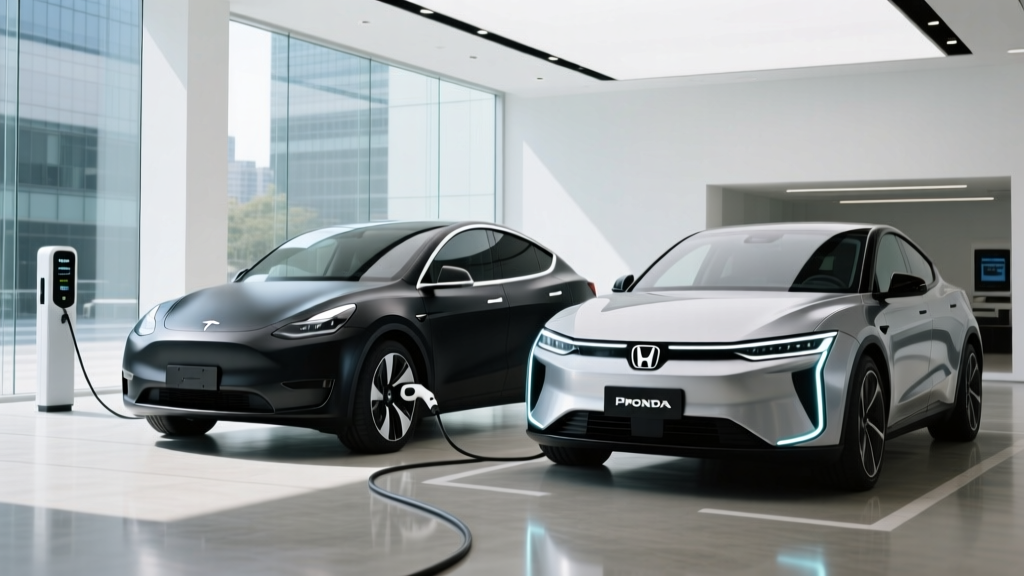
The battle between Tesla and Honda in the electric vehicle space has evolved dramatically. Tesla brings vertical integration, the Supercharger network, and iterative software updates, while Honda enters with a more traditional dealership experience, competitive pricing, and a focus on practicality. If you've been searching "Tesla Honda EV comparison," you're likely weighing whether Tesla's tech-first approach or Honda's grounded practicality better fits your needs.
This guide compares the core 2026 EV offerings from both brands: the Tesla Model 3 and Model Y against the Honda Prologue and the newly launched Honda 0 Series (08 sedan and 0 SUV). We'll break down range, charging, pricing, tax credit eligibility, and real-world ownership to help you decide.
2026 Lineup at a Glance: Tesla vs Honda EVs
| Spec | Tesla Model 3 LR AWD | Tesla Model Y LR AWD | Honda Prologue Elite | Honda 08 (Announced) |
|---|---|---|---|---|
| EPA Range | 341 mi | 320 mi | 296 mi | ~370 mi (est.) |
| Battery (usable) | 75 kWh (NMC) | 75 kWh (NMC) | 85 kWh (NMC, Ultium) | ~80 kWh (est., thin NMC) |
| Peak DC Fast Charge | 250 kW | 250 kW | 155 kW | ~350 kW (est., 800V) |
| 10-80% Charge Time | ~25 min | ~27 min | ~35 min | ~18 min (est.) |
| 0-60 mph | 4.2 sec | 4.8 sec | 6.0 sec | TBD |
| Horsepower | 346 hp | 384 hp | 288 hp | TBD |
| Drivetrain | Dual-motor AWD | Dual-motor AWD | Dual-motor AWD | RWD / AWD (est.) |
| MPGe (combined) | 131 MPGe | 122 MPGe | 95 MPGe | TBD |
| Cargo Volume | 23 cu ft (trunk+frunk) | 72 cu ft (max) | 57.5 cu ft (max) | TBD |
| Base MSRP | $42,630 | $44,630 | $47,400 | ~$40,000 (est.) |
| Battery Warranty | 8 yr / 120,000 mi | 8 yr / 120,000 mi | 8 yr / 100,000 mi | TBD |
Sources: fueleconomy.gov, Tesla and Honda official spec sheets. Honda 08 figures are preliminary estimates for an announced vehicle not yet on sale.
Real-World Range: What the EPA Numbers Don't Tell You
EPA estimates assume a mix of city and highway driving at moderate temperatures. In practice:
• Highway-only driving (75 mph): Expect 15-20% less than EPA. A 341-mi Model 3 delivers roughly 275-290 miles on the interstate.
• Cold weather (below 32°F): Range drops 20-30% without preconditioning. That same Model 3 may deliver 230-260 miles in freezing temps.
• Honda Prologue: Its 296-mi EPA rating translates to approximately 240-255 mi on the highway and as low as 200 mi in harsh winter conditions.
Tesla's efficiency advantage is real. The Model 3 Long Range achieves 131 MPGe combined (fueleconomy.gov), consuming about 25 kWh per 100 miles. The Prologue, built on GM's Ultium platform, consumes roughly 35 kWh per 100 miles — a significant gap driven by its boxier shape and heavier curb weight. Over a 15,000-mile year, that difference means roughly $150-$200 more in electricity for the Prologue at national average rates.
The upcoming Honda 08, built on Honda's dedicated e:Architecture with an ultra-thin battery pack and 800V system, targets a best-in-class drag coefficient and aims for over 370 miles of range. However, Honda has not yet published EPA-certified numbers, and real-world results remain to be seen.
Charging Speed: Supercharger Network vs. the Prologue's Limits
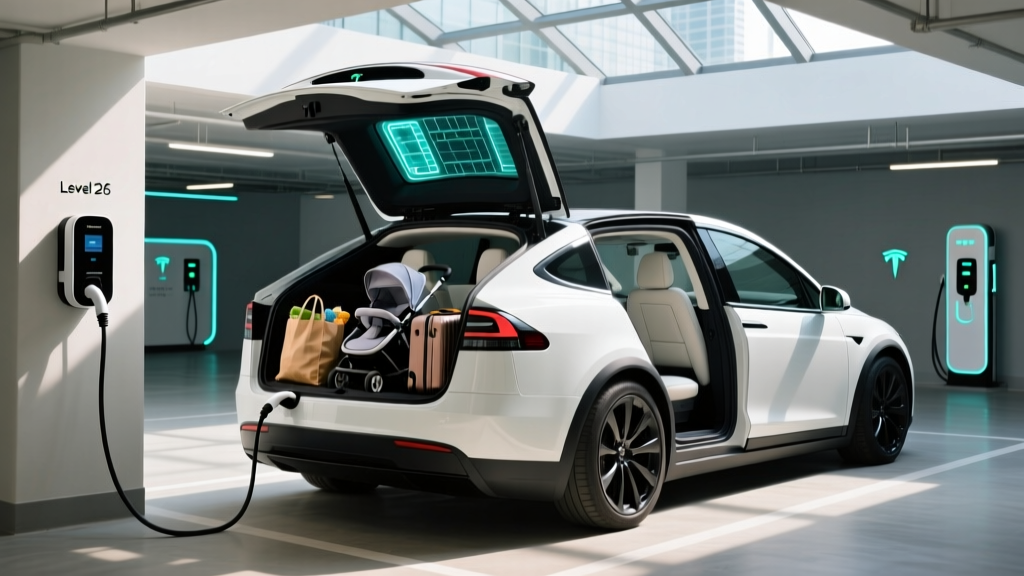
Charging speed separates a tolerable road trip from a frustrating one. Here's how these models compare across charging levels:
| Charging Level | Tesla Model 3/Y | Honda Prologue | Honda 08 (est.) |
|---|---|---|---|
| Level 1 (120V, 1.4 kW) | ~3 mi/hr | ~3 mi/hr | ~3 mi/hr |
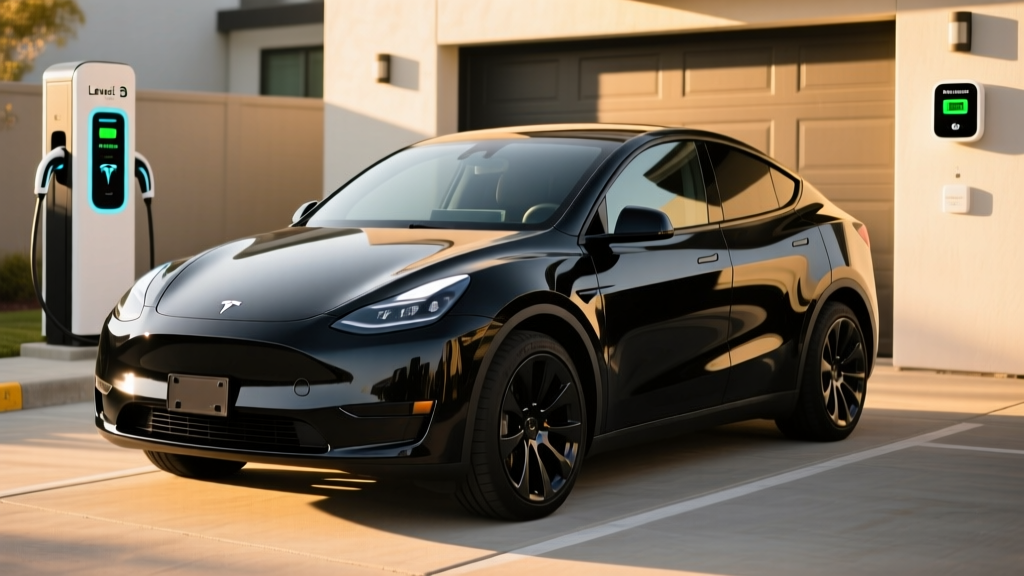
| Level 2 (240V, 11.5 kW) | ~44 mi/hr | ~32 mi/hr | ~40 mi/hr (est.) |
| DC Fast Charge (peak) | 250 kW (V3 Supercharger) | 155 kW | ~350 kW (800V) |
| 10-80% DCFC Time | ~25-27 min | ~35 min | ~18 min (est.) |
| Connector | NACS (native) | CCS1 (NACS adapter avail.) | NACS (expected) |
Understanding kW vs kWh: Kilowatts (kW) measure charging power — how fast energy flows. Kilowatt-hours (kWh) measure battery capacity — how much energy is stored. A 250 kW charger fills a 75 kWh battery quickly, but only during the peak portion of the charge curve.
Charge curve reality: Tesla's 250 kW peak only holds between roughly 10-30% State of Charge (SoC). Above 50%, the rate tapers significantly, dropping below 100 kW past 70%. That's why 10-80% takes 25 minutes rather than the ~12 minutes a sustained 250 kW would suggest. The Prologue's 155 kW peak is lower but sustains more steadily across the curve, which partially closes the real-world gap.
Network access matters as much as speed. Tesla owners charge natively on the Supercharger network — the most reliable and widespread DC fast-charging network in North America, with over 6,500 stations. Honda Prologue owners use CCS1 connectors and rely on Electrify America, EVgo, and other third-party networks, though Honda now includes a NACS adapter for Supercharger access. The Honda 08 is expected to ship with NACS natively.
Pricing, Trims, and Federal Tax Credit Eligibility
Sticker price is only part of the equation. The IRS §30D federal tax credit can reduce your effective cost by up to $7,500 — but eligibility depends on MSRP caps, buyer income, and battery component/critical-mineral sourcing requirements that shift annually.
| Model & Trim | MSRP | §30D Credit (est.) | Effective Price |
|---|---|---|---|
| Tesla Model 3 RWD | $36,630 | $7,500 (if eligible) | ~$29,130 |
| Tesla Model 3 LR AWD | $42,630 | $7,500 (if eligible) | ~$35,130 |
| Tesla Model Y LR AWD | $44,630 | $7,500 (if eligible) | ~$37,130 |
| Honda Prologue EX (FWD) | $41,900 | Varies | Check current IRS guidance |
| Honda Prologue Elite (AWD) | $47,400 | Varies | Check current IRS guidance |
- MSRP cap: Sedans ≤ $55,000; SUVs/pickups ≤ $80,000
- Buyer income cap (AGI): $150K single / $225K head of household / $300K joint
- Battery sourcing: Minimum percentages of critical minerals and battery components must be sourced from the US or FTA partners — thresholds increase annually
- Point-of-sale transfer: You can apply the credit as a dealer discount at purchase rather than waiting for tax filing
- Assembly: Vehicle must undergo final assembly in North America
Tesla Model 3 and Model Y are assembled in Fremont, CA and Austin, TX respectively, and have historically qualified for the full credit, though critical-mineral sourcing rules change — always verify on irs.gov before purchasing.
The Honda Prologue is assembled at GM's Spring Hill, TN plant (via the GM-Honda partnership). Its credit eligibility has fluctuated based on battery sourcing rules. Confirm current status at purchase.
Performance, Efficiency, and Driving Dynamics
Tesla's dual-motor powertrains deliver sharper acceleration and tighter handling than the Prologue, which prioritizes ride comfort over sportiness. The Model 3 Long Range hits 0-60 mph in 4.2 seconds with 346 horsepower — genuinely quick for a family sedan. The Model Y, despite its crossover stance, manages 4.8 seconds.
The Prologue Elite's dual-motor AWD produces 288 hp and reaches 60 mph in about 6.0 seconds. It's adequate for merging and passing but won't pin you to the seat. Where the Prologue wins is ride quality: its longer wheelbase and GM-tuned suspension absorb highway imperfections more gracefully than the Tesla's firmer setup.
Efficiency comparison (kWh/100 mi):
- Tesla Model 3 LR: ~25 kWh/100 mi
- Tesla Model Y LR: ~28 kWh/100 mi
- Honda Prologue AWD: ~35 kWh/100 mi
Tesla's thermal management system — including a standard heat pump — gives it a meaningful edge in cold-weather efficiency. The Prologue also uses a heat pump, but its higher mass and less aerodynamic profile work against it.
Interior, Tech, and Driver Assistance
Tesla: Minimalist Tech
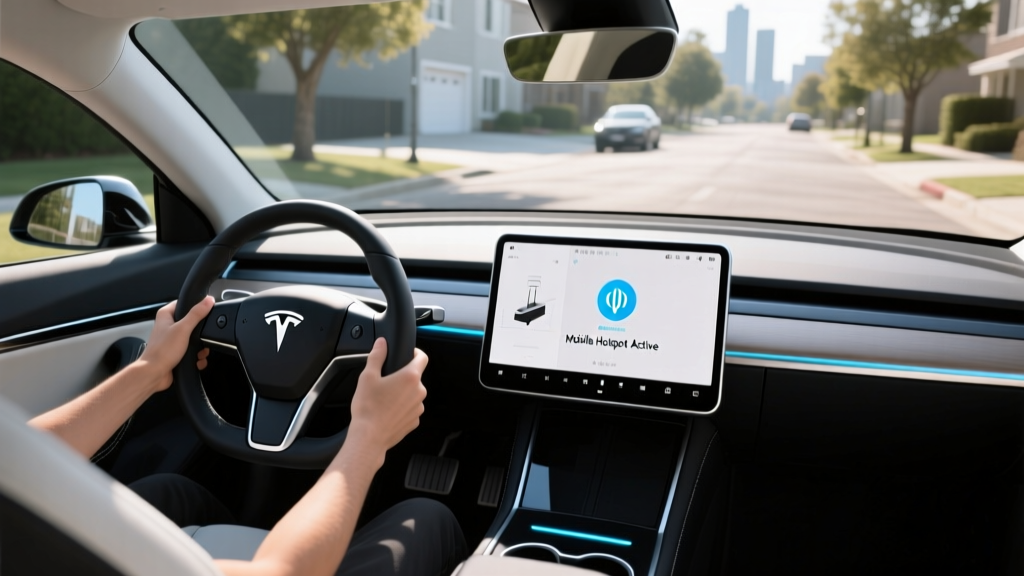
The Model 3 "Highland" refresh brought a cleaner interior, ventilated seats, ambient lighting, and a rear touchscreen for passengers. All vehicle functions route through the 15.4-inch center display — no physical stalks or buttons. This polarizes buyers: some love the clean aesthetic; others find it distracting.
Autopilot (standard) provides adaptive cruise and lane centering. Full Self-Driving (Supervised) adds automatic lane changes, traffic-light recognition, and city-street navigation for an additional $8,000 or $99/month.
Honda: Familiar and Functional
The Prologue uses an 11.3-inch touchscreen with Google Built-In (Maps, Assistant, Play Store), wireless Apple CarPlay and Android Auto, and physical knobs for volume and climate — a more traditional layout that many buyers find easier to use while driving. Honda's Honda Sensing suite provides adaptive cruise, lane keeping, and collision mitigation, though it lacks the navigated on-ramp-to-off-ramp capabilities of Tesla's FSD.
The upcoming Honda 08 promises a radical interior redesign with a full-width display, steer-by-wire, and Level 3 automated driving on highways (pending regulatory approval in the US). Honda has targeted an "ultra-thin" battery that lowers the floor and improves cabin space, though exact dimensions remain unconfirmed.
Cargo and Passenger Space
| Measurement | Model 3 | Model Y | Prologue |
|---|---|---|---|
| Rear Legroom | 34.9 in | 41.6 in | 38.6 in |
| Cargo (behind 2nd row) | 23 cu ft | 30 cu ft | 25.2 cu ft |
| Max Cargo (seats folded) | N/A (sedan) | 72 cu ft | 57.5 cu ft |
| Frunk | 3.1 cu ft | 4.1 cu ft | None |
Warranty and Long-Term Ownership
Battery longevity is a top concern for EV buyers. Here's what each brand covers:
- Tesla: 8 years / 120,000 miles battery and drive unit warranty, with a guarantee that the battery will retain at least 70% of its original capacity during that period.
- Honda Prologue: 8 years / 100,000 miles battery warranty (via GM Ultium), also with a 70% capacity retention threshold.
Tesla's NMC chemistry has demonstrated strong real-world longevity: fleet data suggests roughly 10-12% degradation over 150,000 miles for most owners. The Prologue's Ultium battery is newer to market, so long-term data is limited, but GM's large-format pouch cells have shown promising early results.
Insurance costs: Teslas typically carry 15-25% higher insurance premiums than comparable vehicles due to repair costs and parts pricing. The Prologue, sold through traditional Honda dealerships with conventional body-shop networks, may prove cheaper to insure — get quotes before buying.
Pros, Cons, and Who Should Buy What
- Superior efficiency (kWh/100 mi)
- Native Supercharger access
- Over-the-air updates add features over time
- Strong resale value
- Faster DC charging
- No physical buttons or stalks
- Higher insurance premiums
- Service center wait times in some regions
- FSD is expensive and still Level 2
- Firmer ride quality
- Comfortable ride and quiet cabin
- Physical controls and familiar layout
- Google Built-In infotainment
- Traditional dealership service network
- Competitive pricing on lower trims
- Choose Tesla if: You prioritize efficiency, fast charging, Supercharger reliability, and tech-forward features. Best for road-trippers, commuters who value range, and buyers who prefer OTA improvements.
- Choose Honda if: You want a comfortable, quiet ride with physical controls, local dealer service, and a more conventional ownership experience. Best for families who prioritize ride comfort and buyers who prefer a traditional purchase process.
- Wait for Honda 08 if: You want Honda's next-gen platform with 800V fast charging and potential Level 3 driving — but understand it's announced, not yet available, and final specs may change.
Frequently Asked Questions
What is the real-world range of Tesla vs Honda EVs?
The Tesla Model 3 Long Range (EPA 341 mi) delivers approximately 275-290 miles on the highway and 230-260 miles in cold weather. The Honda Prologue (EPA 296 mi) returns roughly 240-255 miles highway and around 200 miles in freezing temperatures. Real-world results vary with speed, terrain, and climate control use.
How fast do Tesla and Honda EVs charge?
Tesla's Model 3 and Model Y peak at 250 kW on V3 Superchargers, reaching 10-80% in about 25-27 minutes. The Honda Prologue peaks at 155 kW, requiring roughly 35 minutes for the same 10-80% session. At home on a Level 2 (240V) charger, Tesla adds ~44 miles per hour vs. the Prologue's ~32 miles per hour.
Do Tesla and Honda EVs qualify for the $7,500 federal tax credit?
Tesla Model 3 and Model Y have consistently qualified for the full $7,500 credit under IRS §30D, subject to buyer income caps ($150K/$225K/$300K AGI) and the MSRP caps ($55K sedans, $80K SUVs). The Honda Prologue's eligibility has varied due to battery-sourcing requirements — always confirm on irs.gov before purchasing. Rules change frequently.
Is Tesla or Honda better for road trips?
Tesla holds a clear advantage for road trips thanks to the Supercharger network's reliability, faster 250 kW peak charging, and superior highway efficiency. A Model 3 Long Range can cover 275+ highway miles between stops and recharge to 80% in ~25 minutes. The Prologue works for road trips but requires more planning due to slower charging and reliance on third-party networks.
Is the Honda 08 available to buy now?
No. The Honda 08 (part of the Honda 0 Series) is announced but not yet on sale as of early 2026. Honda targets a late 2026 or 2027 launch with estimated 370+ miles of range and 800V fast charging. All specs are preliminary and subject to change.
Which is cheaper to own long-term — Tesla or Honda?
Tesla's lower energy consumption (25 vs. 35 kWh/100 mi) saves roughly $150-$200 per year in electricity at average rates. However, Tesla's higher insurance premiums (15-25% above average) can offset those savings. Honda's dealer service network may mean cheaper out-of-warranty repairs. Total cost of ownership depends heavily on your insurance rate, local electricity cost, and driving habits — run the numbers for your specific situation.