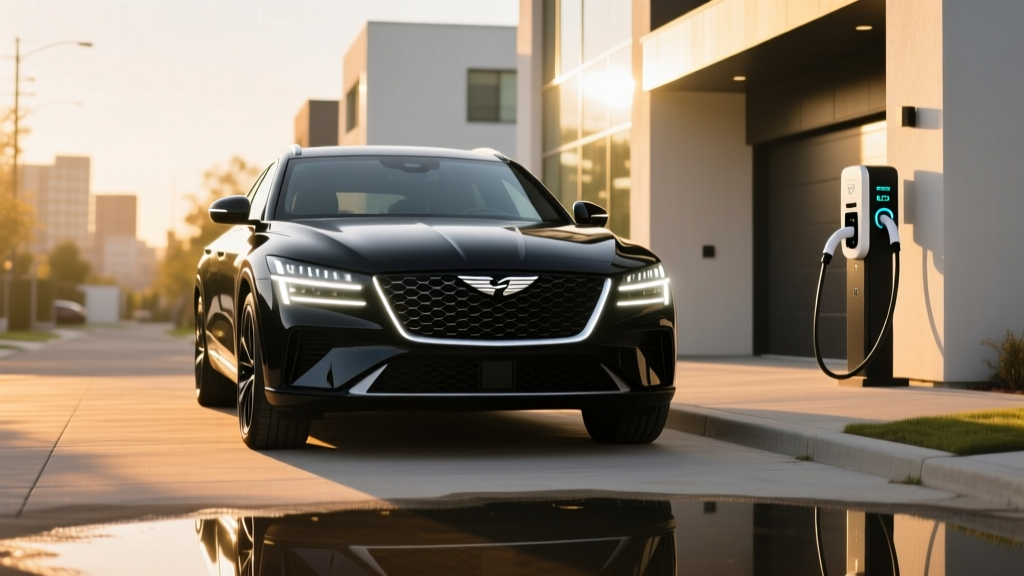
The luxury electric SUV segment forces buyers to choose between performance, comfort, and technology. The 2024 Genesis Electrified GV70 attempts to deliver all three, wrapping proven Hyundai Motor Group EV architecture in a cabin that rivals European rivals twice its price. But with a 236-mile EPA range and a starting price near $67,000, does it make sense as a daily driver in 2026's competitive EV landscape?
We've analyzed the Electrified GV70's specs, real-world efficiency data, charging behavior, and ownership economics to give you everything needed to make an informed decision. This isn't a spec-sheet regurgitation — it's a practical evaluation for buyers weighing this Genesis against the BMW iX, Audi Q8 e-tron, and Tesla Model X.
Quick Verdict: Who Should Buy the Electrified GV70?
Buy it if: You prioritize cabin luxury, ride comfort, and fast DC charging over maximum range. The Electrified GV70 excels as a commuter and family hauler for drivers with home charging access and typical daily drives under 150 miles.
Skip it if: You regularly take 300+ mile road trips, live in extreme cold climates, or need the longest possible range per charge. Consider the BMW iX xDrive50 (324 miles EPA) or Tesla Model X (348 miles EPA) instead.
Range & Efficiency: EPA vs Real-World Reality
| Metric | Value |
|---|---|
| EPA Estimated Range | 236 miles |
| Battery Capacity (Usable) | 77.4 kWh |
| Battery Chemistry | NMC (Nickel Manganese Cobalt) |
| Combined MPGe | 95 MPGe |
| Energy Consumption | 35 kWh/100 miles |
| Drivetrain | Dual-motor AWD |
Real-World Range Expectations
EPA sticker: 236 miles. Here's what to actually expect:
- City/suburban driving (moderate speeds, regen braking): 220-240 miles
- Highway cruising (70-75 mph): 190-210 miles
- Cold weather (below 40°F): 170-195 miles (25-30% reduction)
- Hot weather with A/C (above 90°F): 210-225 miles
The Electrified GV70's efficiency is competitive with the Audi Q8 e-tron (87 MPGe combined) but trails the more aerodynamic BMW iX xDrive50 (97 MPGe). Its boxy SUV shape and 4,850-pound curb weight work against highway efficiency.
Source: EPA Fuel Economy
Charging Speed: DC Fast & Home Level 2
Genesis equips the Electrified GV70 with an 800-volt electrical architecture — the same system found in the Hyundai Ioniq 5 and Kia EV6. This enables exceptionally fast DC charging when paired with compatible 350 kW stations.
| Charging Type | Max Power | Time (10-80%) | Miles Added/Hour |
|---|---|---|---|
| DC Fast (350 kW station) | 240 kW peak | ~18 minutes | N/A |
| DC Fast (150 kW station) | ~150 kW sustained | ~25 minutes | N/A |
| Level 2 (240V, 48A home charger) | 11.5 kW | ~7 hours (0-100%) | ~33 miles/hr |
| Level 1 (120V household) | 1.4 kW | ~60 hours (0-100%) | ~4 miles/hr |
Charging Curve Reality Check
The Electrified GV70 peaks at 240 kW but doesn't sustain that rate. Expect the following charge curve behavior:
- 10-40% SoC: 200-240 kW (fastest charging)
- 40-70% SoC: 150-180 kW (moderate taper)
- 70-80% SoC: 80-100 kW (significant taper)
- Above 80% SoC: Below 50 kW (very slow — avoid charging past 80% on road trips)
The 800V architecture gives the Genesis a clear advantage over 400V competitors like the Audi Q8 e-tron (max 150 kW) at high-power stations. However, you'll need access to Electrify America, EVgo, or similar 350 kW-capable networks to realize this benefit. At older 50-150 kW stations, the advantage disappears.
Home charging note: The onboard charger maxes at 11.5 kW (48 amps). If your home charger or electrical panel only supports 40 amps (9.6 kW), expect ~28 miles of range per hour instead of 33.
Performance: Powertrain, Acceleration & Driving Dynamics
| Metric | Value |
|---|---|
| Powertrain | Dual-motor AWD |
| Horsepower | 429 hp |
| Torque | 516 lb-ft |
| 0-60 mph | 4.0 seconds (Boost mode) |
| Top Speed | 146 mph |
| Towing Capacity | Not rated |
The Electrified GV70's dual-motor setup delivers brisk acceleration, especially in Boost mode (activated via a steering wheel button), which temporarily increases output for 30-second bursts. Normal driving mode delivers 365 hp, still plenty quick for merging and passing.
Ride quality is a standout. Genesis tunes the adaptive suspension for comfort over sportiness, absorbing bumps and highway imperfections better than the firmer BMW iX. The trade-off: less engaging handling on twisty roads. This is a luxury cruiser, not a performance SUV.
Regenerative braking offers four levels (0-3) adjustable via steering wheel paddles. Level 3 provides near one-pedal driving in city traffic, though it doesn't bring the vehicle to a complete stop like some competitors.
Interior, Cargo & Technology
Passenger Space
- Front headroom: 39.6 inches
- Front legroom: 41.3 inches
- Rear headroom: 38.7 inches
- Rear legroom: 39.1 inches
- Seating capacity: 5 passengers
Interior materials and build quality rival the BMW X5 and Mercedes GLE. Nappa leather, real aluminum trim, and a 12.3-inch digital cluster paired with a 14.5-inch infotainment touchscreen create a premium environment. The center console's rotary gear selector and haptic climate controls feel substantial, though some may prefer physical buttons.
Cargo Volume
- Behind rear seats: 28.7 cubic feet
- Rear seats folded: 56.9 cubic feet
- Front trunk (frunk): 0.7 cubic feet (small — fits charging cables only)
Cargo space is competitive with the Audi Q8 e-tron (28.5 cu ft) but trails the BMW iX (35.5 cu ft). The small frunk is a missed opportunity — competitors like the Ford Mustang Mach-E offer 4.7 cu ft up front.
Standout Technology
- Genesis Digital Key: Use your smartphone as a key fob (NFC + Bluetooth)
- Remote Smart Parking Assist: Summon the GV70 in/out of tight spaces via key fob
- Highway Driving Assist II: SAE Level 2 adaptive cruise with lane centering and auto lane change
- 3D digital cluster: Optional 12.3-inch 3D display (glasses-free)
- Wireless Apple CarPlay/Android Auto: Standard on all trims
Highway Driving Assist II works well on divided highways but requires hands on the wheel. It's a competitive SAE Level 2 system, on par with BMW's Driving Assistant Professional but less advanced than Tesla's Autopilot or GM's Super Cruise (which allows hands-free driving on mapped roads).
Pricing, Trims & Federal Tax Credit Eligibility
| Trim | Base MSRP | As-Tested (with options) |
|---|---|---|
| Advanced | $66,950 | $68,400 (with Prestige pkg) |
| Prestige | $73,150 | $73,550 (destination incl.) |
Federal EV Tax Credit (§30D) Eligibility
The 2024 Electrified GV70 does qualify for the full $7,500 federal tax credit, but buyer eligibility depends on multiple factors:
- MSRP cap: SUVs must be under $80,000 — both trims qualify
- Buyer income limits: AGI must not exceed $300,000 (joint), $225,000 (head of household), or $150,000 (single)
- Battery sourcing: Must meet critical minerals and battery component requirements (Genesis confirms 2024 models comply)
- Point-of-sale transfer: You can transfer the credit to the dealer for an immediate $7,500 price reduction at purchase
Effective price after credit: Advanced trim drops to ~$59,450; Prestige to ~$65,650 (assuming full eligibility).
Verify your eligibility using the IRS Clean Vehicle Credit guidelines. State incentives (California, Colorado, New York, etc.) may stack on top — check your local DMV or energy office.
Warranty & Ownership Costs
| Coverage Type | Duration |
|---|---|
| Basic (bumper-to-bumper) | 5 years / 60,000 miles |
| Powertrain | 10 years / 100,000 miles |
| Battery | 10 years / 100,000 miles (70% capacity retention) |
| Corrosion | 7 years / unlimited miles |
| Roadside Assistance | 5 years / unlimited miles |
| Complimentary Maintenance | 3 years / 36,000 miles |
Genesis's battery warranty guarantees 70% capacity retention over 10 years/100,000 miles. If degradation exceeds 30% within that period, Genesis will repair or replace the battery. This is competitive with BMW (8yr/80k mi, 70% retention) and slightly better than Audi (8yr/100k mi, 70% retention).
5-Year Total Cost of Ownership Estimate
Assuming 15,000 miles/year, $0.14/kWh home electricity, and $7,500 federal credit applied:
- Purchase price (Advanced trim after credit): $59,450
- Electricity (5 years): ~$5,250 (35 kWh/100mi × 75,000 mi × $0.14)
- Insurance (estimated): ~$12,000 ($2,400/year average)
- Maintenance (after complimentary period): ~$1,500 (cabin filters, wipers, tires)
- Estimated depreciation: ~$22,000 (Genesis EVs depreciate faster than Tesla/Porsche)
- Total 5-year cost: ~$100,200
For comparison, a similarly equipped BMW iX xDrive50 costs ~$110,000 over 5 years (higher purchase price, similar efficiency). The Electrified GV70 offers strong value if you prioritize luxury over badge prestige.
Pros, Cons & Competitor Comparison
✓ Pros
- Exceptional ride comfort and cabin quietness
- Fast 800V DC charging (18 min 10-80% at 350 kW stations)
- Premium interior materials rivaling $80k+ competitors
- Strong 429 hp acceleration with Boost mode
- Comprehensive 10-year powertrain/battery warranty
- Qualifies for $7,500 federal tax credit
✗ Cons
- Below-average EPA range (236 miles) for the price class
- Highway efficiency drops significantly at 75+ mph
- Small frunk (0.7 cu ft) limits front storage
- No towing rating (competitors like iX tow up to 3,500 lbs)
- Genesis brand lacks the EV cachet of Tesla, Porsche, or Lucid
- Faster depreciation than German luxury EVs
How It Stacks Up Against Key Competitors
| Model | EPA Range | Max DC Charge | 0-60 mph | Base MSRP |
|---|---|---|---|---|
| Genesis Electrified GV70 | 236 mi | 240 kW | 4.0 sec | $66,950 |
| BMW iX xDrive50 | 324 mi | 200 kW | 4.4 sec | $87,100 |
| Audi Q8 e-tron | 285 mi | 170 kW | 5.1 sec | $74,400 |
| Tesla Model X Long Range | 348 mi | 250 kW | 3.8 sec | $79,990 |
The Electrified GV70 undercuts competitors on price while matching or exceeding their charging speed and acceleration. The trade-off is range: if you regularly drive 200+ miles between charges, the BMW iX or Tesla Model X are better choices. For daily commuting and weekend trips under 180 miles, the Genesis offers the best value proposition.
Frequently Asked Questions
What is the real-world range of the 2024 Genesis Electrified GV70?
Expect 220-240 miles in city driving, 190-210 miles on the highway, and 170-195 miles in cold weather (below 40°F). The 236-mile EPA estimate is achievable in moderate conditions with mixed driving.
How fast does it charge at home and on DC fast chargers?
At a 350 kW DC fast charger, the Electrified GV70 charges from 10-80% in about 18 minutes (peaking at 240 kW). At home with a 48-amp Level 2 charger, expect ~33 miles of range per hour, or a full charge in about 7 hours.
Does the 2024 Electrified GV70 qualify for the federal EV tax credit?
Yes, both trims qualify for the full $7,500 credit under IRS §30D rules, assuming you meet income limits (under $300k joint / $150k single) and the vehicle meets battery sourcing requirements (Genesis confirms 2024 models comply). You can transfer the credit to the dealer for an immediate price reduction.
Is the Electrified GV70 worth buying vs the BMW iX or Audi Q8 e-tron?
If you prioritize value, ride comfort, and fast charging over maximum range and brand prestige, yes. The Genesis costs $15,000-$20,000 less than the BMW iX while offering comparable luxury and faster DC charging. Choose the iX if you need 300+ mile range; choose the Q8 e-tron if you prefer Audi's design and slightly better range (285 miles).
Can the Electrified GV70 tow a trailer?
No. Genesis does not provide a towing rating for the Electrified GV70, and the owner's manual advises against towing. If you need to tow, consider the BMW iX (3,500 lbs) or Tesla Model X (5,000 lbs).
What happens if the battery degrades beyond the warranty threshold?
Genesis warrants the battery for 10 years/100,000 miles with a 70% capacity retention guarantee. If your battery drops below 70% of original capacity within that period, Genesis will repair or replace it at no cost. Real-world data from Hyundai/Kia's similar 77.4 kWh pack shows typical degradation of 8-12% over 5 years/75,000 miles.
Is Highway Driving Assist II self-driving?
No. HDA II is an SAE Level 2 driver-assistance system, meaning you must keep your hands on the wheel and remain fully engaged. It handles adaptive cruise control, lane centering, and automatic lane changes on highways, but it cannot navigate complex scenarios like construction zones or unmapped roads. Only SAE Level 4 systems like Waymo's robotaxi operate without driver supervision.
For more details on the Electrified GV70's safety ratings, see IIHS crash test results and NHTSA safety data.