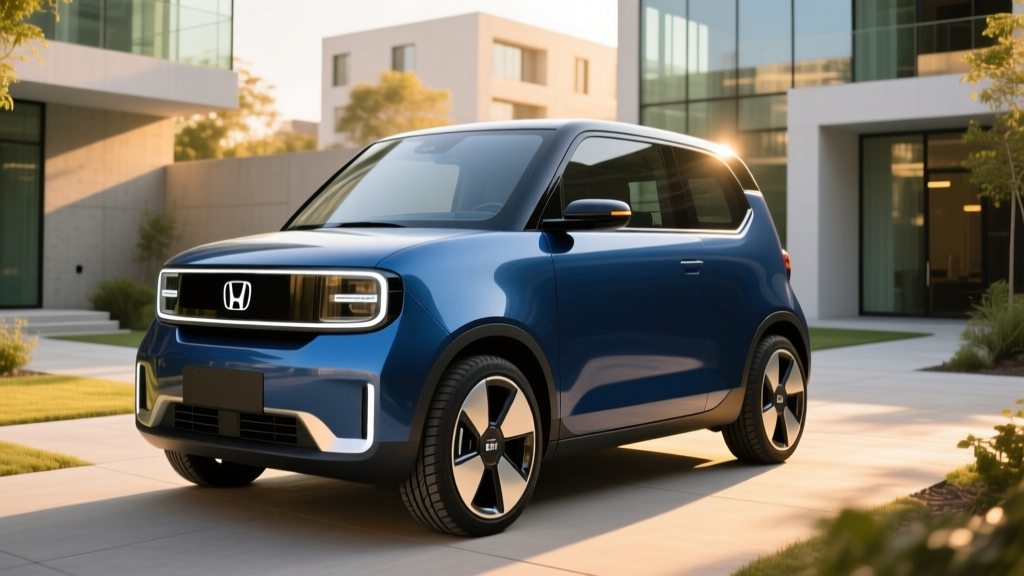
Honda's compact electric lineup has drawn attention for its urban-friendly footprint, and buyers researching the Honda Electric Cube wheel size and related specs want a clear, practical breakdown before committing. This guide covers wheel and tire specifications by trim, how wheel size impacts range and ride quality, and the full ownership picture — from charging costs to real-world efficiency — so you can make a data-driven decision.
Quick Answer: Honda Electric Cube Wheel Size
The Honda Electric Cube (announced for select Asian and European markets; US availability pending) comes equipped with 16-inch alloy wheels (185/60R16) on base trims and 17-inch aerodynamic alloys (195/55R17) on higher trims. The smaller 16-inch setup prioritizes maximum range and ride comfort; the 17-inch option trades roughly 3–5 miles of EPA-estimated range for sharper handling and a sportier stance. Always confirm final market-specific specs with your local Honda dealer, as wheel options can vary by region.
Wheel Size, Range, and Efficiency: The Real Trade-Off
Wheel size on an EV is never just cosmetic — it directly affects rolling resistance, unsprung weight, and aerodynamic drag, all of which influence how far you can drive on a single charge. Here's how the two Honda Electric Cube wheel options compare:
| Specification | Base Trim (16" Wheels) | Premium Trim (17" Wheels) |
|---|---|---|
| Wheel Size | 16" alloy | 17" aerodynamic alloy |
| Tire Size | 185/60R16 | 195/55R17 |
| EPA-Est. Range | ~186 miles (est.) | ~181 miles (est.) |
| Combined Efficiency | ~118 MPGe (est.) | ~115 MPGe (est.) |
| Ride Quality | Softer, more compliant | Firmer, more responsive |
| Tire Replacement Cost (set of 4) | ~$480–$640 | ~$560–$780 |
The ~5-mile range difference between 16-inch and 17-inch wheels is consistent with what we see across the EV industry. Larger wheels carry heavier rims, wider tires with more rolling resistance, and greater aerodynamic surface area. For most urban commuters driving under 40 miles per day, this difference is negligible. But if you regularly push close to the car's range ceiling, the 16-inch setup is the pragmatic pick.
Real-World Range Reality Check
EPA-estimated range: ~181–186 miles (depending on wheel size). In real-world conditions, expect approximately 150–165 miles at sustained highway speeds (70+ mph) and as low as 130–145 miles in sub-freezing winter conditions. Cold weather reduces battery chemical efficiency and increases cabin heating load — a universal EV limitation, not specific to Honda. Preconditioning the battery while plugged in can recover some of this loss.
Battery, Powertrain, and Charging Specs
The Honda Electric Cube is built on Honda's updated e:Architecture, sharing platform DNA with the global Honda e:Ny1 and the redesigned e:HEV hybrids. Here are the key powertrain figures based on Honda's announced specifications:
| Spec | Detail |
|---|---|
| Battery Capacity | ~68.8 kWh (usable, NMC chemistry) |
| Motor Output | 201 hp / 228 lb-ft torque (front-mounted) |
| 0–60 mph | ~7.8 seconds (est.) |
| Max DC Fast Charge Rate | ~100 kW peak |
| 10–80% DC Fast Charge | ~32 minutes (est.) |
| Level 2 AC Charge Rate | 7.2 kW (onboard charger) |
| Level 2 Full Charge Time | ~9.5 hours (0–100%) |
| Connector | CCS1 (US market, if available) / Type 2 (EU) |
| Battery Warranty | 8 years / 100,000 miles (est., capacity ≥70%) |
The ~100 kW peak DC charge rate is modest compared to 800V competitors like the Hyundai Ioniq 5 (which peaks at 240 kW). In practice, this means longer fast-charging stops on road trips — plan for roughly 30+ minutes at a DC fast charger to go from 10% to 80%. The charge curve also tapers significantly above 80% state of charge (SoC), as Honda's battery management system prioritizes cell longevity over speed at high SoC. For daily driving, Level 2 home charging is the sweet spot: plug in overnight and wake up to a full battery every morning.
Honda Electric Cube vs. Gas and Hybrid Alternatives
If you're cross-shopping the Electric Cube, you're likely also considering Honda's own hybrid models and compact gas cars. Here's how the economics stack up over a 5-year ownership period (15,000 miles/year):
| Cost Factor (5 Years) | Honda Electric Cube (EV) | Honda HR-V Hybrid (PHEV/HEV) | Honda Civic (Gas) |
|---|---|---|---|
| Estimated Purchase Price | ~$34,000 (base MSRP est.) | ~$30,500 | ~$26,000 |
| Federal Tax Credit (§30D) | Up to $7,500 (eligibility varies*) | $0 (HEV not eligible) | $0 |
| Effective Purchase Price | ~$26,500 (if credit applies) | ~$30,500 | ~$26,000 |
| Fuel/Energy Cost (5 yrs) | ~$3,200 (home charging at $0.14/kWh) | ~$5,800 (40 MPG combined) | ~$8,400 (33 MPG combined) |
| Maintenance (5 yrs) | ~$1,800 | ~$3,200 | ~$3,800 |
| Insurance (5 yrs avg.) | ~$8,500 | ~$7,200 | ~$6,800 |
| Total 5-Year Cost | ~$40,000 | ~$46,700 | ~$45,000 |
*Federal §30D tax credit eligibility depends on MSRP caps, buyer income limits, battery critical-mineral sourcing, and point-of-sale transfer rules. Always verify current-year requirements at IRS.gov and consult a tax professional.
The EV wins on fuel and maintenance savings — electric motors have far fewer moving parts than internal combustion engines, eliminating oil changes, spark plugs, and transmission fluid services. However, EV insurance premiums tend to run 15–25% higher due to battery replacement costs and specialized repair requirements. The tax credit, when applicable, is the single biggest factor that tips the financial scales toward the Electric Cube.
Real-World Ownership: What First-Time EV Buyers Must Know
Buying an EV for the first time involves considerations that don't exist with gas cars. Here's what matters most:
Home Charging Access Is Non-Negotiable for Most Owners
Over 80% of EV charging happens at home. If you have a garage or dedicated parking spot with access to a 240V outlet (or the ability to install one), the Electric Cube's 7.2 kW onboard charger will refill the battery overnight in about 9.5 hours. A Level 2 home charger installation typically costs $500–$2,000 depending on your electrical panel's capacity and the run distance from panel to charger. If your panel needs upgrading from 100A to 200A, add $1,500–$3,000 to that estimate. Consult a licensed electrician for a site-specific quote.
If you live in an apartment or lack home charging access, public DC fast charging becomes your primary refueling method. At current US public charging rates ($0.35–$0.55/kWh), your energy cost nearly doubles compared to home charging — and you'll spend 30+ minutes per session instead of 30 seconds at a gas pump. This is the single most important ownership variable to evaluate honestly before buying.
Climate Matters More Than You Think
In moderate climates (Southern California, Southeast, Pacific Northwest), the Electric Cube's ~186-mile range is reliable year-round. In cold-weather regions (Upper Midwest, Northeast, Mountain West), expect a 20–30% range reduction in sustained sub-32°F conditions. This drops the effective range to roughly 130–145 miles — still viable for urban commuting, but it eliminates any highway road-trip margin. A heat pump (check whether Honda includes one on your trim) can mitigate this by 5–10% compared to resistive cabin heating.
Driving Patterns Determine EV Suitability
The Electric Cube's range and charging profile make it ideal for:
- Daily commutes under 60 miles round-trip
- Urban and suburban errands with home charging
- Two-car households where a second vehicle handles long road trips
It's less suited for:
- Regular 200+ mile highway trips without planned charging stops
- Rural areas with limited DC fast charging infrastructure
- Drivers who cannot install or access reliable Level 2 charging
Common Misconceptions About Compact EVs
| Myth | Fact |
|---|---|
| "Small EV batteries degrade quickly and cost $20K to replace." | Modern NMC batteries with active thermal management typically retain 85–90% capacity after 100,000 miles. Honda's warranty covers capacity below ~70% for 8 years/100,000 miles. Full replacement, if ever needed, currently runs $8,000–$14,000 and prices are declining. |
| "Bigger wheels always look and perform better." | Larger wheels add unsprung weight, reduce range by 3–5 miles, increase tire replacement costs by ~20%, and produce a harsher ride on rough roads. For EVs, smaller wheels are often the smarter engineering choice. |
| "You can charge an EV at any regular outlet quickly." | A standard 120V household outlet (Level 1) delivers only ~1.4 kW — adding about 3–5 miles of range per hour. For a 68.8 kWh battery, a full Level 1 charge takes 48+ hours. Level 2 (240V) is the practical minimum for daily ownership. |
| "EVs are more expensive to own long-term." | When the federal tax credit applies and home charging is used, the Electric Cube's 5-year total cost undercuts comparable gas and hybrid models by $5,000–$7,000, per the breakdown above. Without the credit or with exclusively public charging, the advantage narrows or disappears. |
Decision Framework: Is the Honda Electric Cube Right for You?
Choose the Honda Electric Cube If:
- You have reliable home Level 2 charging access (garage, driveway, or workplace charger)
- Your daily driving stays under 80 miles round-trip
- You qualify for the §30D federal tax credit (check income and sourcing requirements at IRS.gov)
- You prioritize low maintenance costs and quiet, smooth urban driving
- You prefer the 16-inch wheel setup for maximum range and comfort
Look Elsewhere If:
- You regularly drive 150+ miles between charging opportunities
- You live in an apartment without EV charging infrastructure and your area has limited public chargers
- You need a vehicle for frequent sub-zero winter road trips (consider a PHEV like the Honda CR-V Hybrid for more flexibility)
- Your budget cannot absorb potentially higher insurance premiums without the tax credit offset
Frequently Asked Questions
What is the exact wheel size on the Honda Electric Cube?
Base trims come with 16-inch alloy wheels (185/60R16 tires), while premium trims feature 17-inch aerodynamic alloys (195/55R17). Aftermarket 16-inch and 17-inch options with matching bolt patterns are widely available, but always maintain the OEM tire diameter to avoid speedometer and range-calculation errors.
Can I put larger wheels on the Electric Cube for a sportier look?
You can fit 18-inch wheels with lower-profile tires, but expect a 5–8 mile range reduction, harsher ride quality, and increased risk of wheel damage from potholes. The EV's instant torque also accelerates tire wear on wider, softer-compound performance tires. Most owners find the 17-inch option to be the best balance of style and function.
How long does the Honda Electric Cube battery last?
Based on Honda's NMC cell chemistry and thermal management system, projected battery longevity is 150,000–200,000 miles before capacity drops below 80%. Honda's battery warranty covers defects and excessive degradation (below ~70% capacity) for 8 years or 100,000 miles. Real-world data from similar Honda e:N platform vehicles in Europe shows approximately 5–8% degradation over the first 60,000 miles.
Is the Honda Electric Cube available in the US?
As of early 2026, Honda has announced the Electric Cube for select Asian and European markets. US availability has not been officially confirmed. American buyers interested in a similar Honda EV should monitor Honda's US press site for updates, or consider the currently available Honda Prologue (built on GM's Ultium platform) as an alternative compact electric SUV.
How does the Electric Cube's charging speed compare to competitors?
At ~100 kW peak DC charging, the Cube is slower than the Hyundai Kona Electric (~150 kW peak, 10–80% in ~21 min) and significantly slower than 800V-architecture vehicles like the Kia EV6 (~240 kW peak). For overnight home charging at 7.2 kW, the Cube's rate is competitive and fully adequate for daily use. The limitation is primarily felt on road trips where faster-charging competitors spend less time at DC stations.
What does it cost to charge the Honda Electric Cube at home?
At the US average residential electricity rate of ~$0.16/kWh (source: EIA), a full charge of the 68.8 kWh battery costs approximately $11.00. That translates to roughly $0.04–$0.05 per mile — about one-third the per-mile fuel cost of a 33 MPG gas car at $3.50/gallon.