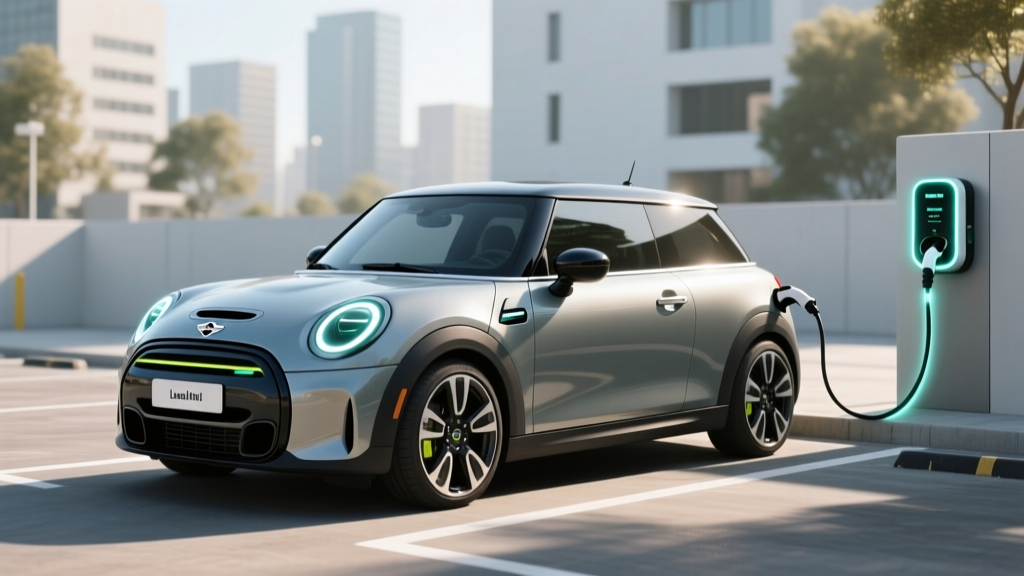
The 2025 Mini Cooper SE arrives as a fully redesigned electric hatchback, trading the outgoing model's 114-mile range for a substantially larger battery, faster charging, and a modernized interior built around Mini's signature circular OLED display. For buyers researching the 2025 Mini Cooper SE MSRP and whether this city-friendly EV fits their daily driving, this review covers every spec that matters—from real-world range expectations to federal tax credit qualification under current IRS §30D rules.
Mini positions the Cooper SE as an urban runabout with premium styling and genuine EV practicality. The question is whether its price, range, and charging performance justify the badge in a segment crowded with longer-range competitors. Let's examine the numbers.
2025 Mini Cooper SE MSRP and Trim Pricing
The 2025 Mini Cooper SE is offered in two trims in the U.S. market: the Signature and the Iconic. Both share the same 54.2 kWh (usable) battery pack and front-wheel-drive powertrain. Here is the pricing breakdown before any incentives or destination charges:
| Trim | Base MSRP | Destination | Total Before Credits | Est. Federal Credit (§30D) | Effective Price |
|---|---|---|---|---|---|
| Cooper SE Signature | $30,900 | $995 | $31,895 | Up to $7,500* | ~$24,395* |
| Cooper SE Iconic | $34,900 | $995 | $35,895 | Up to $7,500* | ~$28,395* |
*Federal tax credit eligibility under IRS §30D depends on buyer income caps ($150K single / $300K joint MAGI), vehicle MSRP caps ($55K for cars), and battery critical-mineral and component sourcing requirements that change annually. The Cooper SE's MSRP clears the $55K car cap easily. Battery sourcing compliance varies by production batch—confirm with your dealer and a tax professional before relying on the full $7,500. The credit can now be transferred to the dealer at point of sale, reducing your out-of-pocket cost at purchase.
Battery, Range, and Efficiency
The 2025 Cooper SE uses a 54.2 kWh usable lithium-ion battery (gross capacity approximately 58 kWh). Mini has not publicly confirmed whether this pack uses NMC (nickel manganese cobalt) or LFP (lithium iron phosphate) chemistry. Based on the energy density required to fit this capacity in the Cooper's compact platform and industry sourcing patterns, NMC is the most likely chemistry, though we will update this review if Mini releases definitive cell-level data.
The EPA sticker rates the Cooper SE at 150 miles of combined range. In real-world driving, expect approximately 135–145 miles on the highway at sustained 70 mph speeds, and 155–165 miles in city driving where regenerative braking recaptures energy. In cold weather (below 32°F), plan for a 20–30% range reduction, dropping effective range to roughly 105–120 miles without preconditioning. Using the Cooper SE's battery preconditioning feature before DC fast charging or departure can mitigate some cold-weather loss.
Efficiency is rated at approximately 114 MPGe combined (approximately 29 kWh/100 miles) according to fueleconomy.gov. That is competitive for the subcompact EV segment, though the smaller battery means fewer total miles between charges than rivals like the Chevrolet Bolt EV or Hyundai Kona Electric.
Charging Speed: DC Fast Charge and Home Level 2
Charging capability is where the 2025 Cooper SE makes its biggest generational leap. The outgoing model topped out at 50 kW DC; the new version nearly doubles that.
| Charging Level | Connector | Max Power (kW) | Speed | Notes |
|---|---|---|---|---|
| Level 1 (120V) | J1772 / NACS | ~1.4 kW | ~4 mi/hr | Emergency/trickle only; full charge in ~38+ hours |
| Level 2 (240V) | J1772 / NACS | 11 kW | ~35 mi/hr | Full charge in ~5.5 hours; ideal for overnight home charging |
| DC Fast Charge | CCS1 / NACS | 95 kW (peak) | 10–80% in ~28 min | Peak rate sustained to ~50% SoC, then tapers; expect 50–60 kW average across the curve |
Real-world charging note: The 95 kW peak rate is competitive for this class, but like all EVs, the Cooper SE does not sustain peak rate throughout the session. You will see the fastest charging between roughly 10% and 50% state of charge. Above 80%, the rate drops significantly to protect battery health—plan to charge to 80% on road trips and move on rather than waiting for a full top-off at the station.
For home charging, the 11 kW onboard charger is a strong point. On a 48-amp Level 2 home station (the most common residential setup), you can add roughly 35 miles of range per hour, easily replenishing a full day's driving overnight. If your electrical panel supports a 60-amp circuit, you can maximize the onboard charger's capability.
Performance and Driving Dynamics
| Spec | 2025 Mini Cooper SE |
|---|---|
| Powertrain | Single motor, front-wheel drive (FWD) |
| Horsepower | 215 hp (160 kW) |
| Torque | 243 lb-ft |
| 0–60 mph | 6.7 seconds |
| Top Speed | 106 mph (electronically limited) |
| Drivetrain | Single-speed reduction gear, FWD |
The 215-hp electric motor gives the Cooper SE a genuine hot-hatch feel around town. The 6.7-second 0–60 time is not sports-car territory, but the instant torque delivery makes it feel quicker than the number suggests, especially in the 0–30 mph urban sprint range where you spend most of your time. Mini's characteristic go-kart handling carries over: the low center of gravity from the floor-mounted battery, firm suspension tuning, and quick steering ratio make this one of the more engaging EVs to drive on a winding road.
Regenerative braking offers multiple levels, including a one-pedal driving mode that brings the car to a complete stop without touching the brake pedal—a feature that becomes second nature in stop-and-go traffic.
Interior, Cargo, and Technology
The 2025 Cooper SE interior represents a clean-sheet redesign. The centerpiece is a 9.4-inch circular OLED display mounted in the dashboard center, running Mini's new Operating System 9. This replaces the traditional instrument cluster; all driver information—speed, range, navigation, media—renders on this single round screen. It is visually distinctive and functional, though drivers accustomed to a dedicated gauge cluster may need an adjustment period.
Passenger space remains true to the Cooper's subcompact roots:
- Front headroom: 38.8 inches
- Front legroom: 41.4 inches
- Rear headroom: 37.1 inches
- Rear legroom: 31.7 inches
- Seating: 4 passengers (strictly)
Cargo volume: 7.1 cubic feet behind the rear seats, expanding to approximately 25.8 cubic feet with the rear seats folded. The Cooper SE does not offer a front trunk (frunk). This cargo capacity is tight—fine for groceries and weekend bags, but a real limitation if you regularly haul larger items.
Driver assistance features (standard and available) include:
- Forward collision warning with automatic emergency braking
- Lane departure warning
- Active cruise control with stop-and-go (available on Iconic)
- Parking assistant with rearview camera
- Head-up display (Iconic trim)
These are SAE Level 1–2 driver-assist features. The driver must remain fully engaged at all times—this is not a hands-off or "self-driving" system.
Warranty and Battery Coverage
| Coverage | Term |
|---|---|
| Basic Vehicle Warranty | 4 years / 50,000 miles |
| Powertrain Warranty | 4 years / 50,000 miles |
| High-Voltage Battery Warranty | 8 years / 100,000 miles |
| Battery Capacity Threshold | 70% of original capacity (industry standard) |
| Corrosion Warranty | 12 years / unlimited miles |
The 8-year/100,000-mile battery warranty is standard for the segment and meets the federal minimum for emissions-related component coverage. If the battery degrades below 70% of its original usable capacity within the warranty period, Mini will repair or replace it. For a 150-mile-range vehicle, that 70% threshold means roughly 105 miles of range at the warranty boundary—something to factor into long-term ownership planning.
Who Should Buy the 2025 Mini Cooper SE?
The Cooper SE is purpose-built for a specific buyer profile. It excels as:
- Urban commuters with home charging and round-trip commutes under 100 miles
- Second-car households that have a longer-range vehicle for road trips
- Style-conscious buyers who prioritize design, driving engagement, and premium feel over maximum range
- Apartment or condo dwellers with access to Level 2 charging who need a compact footprint for tight parking
It is not ideal for:
- Single-car households that regularly drive more than 120 miles per day
- Frequent road-trippers who want minimal charging stops
- Buyers who need cargo space for strollers, gear, or large hauls
- Those in extreme cold climates without garage parking (range loss compounds the 150-mile baseline)
How It Compares to Key Competitors
At the ~$31,000–$35,000 MSRP range (before credits), the Cooper SE competes with several established subcompact EVs. Here is how the key specs stack up:
| Spec | 2025 Mini Cooper SE | 2025 Hyundai Kona Electric | 2025 Chevrolet Bolt EV | 2025 Nissan Leaf (60 kWh) |
|---|---|---|---|---|
| EPA Range | 150 mi | 261 mi | 259 mi | 212 mi |
| Battery (usable kWh) | 54.2 | 64.8 | 65.0 | 60.0 |
| DC Fast Charge (peak kW) | 95 kW | 100+ kW | 55 kW (CCS) | 100 kW (CHAdeMO) |
| 0–60 mph | 6.7 sec | 7.4 sec | 6.5 sec | 6.9 sec |
| Base MSRP | $30,900 | ~$33,000 | ~$27,000 | ~$36,000 |
| Cargo (rear seats up) | 7.1 cu ft | 25.5 cu ft | 16.3 cu ft | 23.6 cu ft |
The Cooper SE trades range and cargo space for design, driving dynamics, and premium interior quality. If range is your top priority, the Kona Electric or Bolt EV deliver nearly double the miles per charge. If you want the most engaging drive and the most distinctive interior in the segment, the Mini has no direct equal.
Pros
- Engaging go-kart handling and instant electric torque
- Distinctive circular OLED interior—best-in-class design
- Competitive 95 kW DC fast charging for the segment
- 11 kW Level 2 onboard charger (faster than many rivals)
- Strong premium build quality and materials
- Eligible for up to $7,500 federal tax credit (subject to §30D sourcing rules)
- Compact footprint ideal for city parking
Cons
- 150-mile EPA range is the shortest in its price class
- Very limited cargo space (7.1 cu ft behind rear seats)
- Rear seat legroom is tight for taller passengers
- No front trunk (frunk) for additional storage
- Cold-weather range loss compounds the already modest baseline
- Circular-only display requires adaptation from traditional gauge clusters
- DC fast-charge curve tapers significantly above 50% SoC
Frequently Asked Questions
What is the real-world range of the 2025 Mini Cooper SE?
The EPA rates the Cooper SE at 150 miles combined. In real-world conditions, expect 135–145 miles at sustained highway speeds and 155–165 miles in city driving with regenerative braking. In cold weather below freezing, plan for 105–120 miles of effective range without preconditioning. For a daily commute under 80 miles round-trip with home charging, this is comfortable; for longer days, you will need to plan charging stops.
How fast does the 2025 Mini Cooper SE charge?
On a DC fast charger, the Cooper SE peaks at 95 kW, achieving a 10–80% charge in approximately 28 minutes. Peak rate holds to roughly 50% state of charge, then tapers. At home on a 240V Level 2 station, the 11 kW onboard charger adds about 35 miles of range per hour, fully replenishing the battery in roughly 5.5 hours overnight.
Does the 2025 Mini Cooper SE qualify for the federal EV tax credit?
The Cooper SE's MSRP (under $55K) clears the vehicle price cap for cars under IRS §30D. Buyer income must not exceed $150,000 (single) or $300,000 (joint) modified adjusted gross income. The critical variable is battery sourcing: the critical-mineral and battery-component requirements tighten each year, and compliance depends on the specific production batch. Confirm eligibility with your dealer at the time of purchase and consult a tax professional. If eligible, the credit can be applied at point of sale, reducing your purchase price by up to $7,500.
Is the 2025 Mini Cooper SE worth buying over the Hyundai Kona Electric or Chevy Bolt?
It depends on your priorities. If you need maximum range (260+ miles) and cargo space for a single-car household, the Kona Electric or Bolt EV are more practical choices. If you value premium interior design, engaging driving dynamics, and a compact city footprint—and you have reliable home charging with a daily drive under 100 miles—the Cooper SE offers an ownership experience its more utilitarian competitors cannot match. The effective post-credit price of approximately $24,000–$28,000 also makes it one of the most affordable premium EVs on the market.
What is the battery warranty on the 2025 Mini Cooper SE?
Mini covers the high-voltage battery for 8 years or 100,000 miles, whichever comes first. The warranty guarantees the battery will retain at least 70% of its original usable capacity. If it drops below that threshold during the coverage period, Mini will repair or replace the battery pack at no cost to the owner.
Can I take the 2025 Mini Cooper SE on road trips?
Yes, but with planning. The 150-mile range means charging stops every 100–120 miles on the highway (accounting for a safety buffer). With 95 kW DC fast charging, each stop takes roughly 25–30 minutes for a 10–80% session. For trips over 250 miles, expect two or more charging stops. If long road trips are a regular part of your driving, a longer-range EV or a two-car household with a gas or hybrid vehicle for trips may be a better fit.