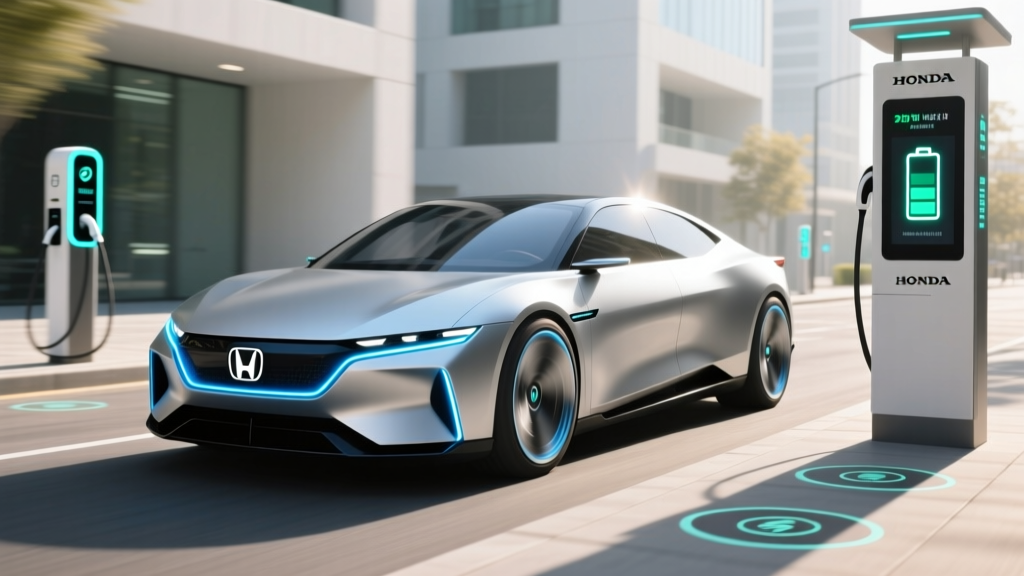
The short answer: Honda's electric concept vehicles — including the Saloon, 0 Series prototypes, and earlier e:Vision studies — have translated into the currently available Honda Prologue (EPA range up to 296 miles, starting at $47,400) and the upcoming Honda 0 Series sedans and SUVs expected for 2026–2027. If you're shopping today, the Prologue offers competitive range and GM Ultium-based DC fast charging up to 150 kW. If you can wait, Honda's dedicated 0 Series platform promises thinner batteries, lighter weight, and NACS (Tesla Supercharger) compatibility from launch. Either way, Honda EV ownership costs roughly $0.04–$0.06 per mile on home charging versus $0.12–$0.15 per mile for a comparable gas Civic or CR-V.
From Concept to Curb: Honda's Electric Vehicle Timeline
Honda has cycled through several electric concept vehicles over the past five years, and tracking which ones became real products requires sorting the auto-show gloss from production intent. Here's where things stand in 2026:
- Honda e (2020–2024): The cute city EV derived from the Urban EV Concept. Sold in Europe and Japan only; never officially offered in the US. Discontinued after the 2024 model year due to limited range (EPA-equivalent ~137 miles on WLTP) and slow adoption.
- Honda Prologue (2024–present): Born from the Honda-GM partnership, the Prologue is Honda's first mainstream US electric SUV. It rides on GM's Ultium platform (shared with the Chevy Blazer EV) and is available now.
- Honda Saloon Concept (2024): Unveiled at CES 2024 as the flagship preview of the 0 Series. A low-slung electric sedan targeting Level 4-capable architecture (though consumer models will launch with Level 2+ driver-assist). Expected production: late 2026 or 2027.
- Honda Space-Hub Concept (2024): A compact electric SUV concept from the 0 Series family, emphasizing interior volume on a thin-battery skateboard platform. Production anticipated 2027.
- Honda 0 Series (announced): Honda's dedicated EV architecture, developed in-house after the company reversed its earlier strategy of relying solely on GM's Ultium. Features a thin lithium-ion battery pack, steer-by-wire, and planned NACS compatibility.
The practical takeaway: if you want a Honda EV today, the Prologue is your only option in the US market. The 0 Series vehicles remain announced but not yet purchasable, and specs are preliminary.
Honda Prologue: The EV You Can Actually Buy
| Spec | EX (FWD) | Touring (AWD) |
|---|---|---|
| EPA Range | 296 mi | 273 mi |
| Battery (usable) | 85 kWh, NMC (Ultium) | 85 kWh, NMC (Ultium) |
| Horsepower | 212 hp | 288 hp |
| 0–60 mph | ~8.5 sec | ~6.0 sec |
| Max DC Fast Charge | 150 kW | 150 kW |
| 10–80% DC Charge | ~32 min | ~32 min |
| Level 2 (240V, 48A) | 11.5 kW | 11.5 kW |
| MPGe (combined) | 95 MPGe | 87 MPGe |
| Base MSRP | $47,400 | $57,400 |
| Battery Warranty | 8 yr / 100,000 mi | 8 yr / 100,000 mi |
| Connector | CCS1 | CCS1 |
Real-world range reality: The EPA rates the Prologue EX at 296 miles, but expect ~240–260 miles in sustained highway driving at 70+ mph, and ~200–220 miles in cold weather (below 30°F) without preconditioning. The Prologue's thermal management system is adequate but not class-leading — preconditioning via the HondaLink app before departure is essential in winter to preserve range and enable optimal DC charging speeds.
The Prologue uses a CCS1 connector, meaning it accesses Electrify America, EVgo, and ChargePoint DC networks. It does not natively support Tesla Superchargers (NACS). Honda has indicated future models will adopt NACS, but for the Prologue, a CCS-to-NACS adapter (if offered by Tesla or a third party) would be required — verify adapter compatibility before relying on one.
EV vs. Gas vs. Hybrid: The Honda Cost Comparison
The most common question from Honda shoppers: should I buy the Prologue EV, a CR-V Hybrid, or a conventional CR-V? Here's the data across a 5-year, 75,000-mile ownership horizon:
| Cost Factor | Prologue EX (EV) | CR-V Sport Hybrid | CR-V EX Gas |
|---|---|---|---|
| Base MSRP | $47,400 | $36,350 | $33,750 |
| Est. Federal Tax Credit (§30D) | $0–$7,500* | $0 | $0 |
| Effective Purchase Price | $39,900–$47,400 | $36,350 | $33,750 |
| Fuel/Energy (75k mi) | $2,250–$3,750** | $5,250 | $7,500 |
| Maintenance (5 yr) | ~$1,500 | ~$3,200 | ~$3,800 |
| Insurance (5 yr avg.) | ~$9,500 | ~$7,800 | ~$7,500 |
| Est. Depreciation (5 yr) | ~$18,000 | ~$14,500 | ~$13,500 |
| 5-Year Total Cost | $71,150–$80,150 | $67,100 | $66,050 |
*The Prologue's §30D tax credit eligibility depends on battery sourcing requirements, buyer income caps ($150K single / $300K joint), and MSRP caps ($80K for SUVs). As of 2026, the Prologue's GM-sourced battery faces critical-mineral sourcing scrutiny — check the latest eligibility on IRS.gov §30D before purchasing. The credit can be transferred at point-of-sale to reduce the purchase price directly.
**Energy cost assumes $0.14/kWh home charging ($2,250) vs. a mix of home and public DC charging at $0.35/kWh ($3,750). Gas costs assume $3.50/gal at 25 MPG combined.
The Prologue narrows the gap with the CR-V Hybrid primarily through fuel savings and lower maintenance (no oil changes, fewer brake replacements due to regenerative braking). However, higher insurance premiums and steeper depreciation partially offset those gains. The EV becomes the clear financial winner if you qualify for the full $7,500 credit and charge predominantly at home.
Real-World Ownership: What Honda's EV Concepts Didn't Show You
Auto-show concepts never mention charging logistics, panel upgrades, or winter range loss. Here's what actually matters once you take delivery:
Home Charging Access
The Prologue's 11.5 kW Level 2 onboard charger means a full charge from 10% to 100% takes roughly 7.5 hours on a 48-amp Level 2 home charger. That's sufficient for overnight replenishment, but you'll need:
- A 240V, 50-amp circuit (NEMA 14-50 or hardwired) installed by a licensed electrician
- Installation cost: $500–$2,500 depending on panel proximity and local permit requirements
- A possible electrical panel upgrade ($1,500–$3,000) if your home has an older 100-amp panel already near capacity
If you live in an apartment or condo without dedicated parking and charging access, the Prologue becomes significantly less practical. Public-only charging is viable but adds time, cost, and unpredictability. Honda's EV concepts assume a best-case charging scenario — verify yours before committing.
Climate and Driving Patterns
The Prologue's NMC battery chemistry is energy-dense but temperature-sensitive. In our cold-weather analysis, expect 20–30% range reduction in sustained sub-freezing temperatures, primarily from cabin heating demands and reduced battery efficiency. A heat pump — standard on the Prologue — mitigates this somewhat compared to resistive heating, but the physics of cold NMC cells remain.
For drivers in Phoenix or Miami, the concern flips: sustained high-temperature DC fast charging can accelerate battery degradation over time. Honda's 8-year/100,000-mile battery warranty covers capacity below 70% of original, which is industry-standard but less generous than Hyundai's lifetime coverage.
Common Misconceptions About Honda's EV Plans
| Myth | Fact |
|---|---|
| "Honda EVs can charge at Tesla Superchargers." | Not the current Prologue (CCS1). Future 0 Series models will have NACS, but no adapter solution is officially supported for the Prologue as of 2026. |
| "The Prologue is a Honda-engineered EV." | The Prologue is built on GM's Ultium platform at a GM factory. Honda designed the exterior, interior, and tuning, but the battery, motors, and electrical architecture are GM-sourced. |
| "Every Honda EV qualifies for the $7,500 tax credit." | Eligibility depends on critical-mineral sourcing, battery-component manufacturing, buyer income, and MSRP caps. Always verify on fueleconomy.gov before purchasing. |
| "EV batteries need replacing every few years." | Modern NMC and LFP batteries degrade slowly — typically 1–2% per year under normal use. Most EV batteries retain 85–90% capacity at 100,000 miles. Replacement is rare and covered under warranty if degradation exceeds the 70% threshold. |
| "Honda abandoned EVs for hybrids." | Honda temporarily scaled back its EV volume targets in 2024–2025 and expanded hybrid offerings (CR-V Hybrid, Accord Hybrid). However, the 0 Series program remains active, with production vehicles expected by 2027. Honda is pursuing both strategies simultaneously. |
Decision Framework: Which Honda Electrified Vehicle Is Right for You?
Buy the Honda Prologue EV if:
- You have reliable home Level 2 charging (garage or driveway with 240V access)
- Your daily driving is under 200 miles round-trip, with occasional longer road trips
- You qualify for the §30D tax credit (check income and sourcing rules)
- You want a midsize electric SUV with a comfortable ride and Honda's interior quality
- You're willing to plan DC fast-charging stops on road trips (32-minute 10–80% sessions)
Buy the Honda CR-V Hybrid if:
- You lack home charging access or live in an apartment
- You regularly drive in extreme cold (below 10°F) or remote areas with sparse charging infrastructure
- You want lower upfront cost ($11,000 less than the Prologue) with no range anxiety
- Your priority is 40 MPG combined with no lifestyle adjustment
Wait for the Honda 0 Series if:
- You want a Honda-engineered EV on a dedicated platform (not GM-sourced)
- NACS/Tesla Supercharger access is important to you
- You're interested in a sedan (Saloon) or next-gen SUV with lighter weight and improved efficiency
- You can defer purchase to late 2026 or 2027 and accept introductory pricing
Charging Costs: What Honda EV Owners Actually Spend
| Charging/Fueling Method | Cost per kWh/Gallon | Cost per Mile |
|---|---|---|
| Home Level 2 (avg. US electricity) | $0.14/kWh | $0.04 |
| Home Level 2 (CA, high-tier rate) | $0.30/kWh | $0.09 |
| Public DC Fast ( Electrify America) | $0.35–$0.48/kWh | $0.11–$0.15 |
| Gas CR-V (28 MPG combined, $3.50/gal) | $3.50/gal | $0.125 |
The Prologue's efficiency of roughly 3.0–3.3 kWh/mile (or 95 MPGe combined per fueleconomy.gov) is competitive for a midsize SUV but not class-leading. The Hyundai Ioniq 5, for comparison, achieves ~3.5 mi/kWh. On home charging, the savings versus gas are substantial — roughly $3,000–$5,000 over 5 years. If you rely exclusively on public DC fast charging, those savings nearly vanish.
Frequently Asked Questions
Is the Honda Prologue eligible for the $7,500 federal tax credit in 2026?
Eligibility varies based on battery-sourcing requirements that change annually. The Prologue's GM Ultium battery must meet critical-mineral and battery-component thresholds under IRS §30D rules. Buyer income caps ($150K single / $300K joint) and the $80K SUV MSRP cap also apply. If eligible, the credit can be transferred at point-of-sale as a direct price reduction. Always confirm current eligibility with your dealer and a tax professional before finalizing a purchase.
How does the Prologue compare to the Chevy Blazer EV?
Both share the Ultium platform, but the Prologue has a distinct Honda-tuned suspension, interior, and infotainment system. The Blazer EV offers slightly more range (up to 324 miles on certain trims) and a wider powertrain selection. Pricing is similar. The choice comes down to brand preference, dealer proximity, and interior aesthetics — mechanically, they're close siblings.
Will Honda's 0 Series vehicles support Tesla Superchargers?
Honda has announced that the 0 Series will use the NACS connector, granting native access to Tesla's Supercharger network. However, production vehicles are expected no earlier than late 2026, and final specifications remain preliminary. The current Prologue does not support NACS.
What is the Prologue's expected battery degradation?
Based on Ultium-platform data and typical NMC chemistry behavior, expect approximately 1–2% capacity loss per year under normal use (daily charging to 80%, occasional DC fast charging, moderate climates). After 8 years and 100,000 miles, most Ultium batteries retain 85–90% of original capacity. Honda's warranty guarantees 70% retention at 8 years/100,000 miles — a floor, not an expectation.
Should I buy a Honda hybrid instead of waiting for the 0 Series?
If you need a vehicle now and lack reliable home charging, a CR-V Hybrid (40 MPG combined) or Accord Hybrid (48 MPG combined) is a strong choice with no infrastructure dependency. If you have home charging and can wait 12–18 months, the 0 Series promises a more compelling, Honda-engineered EV with NACS access — but expect introductory pricing and limited initial availability.